‘It was a bizarre situation. The negotiators were in position in Iraq. The kidnappers and the kidnapped were in Iraq. At the crucial moment, the transport company in Kuwait expressed reservations about the ransom.’
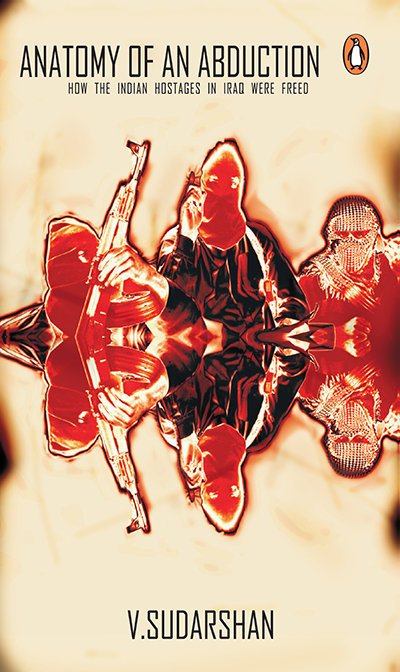
In July 2004, a convoy of KGL trucks drove into Iraq from Kuwait carrying electronic equipment for the American occupiers, when the worst happened-three Indian drivers, three Kenyans and an Egyptian were ambushed, detained by unknown Iraqi dissidents and accused of collaborating with the Americans. A deadline was set for their execution. The countdown had begun.
The abduction drama that ensued had all the ingredients of a thriller: nail-biting suspense, high profile media coverage, international outrage at the plight of these humble workers, and political tightrope-walking. This gripping behind-the-scenes narration recounts what really happened in Baghdad when a team of negotiators was sent there and entered into secret talks through an intermediary whose very existence was not in public domain.
Anatomy of Abduction reveals for the first time the Indian crisis management team’s handling of the situation over forty-four days in occupied, lawless Iraq. The book gives an insight into the pressures that governments have to face as more and more innocent people become pawns in global chess games.
The education of their children is of paramount importance to all Indian parents. They spend tens of thousands of crores each year to get their young educated. The country fetes its successful students : from class X to board toppers and those who ‘crack the IIT JEE’ to those who clear the civil- services examination.
Yet things on the ground are dire.
About 70 per cent of all students ( in villages, towns and cities) have to make do with inferior schooling. Metropolitan newspapers are full of the difficulty of getting a nursery seat in a good school. And while there is a seat crunch in the better colleges too, only 10 per cent of all students between the ages of 18 and 21 are enrolled in college. Crores of educated Indians discover too late that they do not have the skills to land a suitable job.
Y.S. Rajan examines the gamut of issues involved in India’s efforts to educate its young people and the work required to fix schools, vocational training centres, colleges and universities. He argues that Indian education needs reforms on a scale comparable to those which freed the economy of the shackles of the licence-permit raj almost twenty years ago.

On an average, eleven hours a day for the rest of your life, you’ll either be working or travelling to your workplace. Now imagine being stuck in the wrong job! A study says that 80 per cent of Indians are unhappy with their jobs. Then how can we find a job that makes us happy? Is there a formula we can use to find our dream job?
Here is the answer!
Go on a journey with national bestselling author Chandan Deshmukh as he guides you through the various opportunities, challenges and turning points of any career. Learn about human personalities and how they’re suited for certain jobs; how to turn your ‘side hustle’ into opportune ventures and, most of all, how to find a job in which you’ll be happy.
‘Dhandha’, meaning business, is a term often used in common trade parlance in India. But there is no other community that fully embodies what the term stands for than the Gujaratis. Shobha Bondre’s Dhandha is the story of a few such Gujaratis: Jaydev Patel, the New York Life Insurance agent credited with having sold policies worth $2.5 billion so far; Bhimjibhai Patel, one of the country’s biggest diamond merchants and co-founder of the ambitious ‘Diamond Nagar’ in Surat; Dalpatbhai Patel, the motelier who went on to become the mayor of Mansfield County; Mohanbhai Patel, a former sheriff of Mumbai and the leading manufacturer of aluminium collapsible tubes; and Hersha and Hasu Shah, owners of over a hundred hotels in the US.
Travelling across continents-from Mumbai to the United States-in search of their stories and the common values that bind them, Dhandha showcases the powerful ambition, incredible capacity for hard work, and the inherent business sense of the Gujaratis.
Fail! And we are stamped for life. Don’t we try and run from failure all our lives? But, ‘spontaneous doing has to go through failures’. Acknowledging failure is singularly the most difficult thing to do. It takes tremendous courage to come out and say, yes, I failed. Shweta Punj chronicles sixteen leaders who have celebrated their failure as much as their success. Each story is an anatomy of failure. So whether it was the difference between ‘need’ and ‘want’ that led Abhinav Bindra to miss that winning shot, or whether it was a suicide attempt that pushed Sabyasachi Mukherjee into fully realizing his potential-these stories will encourage you to look at failure differently.
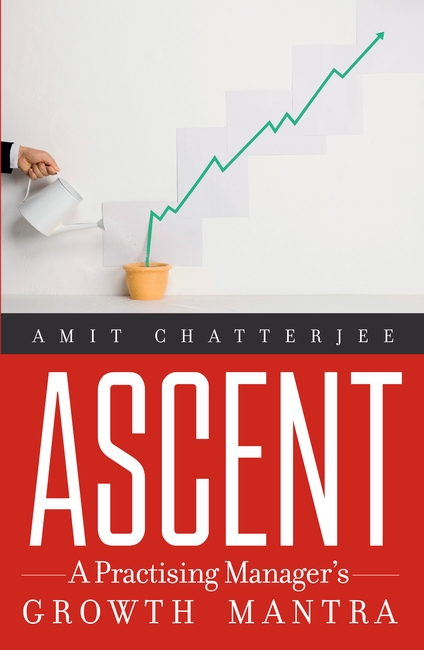
You don’t need an MBA or a job with a top company to be a good manager. Amit Chatterjee, in his provocative and contemplative book, explains how managers can excel beyond expectations. He urges managers to act of their own volition and shows how to transcend from being managers to leaders. Through illustrations and useful graphs, the author offers purposeful practices for leadership. Ascent provides a growth mantra for managers and how they can emerge as leader-managers through investment in complexity and volition. It is a must-read for all managers who want to grow and become effective leaders.

Do you know which business leader plays a game of sudoku every night before going to bed? Never uses a computer to write down important thoughts? Likes to stand and work?
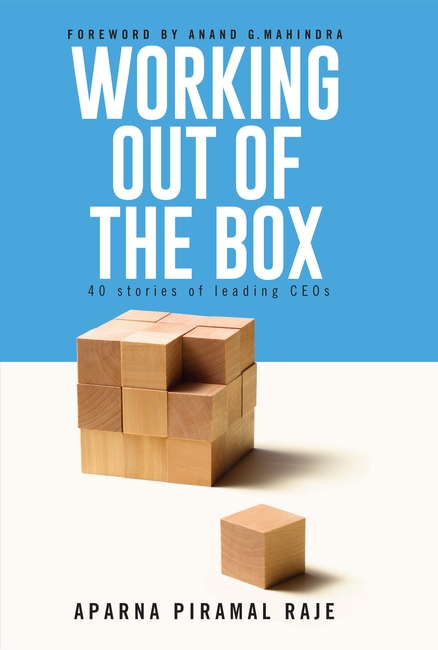
In Working Out of the Box, Aparna Piramal Raje gives us an intimate peek into the lives of forty progressive leaders by exploring the connections between their workspaces and working styles. Capturing quirks, individual styles of working, motivations and leadership traits, and tracing the patterns exhibited by these leaders, she unravels their defining qualities and explains how they reflect in their workspaces. Divided into four sections, personal energy, organizational capital, brand values, environment and sustainability, the book provides insight into what makes these CEOs tick and how they manage their most valuable assets.

Is Shah Rukh Khan an effective actor? Is Naresh Trehan an effective doctor? Was A.P.J. Abdul Kalam an effective nation builder?
Are you an effective person?
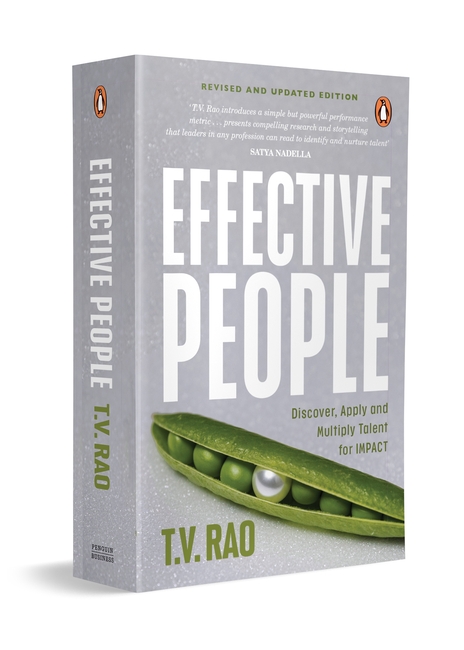
In this book, bestselling author T.V. Rao studies and analyses effective doctors, actors, civil servants, social workers, educationists, nation builders and entrepreneurs. Some of them seem to go beyond the tenets of effectiveness and shine out as what the author calls Very Effective People and Super Effective People.
His diverse examples and cases range from A.P.J. Abdul Kalam, Devi Shetty, Anil Gupta to Kangana Ranaut, Sachin Tendulkar, Anupam Kher to ordinary people whose lives are no less effective.
Hugely readable, with self-assessment tools at the end of each chapter, Effective People will propel you to leap forward and discover the best in you.

‘If you produce what you have promised to, no one would want to come in your way’ S. Ramadorai, former vice chairman, Tata Consultancy Services
‘Relying on conventional wisdom is never a smart idea in an emerging business’ Akhil Gupta, vice chairman, Bharti Enterprises
‘Do your duty to the best of your ability, without attachment to the results, and remain calm in both success and failure’ Venkatesh Kini, president, Coca-Cola India and south-west Asia
‘Planning is academic. Action decides the winner’ Rahul Bhasin, managing partner, Baring Private Equity Partners
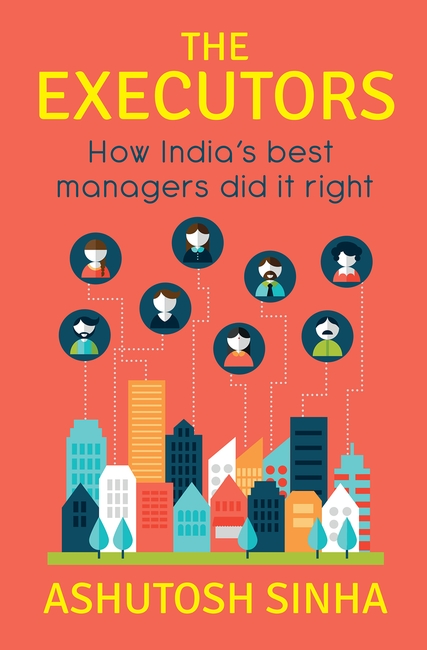
These are some of the life lessons that 30 of India’s most celebrated managers share in The Executors, a personal account of how they came to run influential companies such as Bharti, Bennett Coleman, Tech Mahindra, Apollo Munich, Convergys, Yum! Brands and Max Life Insurance, among others. Packed with inspiring stories of struggle, this book culls out the wisdom that these leaders have imbibed over the years and are keen to impart to others. Ashutosh Sinha insightfully explores their management style, philosophy and how they lead from the front.

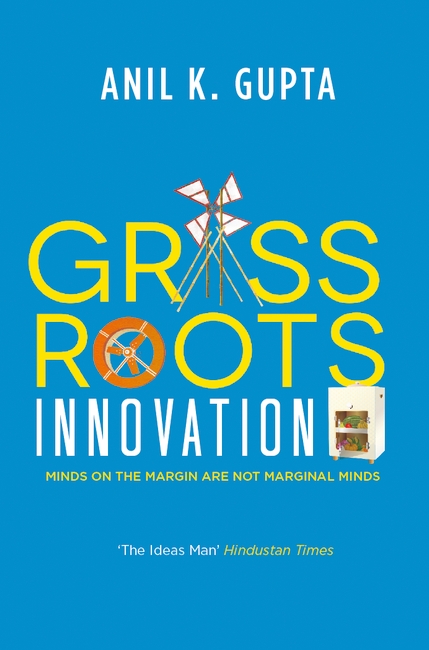
A moral dilemma gripped Anil K. Gupta when he was invited by the Bangladeshi government to help restructure their agricultural on-farm research sector in 1985. He noticed how the marginalized farmers were being paid poorly for their otherwise unmatched knowledge. The gross injustice of this constant imbalance led Gupta to found what would turn into a resounding social and ethical movement-the Honey Bee Network-bringing together and elevating thousands of grassroots innovators.
For over two decades, Gupta has travelled through rural lands, along with hundreds of volunteers of the Network, unearthing innovations by the ranks-from the famed Mitti Cool refrigerator to the root bridge of Meghalaya. He insists that to fight the largest and most persistent problems of the world, we must not rely only on expensive research labs but also look towards ordinary folk, and eventually build bridges between the formal and informal sectors. Innovation-that oft-flung-around word-is stripped to its core in this book.
Poignant and personal, Grassroots Innovation is an important treatise from a social crusader of our time.