Growing up in a remote village in Bengal, Rekha Kalindi was always made to believe that being born a girl was a burden. A feisty, intelligent child, she was aware of the horrific consequences of forced marriages on the young girls in her village. Having observed how her friends were married off and sent to live with their mothers-in-law, where they were often treated like slaves, she was determined not to suffer the same miserable fate.
At the age of eleven, Rekha caused a sensation when she refused to be a child bride. Furious, her mother locked her up and even starved her, but the young girl’s spirit could not be broken. It took an incredible amount of bold determination for Rekha to persuade her family not to marry her off against her will. Ever since, she has actively campaigned for the rights of young girls, and has emerged as a crusader for justice. She also went on to become a recipient of India’s National Bravery Award in 2010.
The Strength to Say No is a powerful portrait of one girl’s monumental struggle against oppression as well as a heartrending and inspiring story about the triumph of the human spirit.

A rollicking, exuberant and powerfully moving story of a family swept up by social unrest in post–World War II Cairo
Abd el-Aziz Gaafar, formerly a well-respected landowner now in the grip of penury, moves his family to Cairo and takes on menial work at the Automobile Club—a place of refuge and luxury for its European members, but one where Egyptians may appear only as servants. Alku, the lifelong Nubian servant of Egypt’s corrupt king, runs the show in all but name. The servants, a squabbling, humorous, and deeply human group, live in a perpetual state of fear: beaten for their mistakes, their wages dependent on Alku’s whims.
When Abd el-Aziz’s pride gets the better of him and he stands up for himself, his death—as much from shame as from his injuries after Alku has him beaten—leaves his widow further impoverished and two of his sons obliged to work in the Club. As the family is drawn into the turbulent politics of Egypt—public and private—both servants and masters are subsumed by the country’s social upheaval. Soon, the Egyptians of the Automobile Club face a stark choice: to live safely but without dignity as servants, or to fight for their rights and risk everything.

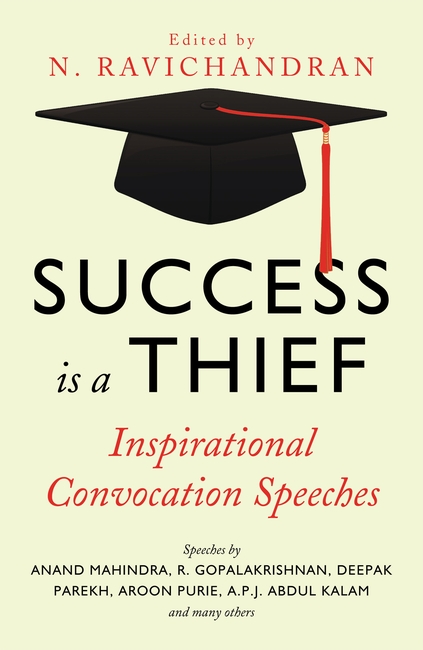
Graduation is a magical time—it is liberating and petrifying in equal measure. It is tradition to invite a noted personality to deliver an address that can rouse the students to step into the real world with courage, motivation and enthusiasm.
This book brings together twenty convocation speeches delivered at the greatest management institutes in this country by eminent personalities like A.P.J. Abdul Kalam, Deepak Parekh, Subroto Bagchi, Indra K. Nooyi and Anand Mahindra. It also offers reflections from experts who analyse these speeches, and delves into the art of inspiring communication. Stimulating and inspiring, Success Is a Thief is a must on every bookshelf.

Are you a Bride-to-be?
Do you want to get into fabulous shape before your wedding?
As weddings in the country grow more and more glamorous each year, brides face immense pressure to look their best on D-Day. But in the days leading up to the wedding, most brides get into a frenzy to shed the kilos fast, making them resort to heavy gym sessions and crash diets which ultimately leaves them with little time for anything else. What if there was a way to shed the kilos without feeling stressed, deprived or having sleepless nights over whether you’ll fit into your dress on time?
From Delhi’s top dietician and the bestselling author of Lose a Kilo a Week comes another weight loss book that will outline a diet programme aimed at brides-to-be so that the days leading up to their wedding can be stress-free. And even if you aren’t getting hitched, you can still use this book to get in shape and get fit.
From exclusive diet plans, workouts, recipes, strategies to avoid temptation, motivators and much more, The Bridal Diet contains everything you need to look and feel your best.

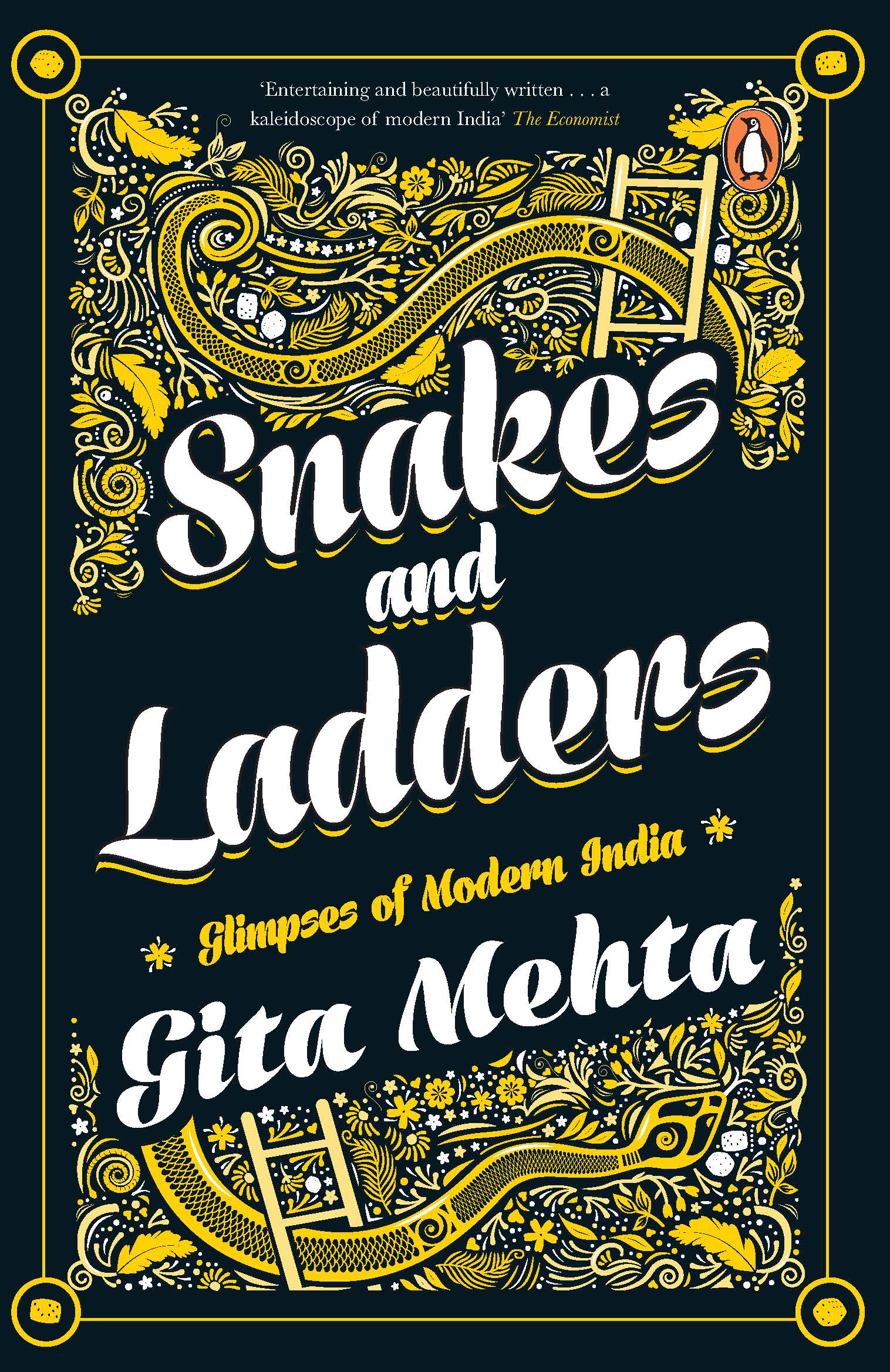
India is a land of contrasts. It is the world’s most populous democracy, but still upholds the caste system. It is a burgeoning economic superpower, but ranks among the poorest nations on earth. It is home to the world’s largest film industry after Hollywood, as well as two still-practised religions that are millennia old. It is an ancient civilization celebrating more than half a century as a modern nation. Mehta is fascinated by India in all its rich detail and gives a loving but unflinching assessment of India today in an account that is entertaining, informative, and wholly personal.
From the late 1960s, hundreds of thousands of Westerners descended upon India, disciples of a cultural revolution that proclaimed that the magic and mystery missing from their lives could be found in the East. Recording her observations of these ‘pilgrims’ interacting with their hosts, Gita Mehta skewers the entire spectrum of seekers: The Beatles, homeless students, Hollywood rich kids in detox, British guilt-trippers and more. Brilliantly irreverent, Karma Cola displays Mehta’s gift for weaving old and new, common and bizarre, history and current events into a seamless and colorful narrative that is at once witty, shocking, and poignant.
The dramatic, entertaining story of the dream team that pioneered the Bollywood blockbuster
Salim Khan and Javed Akhtar reinvented the Bollywood formula with an extraordinary lineup of superhits, becoming game changers at a time when screenwriting was dismissed as a back-room job. From Zanjeer to Deewaar and Sholay to Shakti, their creative output changed the destinies of several actors and filmmakers and even made a cultural phenomenon of the Angry Young Man. Even after they decided to part ways, success continued to court them-a testament not only to their impeccable talent and professional ethos, but also their enterprising showmanship and business acumen.
Fizzing with energy and brimming over with enough trivia to delight a cinephile’s heart, Written by Salim-Javed tells the story of a dynamic partnership that transformed Hindi cinema forever.
Nation at Play is a novel history of India’s engagement with sport and a probing analysis of its cultural and political development under monarchy and the Raj, as well as in the decades after Independence. Interestingly, over time, some sports that originated in India have fallen out of favour, while others, such as cricket, a colonial import, have been adopted and made wholly India’s own.
Sen follows the transformation of sport from an elite, kingly pastime to a national obsession tied to colonialism, nationalism and free market liberalization. He pays special attention to two modern phenomena: the dominance of cricket in the Indian consciousness and the chronic failure of a billion-strong nation to compete successfully in international sporting competitions, such as the Olympics. Innovatively incorporating examples from popular media and other unconventional sources, Nation at Play not only captures the political nature of sport in India but also reveals the patterns of patronage, clientage, and institutionalization that have bound this diverse nation together for centuries.
‘A fine, lucid, engaging and constantly surprising study. Highly recommended’-Gideon Haigh
‘An informative and readable account of the Indian history of football, hockey, wrestling, boxing and cricket in the last two centuries’-Partha Chatterjee
‘An ingenious history of Indian sport . . . tells the story of India’s mostly failed love affair with competitive sport since the nineteenth century’-Mukul Kesavan
‘A fascinating, rich and thoroughly engaging history of sport in India’-Joseph S. Alter

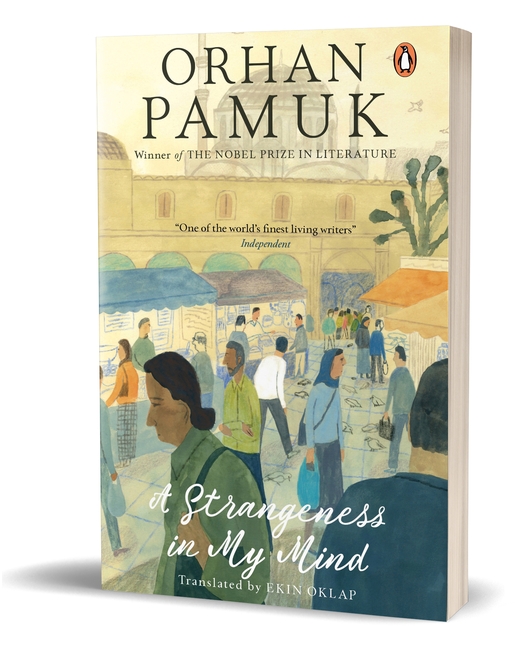
Since his boyhood in a poor village in Central Anatolia, Mevlut Karatas has fantasized about what his life would become. Not getting as far in school as he’d hoped, at the age of twelve he comes to Istanbul—”the center of the world”—and is immediately enthralled by both the old city that is disappearing and the new one that is fast being built. He follows his father’s trade, selling boza (a traditional, mildly alcoholic Turkish drink) on the street, hoping to become rich like the other villagers who have settled on the desolate hills outside the booming metropolis. But luck never seems to be on Mevlut’s side. He spends three years writing love letters to a girl he saw just once at a wedding, only to elope by mistake with her sister. And though he grows to cherish his wife and the family they have, he stumbles toward middle age in a series of jobs leading nowhere. His sense of missing something leads him sometimes to the politics of his friends and intermittently to the teachings of a charismatic religious guide. But every evening, without fail, Mevlut still wanders the streets of Istanbul, selling boza and wondering at the “strangeness” in his mind, the sensation that makes him feel different from everyone else, until fortune conspires once more to let him understand at last what it is he has always yearned for.
Told from different perspectives by a host of beguiling characters, a Strangeness in My Mind is a modern epic of coming of age in a great city, a brilliant tableau of life among the newcomers who have changed the face of Istanbul over the past fifty years. Here is a mesmerizing story of human longing, sure to take its place among Pamuk’s finest achievements.
This deeply felt memoir, translated from the acclaimed original in Malayalam, chronicles the endeavours of four generations of the Kandathil Varughese Mappillai family that set up the Malayala Manorama, the Travancore National and Quilon Bank and other enterprises. With great candour, K.M. Mathew describes how their fortunes changed when their support to the nationalist State Congress brought upon them the wrath of the Travancore dewan, leading to the bank’s collapse; and how through sheer persistence and diligence they could rebuild the paper and go on to establish huge companies. Mathew also shows that throughout the paper upheld the values of liberalism, credibility and democracy, which it continues to do until today. Featuring some of Kerala’s tallest figures over almost a century, The Eighth Ring is a rich portrait of a remarkable man, his family-clan and their stirring times.