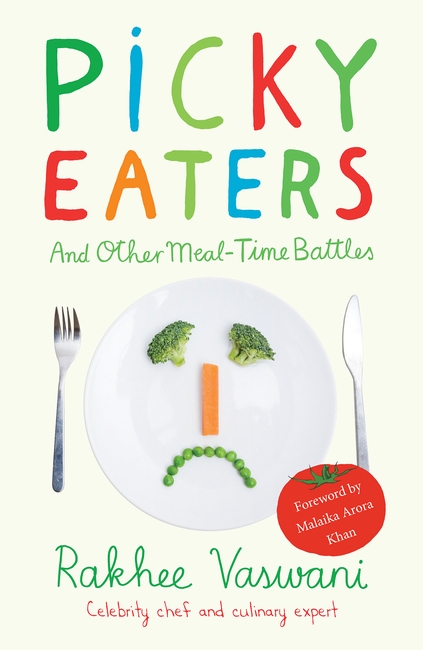
Does your child revolt at the mere thought of eating greens? Are you running out of nutritious lunch-box ideas?
Parents today are constantly reminded of the need to give their children healthy, home-cooked meals instead of the fat-, salt- and sugar-laden fare in food courts and restaurants. Yet, busy lifestyles mean that family time is in short supply which makes it hard to balance this need with the practicality of cooking for every family member.
In Picky Eaters, celebrity chef and culinary expert Rakhee Vaswani guides parents and kids on how they can make everyday food fun, exciting and yummy. From delicious, healthy recipes to party-planning and cooking together, this book will tell you how to get your child to eat right. So banish all those mind-boggling questions about what to feed your children—and start cooking!

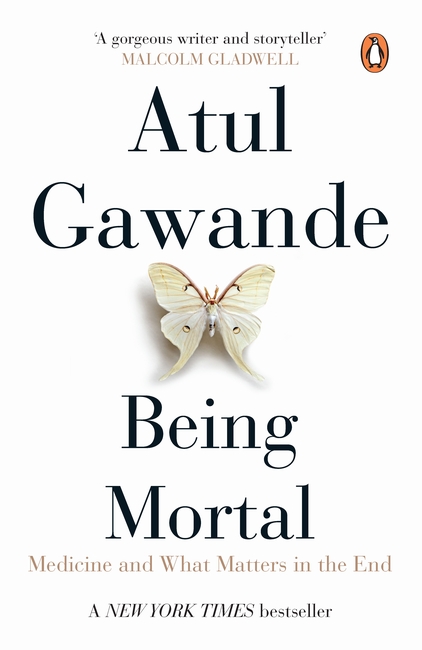
Doctors are trained to keep their patients alive as long as possible. But they are never taught how to prepare people to die. And yet for many patients, particularly the old and terminally ill, death is a question of when, not if. Should the medical profession rethink its approach to them? And in what way? With aging populations and hospital costs rising globally, these questions have become increasingly relevant.
In his new book, Atul Gawande argues that an acceptance of mortality must lie at the center of the way we treat the dying. Using his experiences (and missteps) as a surgeon, comparing attitudes toward aging and death in the West and in India and drawing a powerful portrait of his father’s final years-a doctor who chose how he should go-Gawande has produced a work that is not only an extraordinary account of loss but one whose ideas are truly important.
Questioning, profound and deeply moving, Being Mortal is a masterpiece.

Naseeruddin Shah’s sparkling memoir of his early years, ‘from zero to thirty-two’, spans his extraordinary journey from a feudal hamlet near Meerut to Catholic schools in Nainital and Ajmer, and finally to stage and film stardom in Mumbai. Along the way, he recounts his passages through Aligarh University, the National School of Drama
and the Film and Television Institute of India, where his luck finally began to change.
And Then One Day tells a compelling tale, written with rare honesty and consummate elegance, leavened with tongue-in-cheek humour. There are moving portraits of family members, darkly funny accounts of his schooldays, and vivid cameos of directors and actors he has worked with, among them Ebrahim Alkazi, Shyam Benegal, Girish Karnad, Om Puri and Shabana Azmi.
The accounts of his struggle to earn a living through acting, his experiments with the craft, his love affairs, his early marriage, his successes and failures are narrated with remarkable frankness and objective self-assessment. Brimming with delightful anecdotes as well as poignant, often painful revelations, this book is a tour de force, destined to become a classic of the genre.

Buried resentments, unexpected disappointments, new friendships, small acts of cruelty, journeys that take you back to where you started. With trademark compassion and tender irony, Anita Desai’s short stories give us familiar worlds made unfamiliar, to wonderful effect.
An ageing couple is stranded in a stultifying Delhi summer by the visit of a roguish old Oxford friend, who trades on his charm; an American woman turns to hippies living in the Indian hills, homesick for the farmlands of Vermont; a dog terrorizes the neighbourhood but is cherished by his stern master; a Delhi girl of slender means finds a new kind of freedom with her young friends, in her barsati home; a peaceful game of hide and seek turns into a nightmare; a businessman sees his own death.
In one masterly volume, for the first time ever, here are Anita Desai’s collected stories —including Diamond Dust and Games at Twilight.
Time is scarce and precious in today’s world and we seek solutions that are quick. While allopathic medicine tends to focus on the management of disease, the ancient study of Ayurveda provides us with holistic knowledge for preventing disease and eliminating its root cause.
Dr Bhaswati Bhattacharya takes you through a day in the life of Ayurvedic living.

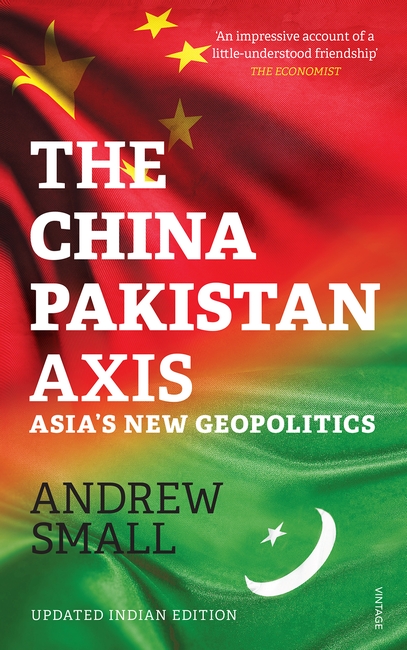
China and Pakistan, India’s two most powerful neighbours, share an ‘all-weather’ relationship that is as reputed for its depth as it is layered in secrecy. Based on years of research and interviews, Andrew Small has put together the story of China and Pakistan’s growing, and in parts troubled, friendship.
The China-Pakistan Axis is essential to understanding the economic, political and security map of Asia, especially India’s neighbourhood. It explains Beijing’s extraordinary support to Pakistan’s nuclear programme and defence planning, their strategic cooperation on India, the United States and Afghanistan, and the implications for counter-terrorism efforts.
A special chapter for this Indian edition brings the book up to date on China’s involvement in the Taliban talks.

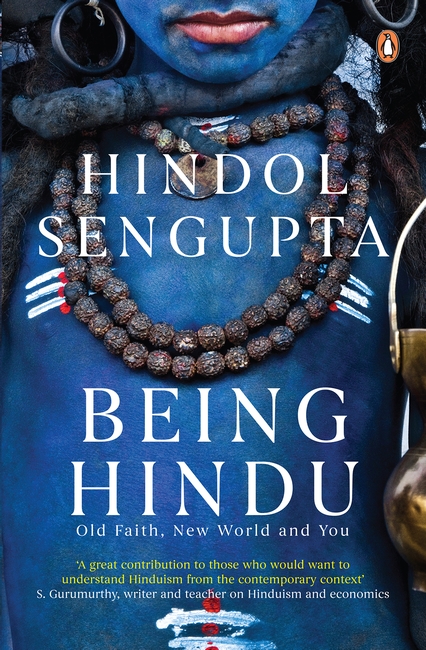
One of the world’s oldest forms of faith, Hinduism has an unbroken trajectory of beliefs and rituals that have continued for many millennia through the footsteps of pilgrims and the pedagogies of theologists; through myth, science and politics. But what does all that mean to the modern Hindu today? Why do Hindus call themselves so? Is it merely because their parents were Hindus? In what way does the faith speak to those who profess to follow it? What does Hinduism mean to the everyday-practising or sometimes-accessing ordinary Hindu? Away from the raucous debate around religion, this is the journey of a common Hind, an attempt to understand why, for so many Hindus, their faith is one of the most powerful arguments for plurality, for unity in diversity, and even more than the omnipresent power of God, the sublime courage and conviction of man.
Being Hindu is an exploration of Hinduism in a way you have never seen before, almost through your own eyes. This is the first book on Hinduism to have won the Wilbur Award given by the Religion Communicators Council of America for excellence in writing about religion.
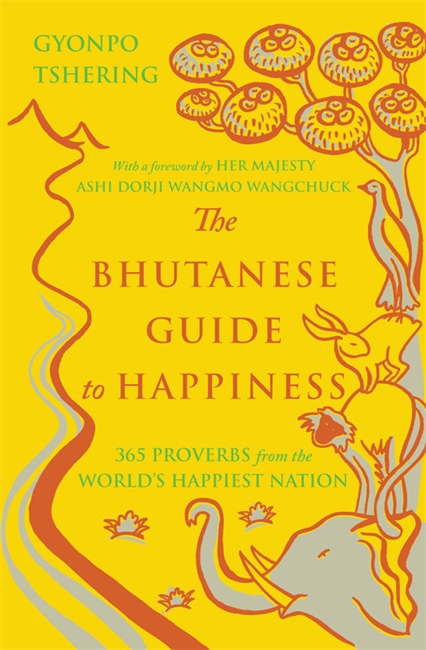
What we can learn from a country where Gross National Happiness is more important than Gross Domestic Product In clear, simple prose, and with poetic turns of phrase, this inspirational collection of quotations-apart from being funny and quirky-reflects the values of the unique country of Bhutan, and its universal embrace of compassion, understanding and kindness. This remarkable little kingdom in the Eastern Himalayas may just hold the secret to lifelong happiness. The Bhutanese grounding in Buddhist
ideals suggests that material and spiritual development should occur side by side- something we can forget too often. So dive into this inspiring collection of wisdom,
proverbs and general sage advice to help you along your own road to happiness-or at least put a smile on your face.

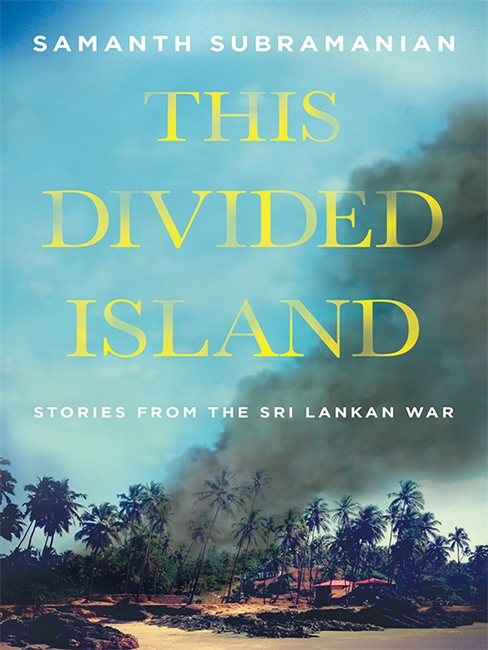
In the summer of 2009, the leader of the dreaded Tamil Tiger guerrillas was killed, bringing to a bloody end the stubborn and complicated civil war in Sri Lanka. For nearly thirty years, the war’s fingers had reached everywhere: into the bustle of Colombo, the Buddhist monasteries scattered across the island, the soft hills of central Sri Lanka, the curves of the eastern coast near Batticaloa and Trincomalee, and the stark, hot north. With its genius for brutality, the war left few places, and fewer people, untouched.What happens to the texture of life in a country that endures such bitter conflict? What happens to the country’s soul? Samanth Subramanian gives us an extraordinary account of the Sri Lankan war and the lives it changed. Taking us to the ghosts of summers past, and to other battles from other times, he draws out the story of Sri Lanka today-an exhausted, disturbed society, still hot from the embers of the war. Through travels and conversations, he examines how people reconcile themselves to violence, how religion and state conspire, how the powerful become cruel, and how victory can be put to the task of reshaping memory and burying histories.This Divided Island is a harrowing and humane investigation of a country still inflamed.
Vinod Mehta’s new book takes forward the story of Lucknow Boy, recounting his experiences in the corridors of power in Delhi. His views on Narendra Modi, Arvind Kejriwal and the Nehru-Gandhi dynasty, and his decoding of coalition politics and the significant changes ushered in by the 2014 Lok Sabha elections, are expressed with his characteristic sharp insights, wit and wisdom. So too are his analyses of the sweeping changes taking place in the print and TV media, and his pen portraits of personalities such as Ratan Tata, Niira Radia, Khushwant Singh, Sachin Tendulkar and Arundhati Roy. Other chapters examine the lack of humour in our political life, the changing aspirations of the Indian middle class, and the mistakes and regrets of his life. Peppered with anecdotes and gossip, every page of this honest, lively and irreverent book is both illuminating and entertaining.