As each chapter echoes a bedtime rumination, Goodnight and God Bless is about books, writers, mice, mothers, airport hotels, and other such unexpectedly thought-provoking subjects. Snugly interwoven with a warmly personal and anecdotal history of the author, this wise and witty book offers an ironic take on nearly everything.
Drawing from her experiences as a woman, mother, daughter, wife and writer, Anita Nair marks over a decade of her literary career with deliciously amusing quotes, mostly unnecessary and unabashed trivia, footnotes and other erudite diversions. This is the perfect book to keep by your bedside, to dip and delve into anytime.

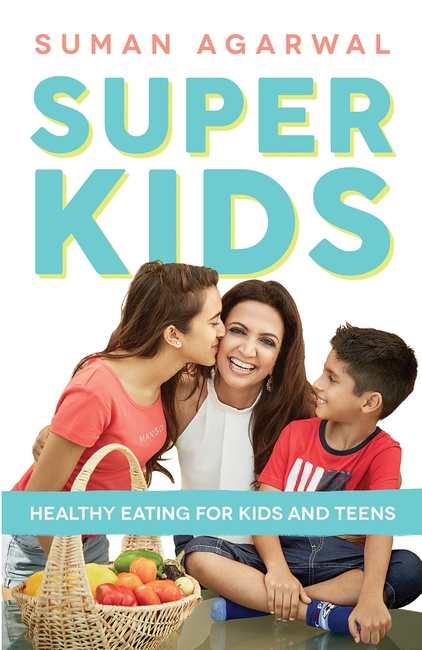
‘Mom, I want to eat something interesting. No more daal–roti, please!’
How many times has your child turned their nose up at dinner? Don’t you wish someone would tell you exactly what this interesting, yummy food is? Do you worry about your child eating too much junk? Do you wish you could make good old ghar ka khana more exciting and appealing? Fret not, Suman Agarwal has answers to all your food and health woes.
Suman provides dozens of super easy, healthy and scrumptious recipes like spinach masala dosa, nachos bhel and chipotle rolls as well as fuss-free desserts and party foods that your children will adore. Complete with simple instructions, photos and calorie indicators, Super Kids is a must-buy for every mum.

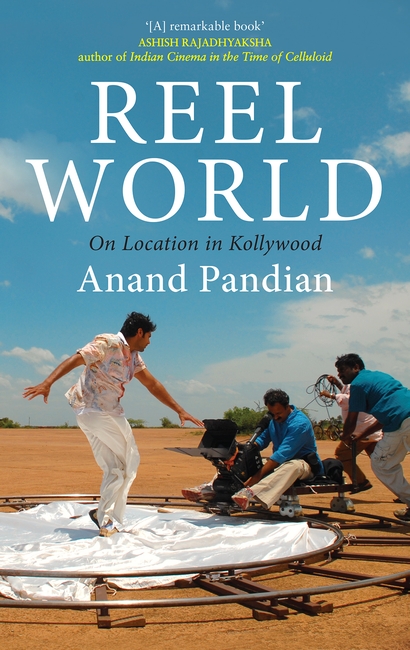
Over the last century, films have changed the way we imagine ourselves and experience the world around us. But what happens to life when the real world begins to look and feel so much like the reel one? And what about those countless craftsmen who make this happen, toiling each day to turn ordinary moments into elements of a cinematic world?
For the last few years, Anand Pandian has trailed some of the most renowned figures in the New Wave of contemporary Tamil cinema, from the studios of Chennai to Switzerland and Kuala Lumpur. His gripping stories reveal how their films come together and sometimes fall apart–the pitched scripts and rickety sets, their stormy fights and digital marvels, the joy of a hit tune and the heartbreak of box office disaster. With an anthropologist’s eye and a cinephile’s zeal, Pandian vividly conjures the frenzied highs and lows of this extraordinary creative process.
Enthralling, original, and written in a dazzlingly experimental style, Reel World is a moving meditation on the power of film, offering rich insight into a fascinating, frenetic world.

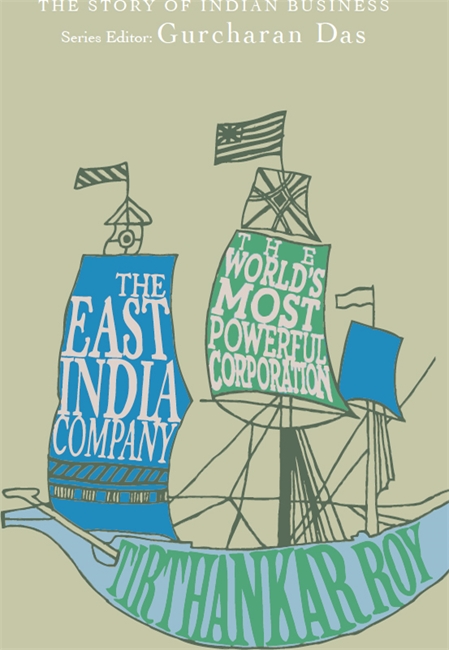
This groundbreaking study examines how the East India Company founded an empire in India at the same time it started losing ground in business. For over 200 years, the Company’s vast business network had spanned Persia, India, China, Indonesia and North America. But in the late 1700s, its career took a dramatic turn, and it ended up being an empire builder.
In this fascinating account, Tirthankar Roy reveals how the Company’s trade with India changed it-and how the Company changed Indian business. Fitting together many pieces of a vast jigsaw puzzle, the book explores how politics meshed so closely with the conduct of business then, and what that tells us about doing business now.
‘One of the first major attempts to tell the company’s story from an Indian business perspective’-Financial Express

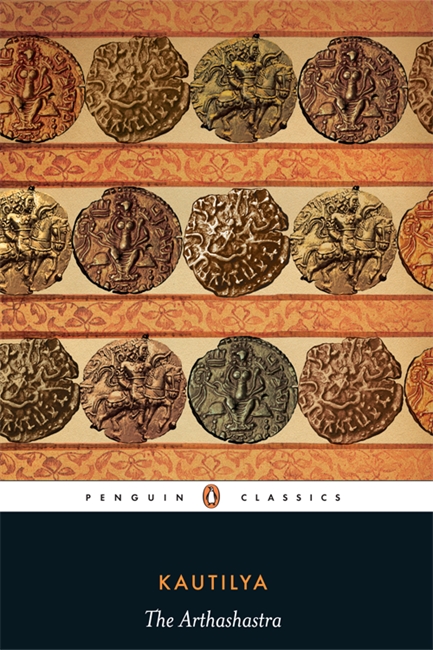
Ascribed to Kautilya (commonly identified as the prime minister of Chandragupta Maurya) and dating back more than 2,000 years, the Arthashastra is the world’s first manual in political economy. It has a pre-eminence in Indian thought that is akin to that of Machiavelli’s The Prince in Europe. Arthashastra (literally, ‘the science of wealth’) is a study of economic enterprise; specifically, Kautilya’s treatise advises the king on the business of creating prosperity. This ancient text provides a fascinating window into the social and economic structures of the time, and into the intricacies of statecraft—for the Arthashastra also addresses the question: what makes a good leader? This book is intended to be an introduction to the economic philosophy of the Arthashastra. Its goal is to analyse the relevance of this classic text in its own time—in a world in which kings were regulators of economic activities of their subjects, but also entrepreneurs themselves—in the conviction that it has much to teach us that has value in our own age

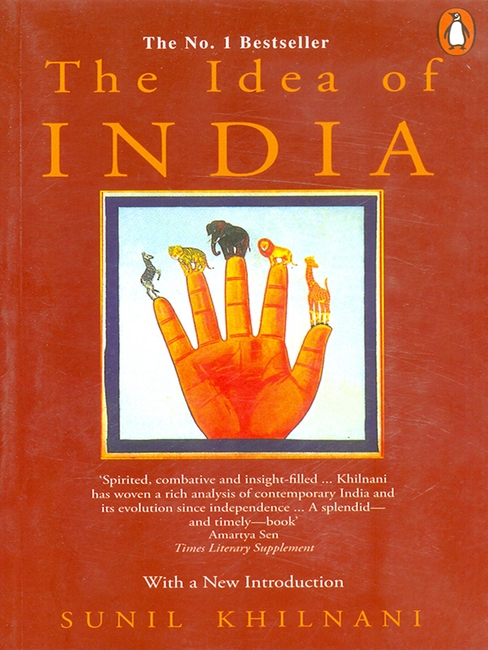
Sunil Khilnani’s exciting book addresses the paradoxes and ironies that have surrounded the project of inventing India-a project that has brought Indians considerable political freedom and carried their enormous democracy to the verge of being Asia’s greatest free state but that has also left many of them in poverty and that is now threatened by divisive religious nationalism.
Khilnani’s superb historical analysis conveys modern India’s energy, fluidity, and unpredictability-in its democracy and its voting patterns, in its visions of economic development, in its diverse cities and devotion to village culture, and in its current disputes over its political identity. Throughout, he provokes and illuminates this fundamental question: Can the original idea of India survive its own successes?

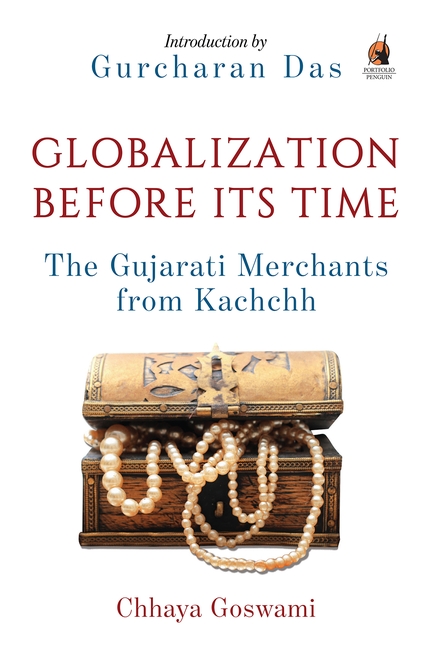
How did the Kachchhi traders build on the Gujarat Advantage?
In the eighteenth and early nineteenth centuries, during the dying days of the Mughal empire, merchants from Kachchh established a flourishing overseas trade. Building on a rich legacy of free trade in pre-modern times between the many ports of Gujarat and the Middle East, the Kachchhis dealt in pearls, dates, spices and ivory with the faraway lands of Muscat and Zanzibar.
The Kachchhi merchants behaved much like today’s venture capitalists. They knew how to grow capital, seek new markets, and create them where they didn’t exist. They also had a phenomenal risk appetite. What they were able to practise was nothing less than the traits of globalization before its time.
This new book in The Story of Indian Business series tells their fascinating story.

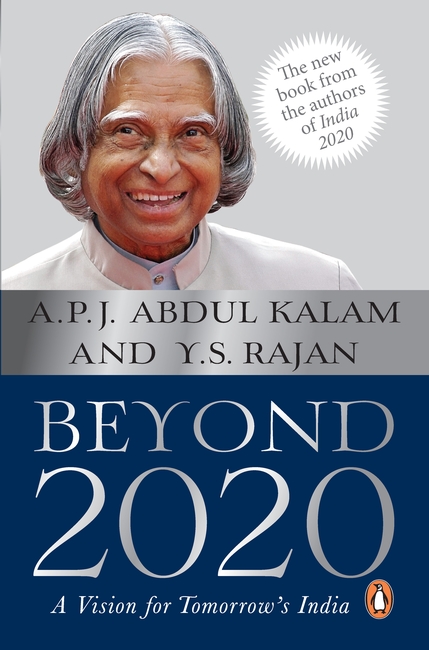
India 2020 is about to become a reality. Are we ready?
In 1998, Dr Kalam and Y.S. Rajan published the now iconic India 2020, a vision document for the new millennium that charted how India could become one of the top five economic powers in the world by 2020. Sixteen years later, as the year 2020 approaches, it is time to take stock of how much India has achieved and what lies ahead.
In many ways, India’s growth story in the twenty-first century has been hamstrung by missed opportunities and slowdowns in project execution; but it has also been marked by new opportunities and emerging technologies that make faster and more inclusive growth viable. A renewed policy focus is now needed for agriculture, manufacturing, mining, the chemicals industry, health care and infrastructure to invigorate these sectors and boost economic growth, argue Kalam and Rajan. Alongside, education, job creation, emerging technologies, biodiversity, waste management, national security and the knowledge economy are some of the other vital areas that we need to build on as we look beyond 2020.
India can still make it to the list of developed nations in a decade. Beyond 2020 provides an action plan for that transformation.
The watershed of the Ganga, or Ganges, lies in the central Himalayas of Garhwal. Hindu tradition identifies the sources of this river as sacred sites. Every year, millions of pilgrims travel to shrines at Yamnotri, Gangotri, Kedarnath and Badrinath. Stephen Alter retraces the original Char Dham Yatra on foot, following ancient routes that crossed the mountains before motor roads were built. At the same time, he navigates the mythology and lore of this natural and spiritual realm, where every tributary and confluence is invested with seminal stories.
The cauliflower. An answer to the prayers of every person on the planet who wants to lose weight, cut down on sugar and stay healthy, while not being hungry all the time. Sounds like a pipe dream? It’s not. The cauliflower is one of the best-kept secrets in the dieting community. It is among the most adaptable and versatile veggies that can blend into any kind of cuisine in the world and is an almost-perfect substitute for several types of starch-flour, cereal, pasta, rice and even the potato-for a fraction of the carb count. Besides being low in carbs, the cauliflower is gluten-free and high in nutrients. In The Cauliflower Diet, learn how the amazingly adaptable cauliflower can be used in the preparation of all the things you love: rice, upma, cookies and even pizza! Perfect for all types of weight loss, this humble vegetable will help you shed the kilos in no time.