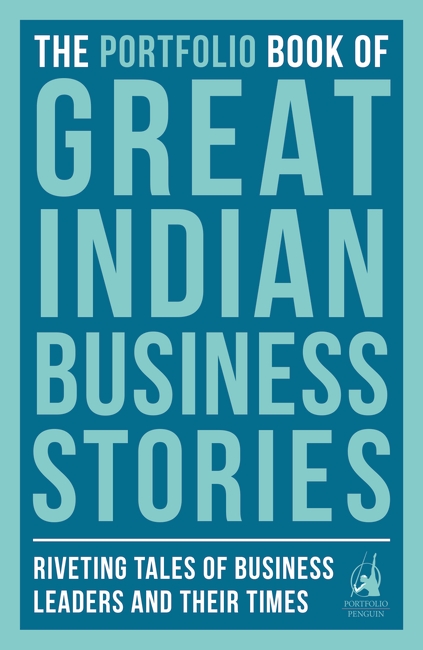
How did Dhirubhai Ambani build a polyester plant in record time?
What made J.R.D. Tata launch India’s first airline?
How did Vijay Mallya wrest control of Shaw Wallace from Manu Chhabria?
Why did Bhai Mohan Singh fall out with his favourite son and lose control of Ranbaxy?
The Portfolio Book of Great Indian Business Stories contains excerpts from a selection of the finest business books published by Penguin Portfolio. This anthology features snippets from the lives of some of the most eminent business leaders India has seen-M.S. Oberoi, Ratan Tata, Aditya Birla and Rahul Bajaj, among others. There are tales of outstanding successes, crushing failures, extraordinary challenges and relentless determination, some of which chronicle the times when these legends were just simple businessmen trying to make a mark. The grit and ruthless persistence of these men defined who they were and the legacies they left behind.

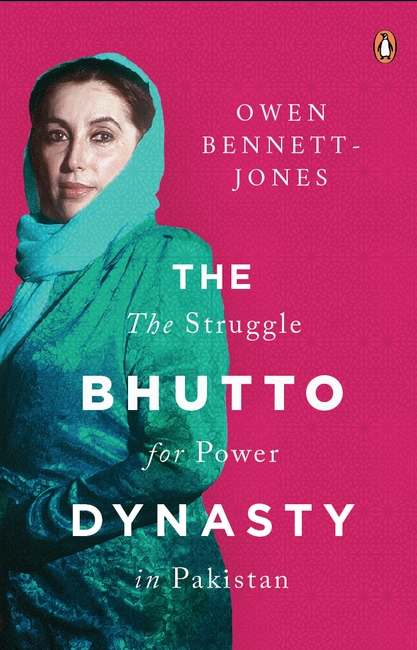
The Bhutto family has long been one of the most ambitious and powerful in Pakistan. But politics has cost the Bhuttos dear. Zulfikar Ali Bhutto, widely regarded as the most astute politician in the country’s history, was removed from power in 1977 and executed two years later, at the age of fifty-one. Of his four children, three met unnatural deaths: Shahnawaz was poisoned in 1985 at the age of twenty-seven; Murtaza was shot by the police outside his home in 1996, aged forty-two; and Benazir Bhutto, who led the Pakistan Peoples Party and became Prime Minister twice, was killed by a suicide bomber in Rawalpindi in 2007, aged fifty-four.
Drawing on original research and unpublished documents gathered over twenty years, Owen Bennett-Jones explores the turbulent existence of this extraordinary family, including their volatile relationship with British colonialists, the Pakistani armed forces and the United States.

Business as usual’ isn’t working. There is an emerging consensus that all is not well with today’s market-centric economic model. Although it has delivered wealth over the last half-century and pulled millions out of poverty, it is recession-prone, leaves too many people unemployed, creates ecological scarcities and environmental risks, and widens the gap between the rich and the poor.
In Corporation 2020, Pavan Sukhdev lays out a sweeping new vision for tomorrow’s corporation: one that will increase human well being and social equity, decrease environmental risks and ecological losses, and still generate profit. Sukhdev illustrates his vision with examples ranging from Infosys’s creation of human capital to Citibank’s having to change its project finance policy due to rainforest destruction. From its insightful look into the history of the corporation to the thoughtful discussion of the steps needed to craft a better corporate model, Corporation 2020 offers a hopeful vision for the role of business in shaping a more equitable, sustainable future.
Only too often, we falter when it comes to completing a task properly and on time. It is the last 10 per cent that seems to elude us-and this usually results in a negative customer experience.
But then some companies-Wal-Mart, Starbucks, Nestlé and Southwest Airlines, to name a few-are far ahead of the curve: they have customers at the heart of whatever they do.
What do these companies do that sets them apart? They genuinely believe in delivering a great customer experience; the thinking that accompanies this belief makes all the difference.
The Last Ten Per Cent shows us how to go that extra mile.
Do you shy away from situations that require you to speak in English? Do you wish to command an army of words at a moment’s notice? Filled with innovative and practical learning devices, this book is a comprehensive guide to mastering the art of reading, writing and speaking English. As a learner who has spent many years navigating the treacherous slopes of the language, Manish Gupta understands the challenges faced by an Indian learner. He recounts his own struggles and narrates his interactions with people to outline tips and tricks to improve vocabulary, pronunciation and spoken English.

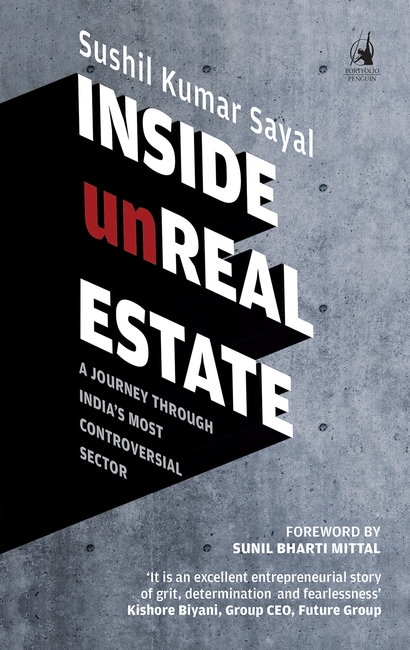
A candid tell-all tale of India’s most debated sector
Starting off as a trainee engineer, Sushil Kumar Sayal was determined to be a success in real estate, at a time when it was viewed as an unscrupulous profession. He has since worked with companies like Mahindra Gesco, DLF and Alpha G, and has played a significant role in establishing the Real Estate Asset Management (REAM) model in the country. In his fast-paced memoir are many anecdotes of dodgy builders, maverick investors and corrupt bureaucrats..

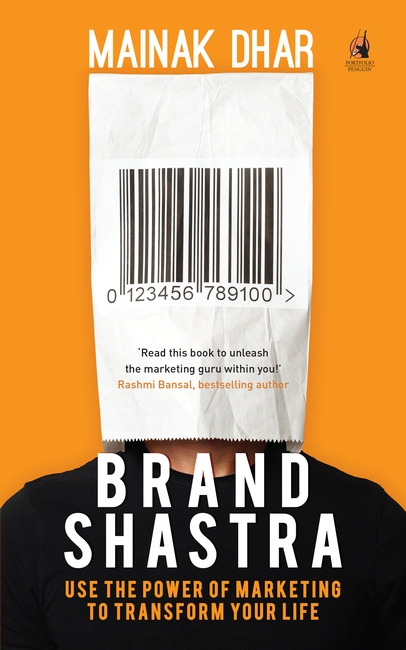
What is the similarity between selling a brand and standing out for promotion? Can the principles of B2B marketing really give marriage a happily ever after? Is using celebrities to sell shampoo the same thing as getting references for your resume? How can lessons from the branding of Starbucks and McDonald’s change your life?
This is not the sort of marketing you learn in business schools, but more a science which influences human perception and through it, behaviour. From the days of Adam, this is that power we all understand intuitively and use every day. From losing weight to implementing better work-life balance to how we incentivize conduct in our friends and colleagues—there are lessons and insights in the book that you’ll find yourself relating to and applying in how you lead your life.
Combining the business and branding experience of a CEO, with the storytelling ability of a novelist, Mainak Dhar’s Brand Shastra will stimulate, inspire and entertain.

Business law in medieval and early modern India developed within the voluminous and multifaceted texts called the Dharmashastras. These texts laid down rules for merchants, traders, guilds, farmers, and individuals in terms of the complex religious, legal, and moral ideal of dharma.
This exciting book provides a new perspective on commercial law in this period. In addition to a description of the substantive rules for business, the book reinterprets the role of business and commerce within the law generally and demonstrates that modern assumptions about good business practice could benefit from the insights of this ancient tradition. It thus makes a compelling case for the relevance of the dharma of business to our own time.

Financial Affairs of the Common Man presents a collage of the various aspects of personal finance management that every individual should pay heed to. It introduces the concepts that you must understand to effectively plan your finances, and provides the tools and the knowledge needed to do so.
Read this book, written with the common man in mind using easy-to-understand language, to understand the power of compounding and the effects of inflation on investments. It’s time to familiarize yourself with mutual funds and SIPs, and to gain a deeper insight into the making of personal balance sheets and income tax provisions.
Do you feel like throwing in the towel, but want to be a great leader? Would you like to build an organization? Do you want your child to be the best she can be? If you answered yes to any of these questions, The Habit of Winning is the book for you. It is a book that will change the way you think, work and live, with stories about self-belief and perseverance, leadership and teamwork-stories that will ignite a new passion and a renewed sense of purpose in your mind.
The stories in The Habit of Winning range from cola wars to cricketing heroes, from Michelle Obama’s management techniques to Mahatma Gandhi’s generosity. There are life lessons from frogs and rabbits, sharks and butterflies, kites and balloons. Together they create a heady mix that will make the winner inside you emerge and grow.