



Focusing on the Hindustan Socialist Republican Army (HSRA), A Revolutionary History . . . delivers a fresh perspective on the ambitions, ideologies and practices of this influential organization formed by Chandrashekhar Azad and Bhagat Singh, and inspired by transnational anti-imperial dissent. It is a new interpretation of the activities and political impact of the north Indian revolutionaries who advocated the use of political violence against the British.
Kama Maclean contends that the actions of these revolutionaries had a direct impact on Congress politics and tested its policy of non-violence. In doing so she draws on visual culture studies, demonstrating the efficacy of imagery in constructing-as opposed to merely illustrating-historical narratives. Maclean analyses visual evidence alongside recently declassified government files, memoirs and interviews to elaborate on the complex relationships between the Congress and the HSRA, which were far less antagonistic than is frequently imagined.
Catagory: Non Fiction
non fiction main category
Fourteen Years with Boss
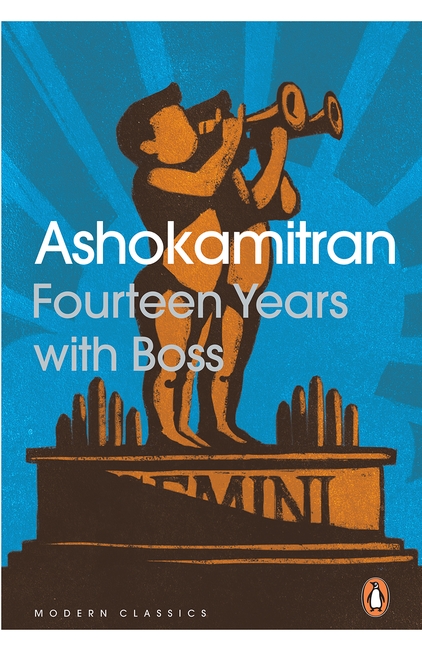
Reminiscing of a time long lost, Fourteen Years with Boss gives a delightful insight into the workings of the Gemini Studios of Madras-one of the most influential film-producing organizations in India-and its founder, the brilliant and multifaceted S. S. Vasan.
Filled with vivid sketches of actors, extras, directors and the ‘boss’, Ashokamitran recreates life at the studio so that it materializes in the reader’s mind with the perfect balance of humour and nostalgia.
Manipal and Beyond
As a young man in the immediate post-Independence era, Ramdas Pai was captivated by the nation-building fervour of the times and the opportunities for enterprise. The old-school entrepreneurs of those days envisioned their endeavours as contributory to nation-building. A fine example of this patriotic mindset was Ramdas’s own father, T.M.A. Pai, who dotted the landscape of the then South Canara district with his educational institutions. Undaunted by sceptical bystanders and numerous obstacles, the elder Pai contrived a community-based, participatory model for the funding and sustainability of these institutions, and then offered them to Morarji Desai, the then prime minister, as a gift to the nation.
As heir to these early accomplishments in private-sector education and healthcare, Ramdas ushered in an era of professionalism, revamping concepts and systems, developing colleges and hospitals into institutions of excellence, and consolidating them into his father’s dream of a university in Manipal. Ramdas leads a committed group of over 20,000 colleagues in seventy institutions, including six universities, in five countries. Bold, pragmatic and upright, Ramdas is the role model for Team Manipal.
This book is more than just the story of an institution builder. It highlights the harsh regulatory environment of education on the one hand, and the temptations of profiteering in a suppliers’ market on the other hand.
Bliss
Everyone is searching for happiness, but they are looking in the wrong place-outside. Real happiness, bliss, can only be found by going inside. Commenting on the ancient wisdom of the Shiva Sutras, Osho shows how to avoid the outside traps of desire and attachment. If you can learn the knack of dis-identifying with the mind, you will find that bliss is hidden within all of everyday experience. Being human happens when you get out of the vicious circle called mind.
Restart
In Restart, Mihir S. Sharma shows what can and must change in India’s policies, its administration and even its attitudes. The answers he provides are not obvious, and require courage. Nor are they all comforting or conventional. Yet they could, in less time than you can imagine, unleash the creativity of a billion hopeful Indians.
Another 100 Lyrics
A delightful new collection from the master lyricist
After the great success of 100 Lyrics, this new volume contains a hundred more of Gulzar’s marvellous compositions.
Gulzar has brought a rare poetic sensibility to popular Hindi film music over a five-decade-long career, and this collection showcases some of his best work, from early lyrics like ‘Ganga aaye kahan se‘ (Kabuliwala, 1961) and ‘Koi hota jisko apna‘ (Mere Apne) to classics such as ‘Tere bina jiya jaye na‘ (Ghar), ‘Do naina aur ek kahani‘ (Masoom) and ‘Roz roz ankhon taley‘ (Jeeva) and later blockbusters like ‘Goli maar bheje mein‘ (Satya), ‘Beedi jalai le‘ (Omkara), ‘Dhan te nan‘ (Kaminey), ‘Dil toh bachcha hai ji‘ (Ishqiya), ‘Challa‘ (Jab Tak Hai Jaan) and ‘Bismil‘ (Haider). In addition, Another 100 Lyrics contains some brilliant poems from non-film albums like Dil Padosi Hai, Marasim, Ishqa Ishqa and Koi Baat Chale.
Complete with anecdotes about the compositions of some of these lyrics and photographs from Gulzar’s personal collection, Another 100 Lyrics is a true collector’s item.
SuperEconomies: America, India, China and the Future of the World
Our times are characterized not by estranged Superpowers building formidable arsenals but by engaged societies building a robust global economy. Emerging countries are redefining the geo-economic (and geopolitical) dynamic; in the new world order, a soaring GDP and a booming population are the true indicators of a nation’s strength.
The twenty-first century will be led, Raghav Bahl says, by a handful of SuperEconomies-large, prosperous countries with a high growth rate, ranking among the world’s top trading partners, commanding 15 to 20 per cent of global GDP, having nuclear arms but using economic leadership to effect significant change. The USA and China qualify automatically as the two existing SuperEconomies.
With its demographic advantage, a surplus of skilled labour, a GDP that is expected to jump from $2 trillion to over $5 trillion by 2025, a strategic geographic location and a new, decisive political leadership, India has every chance, Bahl argues, of becoming the third SuperEconomy. As the world’s largest democracy, its arrival will enhance global stability and ensure that the balance of power remains free, fair and representative of the people.
Drawing on history, current affairs and political and economic analyses, SuperEconomies projects how India can soon become a world leader and help secure a future of peace and prosperity for all.
Kama Sutra
Treating pleasure as an art, Kama Sutra is a handbook covering every aspect of love and relationships. Its seven sections are devoted to everything from social life to detailed instruction on sexual techniques. This beautiful new edition dispels the well-worn image of an erotic Oriental curiosity, highlighting the work’s historical importance as a sophisticated guide to living well. Conveying all the original flavour and feel of this elegant, intimate and hugely enjoyable work, this clear, accurate translation is a masterpiece of pithy description and a wry account of human desires and foibles.
One Part Woman
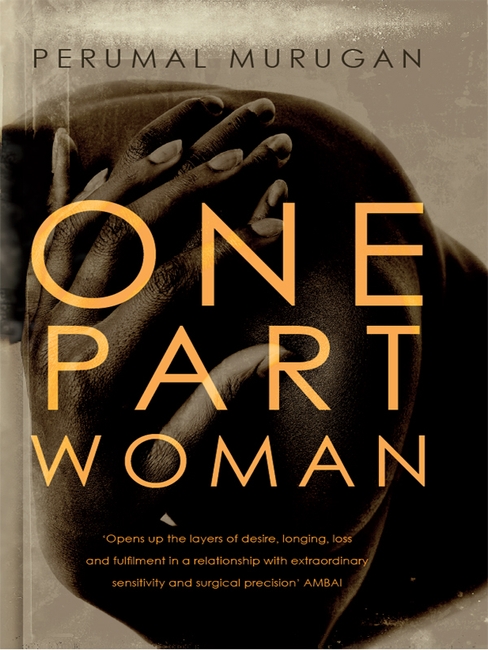
All of Kali and Ponna’s efforts to conceive a child-from prayers topenance, potions to pilgrimages-have been in vain. Despite being in aloving and sexually satisfying relationship, they are relentlessly houndedby the taunts and insinuations of the people around them.Ultimately, all their hopes and apprehensions come to converge on thechariot festival in the temple of the half-female god Ardhanareeswaraand the revelry surrounding it. Everything hinges on the one night whenrules are relaxed and consensual union between any man and woman issanctioned. This night could end the couple’s suffering and humiliation.But it will also put their marriage to the ultimate test.Acutely observed, One Part Woman lays bare with unsparing clarity arelationship caught between the dictates of social convention and the tugof personal anxieties, vividly conjuring an intimate and unsettling portraitof marriage, love and sex.
Not Out!
Chronicling the Indian Premier League (IPL), India’s first sports league and the most controversial ever, this book explores the intricacies of the business and the acceptability of the IPL to take a closer look at the various scams that have plagued it. It is a blow-by-blow description of the highs, lows, and future of the IPL that has, possibly, redefined the way the rest of the world perceives India. It analyses what the league got right and what it has got wrong and why. And, what the IPL and its owner/promoter-the Board of Control for Cricket in India (BCCI)-could have done to sell the sport and build on the popularity of cricket in India, but didn’t. Analysing the spot-fixing scandal, the conflict of interest controversy, the specific issues concerning the teams, the complicated interplay between the BCCI and the IPL, this thought-provoking work brings to light many untold stories of cricket in India.