The universe has bestowed limitless powers and infinite siddhis on the human consciousness. Along with being effective and successful in the personal and professional spheres, the purpose of human life is also to ensure the complete blossoming of the individual consciousness. In Celebrating Life, Rishi Nityapragya shares the secrets that can help you explore your infinite potential. He offers an in-depth understanding of how to identify and be free from negative emotions and harmful tendencies, and how to learn to invoke life’s beautiful flavours-like enthusiasm, love, compassion and truth-whenever and wherever you want.
Celebrating Life is an intensely honest expedition that teaches you how you can be a master of your circumstances and make your life a celebration.

In this rich, eye-opening and uplifting anthology, dozens of esteemed writers, poets, artists and translators from more than thirty countries offer a profound, kaleidoscopic portrait of lives transformed by the coronavirus pandemic.
As COVID-19 has become the defining global experience of our time, writers offer a powerful antidote to the fearful confines of isolation: a window onto corners of the world beyond our own. And We Came Outside and Saw the Stars Again takes its title from the last line of Dante’s Inferno, when the poet and his guide emerge from hell to once again behold the beauty of the heavens. In that spirit, the stories, essays, poems, and artwork in this collection detail the harrowing realities of the pandemic, while pointing toward a more connected future.

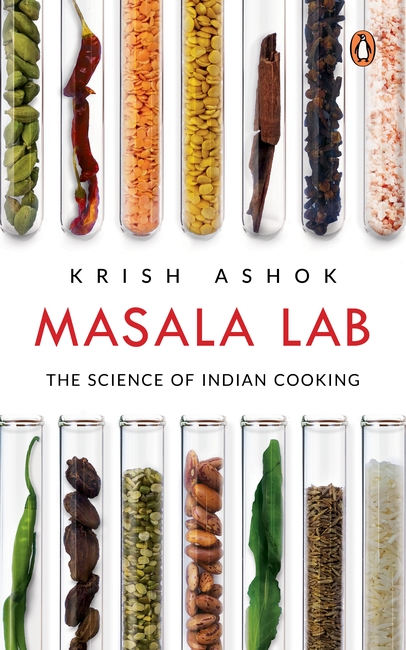
Ever wondered why your grandmother threw a teabag into the pressure cooker while boiling chickpeas, or why she measured using the knuckle of her index finger? Why does a counter-intuitive pinch of salt make your kheer more intensely flavourful? What is the Maillard reaction and what does it have to do with fenugreek? What does your high-school chemistry knowledge, or what you remember of it, have to do with perfectly browning your onions?
Masala Lab by Krish Ashok is a science nerd’s exploration of Indian cooking with the ultimate aim of making the reader a better cook and turning the kitchen into a joyful, creative playground for culinary experimentation. Just like memorizing an equation might have helped you pass an exam but not become a chemist, following a recipe without knowing its rationale can be a sub-optimal way of learning how to cook.
Exhaustively tested and researched, and with a curious and engaging approach to food, Krish Ashok puts together the one book the Indian kitchen definitely needs, proving along the way that your grandmother was right all along.

A wave of entrepreneurship has been sweeping across India. The success of start-ups like Flipkart, Snapdeal, Paytm, Ola and others has veered the discourse towards high valuations.
But what we mostly see is very much the tip of the iceberg. Behind every high valuation of today is a story of blood, sweat, toil and tears. For every entrepreneur who has an amazing success story to tell, there are countless others who have fallen by the wayside. The going has often been a far cry from the presumed romance of breaking the mould, disrupting the order and changing the world.
It is a desire to change the world that drives successful entrepreneurs, for they alone have the blind passion that is often the difference between success and failure, and they are the ones who love the journey more than the destination.
Today, when questions are being asked whether the start-up party is nearing its end, whether we will soon see a rerun of the dot-com bust of the early noughties, it is time to remember India’s start-up warriors.
This is the story of their remarkable journeys. Some found their destination. Some did not.

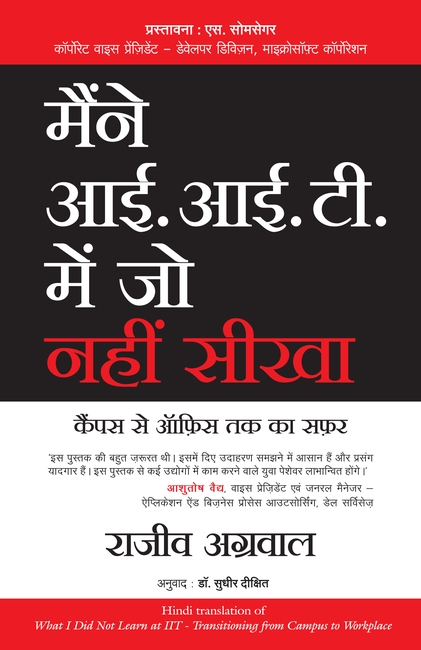
This is Hindi Translation of English Book What I Did Not Learn at IIT written by Rajeev Agarwal.
Every year graduating engineers are told that they are destined for success. But what are the habits and behaviours that actually lead to success? In What I did not learn at IIT, Rajeev Agarwal, the Founder and CEO of MAQ Software, has distilled decades of life experience into one accessible and informative guide. In simple language, he explains the success techniques he applied and what worked for him.
Encouraging graduates to look at their careers over a 40-year span, Rajeev explains that successful people choose to be passionate about every job they have. Using a skillful combination of personal stories and checklists, What I did not learn at IIT provides students—young and old—with a roadmap for success.
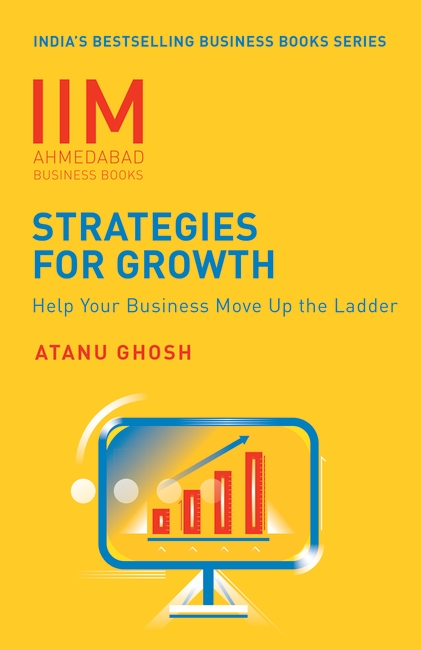
Every organization—small or large, managed professionally or by a family—wants to grow. Strategies for Growth explores the different expansion strategies companies adopt, and the management and marketing challenges they face along the way. Amply illustrated with business experiences from the Indian context—such as those of Bharti Airtel, Amul, GE, Infosys, Compaq, and HP—this book tells you all you need to know to make the best decision for your company.
The IIM Ahmedabad Business Books bring key issues in management and business to a general audience. With a wealth of information and illustrations from contemporary Indian businesses, these non-academic and user-friendly books from the faculty of IIM Ahmedabad are essential corporate reading.
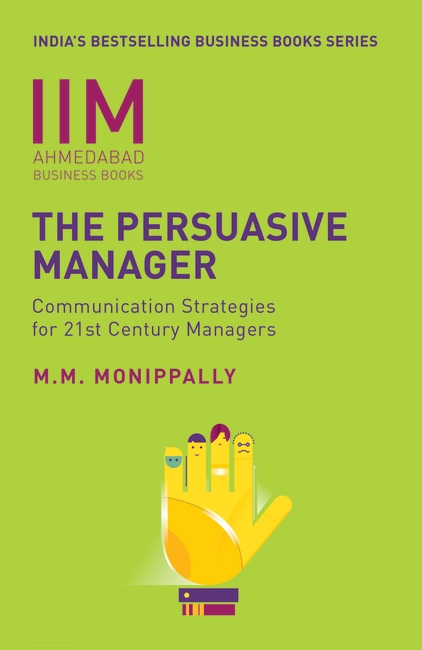
The Persuasive Manager argues compellingly that strategic communication lies at the core of business leadership, and helps organizations run smoothly and effectively. What is persuasion, and how should managers balance their ability to persuade and exercise authority without becoming authoritarian? If credibility and mutual goodwill are to be established, then the need to inspire loyalty and build interpersonal relationships becomes an essential managerial strategy. The book explores the role of persuasion at different levels of the corporate hierarchy—how does a manager convince her subordinates to initiate change? How can peers, or customers and suppliers, be won over and their opinions influenced? Persuading bosses is a particularly tricky business, so how does one use the perfect mix of tact, reasoning, discussion, and ingratiation? With its wealth of real-world illustrations, scenarios, and tips, The Persuasive Manager is the perfect communications roadmap for all managers.
The IIM Ahmedabad Business Books bring key issues in management and business to a general audience. With a wealth of information and illustrations from contemporary Indian businesses, these non-academic and user-friendly books from the faculty of IIM Ahmedabad are essential corporate reading.

From the anchor of the incredibly popular NDTV Good Times show, Royal Reservation
On her show, Amrita Gandhi has been a welcome guest to royal families
all over India. Live like a Maharaja: How to Turn Your Home into a Palace
is her treasure trove of royal lifestyle tips and secrets that will change
the way you live. Discover the art of setting a dining table from
the royal house of Rampur; learn how to accessorize your chiffon sari
like Maharani Gayatri Devi of Jaipur; uncover Saif Ali Khan’s style
commandments and master the secrets of an authentic Hyderabadi
biryani from the chefs of the Falaknuma Palace.
Full of great advice on how to create luxury out of the ordinary,
this book is an exciting journey into the lives and homes of India’s
royal families, revealing the prized lifestyle secrets that will make
kings and queens of all of us.