



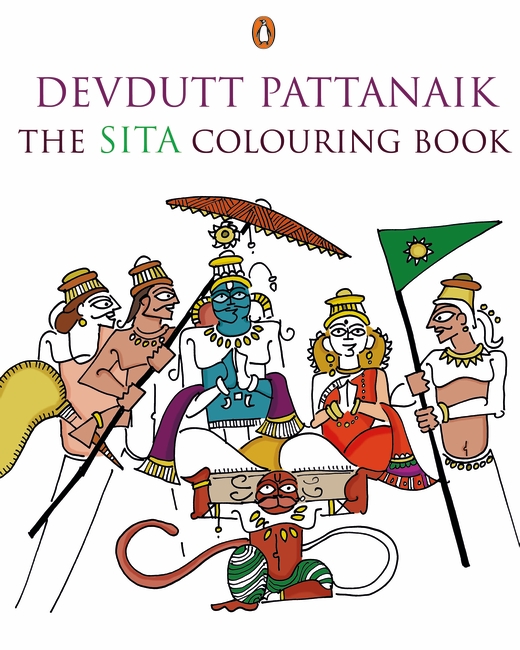
Relive the fabulous story of the Ramayana through 108 illustrations to be coloured in.
The Sita Colouring Book, based on Devdutt Pattanaik’s bestselling retelling of the Ramayana, is a fascinating colouring journey for you to embark on.
From the very beginning of the great epic, the birth of Dashratha’s four sons, to the passing of Lakshman and Ram at the very end, the remarkably simple yet multilayered story of the Ramayana comes alive through Devdutt’s wonderful illustrations.
Rediscover some of the most dramatic moments of the great Indian epic, from Ram’s breaking of the great bow to the abduction of Sita, from the sacking of Lanka to the building of the bridge across the sea, from the slaying of Ravana to Sita’s trial by fire.
Imagine the way the Dandaka forest, Kishkindha, Lanka and Ayodhya might have looked, and colour them in all their glory, along with portraits of unforgettable personages like Hanuman, Jambuvan, Jatayu, Surpanakha, Kumbhakarna and Ravana.
This is a great colouring adventure that readers of all ages will thoroughly enjoy.
Catagory: Non Fiction
non fiction main category
The Jaya Colouring Book
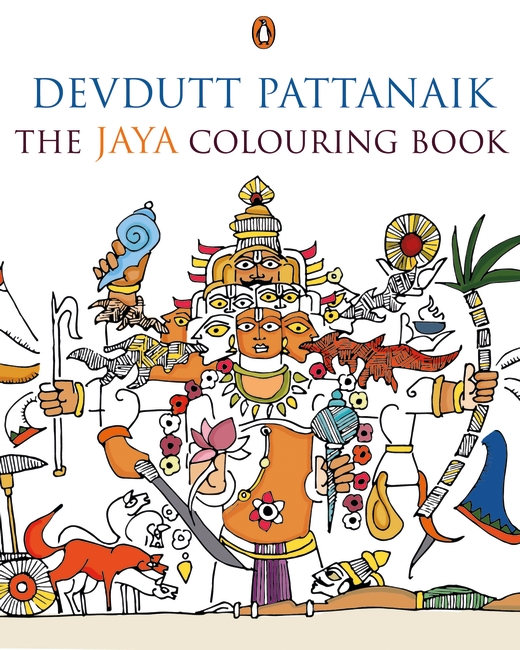
Relive the great Indian epic the Mahabharata through 108 illustrations to be coloured in.
The Jaya Colouring Book, based on Devdutt Pattanaik’s bestselling retelling of the Mahabharata, is a tremendous colouring adventure for you to embark on.
From the very beginning of the great epic (which Vyasa narrates as Ganesha writes the story down) till the dramatic end (when Yudhishtira is horrified to discover the Pandavas and Draupadi in Naraka), the entire story of the Mahabharata unfolds through Devdutt’s inimitable illustrations.
Relive the drama of the greatest story ever told, from the birth of the Kauravas and Pandavas to Draupadi’s swayamvara, the game of dice, the years in exile, and finally the great war of Kurukshetra.
Let your imagination run riot as you colour in the battle scenes-Krishna narrating the Bhagavad Gita to Arjuna, Bhima’s slaying of Dusshasana and Duryodhana, and the deaths of Karna, Drona and Bhishma.
This is a great colouring adventure that readers of all ages will thoroughly enjoy.
Home Truths
This book focuses on Indian single mothers and explores their lives, with their attendant dilemmas and challenges. The author details a phenomenon that is fast becoming common. Deftly using a free-flowing narrative, she raises questions about marriage, children and relationships. This seminal work draws attention to truths that usually lie buried in the rubble of daily life and conventional social sciences.
Vikram Sarabhai
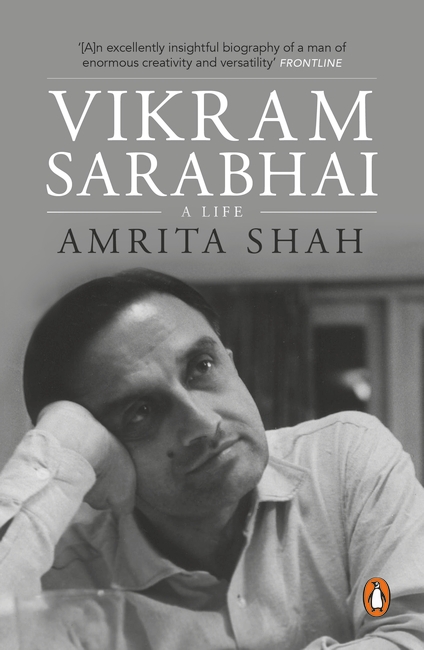
Vikram Sarabhai (1919-71), the renaissance man of Indian science, visualized the impossible and often made it happen. Founder of India’s space programme, Vikram dreamed of communication satellites that would educate people at a time when even a modest rocket programme seemed daring; of huge agricultural complexes serviced by atomic power and desalinated sea water. He envisioned research technology that would free Indian industry from foreign dependence, and of a world-class management college that would train managers for the public sector.
Vikram Sarabhai: A Life is the story of this dynamic visionary. Born into an immensely wealthy and politically conscious business family, Vikram had an early understanding of the power of money and the problems of a newly independent nation, to which he married a deep love for physics. Between 1947 and 1971, he built a thriving pharmaceutical business, conducted research into cosmic rays, set up India’s first textile research cooperative, ATIRA, the first market research organization, ORG, the Indian Institute of Management in Ahmedabad and the dance academy Darpana. He also headed the Atomic Energy Commission and laid the foundations for the world’s first entirely peaceful space programme.
Good-looking, charismatic, married to the glamorous classical dancer Mrinalini, and closely associated with the most influential figures of his time-C.V. Raman, Jawaharlal Nehru, Indira Gandhi, Homi Bhabha, Bruno Rossi, Louis Kahn and John Rockefeller III-Vikram seemed to have led a charmed existence. Yet, his personal life was troubled and his strong resistance to India’s move towards a nuclear explosion in the late 1960s put him at odds with powerful lobbies and fellow technologists.
Amrita Shah delves into the life and mind of this fascinating, complex individual. This is a vivid and intimate portrait of a multifaceted genius who died young, but whose vision still drives India’s ambitious space programme and inspires Indians in all walks of life.
The Emergency: A Personal History
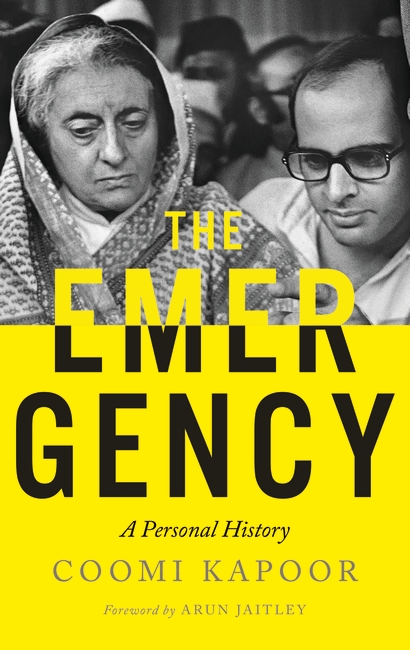
In June 1975, Coomi Kapoor was a young reporter at the Indian Express in Delhi, when Indira Gandhi declared a state of Emergency, suspending civil liberties and sending opposition leaders to prison. In the dark days that followed, she personally experienced the full fury of the Emergency-her journalist husband was imprisoned on flimsy charges under the draconian MISA (Maintenance of Internal Security Act), and her brother-in-law, Jana Sangh MP Subramanian Swamy, was on the run to evade arrest, while her family faced constant threats and harassment from the security forces.
Meanwhile, Indira Gandhi, her son Sanjay and his coterie unleashed a reign of terror that saw forced sterilizations, brutal ‘beautification‘ drives that left thousands of people homeless overnight, and students and other innocent people jailed without cause or trial, while the press was firmly muzzled under strict censorship rules.
This eyewitness account of the Emergency vividly recreates the drama, the horror, as well as the heroism of a few, during those nineteen months, 40 years ago, when democracy was derailed.
The Mind of a Terrorist
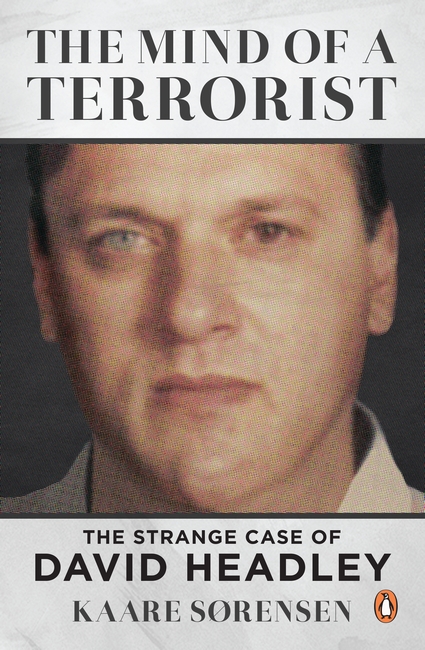
David Headley, the American-Pakistani also known as Daood Gilani, lived a double life. One day he would stroll through Central Park in his tailored Armani suit as a true New Yorker, and the next he would browse in the bazaar in Lahore wearing traditional Pakistani clothes. One day he would drink champagne at the most extravagant clubs; on another he would prostrate himself in prayer in remote Pakistan and pledge fidelity to Allah.
Born in 1960, the son of an American mother and Pakistani father, with one blue eye and one brown, Headley grew up between East and West. He was attracted to both worlds, even working as an informant for the US government, until one day he found he had to choose between the place of his birth and a radical form of Islam preaching global jihad. This is the disturbing story of the mastermind behind the 2008 attacks in Mumbai that killed 166 people-who, two months later, flew to Copenhagen to plan another act of terror with the help of al-Qaeda sleeper cells in Europe.
Veteran journalist Kaare Sørensen has reconstructed his movements and planning in a tense feat of reportage. His account, based on extensive reporting, eyewitness interviews, and documentation, including wiretaps, court transcripts, and emails by Headley accessed from a chat room cache of 9000 messages, offers unprecedented insight into the mind of the terrorist.
Rage of the River
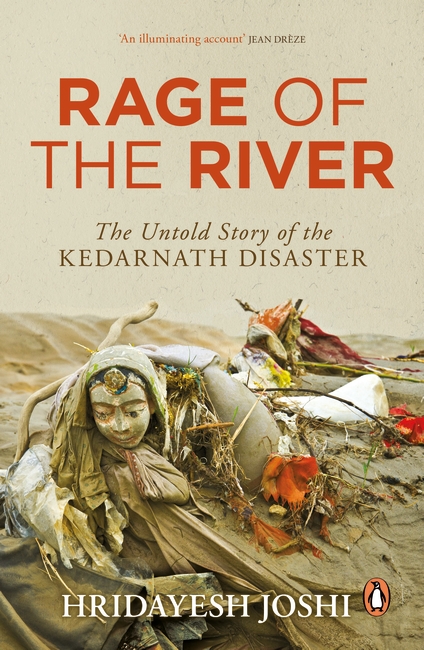
On 17 June 2013, a normally calm Mandakini came crashing down from the hills in Uttarakhand and destroyed everything in its path: houses, bridges, dams and the town of Kedarnath. Thousands of people perished and lakhs lost their livelihood.
Three years after the disaster, stories from the valley-of pain and sorrow, the state government’s indifference and the corporate goof-ups, and the courage and heroism shown by the locals in the face of an absolute catastrophe-still remain largely unheard of.
While the government continues to remain in denial and chooses to ignore the environmental issues in Uttarakhand, the ravaged Kedarnath valley continues to haunt us-though the temple has been restored, given its religious importance and centrality to the local economy.
NDTV journalist Hridayesh Joshi covered the floods in 2013, exposing the government’s apathy and inefficiency. He was the first journalist to reach Kedarnath after the disaster and brought to light the stories from the most-remote parts of the state: areas cut off from the rest of the world.
Woven into this haunting narrative is also the remarkable history of the ordinary people’s struggle to save the state’s ecology. Rage of the River is a riveting commentary on the socio-environmental landscape of Uttarakhand and is filled with vivid imagery of the calamity.
Hashimpura
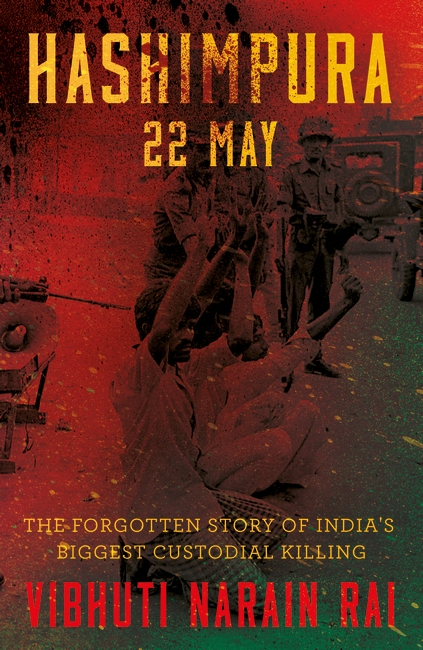
The forgotten story of India’s biggest custodial killing
Searching for survivors among the blood-soaked bodies strewn around the canal and between the ravines near Makanpur village, on the Delhi-Ghaziabad border, on the night of 22 May 1987, with just a dim torchlight-the memories are still fresh in Vibhuti Narain Rai’s mind. On that fateful night, when Rai first heard about the killing, he could not believe the news until he, along with the district magistrate and a few other officials, went to Hindon canal. He quickly realized that all of them had become witnesses to secular India’s most shameful and horrendous incident-personnel of the Provincial Armed Constabulary (PAC) had rounded up dozens of Muslims from riot-torn Meerut and had killed them in cold blood in Rai’s area of jurisdiction.
Offering a blow-by-blow account of the massacre and its aftermath, Hashimpura is a screaming narrative of the barbaric use of state force and the spineless politics in post-Independent India.
Who Moved My Interest Rate
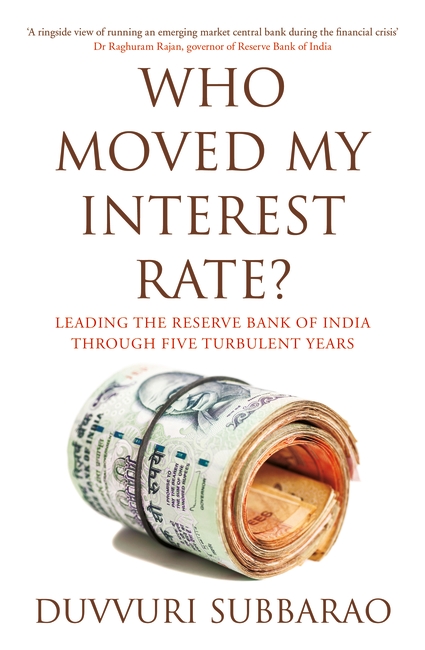
Duvvuri Subbarao’s term as the governor of the Reserve Bank of India from 2008 to 2013 was by all accounts an unusually turbulent period for the world and for India. The global financial crisis erupted within a week of his assuming office. Then, just as the impact of the crisis on India ebbed, the action shifted to combating a decade-high, stubborn inflation during 2009¬¬¬¬-11, which segued into a battle against a sharp depreciation of the rupee starting mid-2012. Who Moved My Interest Rate is an insider’s account of the dilemmas and quandaries Subbarao confronted while leading the Reserve Bank through these extraordinary economic and political challenges.
Subbarao’s five years at the Reserve Bank also marked an intellectually vigorous period for central banking around the world. Not only did the global financial crisis test the policy force of central banks, but it also raised several questions about the breadth of their mandates and the limitations of their autonomy and accountability. While much of the existing debate is set in the advanced economy context, Who Moved My Interest Rate places these issues squarely in an Indian and emerging market perspective.
This is also a compelling chronicle of Subbarao’s attempts to demystify the Reserve Bank and explain to the public its impact on their everyday lives. Honest, authoritative and deeply insightful, this book enhances our understanding of what is, arguably, one of India’s most trusted institutions.
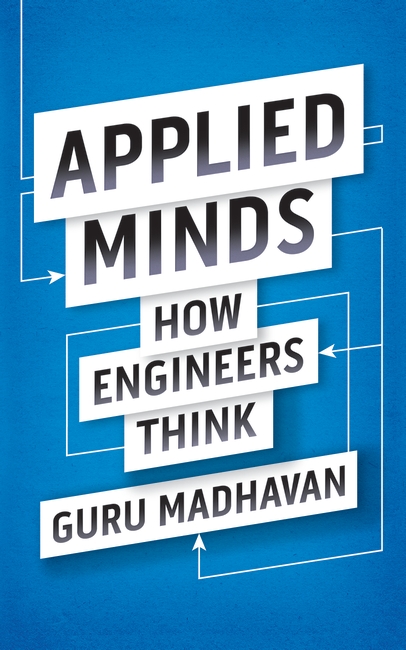
Applied Minds
Growing up in a remote village in Bengal, Rekha Kalindi was always made to believe that being born a girl was a burden. A feisty, intelligent child, she was aware of the horrific consequences of forced marriages on the young girls in her village. Having observed how her friends were married off and sent to live with their mothers-in-law, where they were often treated like slaves, she was determined not to suffer the same miserable fate.
At the age of eleven, Rekha caused a sensation when she refused to be a child bride. Furious, her mother locked her up and even starved her, but the young girl’s spirit could not be broken. It took an incredible amount of bold determination for Rekha to persuade her family not to marry her off against her will. Ever since, she has actively campaigned for the rights of young girls, and has emerged as a crusader for justice. She also went on to become a recipient of India’s National Bravery Award in 2010.
The Strength to Say No is a powerful portrait of one girl’s monumental struggle against oppression as well as a heartrending and inspiring story about the triumph of the human spirit.