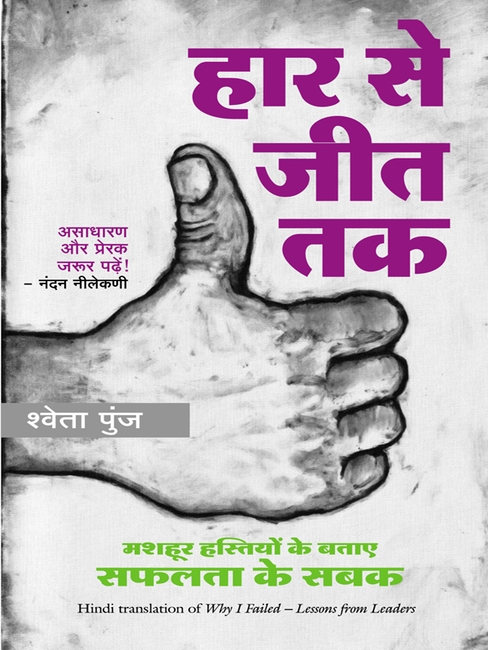
This is Hindi Translation from English Book ‘Why I Failed: Lessons from Leaders’.
Fail! And we are stamped for life. Don’t we try and run from failure all our lives? But, ‘spontaneous doing has to go through failures.’ Acknowledging failure is singularly the most difficult thing to do. It takes tremendous courage to come out and say, yes, I failed. Shweta Punj chronicles sixteen such leaders who have celebrated their failure as much as their success. Each story is an anatomy of failure. So whether it was the difference between ‘need’ and ‘want’ that led Abhinav Bindra to miss that winning shot, or whether it was a suicide attempt that pushed Sabyasachi Mukherjee into fully realizing his potential—these stories will prod you to look at failure differently.
After 2008, as the world lurched from one financial crisis to another, the price of gold rose to over Rs 35,000 per 10 g in 2013. It has since fallen precipitously to a five-year low-under Rs 25,000 for 10 g.
Where will the price of gold go now? How will it perform as an investment? And can we profit from it?
We all want to invest for the future-perhaps for retirement, for a child’s education or to build a nest egg. Whether you are an ordinary or professional investor, a student or an academician, you are faced with a bewildering array of portfolio choices. Where can you find a safe haven for investment that will give you a reliable store of wealth and value untouched by the turmoil of the modern world? In Going for Gold, Nanda Menon outlines the dynamics of the gold market, its demand and supply, its cost of production and geopolitics. Aimed at experts as well as the general reader, this book will answer all your questions on why gold is one of the top investment choices for wealth creation and preservation for Indians.

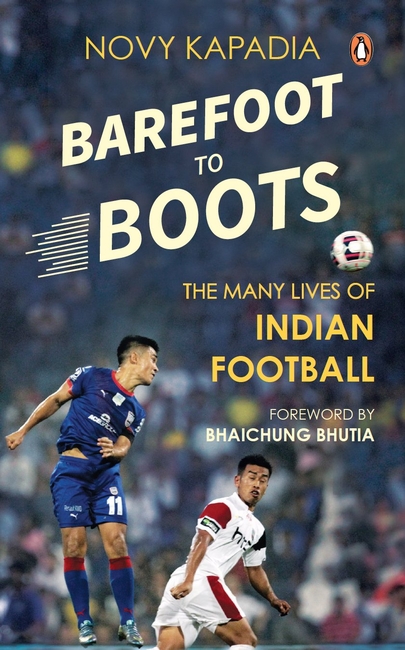
Few football-crazy fans today may be aware that India was once called the ‘Brazil of Asia’. Or that the competition between East Bengal and Mohun Bagan is ranked among the top-fifty club rivalries in the world. Brilliant players, world-class coaches and passionate fans-including political leaders and film celebrities-once combined to make India a football-worshipping nation. A major source of sports entertainment in India, football has thrived in several places apart from Kolkata. The game has also been inextricably linked to community identity, shrewdly used towards political ends, and contributed richly to our cultural heritage.
In Barefoot to Boots, renowned journalist Novy Kapadia reveals Indian football’s glorious legacy through riveting descriptions of on-field action, stories of memorable matches, lively anecdotes and exclusive conversations with legendary players and officials. Having witnessed the evolution of the sport for over fifty years, Novy charts its eventful journey up to the present to enthral old and new fans alike. The book will offer invaluable insight into the future of the game as the Indian Super League dramatically changes the face of domestic football and India hosts the FIFA U-17 World Cup for the first time.
There is no film family quite like the Kapoors. A family of professional actors and directors, they span almost eighty years of film-making in India, from the 1920s to the present. Each decade in the history of Indi films has had at least one Kapoor-if not more-playing a large part in defining it. Never before have four generations of this family-or five, if you include Bashesharnath Kapoor, Prithviraj Kapoor’s father, who played the judge in Awara-been brought together in one book. The Kapoors details the careers and personal lives of each generation’s box-office successes and failures, the ideologies that informed their work, the larger-than-life Kapoor weddings and Holi celebrations, their extraordinary romantic liaisons and family relationships, their love for food and their dark passages with alcohol. Based on extensive personal interviews conducted over seven years with family members and friends, Madhu Jain goes behind the façade of each member of the Kapoor clan to reveal what makes them tick. The Kapoors resembles the films that the great showman Raj Kapoor made: grand and sweeping, with moments of high drama and touching emotion.

Love what you do till you find what you love to do.
When the culture of an enterprise is not rooted in values, you grow weeds, not flowers.
Winners are like kites, which fly high when pulled back and even higher when the wind is against them.
Quote Me if You Can is a book of thoughts by Dr N.S. Rajan, a member of the Group Executive Council and Group Chief Human Resources Officer of Tata Sons. A widely-followed thought leader, Rajan has been studying happiness at work for decades. In this book he packs profound insight into simple words. It is a must-read for all those living in the corporate jungle looking for purpose, harmony and happiness.
A remarkable insight into the films and times of India’s greatest star-actor
In an industry where fashions change every Friday, Amitabh Bachchan has been synonymous with cinematic entertainment for over thirty years. But beyond the labels of ‘one-man industry’ and ‘star of the millennium’, a number of issues pertaining to the star, his films and his era remain largely unaddressed.
What is it that makes Amitabh Bachchan the star he is? Is it his undeniable genius as an actor, his ability to connect with the masses and the classes alike, or is it his writers and directors who project him in varied roles? Did his films in his heyday reflect the angst of his time, or did they ferment the spirit of anger and rebellion in the first place? Was he really the rebel as his ‘angry young man’ image suggests, or was there, behind all the sound and fury, a conformist subtext that called for restoration of the status quo? How relevant is Amitabh Bachchan today?
In Amitabh: The Making of a Superstar, Susmita Dasgupta answers these and other questions that lie buried in the trail of glory the star blazed. In a warm and insightful analysis, the author traces the world-view and philosophy that have shaped the films of Amitabh Bachchan-from the angry young man of Zanjeer, the tragic antihero of Deewar and the entertainer of Amar Akbar Anthony to his more conservative turns in Mahabbatein and Kabhi Khushi Kabhie Gham. In the process, she not only chronicles the star’s journey from a flop actor to a national icon but also brings to life a period in the history of Indian cinema which altered forever the economics of film-making in the country.

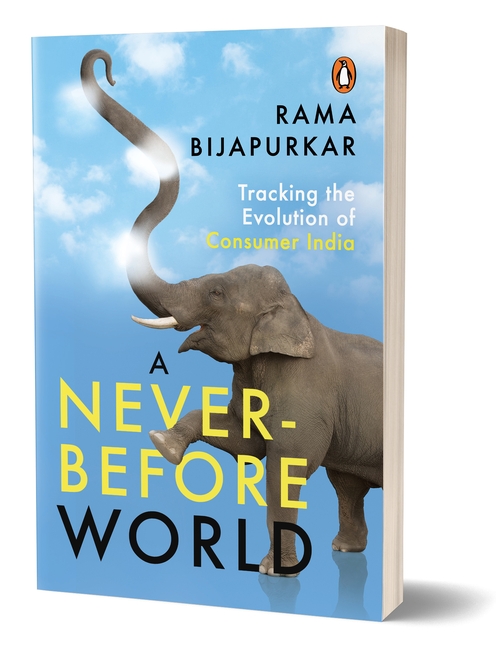
Five years after We Are Like That Only, her seminal and bestselling study on the logic of consumer India, Rama Bijapurkar takes stock of its evolution in her new book. She starts from the point that emerging markets-the queen of which is India-are a never-before world, and businesses approaching them need to understand the environment in which consumers live, how they think, how heterogeneous they are and how they are changing. All of these have key implications for correctly evaluating business opportunity and determining market strategy. India has entered the third decade after liberalization, buffeted by changes on all fronts. Consumption structures and consumer behaviour are changing, and consumer needs and desires are growing faster than incomes. The real war for the consumer rupee begins now-the trick is to understand, without prejudice or preconceived notions, the new world of consumer India. Setting consumerism in the context of society and people’s lives, looking not just at how much money people have, what they spend it on and how, but at how businesses can be relevant to consumers’ lives and life aspirations, A Never-Before World explores everything that businesses need to know and think about to win in the crucial Indian market.

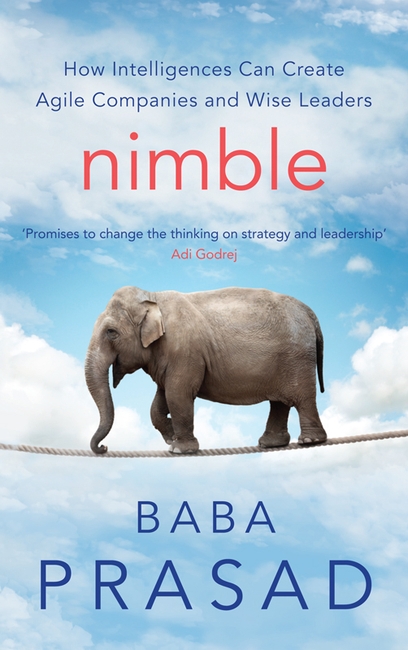
The world today can be best described by one word: turbulence. As change rages all around, how can you—as an individual or as an organization—take advantage of unexpected opportunities and succeed in difficult circumstances?
In a book that challenges traditional notions of strategy, Baba Prasad draws on his research at some of the world’s best business schools to show how intelligence can help you and your business navigate this maelstrom. The Intelligences Framework presented in Nimble goes beyond the common management concept of ‘agility’—it presents an immensely practical and hands-on approach for companies and individuals to develop five kinds of intelligences and apply them in different settings for maximum benefit.
Bridging strategy, leadership and innovation—and with vivid illustrations—Nimble provides a path-breaking assessment methodology and a systematic four-step approach that every company and individual can use to lead amid turbulence.
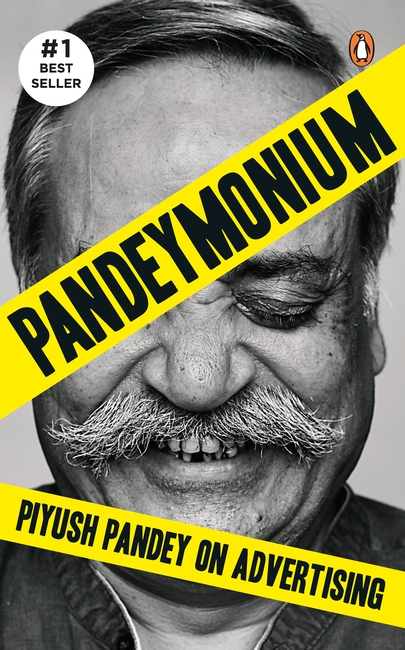
What makes Piyush Pandey an extraordinary advertising man, friend, partner and leader of men? How does he manage to exude childlike enthusiasm and bring such deep commitment to his work?
You’ve seen most of the things that Pandey has seen in his life. You’ve seen cobblers, carpenters, cricketers, trains, villages, towns and cities. What makes him different is the perspective with which he views the same things, his ability to store all that he sees into some recesses of his brain and then retrieve them at short notice when he needs to. That ability combined with his love, passion and understanding of advertising and of consumers make him the master storyteller that he is.
In Pandeymonium, Pandey talks about his influences, right from his childhood in Jaipur and being a Ranji cricketer to his philosophy, failures and lessons in advertising in particular and life in general. Lucid, inspiring and unputdownable, this memoir gives you an inside peek into the mind and creative genius of the man who defines advertising in India.

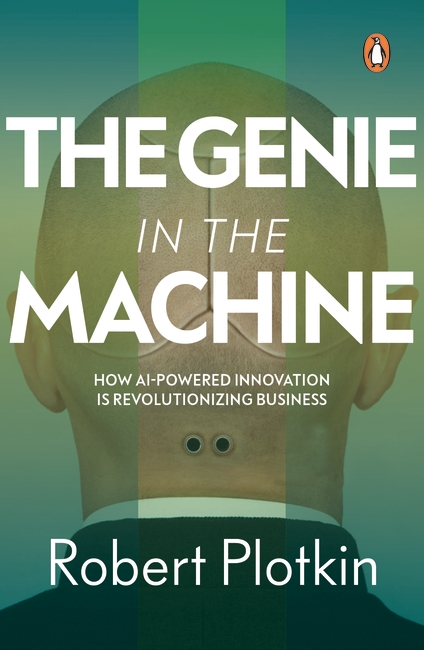
The future of businesses depends on how they respond to the lightning-speed changes in innovation technology
We have long considered inventing to be a uniquely human activity. But software today can automatically generate designs for everything, from toothbrushes to automobile frames, more quickly and inexpensively than ever before. Artificial invention is enabling small teams of inventors to compete with mega-corporations who depend on old methods, and is making it possible for even consumers to design and manufacture new inventions from the comfort of their home.
The Genie in the Machine is a landmark book that explores the impact of AI-powered innovation on businesses. Along with practical advice for inventors, high-tech companies and patent lawyers, this futuristic book attempts to answer two necessary questions: Should inventions designed by software be patentable? Should the software that produces those designs be patentable?
Our decisions about these inventions today will dictate who gets to control this powerful technology tomorrow.