



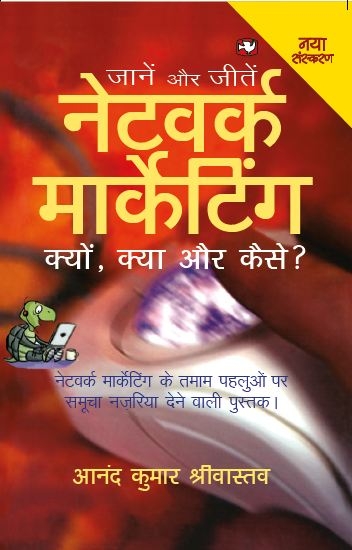
This book will help you build a strong team that delivers. It also offers practical tips for effective leadership to boost your team’s productivity, especially because working hard is no longer enough to help you hold down a job. But setting up the ideal network and putting in smart effort will win you the recognition you deserve.
Catagory: Non Fiction
non fiction main category
Varshik Bhavishyaphal 2019
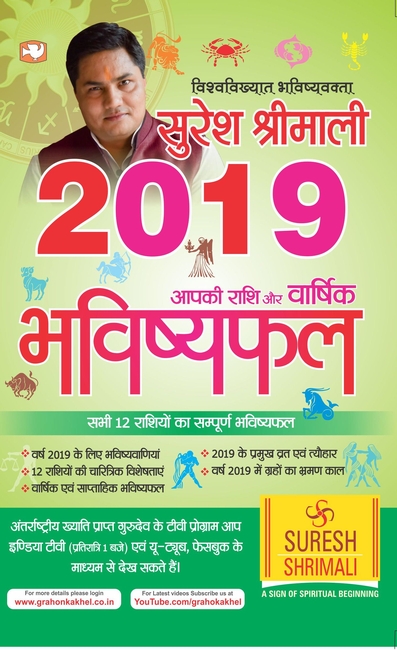
Business is not one-size-fits-all-find out what type of business is suitable for you according to your ruling planet.
Discover how your relationships with your spouse, your children, friends and parents will fare, what your fortune, income and expenditure, career, family, travel and business situations are likely to look like in the New Year, what the most auspicious dates to host important events are, the best time to buy a vehicle, etc.
Also, find out about the year-round movements of Jupiter and the Sun entry into Cancer, which zodiacs will be affected by the rising and setting of the Saturn sadhe-saati in 2019, the most auspicious dates for the Mahalakshmi puja and much more.
Wonder Words
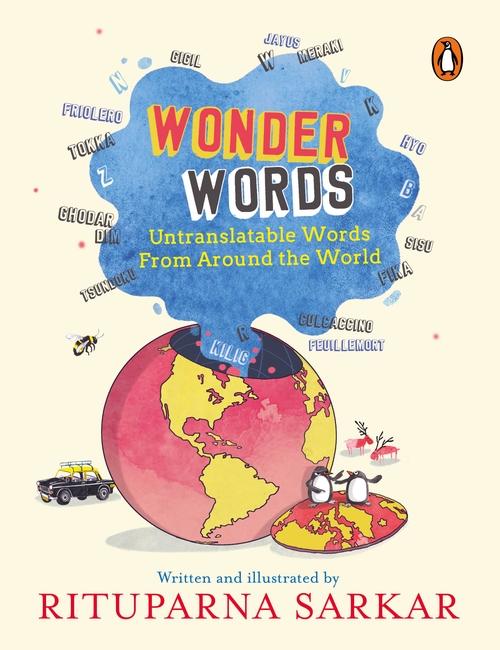
What’s the word for . . .?
People in different countries speak different languages-and sometimes these languages have words that are untranslatable into English. Did you know that Japanese has a word for pretending not to be at home when someone rings the doorbell? Or that there’s a German word for the weight that you put on because of emotional eating? Or even that there’s a Yiddish word for thinking of a witty comeback only when it’s too late?
Wonder Words is a gorgeous, illuminating and often hilarious lexicon of unique words from all over the globe. It will open up your world, making you aware of emotions, cultures and practices from far and beyond. Join author-illustrator Rituparna Sarkar in finding the joy of new words in different languages that you always hoped would exist in English!
Sanjeev Sanyal’s India
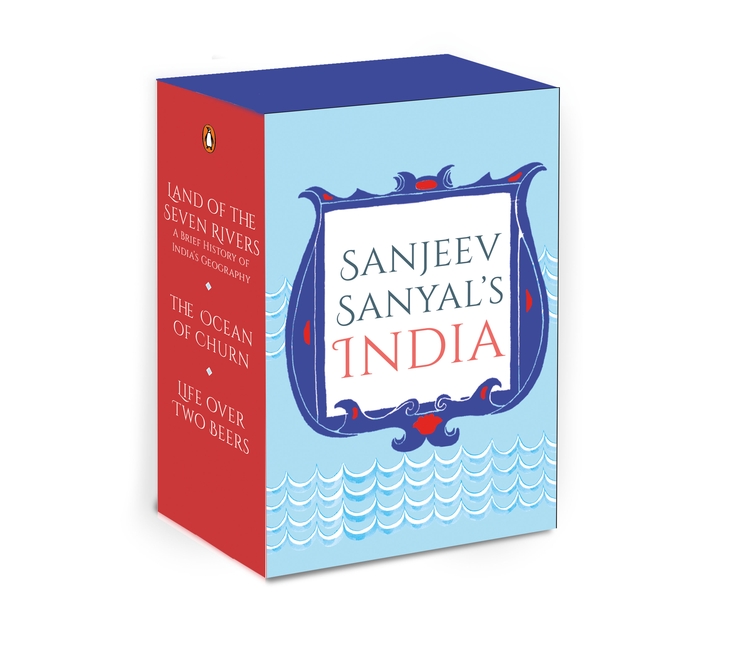
Bestselling author Sanjeev Sanyal’s fresh and provocative vision of India
In three original and insightful books, acclaimed writer Sanjeev Sanyal takes readers on a journey through India’s fascinating prehistory, its glorious ancient lineage and its quirky contemporary times. In the celebrated book, Land of the Seven Rivers, combining scholarship with sparkling wit, Sanjeev sets out to explore how India’s history was shaped by its geography, moving from geological and genetic origins to present-day Gurgaon. In the ambitious The Ocean of Churn, Sanjeev chronicles the grand sweep of history along the Indian Ocean, from East Africa to Australia, offering a mesmerizing glimpse into the heart of a vibrant civilization. Sanjeev’s first work of fiction, Life over Two Beers and Other Stories, is an entertaining ride through the charming absurdities of twenty-first-century India, crackling with irreverence and wit.
Here is the perfect collection to savour, treasure and gift for those who wish to see a different India.
Sai Baba: The Messiah of Oneness
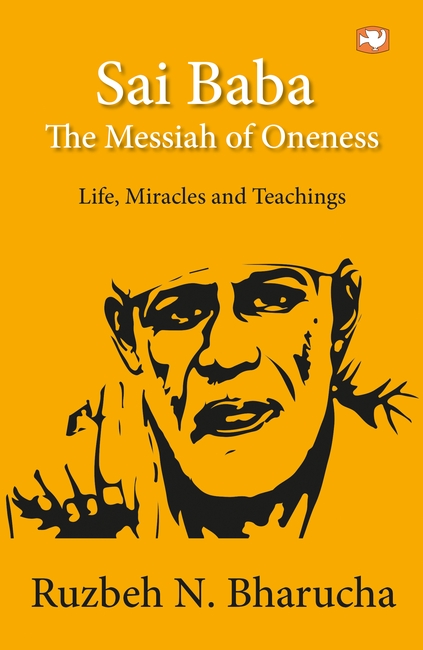
On the occasion of the 100th anniversary of Baba Sai’s Mahasamadhi, bestselling author Ruzbeh N. Bharucha chronicles His years of selfless altruism and spiritual teaching in the human form, through poignant stories and simple day-to-day practices rooted in Baba’s philosophy for the benefit of all hose fumbling to find peace amidst the chaos of the modern world. This book is a wonderful companion for your spiritual journey…
A Hero in the Chair beside me
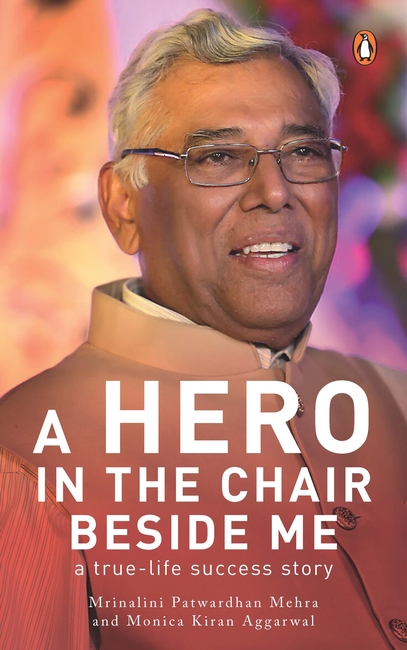
A gifted boy from a small town in newly independent India dreams of making a life in the big city in the 1950s. Suddenly, misfortune and tragedy beset his family, to which he is dearly attached. As responsibilities fall on his twelve-year old shoulders, he chooses his family’s welfare over himself. He does not spare himself as he devotes his energy, attention, focus and time to the two priorities in his life: his family and his ambitions, in that order. Accolades and rewards begin to flow in early, followed by recognition, status and prosperity.
Devoted and indebted to his mother, whom he regards as a power-endowed ascetic, Girish Mohan Gupta continues to uphold the family and service to humanity as his highest values. Slowly, he moves from childhood, to his young adult years and then to a full-blooded householder’s life, supporting ever-increasing family responsibilities, with an eye on philanthropy.
This thought-provoking account by Dr Gupta’s daughter points to how success can be achieved, living life with dignity and honesty, and not giving in to despair in the face of great odds.
Dreamers
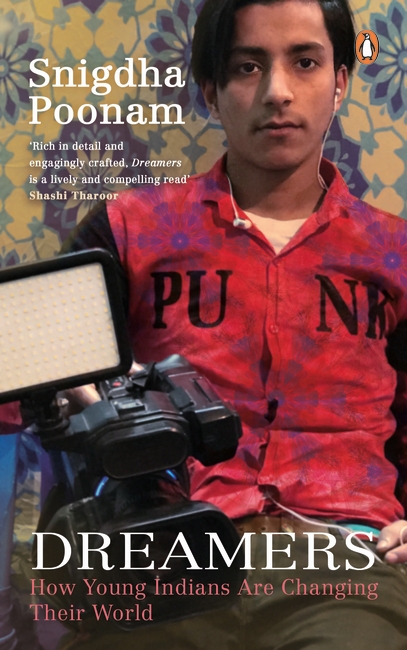
*SHORTLISTED FOR THE 2018 CROSSWORD JURY AWARD FOR NON FICTION*
More than half of India is under the age of twenty-five and the country is set to have the youngest population in the world by 2021. But India’s millennials are nothing like their counterparts in the West.
In a world that’s marked by unprecedented connectivity and technological advancement, in a country that’s increasingly characterized by ambition, political power and access, in an economy that appears to be breaking down the barriers to wealth that existed for every previous era, this is a generation that cannot – will not – be defined on anything but their own terms. They are wealth-chasers, attention-seekers, power-trappers, fame-hunters. They are the dreamers.
Snigdha Poonam’s remarkable cultural study of the unlikeliest of fortune-hawkers travels through the small towns of northern India to investigate the phenomenon that is India’s Generation Y. From dubious entrepreneurs to political aspirants, from starstruck strivers to masterly swindlers, she travels – on carts and buses, in cars and trucks – through the India’s badlands to uncover a theatre of toxic masculinity, spirited ambition and a kind of hunger for change that is bound to drive the future of our country. These young Indians aren’t just changing their world – they’re changing yours.
Pakistan’s Nuclear Bomb

In this inside view of Pakistan’s nuclear programme, Hassan Abbas profiles the politicians and scientists involved in the development of the country’s nuclear bomb, and the role of China and Saudi Arabia in supporting its nuclear infrastructure. Drawing on extensive interviews, the book also examines Pakistani nuclear physicist A.Q. Khan’s involvement in nuclear proliferation in Iran, Libya and North Korea, and argues that the origins and evolution of the Khan network were tied to the domestic and international political motivations underlying Pakistan’s nuclear weapons project, and that project’s organization, oversight and management. This insightful study lays bare, for the first time, the connection between the making of the Pakistani bomb and the proliferation that ensued, establishing important guidelines for nuclear security in the future.
Finally, the book examines the prospects for nuclear safety in Pakistan in the light of the country’s nuclear control infrastructure and the threat posed by the Taliban and other extremist groups to the country’s nuclear assets.
RASEEDI TICKET
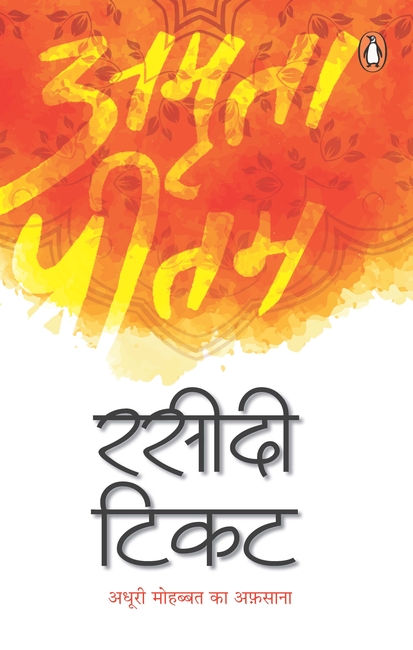
Raseedi Ticket is Amrita Pritam’s celebrated autobiography, which tells us how she felt distressed at the influence of hate; she was traumatised by the horrors of the Partition, out of which her poem ‘Vaaris Shah’ was born. Her autobiography says that a writer should not be afraid of criticism, no matter how hostile the world might become. The time between her intimacy with Sahir and deep friendship with Imroz is described beautifully. Reading this book is like being in a fever which takes you through every truth of the writer’s life.
What’s Cooking in India?
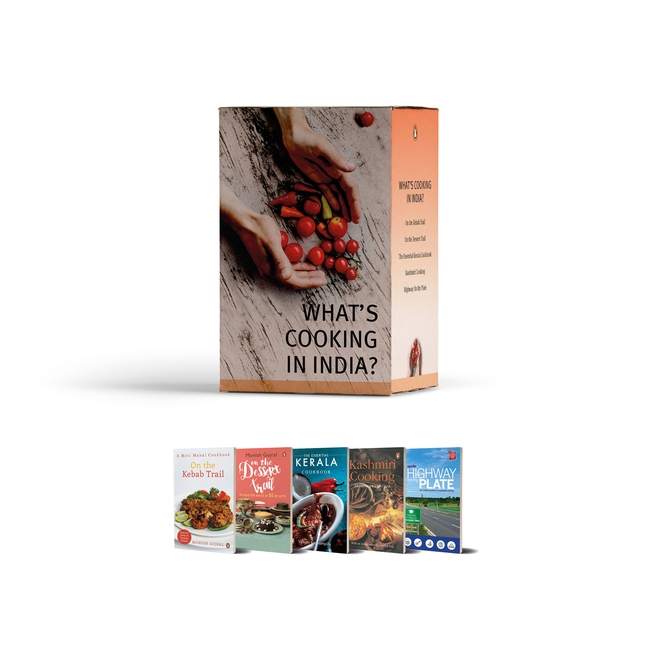
Monish Gujral’s On the Kebab Trail and On the Dessert Trail are the perfect reads for those who want to travel the world through their palates!
Vijayan Kannampilly’s The Essential Kerala Cookbook is a comprehensive guide to all your favourite Malayali foods.
P. Krishna Dar’s Kashmiri Cooking is a stunningly illustrated edition of a celebrated classic with over a hundred Kashmiri recipes!
Rocky Singh and Mayur Sharma’s Highway on My Plate: The Indian Guide to Roadside Eating is an indispensable companion for all your road trips!