




‘Whether you are cooking daily meals for yourself and your family or an occasional meal for an evening of entertainment, let cooking be a process of discovery and enjoyment,’ say Chef Vikas Khanna. And he means it.
It’s exciting-A new beginning, the new life, a new house, and a brand new kitchen! However, setting up your pantry, buying utensils and equipment, then cooking and entertaining-all can get pretty daunting.
Chef Vikas Khanna understands that. In My First Kitchen he expertly guides you set up your own Kitchen, cook marvelous food in quick, easy steps, throw parties, even barbeque like you were a pro!
He holds your hand through the journey as you pick the best produce, learn to cut, chop and preserve and puree-all the processes that you thought too intimidating.
My First Kitchen is the only book you will need to begin your culinary journey!
Catagory: Non Fiction
non fiction main category
The Great Indian Novel
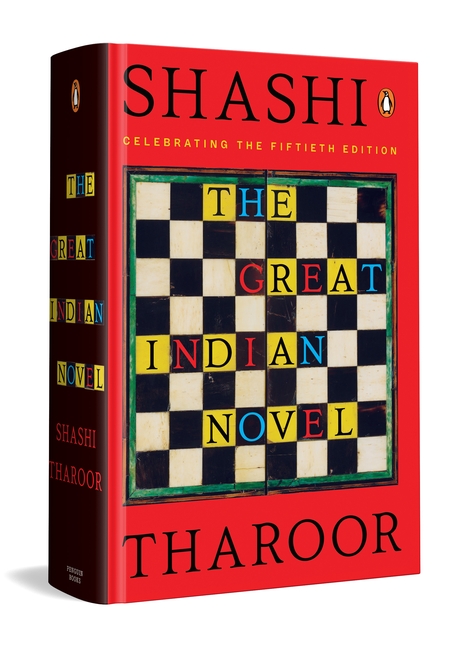
In Shashi Tharoor’s satirical masterpiece, the story of the Mahabharata is retold as modern Indian history, and renowned political personalities begin to resemble characters from the epic -all of whom have a curious and ambiguous relationship with Draupadi Mokrasi (D. Mokrasi for short) . . . Brimming with incisive wit and as enjoyable a read as it is cerebrally stimulating, The Great Indian Novel brilliantly retells reality as myth.
The Five Dollar Smile
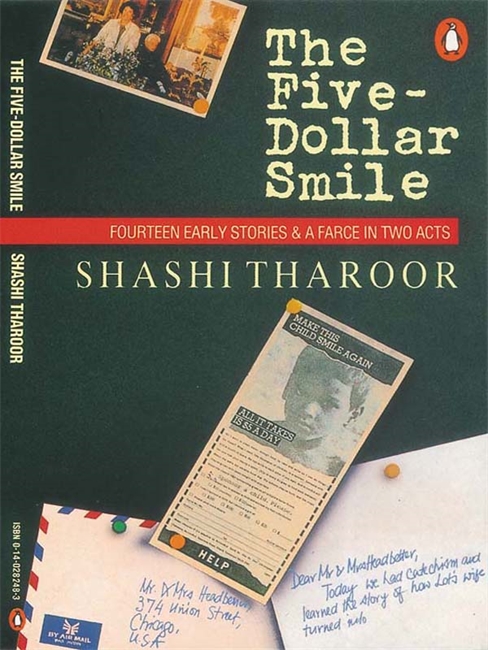
The Five-Dollar Smile is a collection of stories of young love and disaffection, adolescent high spirits and youthful traumas; there are also stories, written with the energy and passion of youth, which deal with very adult subjects: death, deceit, loss, hypocrisy, honour. Sensitive, compelling and persuasive, these stories, written for the most part in Shashi Tharoor’s late teens and early twenties, reveal an already formidable talent. Rounding off the collection is a marvellously inventive play set in the time of the Emergency.
Network 18
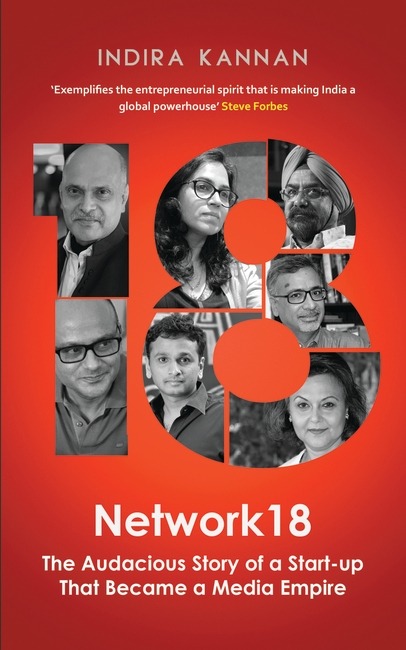
As Indians got their first taste of satellite television during the first Gulf War, Raghav Bahl saw his future in the signals flickering across the small screen. Armed with burning ambition, keen business sense and amazing audacity, he assembled a group of talented professionals and rank beginners to launch one of India’s earliest start-up success stories. Starting from a small room in New Delhi’s Safdarjung Enclave, Television Eighteen (TV18) grew into Network18, one of India’s biggest media conglomerates spanning television, print, films, the Internet, business and general news, drama and entertainment. In less than two decades filled with excitement, adventure and frequent crises, Network18 launched pioneering properties, television and film careers, and racked up partnerships with blue-chip media brands like CNBC, CNN and Viacom. But a mix of hubris, overreaching and external factors set it up for a free fall.
This is a story of brilliant ideas, severe setbacks, naked aggression, spectacular victories and fatal flaws. It’s a story of a media empire that could only have been Made in India.
Is Wheat Killing You?

Ishi Khosla was recently listed as being among the twenty-five most powerful women in the country in her domain of expertise by the India Today Group. Her latest book, Is Wheat Killing You?, will help not only the millions of people with gluten/ whet intolerance, also known as celiac disease, but all those who prefer to avoid wheat. With the alarming rise in the incidence of celiac disease, this book is a boon as it provides information on the disease and how to manage it without having to give up any favourite foods. Most people with celiac disease who follow a gluten-free diet have a complete and rapid recovery.
This complete guide to gluten-free living is based on scientifically established principles of healthy eating and includes essential facts about a balanced diet that are of interest to all. The book features nearly 200 quick, easy-to-follow, practical and delicious recipes- pan-Indian, Oriental and Continental. Additionally, Is Wheat Killing You? integrates gluten-free cooking with mainstream cooking so those who cannot eat gluten can lead normal social lives. Ishi Khosla explains how grains can affect your health and profiles those at risk for gluten sensitivity.
Corporate Divas
Eighteen extremely talented and determined women have balanced the home and the boardroom with equal aplomb; setting standards in the corporate world for all to follow. Corporate Divas offers inspiring insights into what motivates and sustains India’s leading corporate women. Through a series of in-depth conversations; this book reveals the unconventional styles and the secret mantras they use to achieve phenomenal success in their professions. A riveting and an uplifting read; it is an indispensible resource for anyone striving to build the right attitudes for success in today’s highly competitive global environment.
Unreal Elections
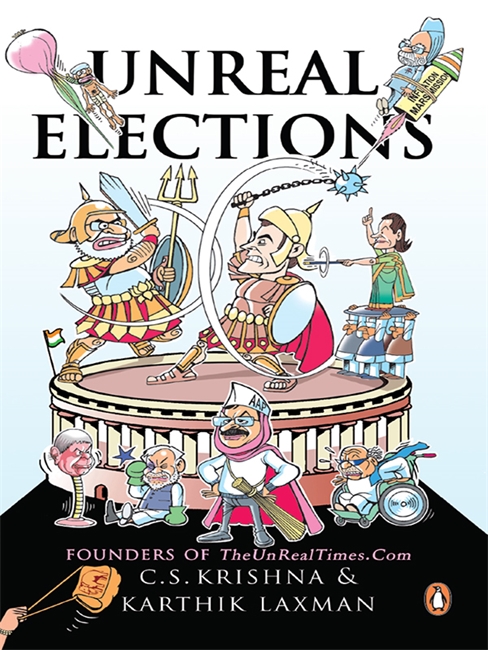
At the risk of offending you a little, India’s funniest bloggers would like to hold forth on:
• Why Narendra Modi’s favourite movie is The Lion King
• What happens to Arnab Goswami’s milkman when he tries to cheat him
• How Sonia G reshuffles her Cabinet with a little help from Britney Spears
• Why Kejriwal must wear a shawl in the Delhi summer
• What fills Manmohan Singh with rage
• Why Ravi Shastri must moderate the prime ministerial debate
And what all of this has to do with the most Unreal Elections of the Summer of 2014 . . .
How To Love Your Body

Do you look in the mirror and dislike what you see? Are you always trying different diets? Do you feel guilty if you overeat? You’re not the only one. For sixteen years, model and actress Yaana Gupta struggled with her body and the way she felt about it. She tried every diet, worked out constantly but the fears remained.
In How to Love Your Body (and get the body you love), Yaana writes about how she got the balance back in her life and learnt to love herself. Using her own experiences, she gives you easy to follow eating advice and the real lowdown on food from the right portions to eat to being healthy on the go. She also gives you great tips-how to understand the nutrition labels, the great dabba trick and the best snack to eat when you get a late-night hunger attack.
Finally Yaana teaches you the greatest lesson of all-how you can learn to love and accept your body. Because without it, she argues, no weight loss will ever make you happy.
The Victory Project
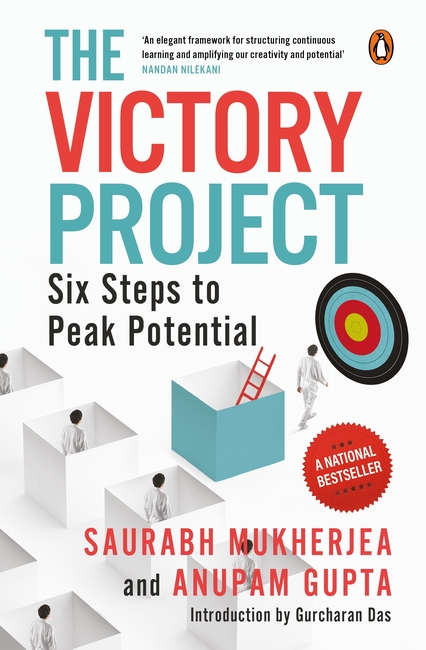
India’s economy has tripled in size over the past twenty years. And yet, the generation that propelled this growth is facing rising levels of stress and depression. Furthermore, the new generation entering the workforce today dreams big but faces a highly competitive work environment. How can both these generations fire on all cylinders and lead fulfilling lives? This book attempts to answer this question by using the principles of Simplicity, Specialization, Creativity and Collaboration. It delves into a treasure trove of material from global gurus as well as from highly successful Indian and American professionals, and it draws on the authors’ own careers to show how readers can apply these principles to the fields of business and investment, even to life itself. The Victory Project is the ultimate guide to surviving and thriving in the professional and social domains, which are increasingly becoming tough, competitive, often cutthroat and deeply political.
The Scientific Edge
India has a rich history of scientific accomplishments. In the fifth century, nearly one millennium before Copernicus, the Indian astronomer and mathematician Aryabhata theorized that the earth spins on its axis. Likewise, in the twentieth century physicist Meghnad Saha’s ionization equation opened the door to stellar astrophysics.
But India’s scientific achievements have occurred as flashes of brilliance rather than as a clear trajectory of progress. So how did India, with its historic university system and
excellent observatories, lose its scientific edge?
Cosmologist, founder director of the Inter-University Centre for Astronomy and Astrophysics, and science fiction author Jayant V. Narlikar tracks the highs and lows of Indian
science across the millennia, distinguishing fact from fiction. Through a lively narrative of breakthroughs and failures, he explores the glories of India’s scientific advances and questions the more fanciful so-called discoveries. His essays are invigorated by his excitement for new findings, and he argues passionately for preserving the true scientific temperament instead of granting legitimacy to such pseudosciences as astrology.
Above all, Narlikar raises issues that both the layperson and the scientist need to consider as India seeks to lead the world in information technology and biotechnology.