Osho’s Yoga: The Supreme Science is a guide on how to use the inner science of yoga to dispel all of life’s anxieties.
Ruzbeh N. Bharucha’s Rabda: My Sai . . . My Sigh is a unique journey into the life and philosophy of Sai Baba of Shirdi, often in His own words.
Sadhguru’s More Than a Life is the incredible story of the making of this world-renowned spiritual guru.
Venugopal Acharya’s Are You Connected? 25 Keys to Live, Grow and Succeed with Self and Others offers deep insight into living a life of harmony, success and happiness.
Ever been dissatisfied with following ONE fitness routine, and still holding on to your love handles? Here comes a collection that focuses on the complete you-from using yoga to mould your body to the fitness level you want and keeping stress at bay while losing weight, to eating the good home-made food that your body will love. This box set is for anyone and everyone looking for a healthy lifestyle, not a crash course in fitness.

Featuring the works of K.R. Meera, Chitra Banerjee Divakaruni and Anita Nair, this limited edition set is essential reading for those who love reading fiction from South Asia.
Chitra Banerjee Divakaruni’s Oleander Girl revolves around seventeen-year-old Korobi Roy who, troubled by the silence that surrounds her parents’ death, clings to her only inheritance from them: the unfinished love note she found hidden in her mother’s book of poetry. But when her grandfather dies, she discovers a dark secret which will finally explain her past.
The bold, wry and ebullient stories of Yellow Is the Colour of Longing put on display K.R. Meera’s astonishing range of narrative techniques, as she expertly lays bare the fault lines behind the façades of everyday life, sometimes with dark humour and sometimes with astoundingly bitter sadness.
Forty-five and single, Akhila has never been allowed to live her life-she is always a daughter, a sister, an aunt and a provider first-until the day she buys a one-way train ticket to the seaside town of Kanyakumari. Anita Nair’s Ladies Coupé unfolds in an intimate atmosphere as Akhila gets to know her five fellow travellers. Riveted by their stories, she seeks an answer to the question that has haunted her all her life: can a woman stay single and be happy, or does she need a man to feel complete?

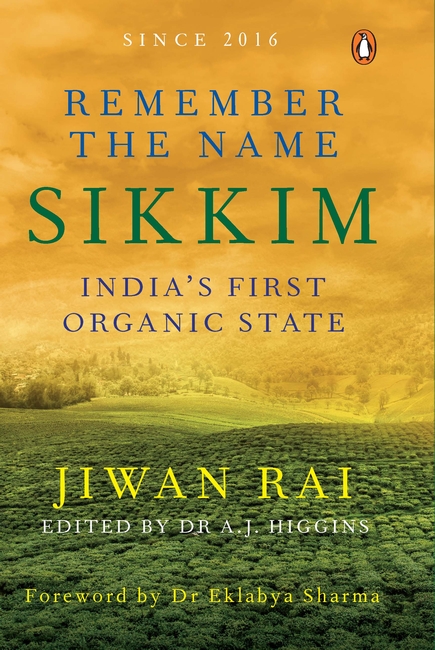
In a world obsessed with politics and pop culture, stories of substance are often side-lined. In a country where cricket and Bollywood capture media primetime and headlines, so many incredible stories of success slide into obscurity.
This book brings to light one such story of a small north-eastern state of India. The story is of Sikkim’s organic farming mission that has captured national and international attention. The lessons to be learned from this are so much deeper than fleeting media attention can ever do justice. As India’s first and only fully organic state since 2016, and apart from Cuba, boasting of the only government-driven mission for total organic farming, Sikkim offers hope for the future of sustainable agriculture.
The growth and determination of the people of this small Himalayan state should inspire and challenge the country and the world. Sikkim’s message is simple: Organic farming can heal our Earth, help our families, and offer hope for our shared future. Will anyone listen? Will anyone join us?
‘Let those who scoff at overmuch enthusiasm look at the Taj and henceforward be dumb’-Rudyard Kipling
The Taj Mahal is the Queen of architecture. Other buildings may be as famous but no other has been so consistently admired for a beauty that is seen as both feminine and regal. Imperial tomb, symbol of India, symbol of love, brand of tea-the Taj can be what you want it to be. Drawing on a huge range of sources from Mughal court histories to Bollywood movies, this superb book gives us a history of the Taj and its many meanings.
Giles Tillotson recounts the human drama behind the building, particularly the relationship between Shah Jahan and his beloved wife Mumtaz Mahal, who lie there. He explores its reputation through history as a Wonder of the World, its representation in art, and analyses the secrets of its architectural success. He describes the troubled story of its conservation and records the recent disputes about its ownership, treatment and exploitation.
The Taj holds a secure place in the world’s collective consciousness; Taj Mahal is a rigorous and vivid account of how this came to be.

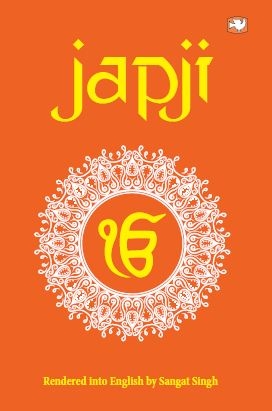
Guru Nanak’s Japji contains the quintessence of Sikh religious thought and philosophy. This analysis weaves Japji into an integrated essay to make a more explicit understanding of the theme. The appendices also contain translations of Rahiras, Sohila and Ardas.

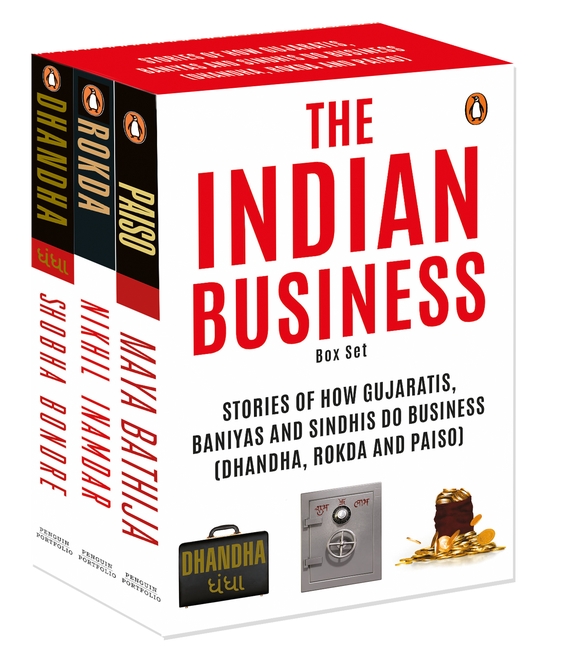
This collection of bestselling books Dhanda, Rokda and Paiso brings together renowned journalists Shobha Bondre, Nikhil Inamdar and Maya Bathija who delve into how empires such as Emami, Diamand Nagar and Embassy Group were built. These wonderful accounts show us the people behind these hugely successful companies and the entrepreneurial spirit and characteristics inherent to each community.
‘Highly readable . . . Nifty storytelling’ Business Standard
‘Well-structured and engaging . . . Each of these extraordinary stories has elements of some of the characteristic Sindhi ways of doing business’ Hindustan Times
‘Inamdar’s book offers a good insight into the ways of this remarkable community’ Business Standard

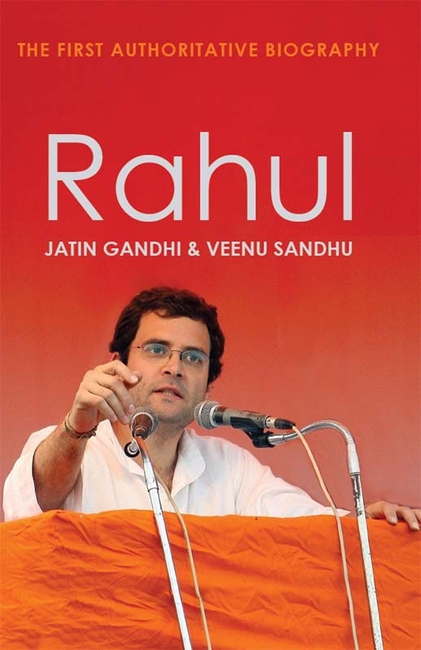
Perceptions of Rahul Gandhi have ranged from the great Indian hope to that of an over-
promoted dynastic scion. Everyone has an opinion, but the man himself remains opaque, his public persona confined to positions on political events, policies or programmes.
Who is Rahul Gandhi—the real man—beneath the hype and the hatchet jobs?
What are the ideas and influences that propel him? Who are his advisers? And
how will he tackle his new responsibilities as his mother, Sonia Gandhi, makes way for him?
Two young journalists, Jatin Gandhi and Veenu Sandhu, trace the evolution of the Rahul brand and explore the fascinating relationship between modernity and dynasty in this incisive political biography.

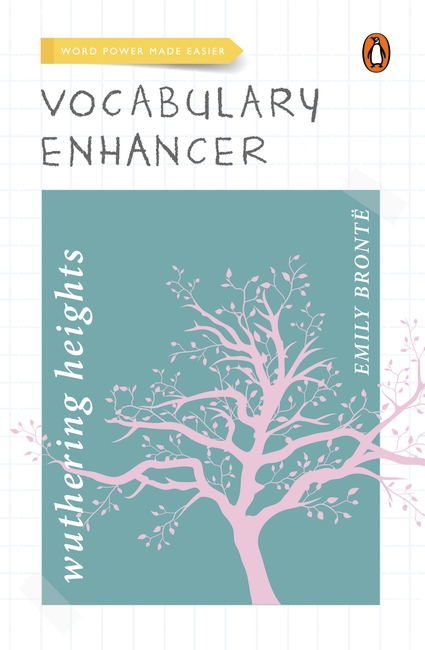
The right word, now at your fingertips!
Word power is an integral part of being able to express yourself-whether you’re in college, appearing for competitive exams or attending a job interview. It makes you an effective and confident communicator. This handy guide brings to you an abridged version of the beloved gothic romance Wuthering Heights by Emily Brontë to familiarize you with a must-read and equip you with new words.
Accessible and engaging, each book in the Vocabulary Enhancer series simplifies a classic and helps you memorize a list of carefully curated, frequently used words through their definitions, antonyms, examples of usage as well as word exercises and puzzles to recap your learning.
So what are you waiting for? Strengthen your understanding of the English language and enhance your vocabulary with this unique companion.

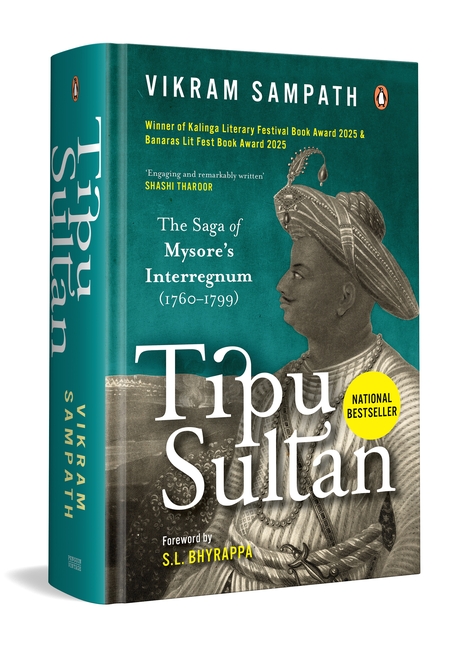
Over two centuries have passed since his death on 4 May 1799, yet Tipu Sultan’s contested legacy continues to perplex India and her contemporary politics. A fascinating and enigmatic figure in India’s military past, he remains a modern historian’s biggest puzzle as he simultaneously means different things to different people, depending on how one chooses to look at his life and its events.
Tipu’s ascent to power was accidental. His father Haidar Ali was a beneficiary of the benevolence of the Maharaja of Mysore. But in a series of fascinating events, the Machiavellian Haidar ran with the hare and hunted with the hounds; he ended up overthrowing his own benefactor and usurping the throne of Mysore from the Wodeyars in 1761. In a war-scarred life, father and son led Mysore through four momentous battles against the British, termed the Anglo-Mysore Wars. The first two, led by Haidar, brought the English East India Company to its knees. Chasing the enemy to the very gates of Madras, Haidar made the British sign such humiliating terms of treaties that sent shockwaves back in London.
In the hubris of this success, Tipu obtained the kingdom on a platter, unlike his father, who worked up the ranks to achieve glory. In a diabolical war thirst, Tipu launched lethal attacks on Malabar, Mangalore, Travancore, Coorg, and left behind a trail of death, destruction and worse, mass-conversions and the desecration of religious places of worship. While he was an astute administrator and a brave soldier, the strategic tact with opponents and the diplomatic balance that Haidar had sought to maintain with the Hindu majority were both dangerously upset by Tipu’s foolhardiness on matters of faith. The social report card of this eighteenth-century ruler was anything but clean. And yet, one simply cannot deny his position as a renowned military warrior and one of the most powerful rulers of Southern India.
Meticulously researched, authoritative and unputdownable, Tipu Sultan: The Saga of Mysore’s Interregnum (1760–1799) opens a window to the life and times of one of the most debated figures from India’s history.