



Described as a ‘felicitous prose poem’, Afternoon Raag is the account of a young Bengali man who is studying at Oxford University and caught in a complicated love triangle. His loneliness and melancholy sharpen his memories of home, which come back to haunt him in vivid, sensory detail. Intensely moving, superbly written, Afternoon Raag is a perfect miniature of a novel about arrivals and departures, new worlds and old homes.
Catagory: Non Fiction
non fiction main category
The Shadow Lines: From bestselling author and winner of the 2018 Jnanpith Award
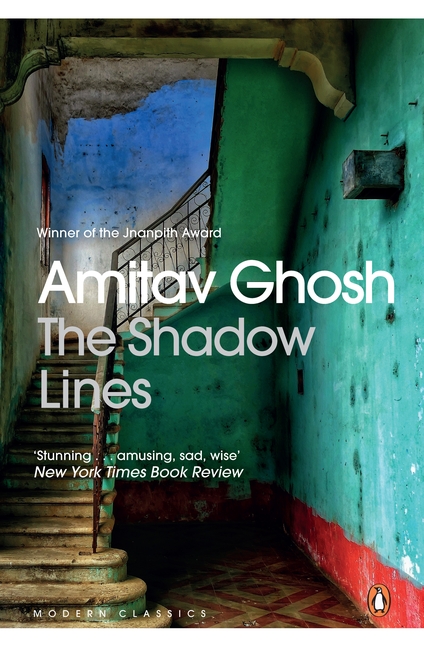
As a young boy, Amitav Ghosh’s narrator travels across time through the tales of those around him, traversing the unreliable planes of memory, unmindful of physical, political and chronological borders. But as he grows older, he is haunted by a seemingly random act of violence. Bits and pieces of stories, both half-remembered and imagined, come together in his mind until he arrives at an intricate, interconnected picture of the world where borders and boundaries mean nothing, mere shadow lines that we draw dividing people and nations.
Out of a complex web of memories, relationships and images, Amitav Ghosh builds an intensely vivid, funny and moving story. Exposing the idea of the nation state as an illusion, an arbitrary dissection of people, Ghosh depicts the absurd manner in which your home can suddenly become your enemy.
Kosa Katha
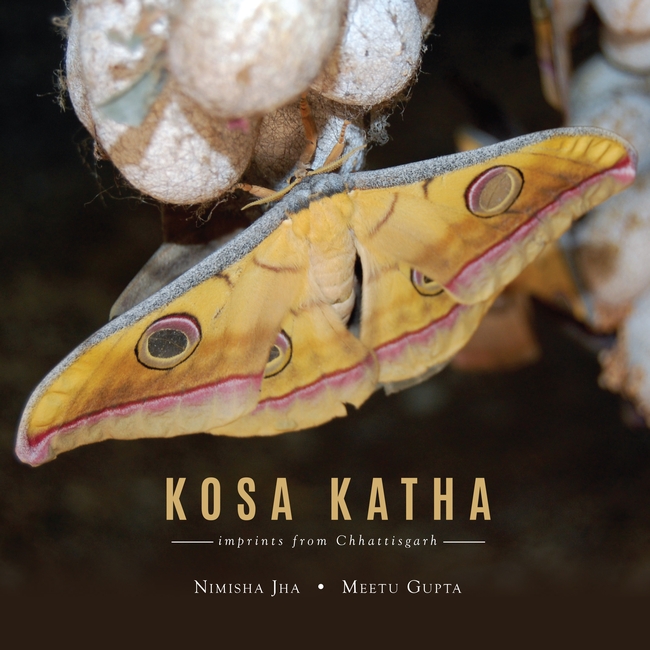
The book weaves in multifaceted accounts of the various processes and stages of its creation, from cocoon cultivation to silk yarn production. There are multiple stakeholders all along the assembly line, which means it generates layers of employment opportunities in silk manufacturing as an industry. The book also highlights the impact of kosa on the local population and discusses its socio-economic aspects, the way it affects livelihood, the importance of women in the sector and its wider effects on the environment. Emphasis has been placed on best practices in the business and the use of technology, underlining the emergence of mechanized techniques, thus making it a lucrative profession and establishing silk as the real queen of textiles.
The idea behind Kosa Katha is to compile information to address the existing gaps caused by poor documentation, incomplete literature and distorted figures, which have not been able to give a holistic view of this flourishing trade. The book also gives valuable suggestions so that the kosa sector turns out to be a highly rewarding and respectable vocation in times to come. In a bid to sustain the positive efforts in the sericulture industry, the hope is to connect the dots so that kosa can find its place in anenvironment where production is declining and weavers are gradually vanishing from the forefront.
Ramayana, Mahabharata, Bhagavata
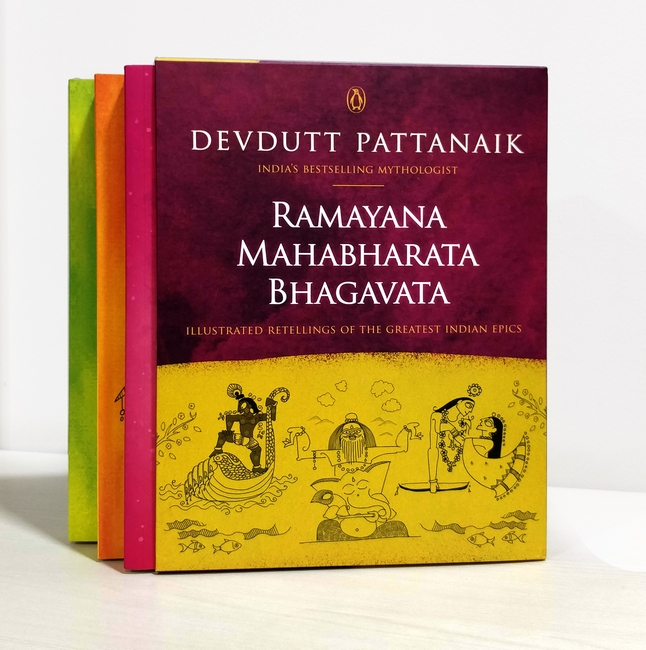
An enthralling retelling of India’s greatest epic, the Mahabharata, Jaya seamlessly weaves into a single narrative plots from the Sanskrit classic as well as its many folk and regional variants. With clarity and simplicity, the tales in this elegant volume reveal the eternal relevance of the Mahabharata and the complex and disturbing meditation on the human condition that has shaped Indian thought for over 3000 years.
Sita approaches Ram and the Ramayana by speculating on the titular character: her childhood with her father, Janaka, who hosted sages mentioned in the Upanishads; her stay in the forest with her husband, who had to be a celibate ascetic while she was in the prime of her youth; her interactions with the women of Lanka, recipes she exchanged, the emotions they shared; her role as a goddess, the untamed Kali as well as the demure Gauri, in transforming the stoic prince of Ayodhya into God.
The Bhagavata is the story of Krishna, known as Shyam to those who find beauty, wisdom and love in his dark complexion. Shyam tells the story of Krishna’s birth and his death, bringing together the fragments of this great epic composed over thousands of years, first as the Harivamsa, then as the Bhagavata Purana, and finally as the passionate songs of poet-sages in various regional languages.
Words From My Window
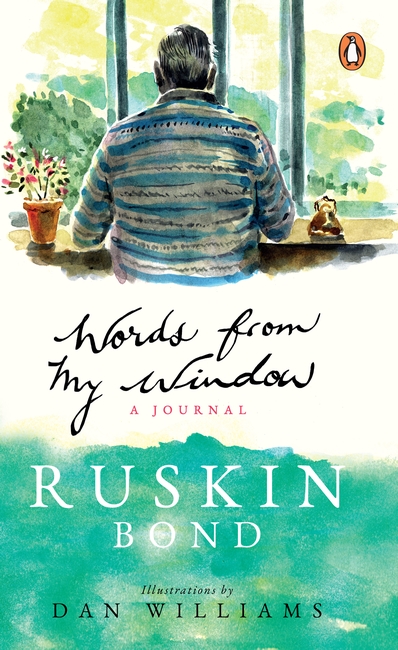
I need a window to look at the world without; for only then can I look at the world within. A room without a window is rather like a prison cell, and the soul is inclined to shrivel up in a confined space. … Car horns, children calling to each other as they return from school, a boy selling candyfloss, several crows chasing a hawk! Never a dull moment. And the magic mountain looks on, absorbing everything.
Mera Jeevan, Mera Mission
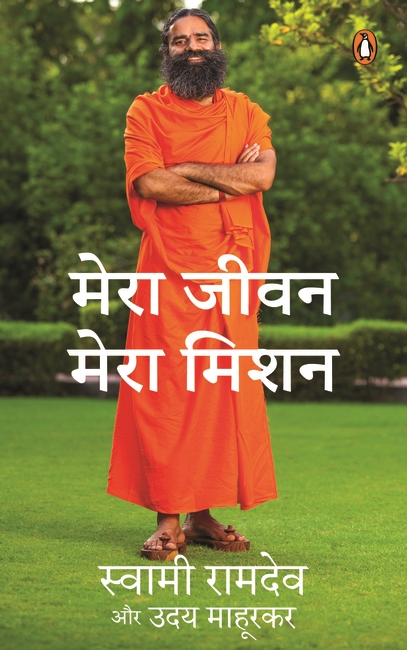
Swami Ramdev is a household name in India. But do you know where he was born?
Why did he take sanyas and get into spirituality?
What is his vision for India?
Fearless, driven and with a penchant for being outspoken, Swami Ramdev-for the first time-addresses the major controversies, turning points and achievements of his life. An autobiographical account, the book is written with senior journalist Uday Mahurkar and captures the seer’s journey from a small village in Haryana to the international stage. As we uncover the trials, tribulations and triumphs of his life, we realize that there is more to the ascetic than often meets the eye. The book provides insights into his childhood, his passion for yoga and good health, his friends and foes, and the Swadeshi campaign he has spearheaded. In 2006, the globally popular yoga teacher known for his work in Ayurveda, health and social issues, founded the Patanjali Group of Institutions that is now a major FMCG company with a turnover of about Rs 12,000 crores.
Engaging, revealing and inspiring, the book shows how determination, passion and tenacity can transform the ordinary into the extraordinary.
My Life, My Mission
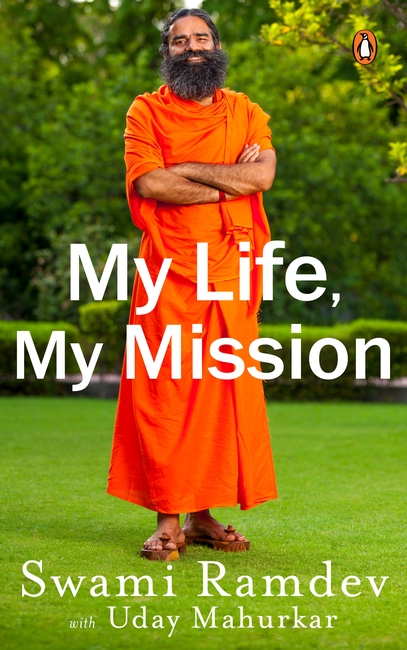
‘A lot has been written about me by other people. Now I will share with you the story of my life in my own words.’
Swami Ramdev is a household name in India. But do you know where he was born? Why did he take sanyas and get into spirituality? What is his vision for India?
Fearless, driven and with a penchant for being outspoken, Swami Ramdev-for the first time-addresses the major controversies, turning points and achievements of his life. An autobiographical account, the book is written with senior journalist Uday Mahurkar and captures the seer’s journey from a small village in Haryana to the international stage. As we uncover the trials, tribulations and triumphs of his life, we realize that there is more to the ascetic than often meets the eye. The book provides insights into his childhood, his passion for yoga and good health, his friends and foes, and the Swadeshi campaign he has spearheaded. In 2006, the globally popular yoga teacher known for his work in Ayurveda, health and social issues founded the Patanjali Group of Institutions that is now a major FMCG company with a turnover of about Rs 12,000 crore.
Engaging, revealing and inspiring, the book shows how determination, passion and tenacity can transform the ordinary into the extraordinary.
The Last Englishmen
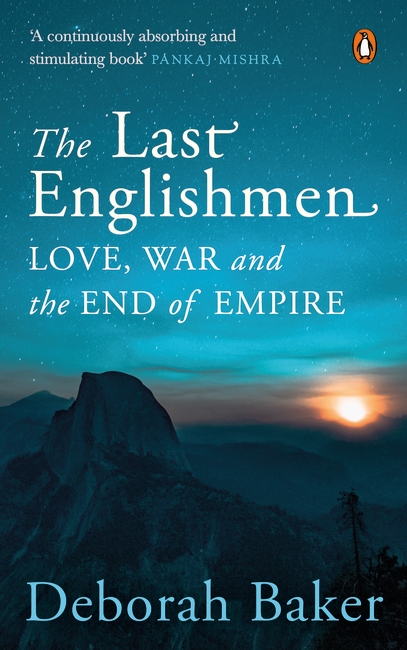
W.H. Auden and Stephen Spender were the cutting-edge English poets of their generation, influential inter-war figures on the cusp of culture and politics, of imperialism and anti-imperialism. By a curious quirk of history, both their older brothers were mountain explorers – John Bicknell Auden was a pioneering geologist of the Himalayas, while Michael Spender was the first to draw a detailed map of the north face of the Everest. While their younger brothers achieved literary fame, John Auden and Michael Spender vied to be included in the expedition that would deliver an Englishman to the summit of Everest, a quest that became a metaphor for Britain to maintain power over India. To this rivalry was added another: both men fell in love with the same vivacious woman, the painter Nancy Sharp. Her choice would determine where each man’s wartime fate and loyalties would lie, with England and its unraveling empire, or elsewhere.
Set in Calcutta, London, in the glacier-locked wilds of the Karakoram, and on Mount Everest itself, The Last Englishmen is also the story of a generation. The cast of characters in Deborah Baker’s exhilarating drama includes Indian and English writers and artists, explorers and Communist spies, imperial ‘Die Hards’ and Indian nationalists, political chancers and police informers. Key among them is a highborn Bengali poet named Sudhindranath Datta, a melancholy soul torn like others of his generation between a hatred of the British empire and a deep love of European literature, and whose way of life would be upended by the arrival of the Second World War on his Calcutta doorstep.Dense with romance and intrigue, and of startling relevance to the cross-cultural debates and great power games of our own day, The Last Englishmen is an engrossing and masterful story that traces the end of empire and the stirring of a new world order.
Keeping the Jewel in the Crown
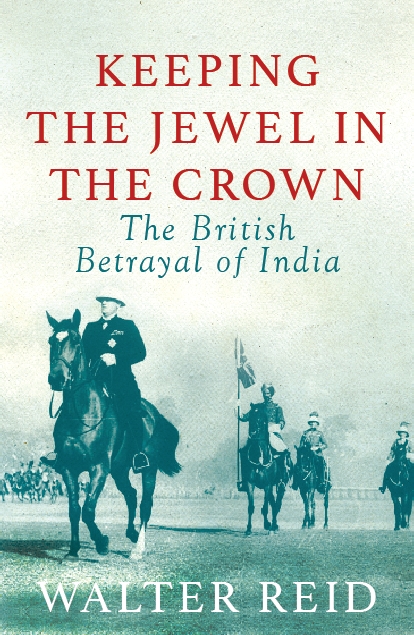
When India became independent in 1947, the general view, which has prevailed until now, is that Britain had been steadily working for an amicable transfer of power for decades. In this book, Walter Reid argues that nothing could be further from the truth. Referring to a vast amount of documentary material, from private letters to public records and state papers, he shows how Britain held back political progress in India for as long as possible-a policy which led to unimaginable chaos and suffering when independence was granted, and which created a legacy of hatred and distrust that continues to this day.
The Open Road
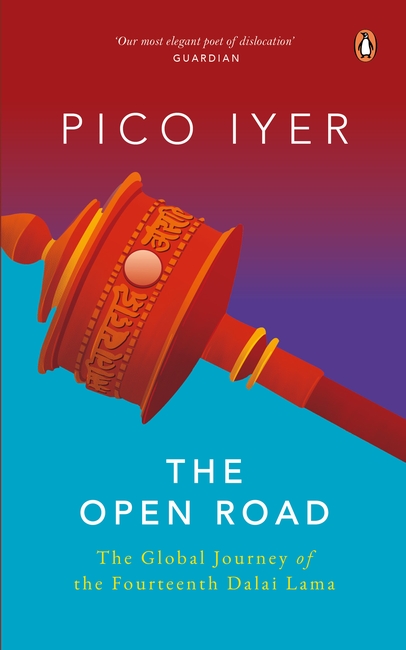
Pico Iyer has been engaged in conversation with the Dalai Lama (a friend of his father’s) for the last many decades-about his message and its effectiveness. Now, in this insightful, impassioned book, Iyer captures the paradoxes the Dalai Lama embodies: he is a religious leader who warns against being needlessly distracted by religion; a Tibetan head of state who suggests that exile from Tibet can be an opportunity; an incarnation of a Tibetan god who champions globalism and technology.
Moving from Dharamsala, India, to Lhasa, Tibet, to venues in the West-where the Dalai Lama’s pragmatism, rigour and scholarship are sometimes lost on an audience yearning for mystical visions-The Open Road illuminates the hidden life, the transforming ideas and the daily challenges of a global icon.