If you saw a toothpick on the floor, what would you do?
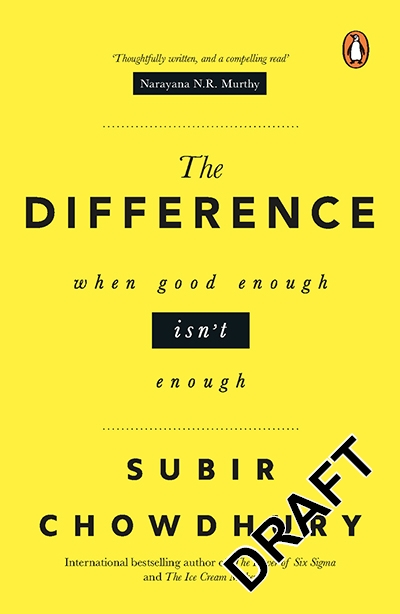
This seemingly innocuous question was posed to Subir Chowdhury by one of his long-time clients, and ultimately lead him to a profound realization: good enough is not enough. In this pithy and thought-provoking new book, bestselling author Subir Chowdhury shares the secret of how some organizations only improve incrementally while others improve exponentially. The Difference, he reveals, is in the star facets of a caring mindset laid out in the book.
‘Those who fail to adopt the caring mindset Subir Chowdhury describes in The Difference will find themselves falling behind in innovation, employee engagement, and productivity. Reading and practicing the ideas in The Difference will change your life’- Marshall Goldsmith

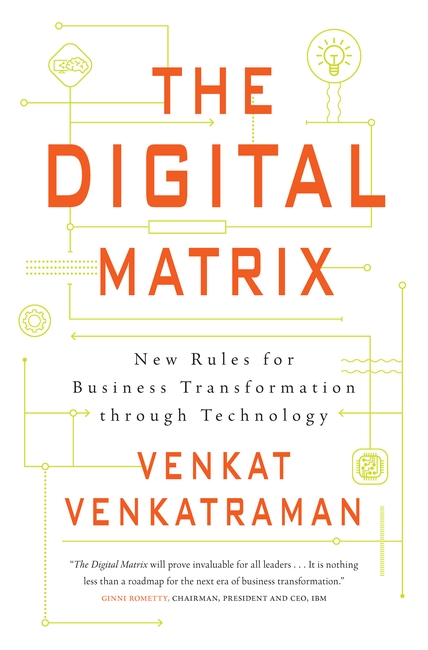
Ambitious digital-driven startups are now creating and cornering new markets in every sector. And yet, most legacy businesses continue to operate by old playbooks. Most are not keeping pace with the changes in their industry, let alone leading the way-what is yours doing? The Digital Matrix will help you understand the three types of players that are shaping the new business landscape; the three phases of transformation that every firm will encounter on its journey to business reinvention; and the three winning moves that will ensure your company’s success along the way.
With The Digital Matrix, you will:
Learn to navigate the world of digital ecosystems.
Discover ways of competing and collaborating with other companies to create and capture value.
Realize how powerful machines can amplify your company’s human talent.
Learn to assemble the team to experiment with new ideas, re-examine your core beliefs, and reinvent your business rulebook for the digital future.
Your company’s future depends on its ability to harness digital technology.
Don’t wait!

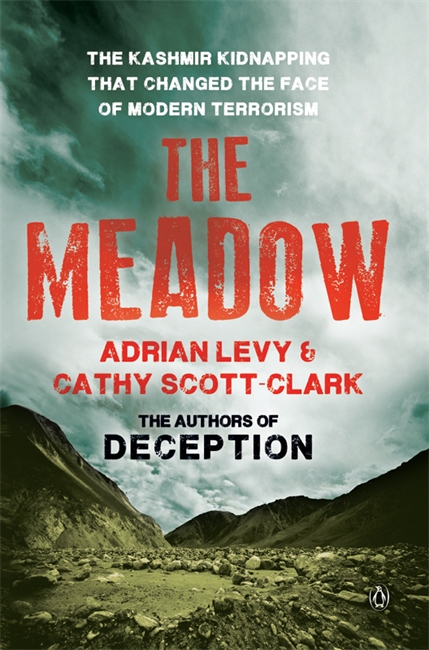
In the summer of 1995, six tourists were kidnapped in the mountains of Kashmir. The ransom note said the kidnappers were from an unheard of Islamic outfit and that they wanted the release of Pakistani militant leader Maulana Masood Azhar (later responsible for the attack on the Indian parliament). The kidnapping electrified the world and for the first time put the global spotlight on Kashmir. Within four days, one of the prisoners had made a hair-raising escape. A month on, was found, beheaded by his captors who had carved their name into his flesh. In the background, camped out in Delhi, the families of the missing struggled to keep their hopes alive, while international governments negotiated frantically with India, and the army, police and intelligence services tried to follow the trail. But the remaining four hostages were never found, their case forgotten – until now.

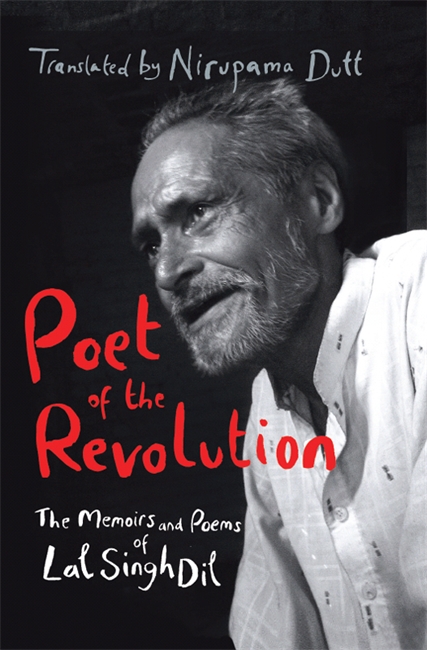
Lal Singh Dil is a legend in Punjab, famed as much for his rousing poetry as for the brew of his tea stall. Born into the ‘untouchable’ Dalit community in the years before Partition, he bravely challenged deep-rooted social prejudices through his crisp and stirring verses. His struggle led him to join the Naxalite movement-an experience that culminated in three horrifying years of torture at the hands of the police. In his later years, much to the dismay of his comrades, he converted to Islam because he believed that its tenets could be reconciled with the egalitarian and inclusive principles of communism. A powerful indictment of caste violence and discrimination, Poet of the Revolution describes Dil’s most turbulent years in his clear, fiery voice. Translated into English for the first time, this book also includes a selection of his most memorable poems.

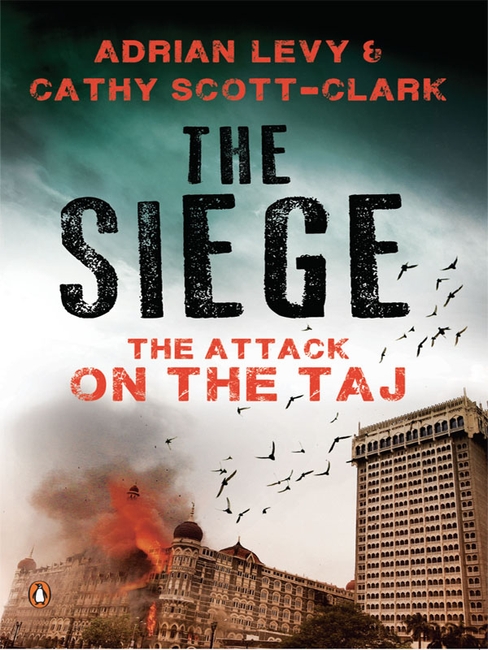
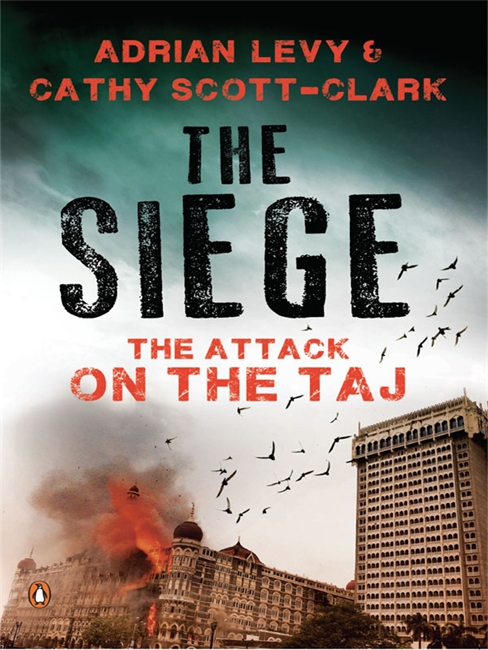
THE ULTIMATE ACCOUNT OF 26/11 FROM TWO ACCLAIMED INVESTIGATIVE JOURNALISTS
On 26 November 2008, four terrorists entered the Taj, Mumbai, and took over the hotel. What followed were nearly three days of terror as the world watched the great hotel go up in flames. Now comes the ultimate account of that attack. Telling the stories of guests, staff, police and the National Security Guard, and piecing together transcripts of calls between the terrorists and their handlers, The Siege takes you right into the warzone, showing you what it was like to be in the Taj on those fateful days.
Here are heart-stopping stories of guests and staff—of a couple about to celebrate their wedding, a British-Cypriot shipping magnate whose state-of-the-art yacht is docked in front of the hotel, and a young Taj employee who survives because of a stranger’s phone call. Here too are revelations about the training of the terrorists, Headley’s double game and the shocking incompetence of the Indian security forces. Terrifying, gripping and deeply moving, The Siege is unputdownable.
THE ULTIMATE ACCOUNT OF 26/11 FROM TWO ACCLAIMED INVESTIGATIVE JOURNALISTS
On 26 November 2008, four terrorists entered the Taj, Mumbai, and took over the hotel. What followed were nearly three days of terror as the world watched the great hotel go up in flames. Now comes the ultimate account of that attack. Telling the stories of guests, staff, police and the National Security Guard, and piecing together transcripts of calls between the terrorists and their handlers, The Siege takes you right into the warzone, showing you what it was like to be in the Taj on those fateful days.
Here are heart-stopping stories of guests and staff-of a couple about to celebrate their wedding, a British-Cypriot shipping magnate whose state-of-the-art yacht is docked in front of the hotel, and a young Taj employee who survives because of a stranger’s phone call. Here too are revelations about the training of the terrorists, Headley’s double game and the shocking incompetence of the Indian security forces. Terrifying, gripping and deeply moving, The Siege is unputdownable.

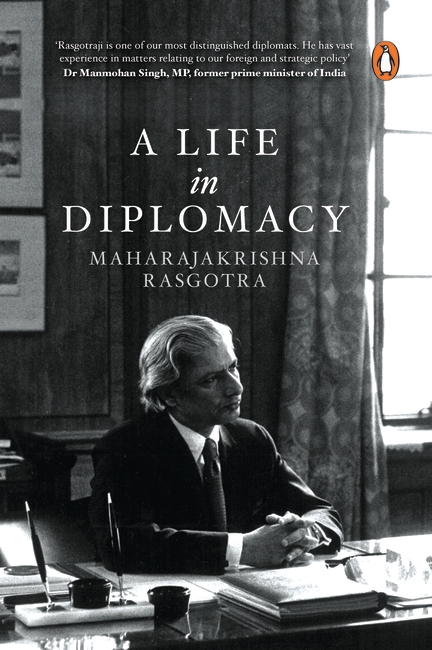
Former foreign secretary, Maharajakrishna Rasgotra joined India’s external affairs ministry when Jawaharlal Nehru, Girija Shankar Bajpai, Sardar Patel were-with a mix of pragmatism and hope-creating the foreign policy of the newly independent nation. This was taking place as the Cold War slid into the subcontinent and complex relationships with India’s neighbours-China, Pakistan and Nepal-were taking shape. Looking back on those crucial years with a discerning eye for the interplay of personalities-Nehru, Krishna Menon, or S. Radhakrishnan, for instance-Rasgotra assesses their influence on events and their impact on the evolution of Indian diplomacy.
For over three decades Rasgotra’s assignments took him to Nepal, Britain and France, among other countries, as well as twice to the United States. His account of Nixon and Kissinger, and the mix of truculence and persuasion in their dealings with Mrs Gandhi in the run up to the 1971 Bangladesh war, sheds new light on the events of that time. His tenure as foreign secretary covered a period of great change and A Life in Diplomacy provides a ringside view of the beginnings of ethnic violence in Sri Lanka, the last years of the Cold War, the negotiations on the formation of SAARC, Mrs Gandhi’s assassination and the Bhopal gas disaster.
This is a compelling, authoritative account of a personal and professional journey; a reflective look at the leaders, events and forces that formed relations between India and the world over fifty years.

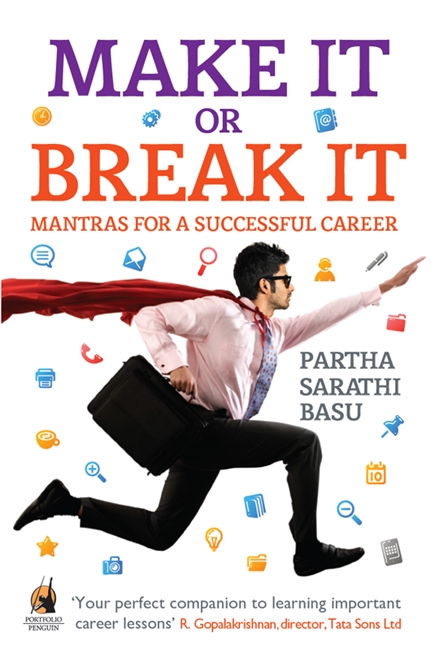
The corporate world can be ruthless with its unwritten rules and hidden pitfalls. To succeed, it is crucial to learn the tricks of survival quickly. Make It or Break It is an indispensible guide to imbibing these skills early on in one’s career. Packed with important life lessons, it shows you how to get started on the right foot and emerge a winner.

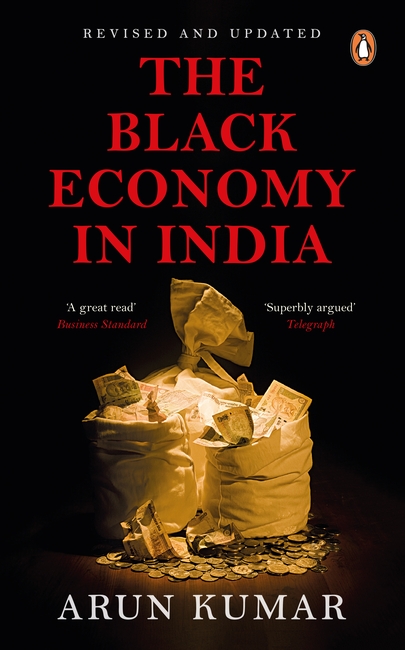
India’s white economy is inextricably linked with its black economy. Where in 1991 the black economy constituted about 35 per cent of the national economy, it had increased to 62 per cent by 2013. Both legal (industry, services, real estate, the share market) and illegal (havala, smuggling, narcotics) activities, as well as instances of corruption, contributed to this situation. But the cash, or ‘black money’, circulating in the country is merely around 3 per cent of the total domestic black economy. In this scenario, how effective has the central government’s move to demonetize 500- and 1000-rupee notes in November 2016 been?
In the only such book on the subject, written especially for the general reader, Arun Kumar critically examines the causes and consequences of black income generation and the possible ways to curb it. Backed by empirical data, his incisive analysis lays bare the pernicious effects of black income on the macroeconomy and the resultant inefficiency in society. It also focuses on the nexus of businessmen, politicians and the executive in perpetuating the black economy.
A groundbreaking book, The Black Economy in India shows how demonetization is not the way to end black economy, since what India must do is empower citizens and make leaders accountable.

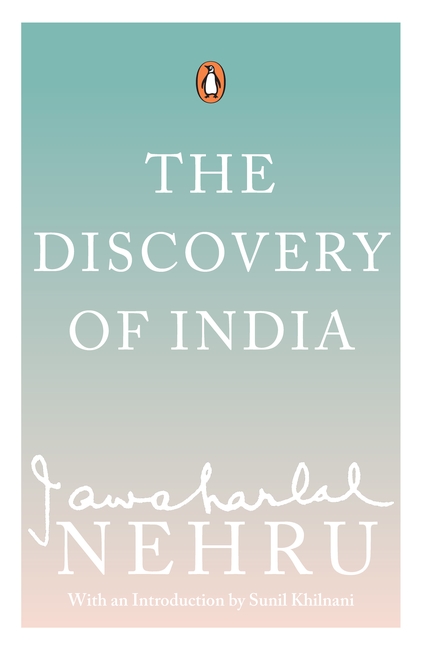
The Discovery of India has acquired the status of a classic since it was first published in 1946. Nehru’s brilliant intellect, deep humanity, and lucid style make ‘The Discovery of India’ essential reading for anyone interested in India, both its past and its present.
Written over five months when Jawaharlal Nehru was imprisoned in the Ahmadnagar Fort, The Discovery of India has acquired the status of a classic since it was first published in 1946.
In this work of prodigious scope and scholarship, one of the greatest figures of Indian history unfolds the panorama of the country’s rich and complex past, from prehistory to the last years of British colonial rule. Analysing texts like the Vedas and the Arthashastra, and personalities like the Buddha and Mahatma Gandhi, Nehru brings alive an ancient culture that has seen the flowering of the world’s great traditions of philosophy, science and art, and almost al its major religions.
Nehru’s brilliant intellect, deep humanity and lucid style make The Discovery of India essential reading for anyone interested in India, both its past and its present.