



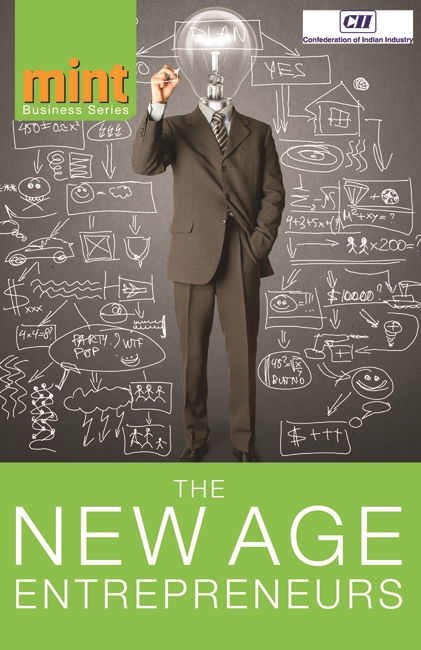
Have you wondered what goes on in the heads of entrepreneurs? What makes them tick? The New Age Entrepreneurs provides a peek into the lives of thirty successful entrepreneurs, including N.R. Panicker of Accel Ltd., Ramachandra Galla of Amaron and M. Murali of Sri Krishna Sweets, who established flourishing businesses borne out of innovative ideas. These trailblazers delved into diverse industries, ranging from information technology to luxury hotels and Indian sweets. With snappy, insightful and motivating tales, interspersed with interviews and vivid profiles, The New Age Entrepreneurs is a collection of vignettes of men who made their own rules and set standards for the rest of the industry to follow.
Catagory: Non Fiction
non fiction main category
The Resurgence of Satyam
All hell broke loose with a simple confession from Ramalinga Raju, founder and chairman of Satyam Computers, the fourth largest IT company in India with over 50,000 employees and business in more than 66 countries. His admission in 2009 of cooking the books to show exaggerated profits combined with the diving economy rocked India Inc. and forced it to look inwards.
With robust research, interviews and stories, Zafar Anjum tracks the chronicle from Raju’s confession and Satyam’s free-fall to the phoenix’s rise as Mahindra Satyam. This is a tale of betrayal and devastation, but more importantly of hope and resurrection. With an afterword by Anand Mahindra, chairman and managing director of Mahindra Group, The Resurgence of Satyam is the definitive book that will answer all that you wanted to know about the Satyam saga.
Working Hard Is Not Good Enough
Less than 2 per cent of entrepreneurs succeed, only 15 per cent of employees get the best hikes, promotions and appraisal ratings. Less than 1 per cent get to senior management positions and higher. Does this mean the rest do not work as hard or are not as smart? They are! But there are subtle yet profound differences. According to bestseller author T.G.C. Prasad, there is more to accomplishments than just working hard or at times even being smarter. Working Hard Is Not Good Enough is an insightful management book for all who want to make a difference to their performance, potential and life in general, to achieve success and happiness.
The Big Connect
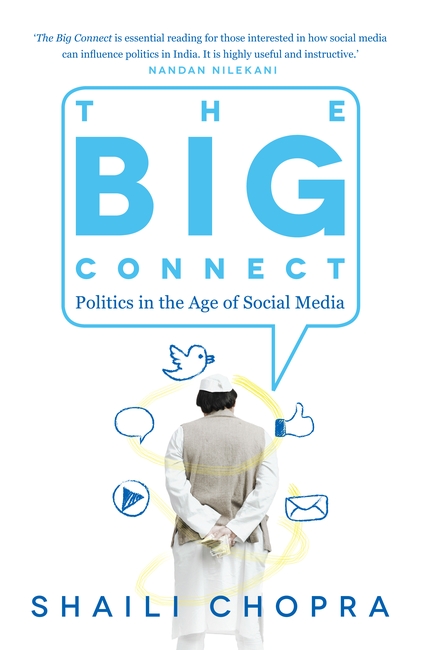
Are digital means of communication better than traditional bhaashans and processions? Will a social media revolution coerce armchair opinion-makers to head to poll booths?
Twitter, Facebook, and LinkedIn are changing the way the denizens of the world, and more specifically youth of this country, communicate and connect. In The Big Connect, Shaili Chopra traces the advent of social media in India and how politics and lobbying has now shifted to the virtual floor. She argues that though a post, a pin, or a tweet may not translate into a vote, it can definitely influence it. With comparisons to the Obama campaign of 2008 and 2012 and analysis of the social media campaigns of political bigwigs like Narendra Modi, Rahul Gandhi and Arvind Kejriwal-the book discusses the role of a digital community in Indian politics.
When I Was 25
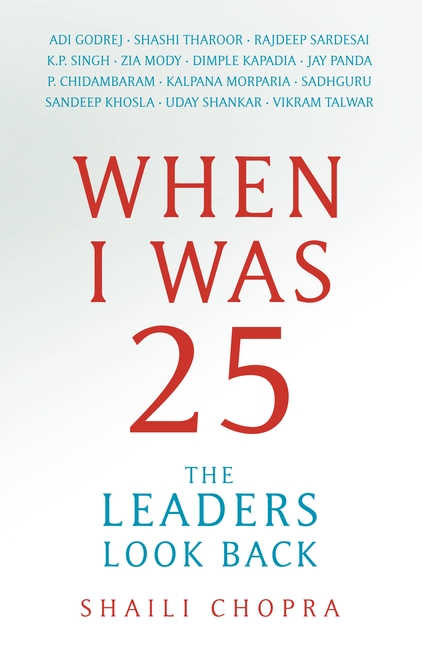
What do you dream about when you envisage your future? In When I Was 25, Shaili Chopra traces the youth of eminent personalities like Adi Godrej, K.P. Singh, P. Chidambaram and Dimple Kapadia. These successful people open up about the challenges they faced and the choices they made to reach where they are today. They also part with invaluable advice to the young, based on what they have learned in their careers. Honest and refreshing, this book will inspire you and point you to the path of greater glory.
The Bhishma Way
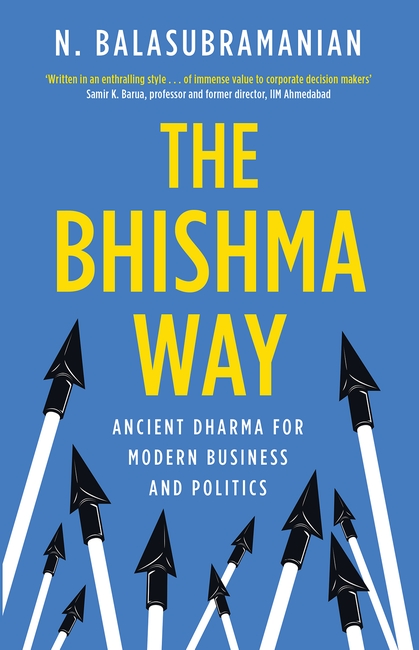
Contemporary dilemmas, whether in business or politics, bear an uncanny resemblance to the predicaments witnessed in the ever-timely epic, the Mahabharata. Who else but Bhishma Pitamah then to the rescue of the modern-day manager, politician or bureaucrat! In the epic, Bhishma is the upholder of truth and dharma, his life shaped by the difficult choices he makes. He isn’t always infallible, but even where his decisions are questionable, he serves as a role model.
Prof. N. Balasubramanian uses this powerful figure and his selfless values as a guide to make the right choices in The Bhishma Way. He discusses the importance of values, dharma, truth, justice and governance in businesses and governments. Analyses of real-life cases — among them, Union Carbide and the Bhopal gas tragedy, James Hardie and asbestos in Australia, and Ok Tedi in Papua New Guinea — complement the mythological stories and insightful anecdotes in this illuminating and thought-provoking book. This serves as an instructive read for anyone striving for a higher moral code in day-to-day decision-making and leadership.
What’s Changed
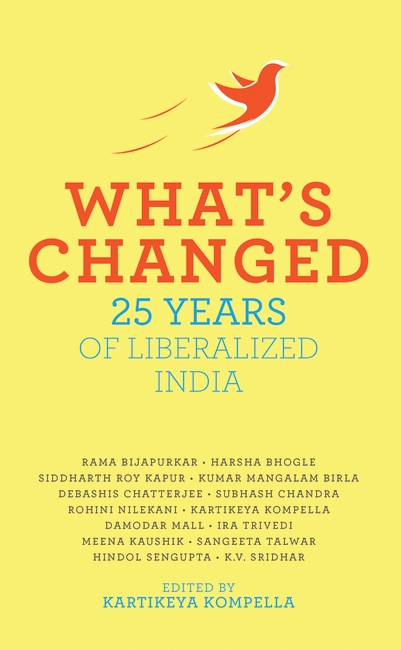
In 1991, an exciting journey began when finance minister Manmohan Singh initiated what came to be called the economic liberalization of India. It was the beginning of a bold new era that would redefine this country. India threw open its gates to outside businesses, embracing foreign products, competition and changing everything forever. Twenty-five years on, What’s Changed looks at how the country has metamorphosed since the first set of reforms were introduced. Experts like Kumar Mangalam Birla, Harsha Bhogle, Rama Bijapurkar, Siddharth Roy Kapur and many others write about the changes they have witnessed in their industries. This insightful book edited by Kartikeya Kompella casts a probing look at the quarter century of liberalized India and how it changed us all.
Pitch It!
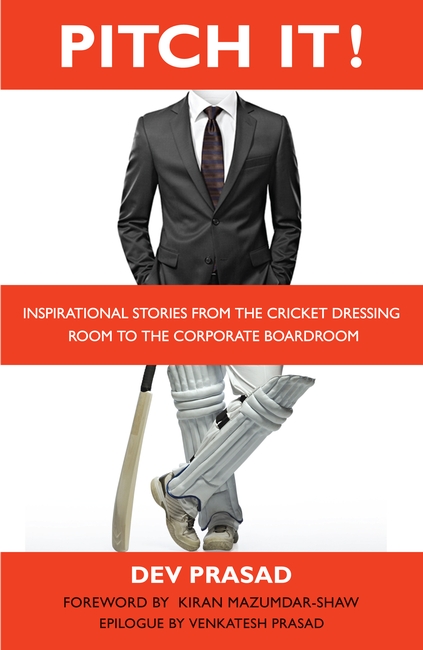
Pitch It! is an innovative and delightful book consisting of enthralling anecdotes linking top cricketing giants and corporate moguls that will act as a catalyst for professionals to soar to top echelons in their respective fields. Peppered with fascinating case studies from an eclectic spectrum of industries ranging from IT, consumer goods, automotive, aerospace, banking, petrochemicals and food and beverages, Pitch It! provides the essential blueprint for creating and sustaining winning organizations. It has a foreword by Kiran Mazumdar-Shaw and an epilogue by former Indian cricketer and coach Venkatesh Prasad.
My Dateless Diary
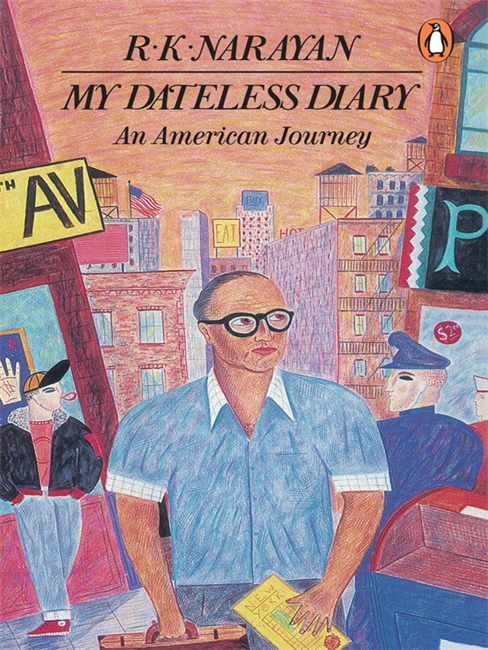
At the age of fifty, when most people have settled for the safety of routine, R. K. Narayan left India for the first time to travel through America. In this account of his journey, the writer’s pen unerringly captures the clamour and energy of New York city, the friendliness of the West Coast, the wealth and insularity of the Mid-West, the magnificence of the Grand Canyon…Threading their way through the narrative are a host of delightful characters-from celebrities like Greta Garbo, Aldous Huxley, Martha Graham, Cartier Bresson, Milton Singer, Edward G. Robinson and Ravi Shankar to the anonymous business tycoon on the train who dismissed the writer when he discovered Narayan had nothing to do with India’s steel industry. As a bonus, there are wry snapshots of those small but essential aspects of American life-muggers, fast food restaurants, instant gurus, subway commuters, TV advertisements, and American football. An entrancing and compelling travelogue about an endlessly fascinating land.
A Century Of Trust
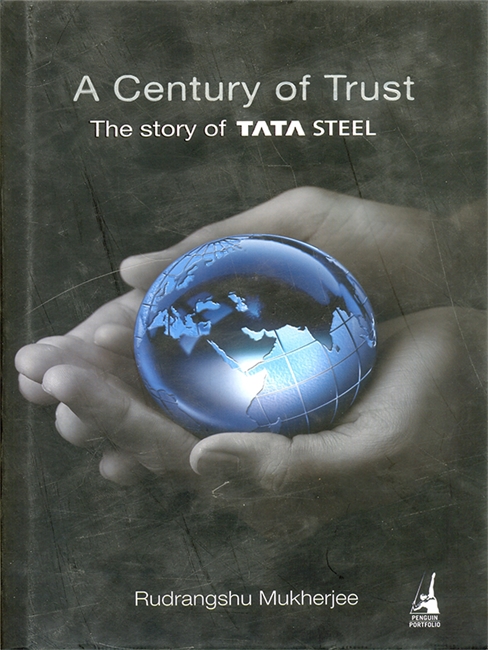
Long before India dreamt of industrial self-reliance, Jamsetji Tata envisioned India’s biggest industrial enterprise—its first steel plant. Long before the industrialized nations instituted worker friendly policies, an Indian company instituted an eight-hour day for its workers. Long before the term Corporate Social Responsibility was coined, a company in India chose to give upto 14 per cent of its profits to charity. That Indian company was none other than Tata Steel.
Established in 1907, the Tata Iron and Steel Company was born of the vision of Jamsetji Tata, an industrialist and patriot who foresaw India’s future as an industrialized power. Those who believed in his vision braved wild terrain, unimaginable danger and even risked their fortunes to build India’s first great steel works.
From then to now, Tata Steel has traversed a long and uneven road encompassing exceptional success and near bankruptcy to emerge as India’s largest steel producer. It is now 100 years old and with its takeover of the Anglo-Dutch giant Corus, it has become the sixth-largest steel producer in the world.
In this objective and well-researched biography, Rudrangshu Mukherjee brings to life the story of this remarkable company from its early days to its maturity, its struggle as also its triumphs, and its eventual transformation into a global giant. In the process, he chronicles critical aspects of India’s social and political history: the role of government in business, the restrictions on doing business in a planned economy and the role of business in society. He also provides insights into the remarkable social contributions of Tata Steel in the areas of labour welfare and legislation, education, health and the arts.
This in-depth history, though told from a corporate viewpoint, is an inspiring narrative of how the dedication, ingenuity and hard work of many came to create India’s first great industrial enterprise. An absorbing and inspirational biography, A Century of Trust is a gripping account of patriotism, enterprise and dedication.