



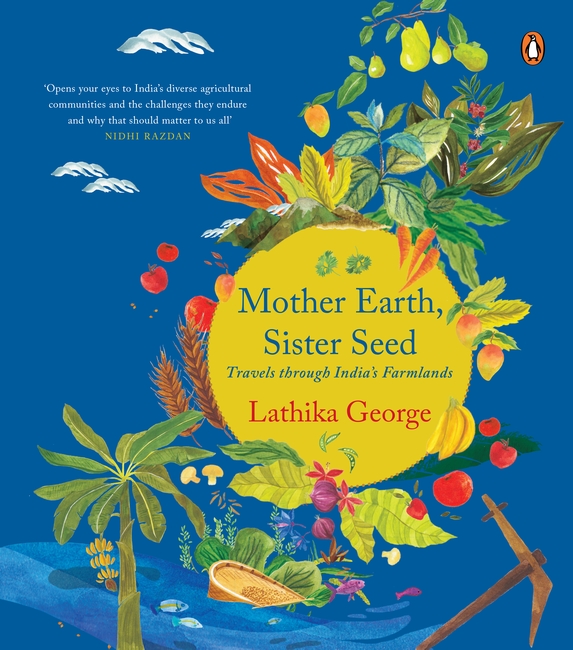
In Mother Earth, Sister Seed, landscape designer Lathika George looks at India’s traditional agricultural communities and the changes-some good, some not-that modernization and urbanization have wrought. Paying tribute to the ancient systems of farming, George talks about the men and women whose livelihoods are derived from the land and the sea. An organic gardener herself, she takes you through the changing seasons of agriculture as she travels around the country, from Rameshwaram in Tamil Nadu and Coorg in Karnataka to the Khasi Hills in Meghalaya and Chamba in Himachal Pradesh, documenting the celebrations, rituals, folklore and recipes associated with each.
Mother Earth, Sister Seed is a lyrical journey dedicated to ways of life that are vanishing. It captures the myriad ways in which the food we eat is produced and brings to life the industrious farmers, fi shermen and forest folk behind it.
Catagory: Non Fiction
non fiction main category
What I Did Not Learn At IIT
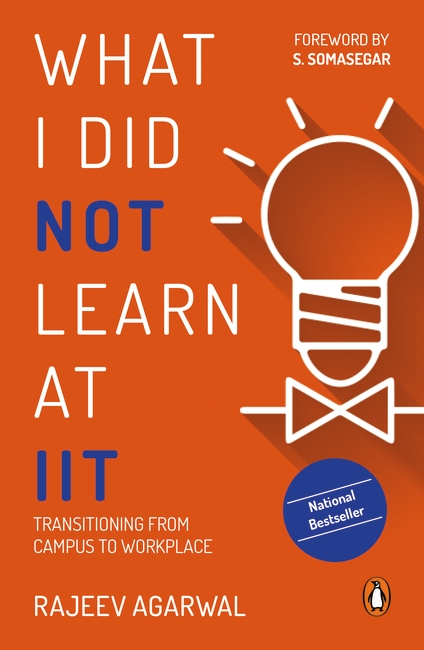
Every year, graduating engineers are told that they are destined for success. But what are the habits and behaviours that actually lead to success? In What I Did Not Learn at IIT, Rajeev Agarwal, founder and CEO of MAQ Software, distils decades of life experience into one accessible and informative guide. In simple language, he explains the success techniques he applied and what worked for him.
Encouraging graduates to look at their careers over a forty-year span, Rajeev explains that successful people choose to be passionate about every job they have. Using a skilful combination of personal stories and checklists, What I Did Not Learn at IIT provides students, young and old, with a roadmap for success.
Demonetization and the Black Economy
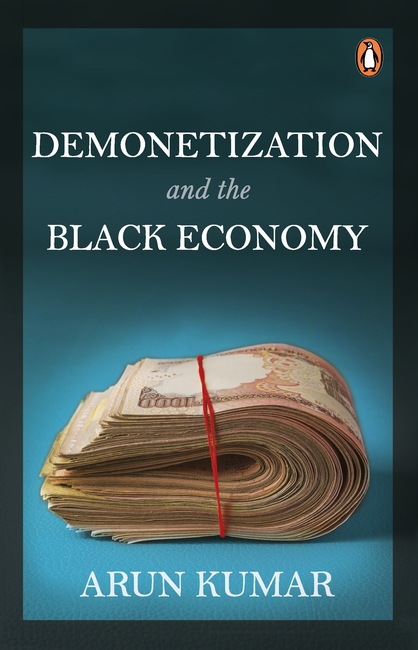
On 8 November 2016, the prime minister announced the immediate cancellation of all
Rs 500 and Rs 1000 denomination notes, wiping out 86 per cent of the currency in
circulation. India’s well-functioning economy went into a tailspin.
This move, it was claimed, was made to wipe out corruption, deter the generation of black
money, weed out fake Indian currency notes and curb terrorism. Overnight, people in India realized that the cash in their pockets had no value. A window of fifty days was granted to 1.3 billion people to convert their old notes into new ones.
Businesses, especially in the unorganized sectors, came to a grinding halt. Patients in hospitals faced huge problems, farmers had difficulty buying inputs, weddings were scaled down, and fishermen watched their catch rot. Many lost their jobs and could not support their families.
A year later, the RBI announced that 99 per cent of the old currency notes had been deposited with
it. India continues to grapple with the effects of this move. The black economy has not been
dented; counterfeiting and terrorism continue; the credibility of the RBI, banks and currency is
damaged; the accountability of the Parliament and the prime minister has been eroded; and the social divide
has widened. There have been many arguments and counter-arguments from both sides, but they have
missed the complete picture.
Demonetization and the Black Economy, for the first time, lucidly explains the story
of demonetization along with its effects on the economy.
Dera Sacha Sauda and Gurmeet Ram Rahim
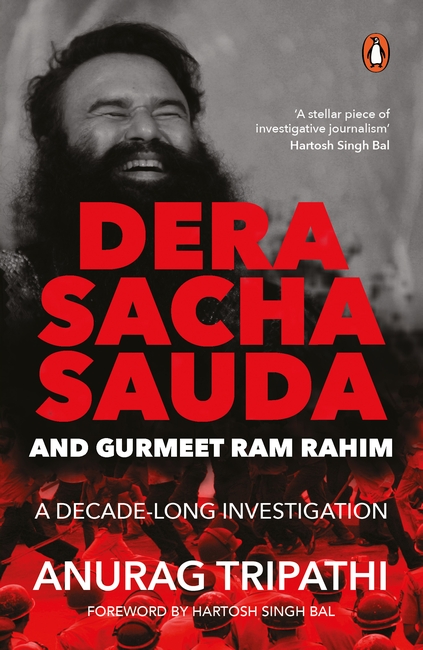
A journalist’s account of investigating Gurmeet Ram Rahim and his empire of exploitation
How did a nondescript young man from a farming family become the head of a quasi-religious sect with a million followers willing to die and kill for their ‘Pitaji’?
The story of the rise of Gurmeet Ram Rahim Singh Insan of the wildly popular Dera Sacha Sauda is anything but ordinary. It allegedly involved sexual exploitation, forced castrations, private militias, illegal trade in arms and opium, and land grab on an untold scale-until the self-styled godman was convicted for one of his many crimes in August 2017.
The book opens with an anonymous letter which led to the first-ever journalistic investigation, in 2007-Tehelka‘s Operation Jhootha Sauda-into the reported criminal activities at the Dera. In the years that followed, the author continued to document the lonely battles for justice against the influential godman who had the might of the Dera’s machinery and manpower behind him.
This book is as much about the grit and determination of ordinary citizens fighting power systems as it is about the difficulty of investigating crimes committed by the rich and powerful in India today.
Cyber Sexy

In 1964, American judge Potter Stewart famously said, ‘I can’t define pornography, but I know it when I see it.’ Over fifty years later, the reverberations of these words are still being felt across the world. Be it proposed porn bans, religious morality or women’s rights, the assumption is that porn has a single, knowable definition. But one man’s art is another woman’s erotica is another person’s sex tape.
In this intrepid, empathetic and nuanced account of the sexual shopping cart that is the internet today, Richa Kaul Padte takes readers on an intimate tour of online sex cultures. From camgirls to fanfiction writers, homemade videos to consent violations, Cyber Sexy investigates what it means to seek out pleasure online.
And as for whether or not something counts as porn? You’ll know it when you see it.
Eleven Ways to Love
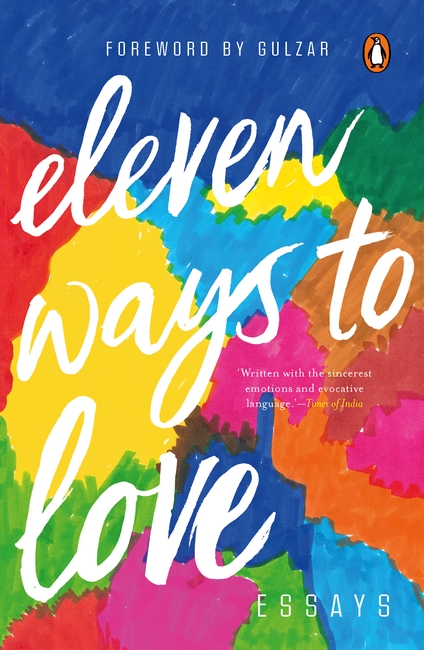
People have been telling their love stories for thousands of years. It is the greatest common human experience. And yet, love stories coach us to believe that love is selective, somehow, that it can be boxed in and easily defined. This is a collection of eleven remarkable essays that widen the frame of reference: transgender romance; body image issues; race relations; disability; polyamory; class differences; queer love; long distance; caste; loneliness; the single life; the bad boy syndrome . . . and so much more.
Pieced together with a dash of poetry and a whole lot of love, featuring a multiplicity of voices and a cast of unlikely heroes and heroines, this is a book of essays that show us, with empathy, humour and wisdom, that there is no such thing as the love that dare not speak its name.
Breach
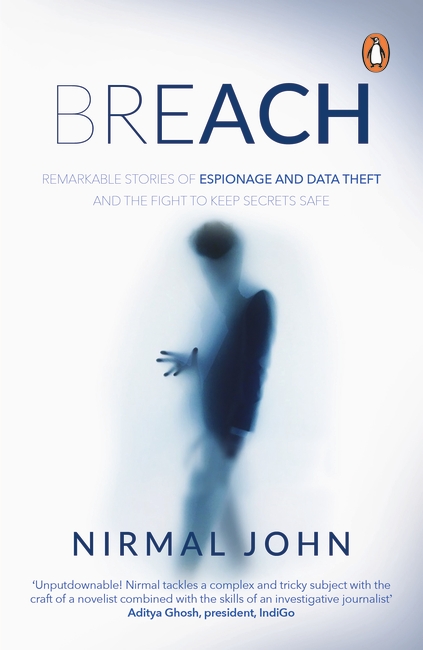
A journalist accused of hacking the inbox of a billionaire
A company which fought back when its data was stolen
An entrepreneur who fought an international battle to end piracy
A hacker who decided to take a start-up hostage by stealing its data
Full of riveting stories of hackers, police and corporates, Breach reads like a thriller. The book brings to light several incidents which till now were brushed under the carpet. It has instances of piracy, data theft, phishing, among many others.
Even though he focuses on India, Nirmal John takes great pains to show links between underground international networks working to undermine data security.
From XL to XS

Can you change the shape of your body?
Yes, you can. Payal Gidwani Tiwari, Bollywood’s most celebrated yoga expert, tells you how to go From XL to XS. With simple and easy to follow principles and exercise routines, learn how to lose (or gain) weight, stay fit, and transform your body structure. And that’s not all! Learn how to look ten years younger and about other invisible factors like stress, sleep, etc. that affect the way you look. So now you don’t need to envy your favourite stars. You can look like them. With photographs, celeb workouts, and useful tips by stars, From XL to XS is the best gift you can give yourself.
The Noodle Maker Of Kalimpong
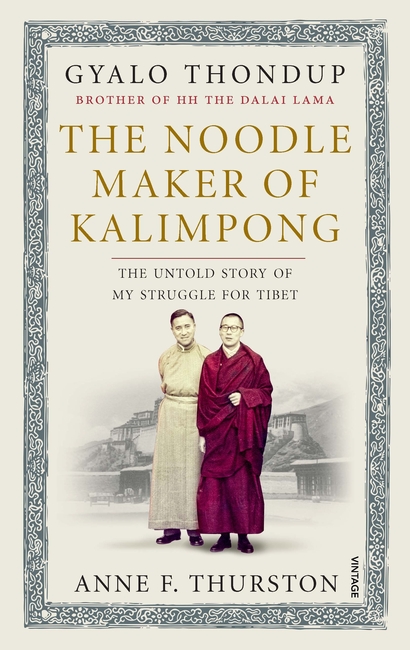
This is the untold story of Tibet—a compelling account of conspiracy, covert organizations and international intrigue. It includes hitherto classified information and photos gleaned from privileged sources. Central to these revelations is a seemingly simple man: Gyalo Thondup, the Dalai Lama’s elder brother. After Tibet was overrun by the Chinese in 1951, Thondup served for decades as His Holiness’s special envoy—the trusted interlocutor between his country and foreign leaders including Chiang Kai-shek, Jawaharlal Nehru, Zhou Enlai and Deng Xiaoping. He has acted as a go-between for the CIA and Tibetan freedom fighters. He has recruited for the resistance and negotiated with China. His has been a vital role in the history of modern, tragedy-ridden Tibet.
Now, together with Anne F. Thurston, Gyalo Thondup shares his experiences for the first time. He offers an intimate portrait of the Dalai Lama and their immediate family, and reveals his secret international role. No one has a better grasp of the ongoing great game as the divergent interests of China, India, Russia and the United States continue to play themselves out over the Tibetan plateau, and no one is better placed to offer his vision for the future of Tibet in the twenty-first century.
The Millennials
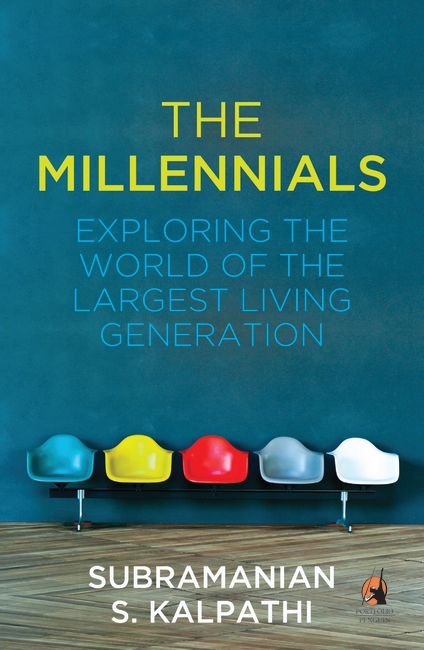
Born between the early 1980s and 2000, the millennials are the youngest (and on several occasions, the largest) generation at work today. Aided by discerning research, in this comprehensive book, Subramanian S. Kalpathi turns the modern workplace on its head and asks pressing questions about what makes this raring-to-go generation tick.
With case studies of pioneering organizations, and holistic, multigenerational narratives, The Millennials will give you a glimpse into the future by explaining the goals, motivations and dreams of an inspired generation.