




An exhaustive and unforgettable portrait of India’s greatest and most respected industrialist. Written with J.R.D. Tata’s co-operation, this superb biography tells the J.R.D. story from his birth to 1993, the year in which he died in Switzerland. The book is divided into four parts: Part I deals with the early years, from J.R.D’s birth in France in 1904 to his accession to the chairmanship of Tatas, India’s largest industrial conglomerate, at the age of thirty-four; Part II looks at his forty-six years in Indian aviation (the lasting passion of J.R.D’s life) which led to the initiation of the Indian aviation industry and its development into one of India’s success stories; Part III illuminates his half-century-long stint as the outstanding personality of Indian industry; and Part IV unearths hitherto unknown details about the private man and the public figure, including glimpses of his long friendships with such people as Jawaharlal Nehru, Mahatma Gandhi, Indira Gandhi and his association with celebrities in India and abroad.
Catagory: Non Fiction
non fiction main category
How May I Help You?
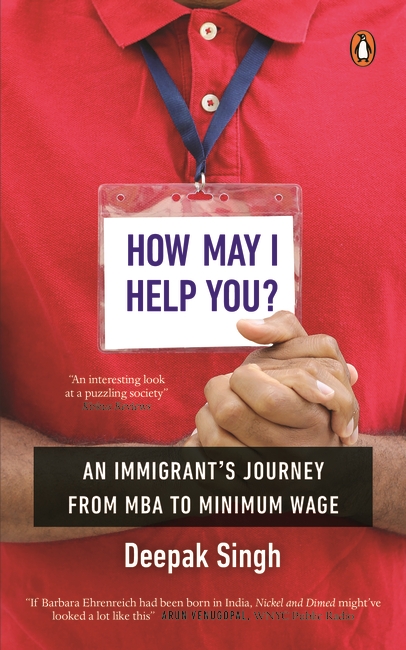
In this charming and insightful story, Deepak Singh chronicles his journey as an Indian immigrant in the United States of America.
Deepak falls in love with an American visiting India as an exchange student. The young couple gets married and leaves the country to live the American dream. Unfortunately for Deepak, he soon realizes that reality was completely different.
Armed with an MBA from a good B-school and quitting a cushy job in BBC, Deepak moves with his wife. But once in the US, all he is able to get is a minimum-wage job in an electronics store. Every day he confronts an unfamiliar American culture. He experiences the deeply entrenched racism and observes first-hand the crushing reality of being poor in America.
‘Fresh off the plane’, Deepak tells an intimate tale of living in an unfamiliar place, being the perennial outsider and making a mixed marriage work.
How May I Help You is a moving tale of love, empathy, vulnerability and hope that will keep you hooked till the last page.
Warrior of the Fourth Estate
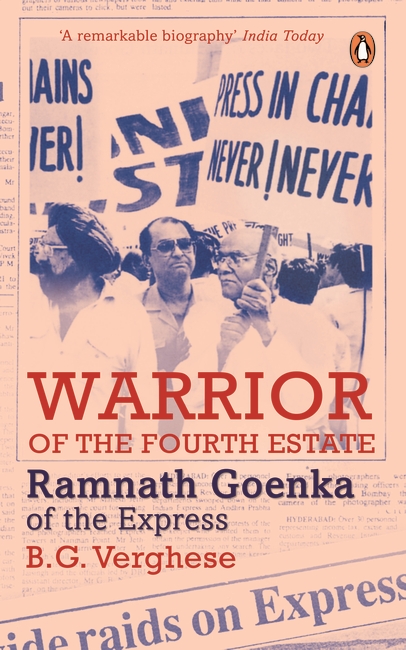
Ramnath Goenka, or RNG as he was popularly known, redefined what it meant to be a newspaper baron. A man of many parts-freedom fighter, Gandhian worker, politician, merchant, industrialist-he made it his mission as a publisher to empower the citizen and hold the ruling classes accountable, often at enormous cost to himself. Goenka was a fearless agent for the freedom of the press, and famously waged an epic battle of defiance against the government during the Emergency.
B.G. Verghese’s biography charts the tumultuous course of Goenka’s life, from his modest beginnings to his building of the vast Indian Express empire with its multiple editions. It also paints a compelling portrait of a man who was a bundle of contradictions, who had staunch admirers as well as bitter enemies, a man you could love or hate but never ignore. This book is a roller-coaster ride through the twists and turns of Ramnath Goenka’s fortunes, including scandals and scoops, fiery public campaigns, dramatic court battles and the making and unmaking of political leaders and governments. Along the way, it tells the story, too, of a newspaper.
Indira Gandhi
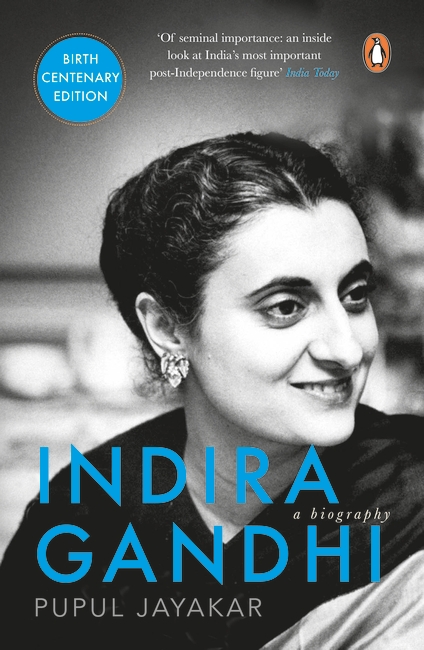
Indira Gandhi’s life spanned over two-thirds of a century. By the time of her brutal assassination in 1984, she had established herself as the most significant political leader India had seen since the death of her father, Jawaharlal Nehru. In this book, written with the close cooperation of her subject, Pupul Jayakar seeks to uncover the many personalities that lay hidden within Mrs Gandhi. Much more than a political biography, the book reveals the complex personality of Indira Gandhi-her thoughts and feelings, her hates and prejudices, her insights and her faults, her loves and emotional entanglements.
Full of startling insights, Indira Gandhi: A Biography paints a magnificent portrait-at once empathetic and unprejudiced-of one of the twentieth century’s most remarkable women.
India in Slow Motion
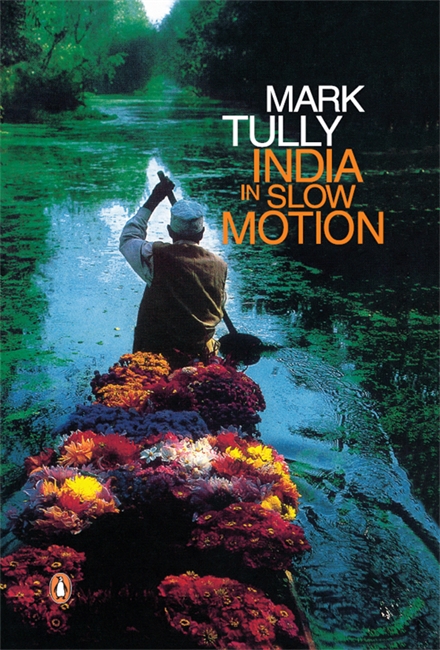
Mark Tully is incomparable. No foreign commentator has a greater understanding of the passions, the contradictions, the charms and the resilience that constitute India. In India in Slow Motion, Tully and his colleague Gillian Wright delve further than ever before into this nation of over one billion people, attempting to unravel a culture that, famously, has always resisted unravelling. India in Slow Motion is the account of a journey that for Tully and Wright has no true beginning or end. Covering a diverse range of subjects-from Hindu extremism to child labour, Sufi mysticism to the crisis in agriculture, the persistence of political corruption to the problem of Kashmir-this book challenges the preconceptions others have about India, as well as those India has about itself. India is often depicted as a victim of forces too wild to be controlled-of post-colonial malaise, of religious strife, of the caste system, of a corrupt bureaucratic machine. India in Slow Motion refutes this, probing into the heart of the Indian experience and arguing that change is possible and that solutions do exist. In the process it brings the country and its people brilliantly alive.
IIMA – Business And Intellectual Property

Business and Intellectual Property reflects on the future of Intellectual Property (IP) in the age of new media and shows how—in a rapidly changing business field—managers and decision-makers need to be more perceptive, agile, and vigilant than ever before. Drawing on contemporary business affairs and strategies, it explores the nature and scope of IP and the evolution of national laws and global agreements like the TRIPs to protect it. It also explores measures (use of patents, copyright, and trademarks) used by some of the biggest brands—Coke, MGM, 20th Century Fox, Microsoft, Harrods, Maruti, Tata—to manage disputes and protect themselves. Accessible, clear, and using a wide range of case studies, Business and Intellectual Property gives an excellent overview of a subject that is becoming a key aspect of many businesses today.
The IIM Ahmedabad Business Books bring key issues in management and business to a general audience. With a wealth of information and illustrations from contemporary Indian businesses, these non-academic and user-friendly books from the faculty of IIM Ahmedabad are essential corporate reading.
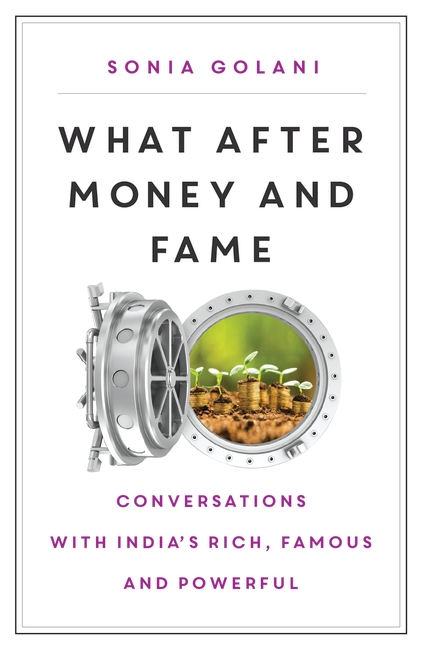
What After Money and Fame?
Adi Godrej * Ajay Piramal * Amit Chandra * Anu Aga * Hafeez Contractor * Harish Salve * Javed Akhtar * Jayant Sinha * Kavita Seth * Narayana Murthy * Dr Naresh Trehan * Rashesh Shah
Twelve distinguished Indians who have achieved dizzying heights of success. What lies beyond material triumph for them? What is it that continues to motivate and sustain them? How much money do they think amounts to enough for individuals? What is their core philosophy of life that has helped them achieve what they have? What according to them is most important in life?
From the author of the bestselling book Corporate Divas, this is another insightful and engaging read that answers the above questions and more. Sonia Golani delves deep into the minds and psyche of some of India’s doyens par excellence, and through a series of in-depth conversations, attempts to throw light on the measure of a life well lived. What after Money and Fame is riveting and uplifting, an indispensable resource for anyone striving to attain exceptional success and balance in their lives-for sustained accomplishments for themselves-as well as towards making a definite contribution to the nation.
Unreal Aliens
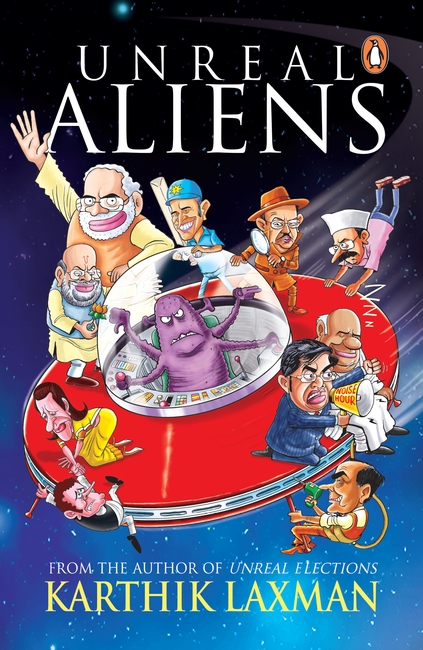
For the first time in human history, a nation is playing host to an alien delegation. And it is Modi-led India that has this high honour. Prime Minister Modi rolls out the red carpet for the aliens. He receives them at the airport, shows them the sights in Delhi and convinces them to invest in the Make in India campaign. The leader of the alien delegation even holds a broom to promote Swachh Bharat. But what is the real reason the aliens have come to India? Are they friends? Or will they turn foes? Read this hilarious, rib-tickling novel from the authors of Unreal Elections to find out.
Death Is Not the Answer

Did you know that India is the world’s suicide capital with over 2.6 lakh cases reported every year?
But what we know about the causes of suicide lags far behind our knowledge of many other life-threatening illnesses, partly because the stigma surrounding suicidal behaviour has limited society’s investment in suicide research.
It is said that more than 50 per cent of all those who attempt suicide tell someone about their intention. So how do you recognize suicidal symptoms in people around you and get help?
From insights into the mind of a suicidal patient and understanding why one is driven to suicide to the right kind of intervention when suicide has been attempted, and a list of suicide hotlines, this book is an attempt to help thousands who are questioning the motive of their life. It is just as useful to anyone who has lost a loved one to suicide and is looking for a way to overcome grief.
The Content Trap
Companies everywhere face two major challenges today: getting noticed and getting paid. To confront these obstacles, Bharat Anand examines a range of businesses around the world, from Chinese Internet giant Tencent to Scandinavian digital trailblazer Schibsted, from The New York Times to The Economist, and from talent management to the future of education. Drawing on these stories and on the latest research in economics, strategy, and marketing, this refreshingly engaging book reveals important lessons, smashes celebrated myths, and reorients strategy.
Companies that now flourish are finding that the connections they foster are more important than the content they create. Success comes not from making the best content but from recognizing how content enables customers’ connectivity; it comes not from protecting the value of content at all costs but from unearthing related opportunities close by; and it comes not from mimicking competitors’ best practices but from seeing choices as part of a connected whole.
Digital change means that everyone today can reach and interact with others directly: We are all in the content business. But that comes with risks that Bharat Anand teaches us to recognize and navigate. Filled with conversations with key players and in-depth dispatches from the front lines of digital change, The Content Trap is an essential new playbook for navigating the turbulent waters in which we find ourselves.