A remarkable insight into the films and times of India’s greatest star-actor
In an industry where fashions change every Friday, Amitabh Bachchan has been synonymous with cinematic entertainment for over thirty years. But beyond the labels of ‘one-man industry’ and ‘star of the millennium’, a number of issues pertaining to the star, his films and his era remain largely unaddressed.
What is it that makes Amitabh Bachchan the star he is? Is it his undeniable genius as an actor, his ability to connect with the masses and the classes alike, or is it his writers and directors who project him in varied roles? Did his films in his heyday reflect the angst of his time, or did they ferment the spirit of anger and rebellion in the first place? Was he really the rebel as his ‘angry young man’ image suggests, or was there, behind all the sound and fury, a conformist subtext that called for restoration of the status quo? How relevant is Amitabh Bachchan today?
In Amitabh: The Making of a Superstar, Susmita Dasgupta answers these and other questions that lie buried in the trail of glory the star blazed. In a warm and insightful analysis, the author traces the world-view and philosophy that have shaped the films of Amitabh Bachchan-from the angry young man of Zanjeer, the tragic antihero of Deewar and the entertainer of Amar Akbar Anthony to his more conservative turns in Mahabbatein and Kabhi Khushi Kabhie Gham. In the process, she not only chronicles the star’s journey from a flop actor to a national icon but also brings to life a period in the history of Indian cinema which altered forever the economics of film-making in the country.

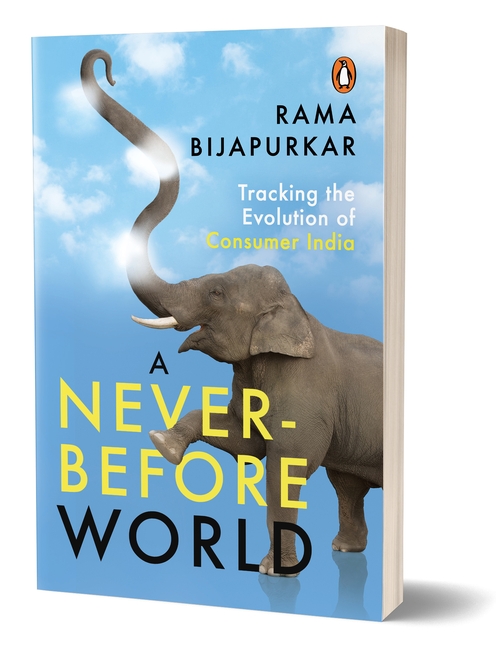
Five years after We Are Like That Only, her seminal and bestselling study on the logic of consumer India, Rama Bijapurkar takes stock of its evolution in her new book. She starts from the point that emerging markets-the queen of which is India-are a never-before world, and businesses approaching them need to understand the environment in which consumers live, how they think, how heterogeneous they are and how they are changing. All of these have key implications for correctly evaluating business opportunity and determining market strategy. India has entered the third decade after liberalization, buffeted by changes on all fronts. Consumption structures and consumer behaviour are changing, and consumer needs and desires are growing faster than incomes. The real war for the consumer rupee begins now-the trick is to understand, without prejudice or preconceived notions, the new world of consumer India. Setting consumerism in the context of society and people’s lives, looking not just at how much money people have, what they spend it on and how, but at how businesses can be relevant to consumers’ lives and life aspirations, A Never-Before World explores everything that businesses need to know and think about to win in the crucial Indian market.

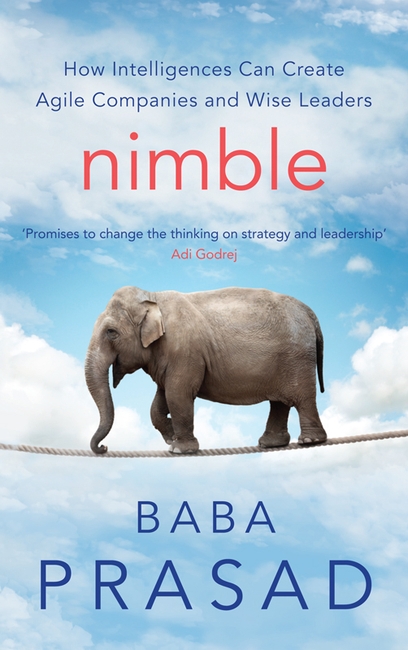
The world today can be best described by one word: turbulence. As change rages all around, how can you—as an individual or as an organization—take advantage of unexpected opportunities and succeed in difficult circumstances?
In a book that challenges traditional notions of strategy, Baba Prasad draws on his research at some of the world’s best business schools to show how intelligence can help you and your business navigate this maelstrom. The Intelligences Framework presented in Nimble goes beyond the common management concept of ‘agility’—it presents an immensely practical and hands-on approach for companies and individuals to develop five kinds of intelligences and apply them in different settings for maximum benefit.
Bridging strategy, leadership and innovation—and with vivid illustrations—Nimble provides a path-breaking assessment methodology and a systematic four-step approach that every company and individual can use to lead amid turbulence.

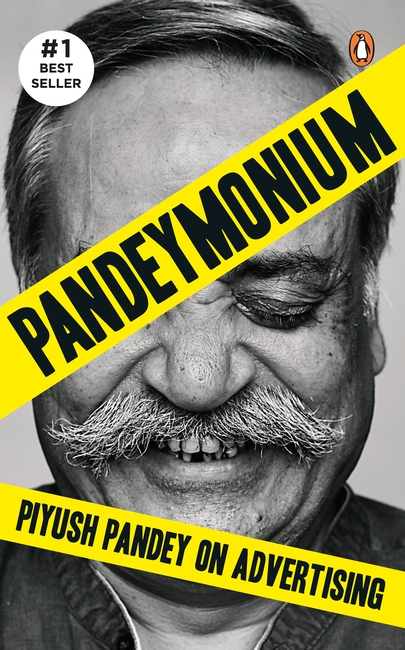
What makes Piyush Pandey an extraordinary advertising man, friend, partner and leader of men? How does he manage to exude childlike enthusiasm and bring such deep commitment to his work?
You’ve seen most of the things that Pandey has seen in his life. You’ve seen cobblers, carpenters, cricketers, trains, villages, towns and cities. What makes him different is the perspective with which he views the same things, his ability to store all that he sees into some recesses of his brain and then retrieve them at short notice when he needs to. That ability combined with his love, passion and understanding of advertising and of consumers make him the master storyteller that he is.
In Pandeymonium, Pandey talks about his influences, right from his childhood in Jaipur and being a Ranji cricketer to his philosophy, failures and lessons in advertising in particular and life in general. Lucid, inspiring and unputdownable, this memoir gives you an inside peek into the mind and creative genius of the man who defines advertising in India.

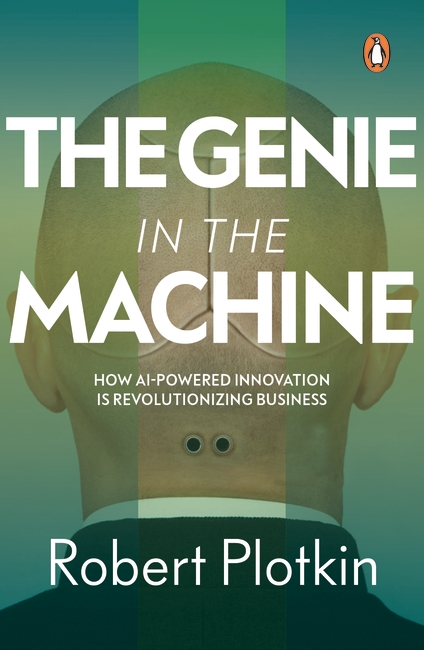
The future of businesses depends on how they respond to the lightning-speed changes in innovation technology
We have long considered inventing to be a uniquely human activity. But software today can automatically generate designs for everything, from toothbrushes to automobile frames, more quickly and inexpensively than ever before. Artificial invention is enabling small teams of inventors to compete with mega-corporations who depend on old methods, and is making it possible for even consumers to design and manufacture new inventions from the comfort of their home.
The Genie in the Machine is a landmark book that explores the impact of AI-powered innovation on businesses. Along with practical advice for inventors, high-tech companies and patent lawyers, this futuristic book attempts to answer two necessary questions: Should inventions designed by software be patentable? Should the software that produces those designs be patentable?
Our decisions about these inventions today will dictate who gets to control this powerful technology tomorrow.
In just over five years of its existence, the Tech Mahindra Foundation (TMF) has helped bring about a significant change in the lives of thousands of underprivileged children and youth. Funded entirely by Tech Mahindra, it has risen to the Herculean challenge of providing them educational opportunities from primary schooling to vocational training. In this endeavour, it has laid special emphasis on those who are more vulnerable: the girl child, the physically challenged and religious minorities. And with each passing year, its philanthropic operations and its successes continue to grow, bringing hope to an ever-increasing number of disadvantaged young people.
Making Dreams Come True provides valuable insights into how a medium-sized private foundation has become a significant contributor to some of the country’s most important developmental goals. Moreover, it is a testament to the passion and hard work of not only the TMF and its personnel but also others involved in this important project of building a more inclusive India.

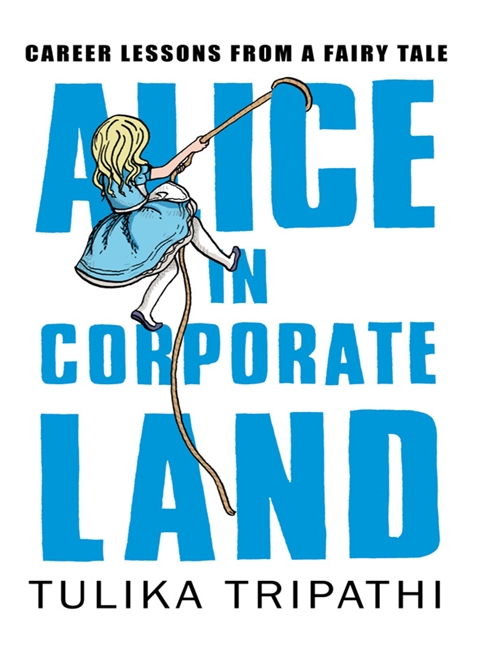
Alice teaches you to climb the corporate ladder
This is a lovely little book based on the Alice in Wonderland fairy tale with a twist. A nervous and confused young girl is trying to get a good night’s rest before her first day at work. Alice’s rabbit leads her on a magical journey where she meets Pinocchio, Rapunzel, Cinderella and the Seven Dwarfs who coach her by imparting important career lessons in their own inimitable style.
Tulika Tripathi has rapidly scaled the corporate ladder to become a leader at a global executive search firm. This, combined with a love for fairy tales, puts her in the unique position to distil and offer career wisdom to those who are beginning their journey.
Recipes treasured by more than three generations of women
The first volume of Samaithu Paar was published in 1951. More than just a cookery book, it was intended to serve as a manual for daily use. Over the years, those who did not find time to learn cooking in the traditional way from their mothers have used the three volumes of Samaithu Paar to set up home and manage kitchen all over the world.
The Best of Samaithu Paar brings together 100 most-loved recipes chosen from the three-volume original. Maintaining the simplicity of language, easy-to-follow directions and the adherence to the smallest details, the recipes have been suitably revised and adapted using universal measures of cups and spoons and modern utensils and appliances in place of the more traditional ones.
Recipes range from the basic idli, dosai, sambar and rasam to their many variations that are not so familiar to all Indians. The book also includes specialities like Moar Kuzhambu, Mysore Rasam, Pongal, Murukku and Jangiri, as well as pachadis and pickles.
A must-have for all those who enjoy traditional Indian cuisine.
‘Go, kiss the world’ were Subroto Bagchi’s blind mother’s last words to him. These words became the guiding principle of his life. Bagchi grew up amidst what he calls the ‘material simplicity’ of rural and small-town Orissa, imbibing from his family a sense of contentment, constant wonder, connectedness to a larger whole and learning from unusual sources. From humble beginnings, he went on to achieve extraordinary professional success, eventually co-founding Mindtree, one of India’s most admired software services companies. Through personal anecdotes and simple words of wisdom, Bagchi brings to the young professionals lessons in working and living, energizing ordinary people to lead extraordinary lives. Go Kiss the World will be an inspiration to ‘young India’, and to those who come from small-town India, urging them to recognize and develop their inner strengths, thereby helping them realize their own potential.

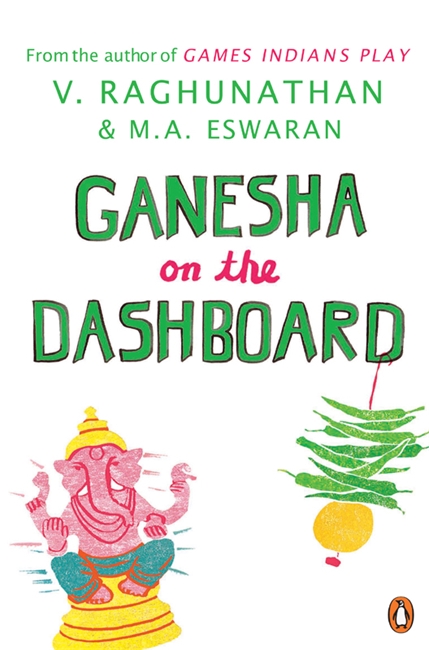
Take the way we go about buying a new car. We identify an auspicious date and time, then proceed to break a coconut, plonk a plastic deity of Ganesha on the dashboard and zoom off at great speed, refusing to wear our seat belts.Supposedly educated, smart and tech-savvy, Indians can be surprisingly unscientific in their daily lives. Think of the crores spent every year remodelling homes according to Vaastu, in the hope of changing luck; and the continued horrors of female infanticide, because it is only the son who can help the father’s journey to heaven . . . This unsparingly critical, scathingly analytical book points out the shocking lack of scientific temper among the vast majority of Indians, and how this holds us up as a nation in the twenty-first century.