



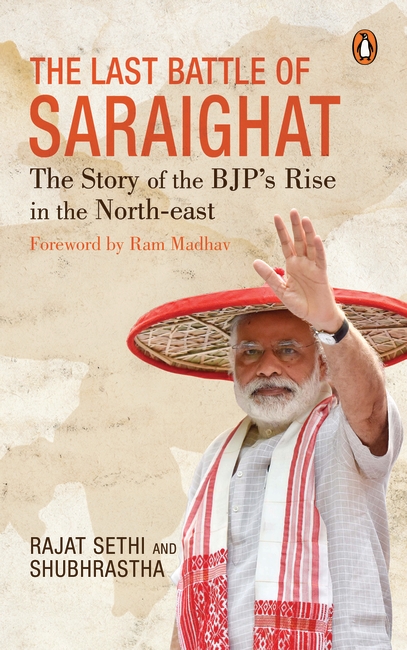
The first-ever account of the BJP’s landslide victory in the 2016 Assam legislative assembly elections, the battle of Saraighat was fought in 1671 between the Ahoms of Assam and the Mughal invaders. In 2016, the BJP centred its strategy for the legislative assembly elections on this historic battle, focusing on issues of illegal migration, constantly invoked in the party’s rallies, posters and communication to appeal to the voting public. The historic elections saw the BJP win an overwhelming majority of assembly seats in Assam, where the Congress had been in power for decades. It was a watershed moment that opened the door for the party to the political corridors of the north-east. In this book, Rajat Sethi and Shubhrastha, political campaigners for the BJP in the north-east of India, take you behind the scenes of the high-octane electoral drama. They outline the political history of the region, provide details of election strategies employed by the party and explain why they resonated with the local people so strongly. The Last Battle of Saraighat looks at Assam as a case study to explain the rise of the BJP in the north-east and throws light on the key political issues of the region.
Catagory: Non Fiction
non fiction main category
Bimal Roy
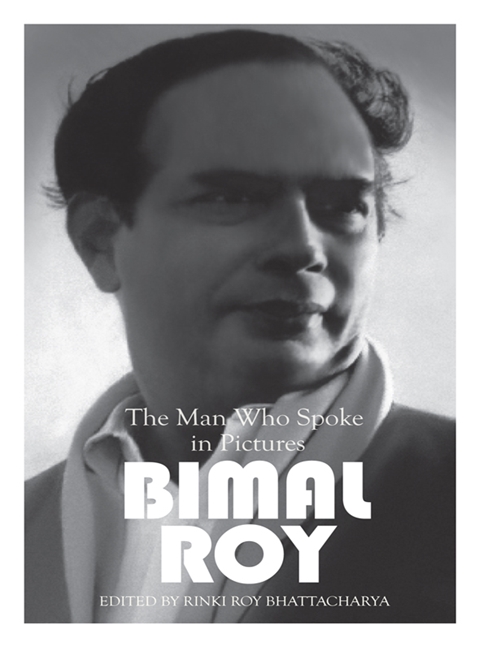
Udayer Pathe, Bimal Roy’s first film, revolutionized PBI – Indian cinema. Hailed as a pioneer by Satyajit Ray, he was perhaps the first to bring shades of grey to the black-and-white screen. Roy’s spare storytelling and nuanced understanding of the human condition are reflected in classics like Devdas, Sujata and Madhumati. His ability to illuminate ordinary characters like Shambhu in Do Bigha Zamin and Kalyani in Bandini, is attested to by their being a part of popular memory even to this day.
The Man Who Spoke in Pictures is not just a eulogy to this great director, but also an insight into Roy, the man, the director and his art. The auteur’s little-known Bengal phase is chronicled by Mahasweta Devi and Amit Chaudhuri, as well as Tapan Sinha, Amit Bose and other greats of cinema who trace his journey from cinematographer to director. His Bombay years are recorded through a collection of analyses and anecdotes from leading literary and cinematic luminaries, including Nayantara Sahgal, Gulzar, Naseeruddin Shah and Khalid Mohammed. The final section examines Roy from the outsider’s perspective, with articles by Meghnad Desai, Rachel Dwyer and Paula Mayhew.
Jesus Lived In India
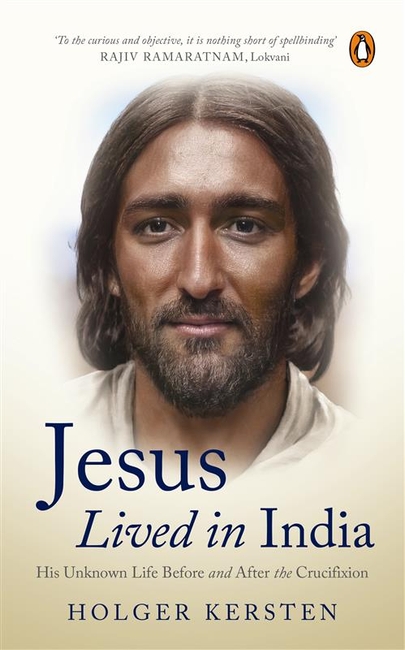
Is there any truth to the numerous claims that Jesus spent a large part of his life in India? Why has Christianity chosen to ignore its connections with the religions of the East? In this compelling work of investigative research, theologian Holger Kersten presents overwhelming evidence that provides answers to these intriguing questions.
Exploring the historical sites connected with Jesus in Israel, the Middle East, Afghanistan and India, Kersten’s detailed study discloses age-old links between the Israelites and the East and presents some startling revelations, including how Jesus survived the Crucifixion and, after the Resurrection, returned to Srinagar, India to die in old age, where he continues to be revered as a saintly man.
Aarushi
It is the murder that haunts India with the simplest of questions: Who did it? A fourteen-year-old girl is killed in her comfortable suburban home along with the family servant under puzzling circumstances. Within weeks, her dentist parents are the prime suspects; within months, they are as good as exonerated; a year and half later, they are on trial. But did they do it? From the controversial police investigation to the media frenzy surrounding the Talwars and the protracted legal battle, every layer of the Aarushi case has mystery and metaphor. Now comes the ultimate retelling of the story. Avirook Sen has followed the court case, examined all the police documents and interviewed key players among investigators, lawyers, family and Aarushi s friends. In Aarushi he draws a superb portrait of the young woman, the aftermath of her death, and tries to answer the biggest question of all. Acute, gripping and brilliantly written Aarushi is a book that will take you into the heart of the murder that has gripped the nation.
The Vijay Mallya Story
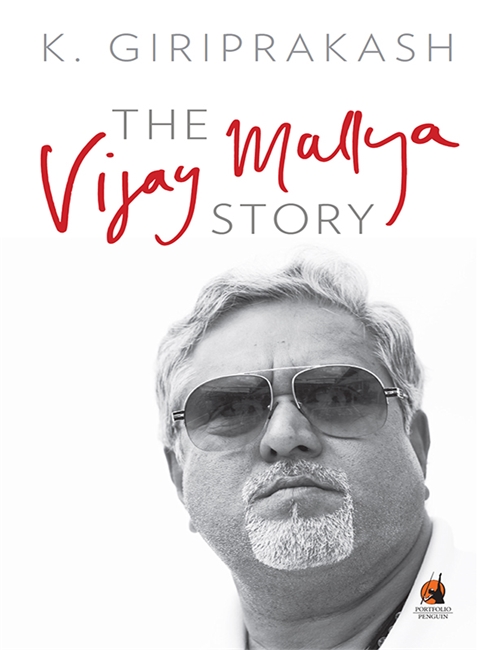
The Vijay Mallya Story is an extraordinarily detailed and lively chronicle of the life of one of India’s most celebrated and reviled businessmen, Vijay Mallya. His extraordinary career spans three decades and is spread across multiple industries. The book covers Mallya’s childhood, his relationship with his father and his inherent deal-making abilities. It tracks his meteoric rise with Kingfisher and how the airline led to his downfall.
Harivamsha

A gorgeous, lucid rendering of the majestic conclusion to the Mahabharata
As an epilogue to the greatest epic of all time, the Harivamsha further elaborates on the myriad conflicts of dharma and the struggle between good and evil. Stories abound-from the cosmogony of the universe to the legends of the solar and lunar dynasties and even a foreshadowing of kali yuga in the future. At the centre of all these magnificent tales is the mercurial figure of Krishna, whose miraculous life and wondrous exploits are recounted with vivid detail. In offering a glimpse into Krishna’s life-as a mischievous child, as an enchanting lover, as a discerning prince-this luminous text sheds light on many questions left unanswered in the Mahabharata.
Brimming with battles and miracles, wisdom and heroics, philosophical insight and psychological acuity, Bibek Debroy’s splendid translation of the Harivamsha is absolutely essential reading for all those who love the Mahabharata.
If It’s Monday It Must Be Madurai
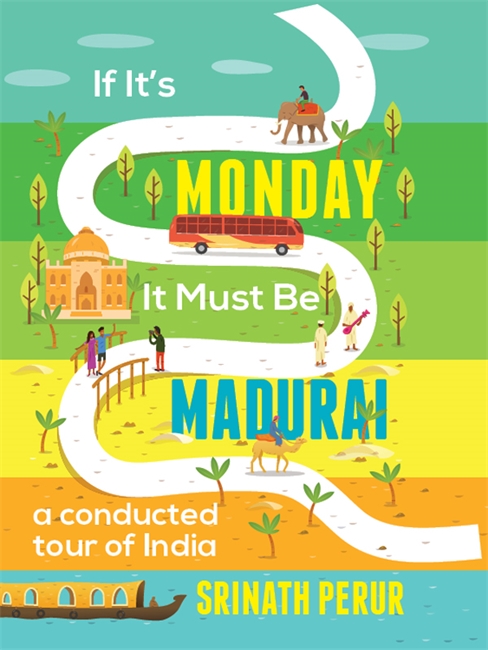
This delightful travelogue around ten conducted tours is full of richexperiences: hanging on to a camel in the Thar, rediscovering music on thetrail of Kabir, joining thousands on an ancient pilgrimage in Maharashtra,crossing living root bridges near Cherrapunji, and more.As much about people as places, the book is also a reflection on thenature of popular travel today marked by the packaging of experiences,the formation of tourist economies and compulsive picture-taking. Howthis influences tourists comes through vividly: in their creating a ‘mini-India’ in a bus, while racing through treasured sights in Europe; in theirperfunctory devotion while hopping from temple to temple in Tamil Nadu;in their ‘enjoying’ with sex workers far away from home.Deeply felt, ironic, and often comic, the book entertains and enlightens,and becomes an idiosyncratic portrait of India and her people.
The Good Boatman
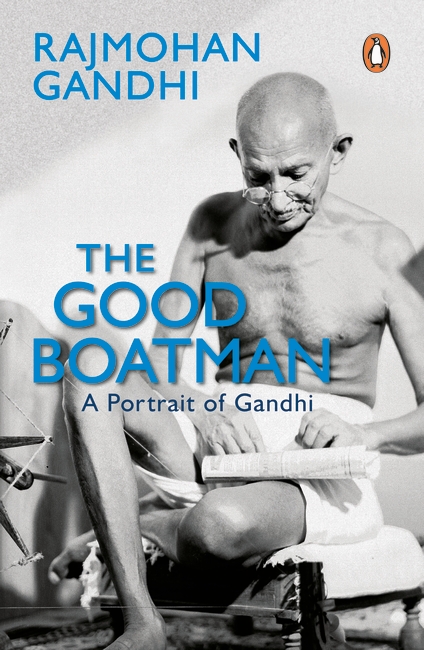
A new and illuminating portrait of one of the greatest figures of the twentieth century. Mohandas Karamchand Gandhi has been the subject of over a dozen well-regarded biographies, yet key aspects of the man still prove elusive. In this book, Rajmohan Gandhi, a grandson of Mahatma Gandhi and an acclaimed biographer and scholar, attempts to understand the phenomenon that was Gandhi. This he does by examining in detail dominant and varied themes of Gandhi’s life”his unsuccessful bid to keep India united, his attitude towards caste and untouchability; his relationship with those whose empire he challenged; his controversial experiments with chastity; his views on God, truth and non-violence; and his selection of heirs to lead a new-born nation. For a generation growing up on images of a simplified Father of the Nation and apostle of non-violence frozen in statues or reduced to a few predictable strokes of an artist’s pen, this biography offers a rewarding insight into the man, his victories and his defeats.
The Case That Shook India
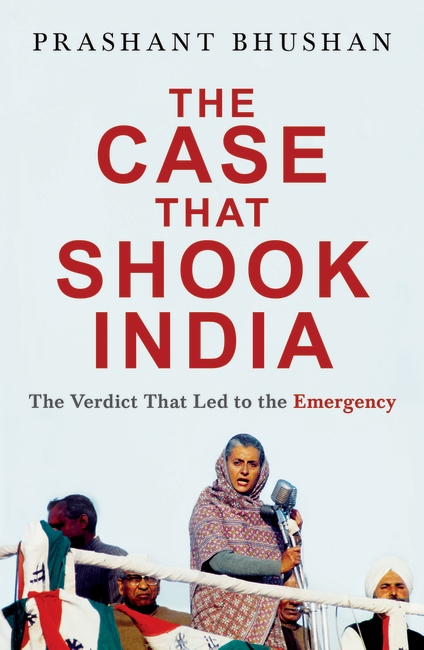
On 12 June 1975, for the first time in independent India’s history, the election of a Prime Minister was set aside by a High Court judgment. The watershed case, Indira Gandhi v. Raj Narain, acted as the catalyst for the imposition of the Emergency. Based on detailed notes of the court proceedings, The Case That Shook India is both a legal and a historical document of a case that decisively shaped India’s political destiny.
The author, advocate Prashant Bhushan, sets out to reveal the goings-on inside the court as well as the manoeuvrings outside it, including threats, bribes and deceit. Providing a blow-by-blow account, he vividly recreates courtroom scenes. As the case goes to the Supreme Court, we see how a ruling government can misuse legislative power to save the PM’s election.
Through his forceful and gripping narrative, Bhushan offers the reader a front-row seat to watch one of India’s most important legal dramas unfold.
The Fever
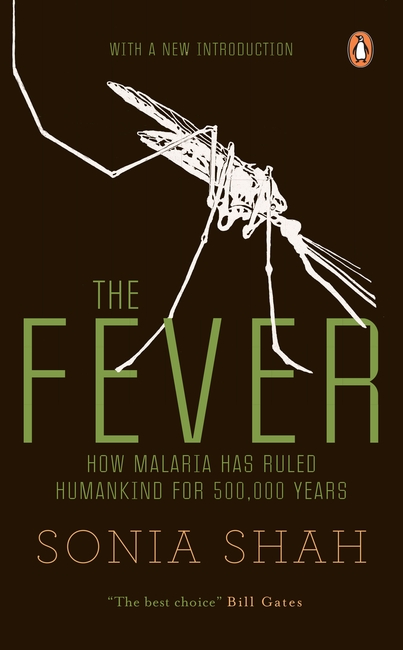
One is often led to believe that mosquito-borne diseases such as malaria and its companion diseases, dengue and chikungunya, are backward and rural diseases that have very little to do with urbanization and development. However, it is often just the reverse. These diseases have been around for over 500,000 years and continue to flourish even as we continue to progress as a race.
In The Fever, journalist Sonia Shah sets out to address this concern, delivering a timely, inquisitive chronicle of malaria and its influence on human lives. Through the centuries, she finds, we’ve invested our hopes in a panoply of drugs and technologies, and invariably those hopes have been dashed. From the settling of the New World to the construction of the Panama Canal, through wartimes and the advances of the Industrial Revolution, Shah tracks malaria’s jagged ascent and the tragedies in its wake, revealing a parasite every bit as persistent as the insects that carry it. With distinguished prose and original reporting from Panama, Malawi, Cameroon, India and elsewhere, The Fever captures the curiously fascinating, devastating history of this long-standing thorn in the side of humanity.