



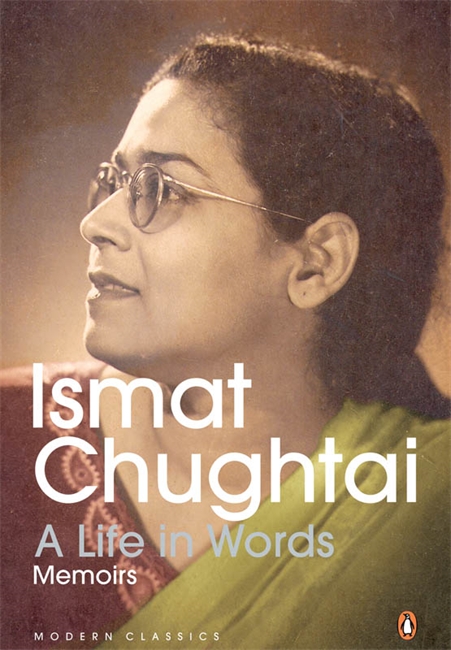
A Life in Words, the first complete translation of Ismat Chughtais celebrated memoir Kaghazi hai Pairahan, provides a delightful account of several crucial years of her life. Alongside vivid descriptions of her childhood years are the conflicted experiences of growing up in a large Muslim family during the early decades of the twentieth century. Chughtai is searingly honest about her fight to get an education and the struggle to find her own voice as a writer. The result is a compellingly readable memoir by one of the most significant Urdu writers of all time.
Catagory: Non Fiction
non fiction main category
Sacred Plants Of India
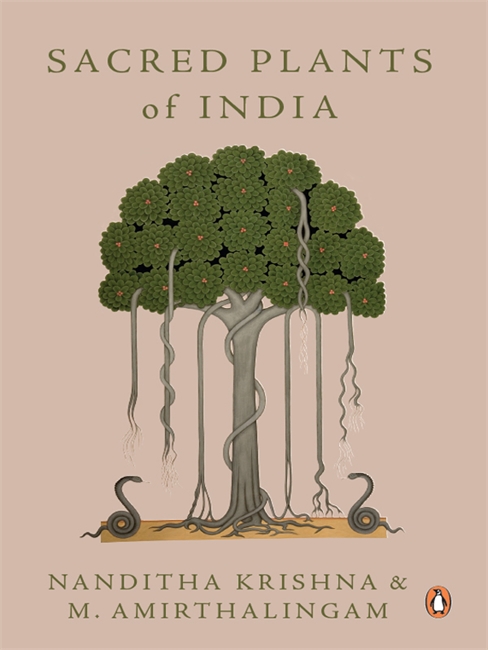
Plants personify the divine— The Rig Veda (X.97)
Trees and plants have long been held sacred to communities the world over. In India, we have a whole variety of flora that feature in our myths, our epics, our rituals, our worship and our daily life. There is the pipal, under which the Buddha meditated on the path to enlightenment; the banyan, in whose branches hide spirits; the ashoka, in a grove of which Sita sheltered when she was Ravana’s prisoner; the tulsi, without which no Hindu house is considered complete; the bilva, with whose leaves it is possible to inadvertently worship Shiva. Before temples were constructed, trees were open-air shrines sheltering the deity, and many were symbolic of the Buddha himself.
Sacred Plants of India systematically lays out the sociocultural roots of the various plants found in the Indian subcontinent, while also asserting their ecological importance to our survival. Informative, thought-provoking and meticulously researched, this book draws on mythology and botany and the ancient religious traditions of India to assemble a detailed and fascinating account of India’s flora.
The Mahabharata
The Greatest Story Ever Told
Dispute over land and kingdom may lie at the heart of this story of war between cousins-the Pandavas and the Kouravas-but the Mahabharata is about conflicts of dharma. These conflicts are immense and various, singular and commonplace. Throughout the epic, characters face them with no clear indications of what is right and what is wrong; there are no absolute answers. Thus every possible human emotion features in the Mahabharata, the reason the epic continues to hold sway over our imagination.
In this superb and widely acclaimed translation of the complete Mahabharata, Bibek Debroy takes us on a great journey with incredible ease.
The Mahabharata
The Mahabharata is one of the greatest stories ever told. Dispute over land and kingdom may lie at the heart of this story of war between cousins-the Kouravas and Pandavas-but the Mahabharata is about conflicts of dharma. These conflicts are immense and various, singular and commonplace. Throughout the epic, characters face them with no clear indications of what is right and what is wrong; there are no absolute answers. Thus every possible human emotion features in the Mahabharata, the reason the epic continues to hold sway over our imagination. In this superb and widely acclaimed translation of the complete Mahabharata. Bibek Debroy takes us on a great journey with incredible ease.
Hindu Rites And Rituals
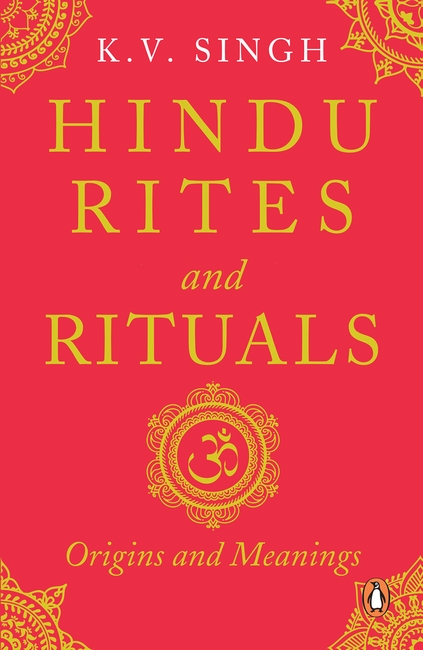
Why is the tulsi considered sacred?
What is the significance of namaste?
Why do Hindus light a lamp before performing a ritual?
Why is it forbidden to sleep facing the south?
Why do Hindus chant ‘shanti’ three times after performing a rite?
Millions of Hindus the world over grow up observing rites, rituals and religious practices that lie at the heart of Hinduism, but which they don’t know the significance of. Often the age-old customs, whose relevance is lost to modern times, are dismissed as meaningless superstitions. The truth, however, is that these practices reveal the philosophical and scientific approach to life that has characterized Hindu thought since ancient times; it is important to revive their original meanings today.
This handy book tells the fascinating stories and explains the science behind the Hindu rites and rituals that we sometimes follow blindly. It is essential reading for anyone interested in India’s cultural tradition.
Conversations With Dada Vaswani
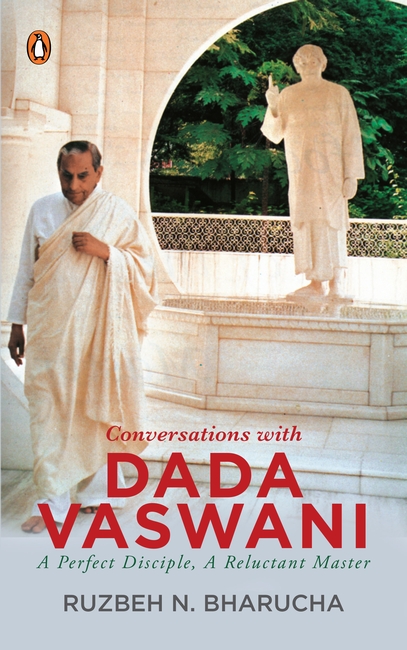
The zenith of spirituality lies not in being a Master, but being the perfect disciple. In the womb of humility lies the greatest reality-not only for this life, but also for the one beyond.
In this book, Dada Vawasni, a Guru to millions, shares His innermost thoughts and ideals with Ruzbeh N. Bharucha, the author of The Fakir trilogy. Their discussions, punctuated by Dada’s trademark sense of humour, are filled with laughter and joy, and yet, within them, lie ancient truths and the wisdom of life.
Their talks cover a range of topics-from the power of prayer to how to live in the world and not be imprisoned by circumstances; from true surrender to the role of the Guru and the disciple, from the concepts of karma and free will to life after death and positive acceptance.
Conversations with Dada Vaswani is a spiritual journey, but, most importantly, it is a dialogue between a Master and a seeker.
Bollywood Boom
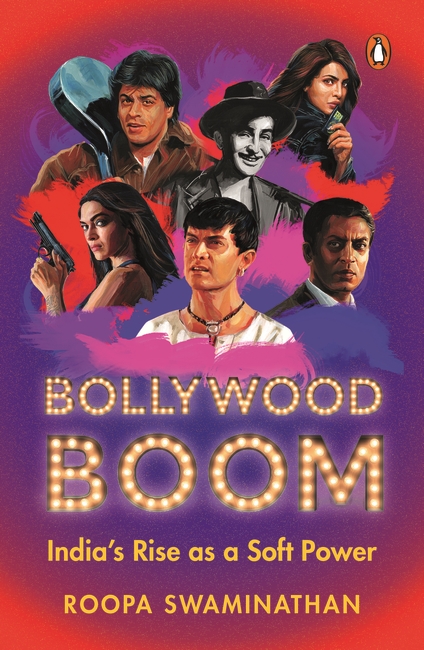
The world is feeling the impact of Bollywood like never before. From the Oscar-nominated Lagaan to Bajrangi Bhaijaan to Ae Dil Hai Mushkil, Bollywood has come a long way since the watershed Dilwale Dulhaniya Le Jayenge and the UK Top Ten debut of Kuch Kuch Hota Hai. Where earlier it was in Russia, East Europe and Africa where Raj Kapoor and Amitabh Bachchan enjoyed a devoted fan base, today the entire world is as entertained by the three
Khans as by the international stars Irrfan, Priyanka and Deepika.
In Bollywood Boom, National Award-winner Roopa Swaminathan opens a window to the spectacular success of Bollywood in the twenty-first century and its direct contribution to India’s rising soft power and influence. Using extensive research, a compelling argument and fun anecdotes, Roopa shows how Bollywood not only brings to the country real income through trade and tourism, but also enhances its global standing.
Dastan-E-Ghadar
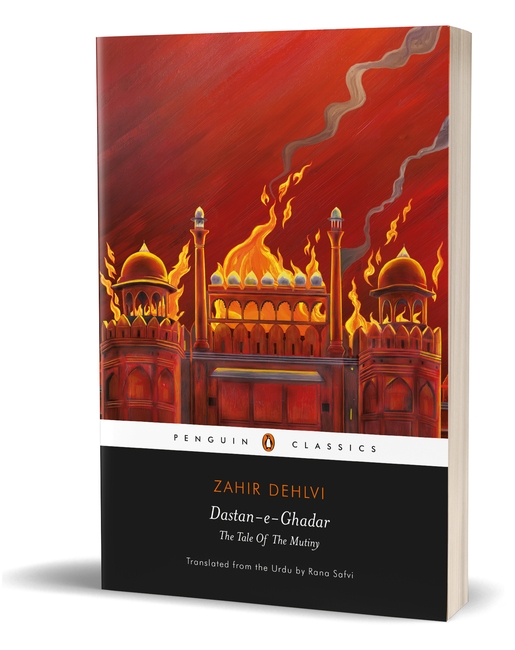
Zahir Dehlvi, an accomplished poet and official in the court of Bahadur Shah Zafar, lived through the cataclysmic Revolt of 1857 that changed the course of history, marking the end of Mughal dominion and the instatement of the British Raj. Dehlvi’s memoir, written on his deathbed, not only chronicles the fading glory of the Mughal court and his entry into a vanishing way of life, but also, most importantly, pivots on the horrifying spectacle of the Revolt and its aftermath—from the violent siege of Shahjahanabad to the bloody reprisals that followed. We learn about the brutal murder of the British Resident and the ensuing deaths of the European men, women and children who were sheltering inside the Qila. We also glimpse the emperor’s pleas to the rebels and his helplessness as they took over the Qila. Moreover, Dehlvi crucially elaborates on the plight of those who managed to escape the slaughter and carnage.
Translated into English for the first time, Dehlvi’s memoir is intensely vivid and moving, filled with incidents and rich in insight. An immensely significant historical record of the Revolt as it unfolded, Dastan-e-Ghadar is also a compelling personal account that conjures the dramatically changing world Dehlvi lived in.
Indian Instincts
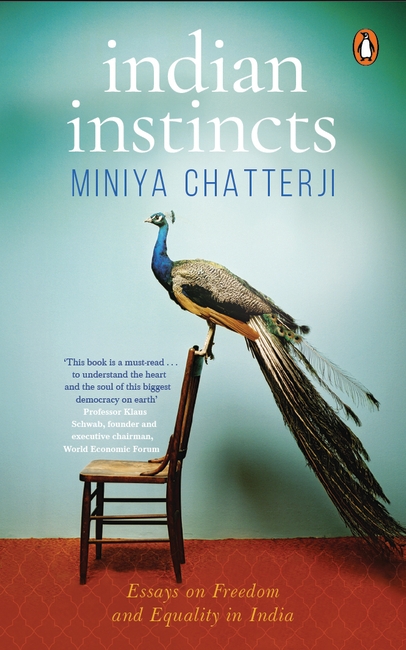
From tracing the possible first arrival of man in India to writing about love, sex, money, parenting and values in Indian society and discussing nationalism, religion and democracy, Miniya Chatterji presents an accessible yet brilliant intellectual treatise about issues that affect Indians the most. Indian Instincts is a seminal and deeply philosophical work, presented tactfully with entertaining and memorable instances. It is a must-read for anyone who wants to know what makes an Indian. The vivid and insightful examples make us reflect: Are we willingly entrapped in the institutions of our own making? Have these institutions-the government, corporations, religion-become sources of the problem in India, increasing economic inequality?
This book, a collection of fifteen powerful essays that argue for greater equality and opportunity in contemporary India, holds up a mirror to what we Indians have become.
Sam’s Story
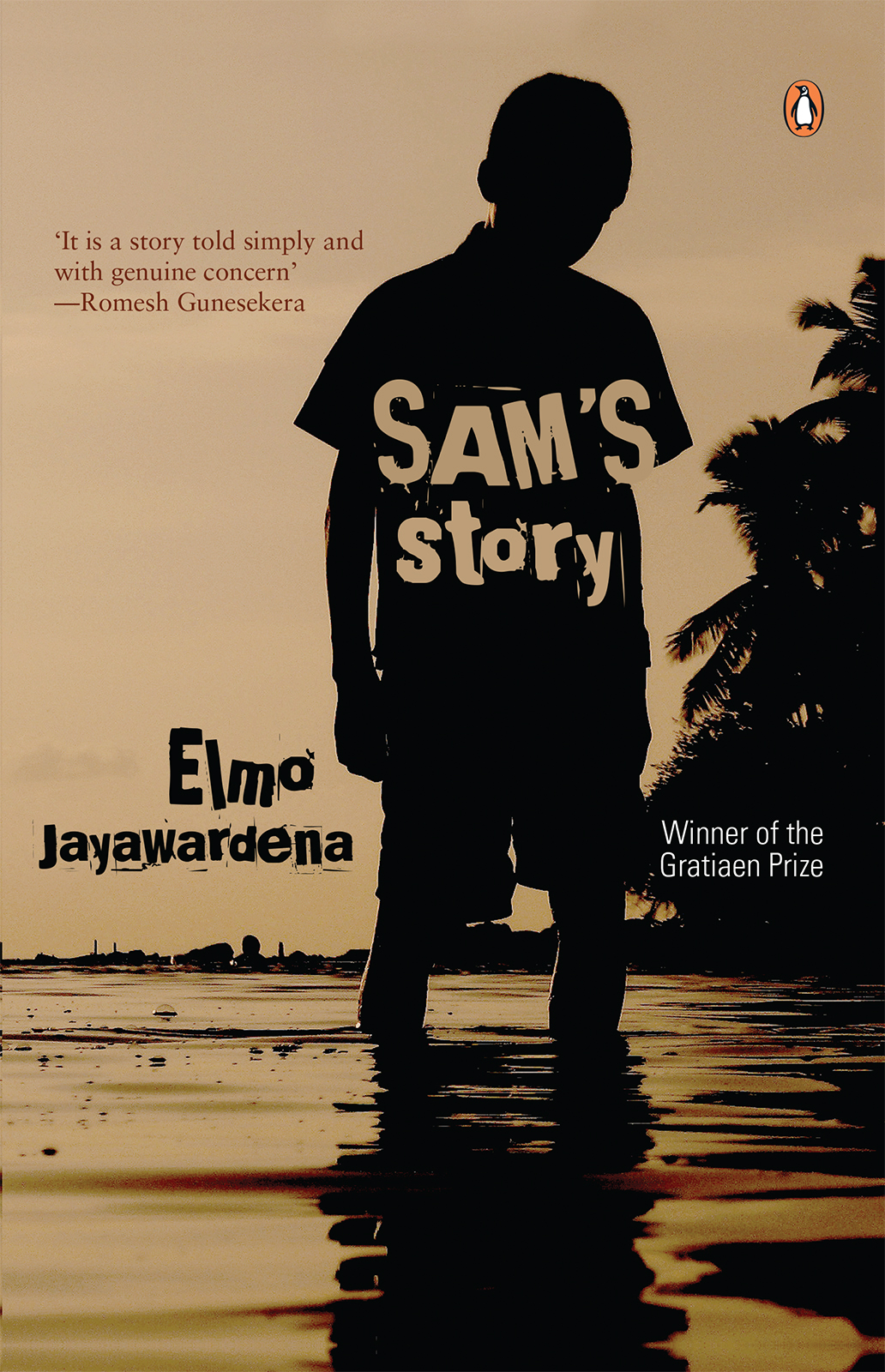
Sri Lanka , 2001. Sam, a poor, dim-witted boy, ekes out an existence with his mother, brothers and sisters in a tiny village too remote for maps. His fortunes change when he gets a job as a housboy in Colombo. But life ins’t all perfect; marring Sam’s peace is Leandro the cook. Sam hates Leandro, not only because he teases him but also because Leandro belongs to the other side- the side that is killing Sam’s people in the war in the North.
With brutal honesty and a wry sense of humour that seems from his simplicity, Sam tell us about the days in life that he never wants to forget and the days he wishes he didn’t remember. Funny and sad at once, this is the tale of contemporary Sri-Lanka about rural and urban life, poverty and corruption, egg hoppers and Christmas parties, boxing dogs and gin and tonics. Sam’s joys are pure, his tragedies heart-wrenching. But he takes them all in his stride, telling at it is.
Set in a country that has been war -ravaged for fifteen years, Elmo Jayawardana’s Sam’s Story is a poignant, powerful and unforgettable debut novel.
‘ A VASTLY SENSITIVE AND GRIPPING EXPERIENCE OF THE “OTHER”…WHOLLY ABSORBING
– Carl Muller