




A group of nine are trapped in the visa office at an Indian Consulate after a massive earthquake in an American city. Two visa officers on the verge of an adulterous affair; Jiang, a Chinese-Indian woman in her last years; her gifted teenage granddaughter Lily; an ex-soldier haunted by guilt; Uma, an Indian-American girl bewildered by her parents’ decision to return to Kolkata after twenty years; Tariq, a young Muslim man angry with the new America; and an enraged and bitter elderly white couple. As they wait to be rescued—or to die—they begin to tell each other stories, each recalling ‘one amazing thing’ in their life, sharing things they have never spoken of before. Their tales are tragic and life-affirming, revealing what it means to be human and the incredible power of storytelling.
Catagory: Non Fiction
non fiction main category
Aurangzeb
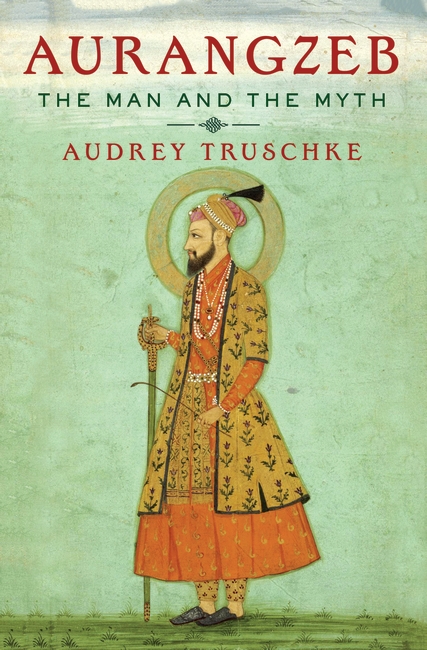
Aurangzeb Alamgir (r. 1658-1707), the sixth Mughal emperor, is widely reviled in India today. Hindu hater, murderer and religious zealot are just a handful of the modern caricatures of this maligned ruler. While many continue to accept the storyline peddled by colonial-era thinkers-that Aurangzeb, a Muslim, was a Hindu-loathing bigot-there is an untold side to him as a man who strove to be a just, worthy Indian king.
In this bold and captivating biography, Audrey Truschke enters the public debate with a fresh look at the controversial Mughal emperor.
Churchill’s Secret War
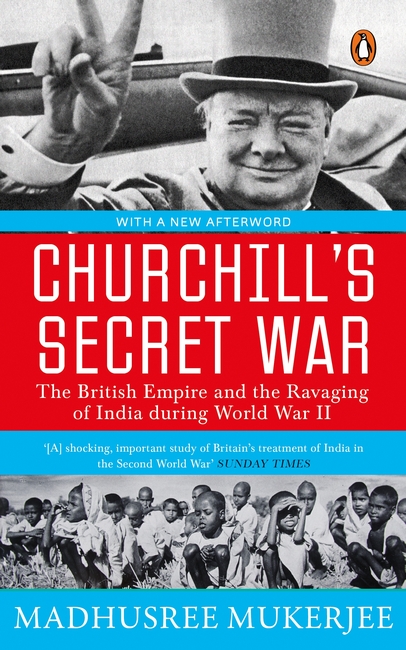
WITH A NEW AFTERWORD
Winston Churchill has been venerated as a resolute statesman and one of the great political minds of the last century. But, as Madhusree Mukerjee reveals in this groundbreaking historical investigation, his deep-seated bias against Indians precipitated one of the world’s greatest man-made disasters — the Bengal Famine of 1943 — resulting in the deaths of over four million Indians. Combining meticulous research with a vivid narrative, Churchill’s Secret War places this overlooked tragedy into the larger context of World War II, India’s freedom struggle and Churchill’s legacy.
The Assassination Of Rajiv Gandhi
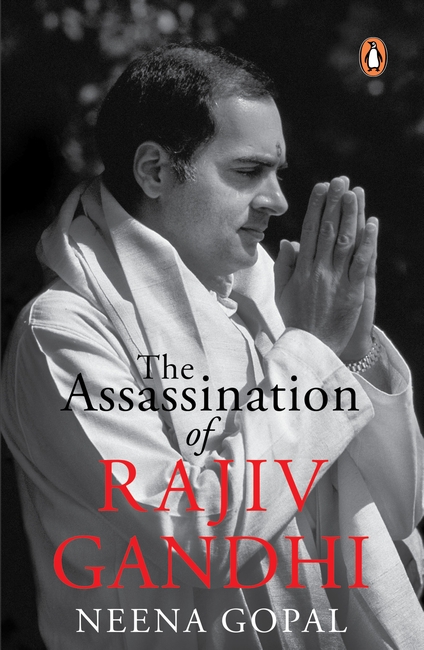
Journalist Neena Gopal was interviewing Rajiv Gandhi in the car en route to the rally and was only yards behind him when the suicide bomber Dhanu blew herself up, killing him and many innocent bystanders.
Drawing on extensive interviews, research and her own vast experience as a journalist, Gopal tracks the assassination plot hatched by LTTE supremo Prabhakaran in Sri Lanka and takes us step by step to Sriperumbudur to that tragic May evening as Rajiv Gandhi walked inexorably to his death.
The Burden Of Democracy
After nearly seven decades of its existence, there is a pervasive feeling that India’s democracy is in crisis. But what is the nature of this threat? In this essay, republished now with a new foreword from the author, Pratap Bhanu Mehtareminds us what a bold experiment bringing democracy to a largely illiterate and unpropertied India was. He argues that the sphere of politics has truly created opportunities for people to participate in society. Looking at various facts, he also finds that persistent social inequality on the one hand and a mistaken view of the state’s proper function and organization on the other have modified and hindered the workings of democracy and its effects in innumerable ways. Posting the quest for self-respect as democracy’s deepest aspiration, this essay explores how inequality and the crisis of accountability have together impeded collective action to achieve such an end. To recover this sense of moral well-being and responsibility, Mehta suggests, is the core of the democratic challenge before us.
Optimistic, lively and closely argued, The Burden of Democracy offers a new ideological imagination that throws light on our discontents. By returning to the basics of democracy it serves to illuminate our predicament, even while perceiving the broad contours for change.
Cut The Crap And Jargon
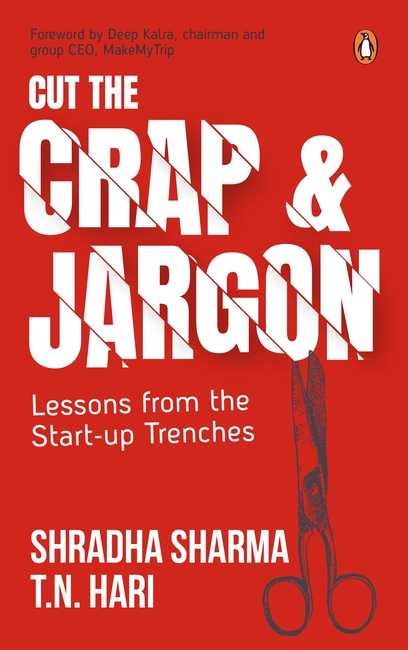
Start-ups are the fountainheads of innovation that power this world. However, they lose the plot when they do not have access to timely, contextual and good quality advice based on a deep understanding of the real issues on the ground that comes with experience in the trenches. It is sad to see intrepid and tenacious entrepreneurs fail because of small things. This book is as much about these as it is about some of the more complex navigational skills required to avoid major pitfalls. A practical book for every entrepreneur, Cut the Crap and Jargon will make an interesting read for a global audience.
Indira Gandhi
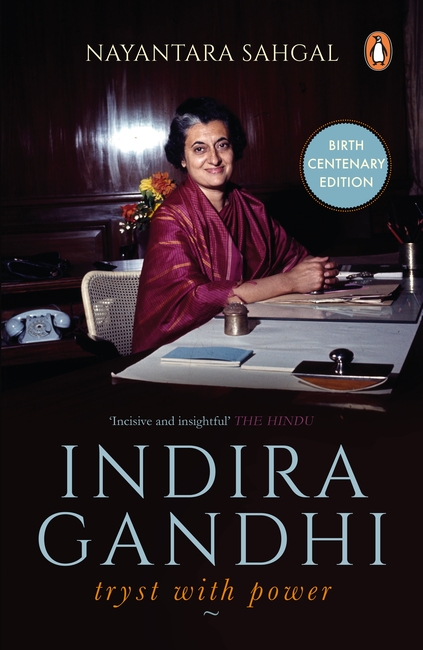
Indira Gandhi – Tryst with Power is a book that focusses on the life of one of India’s most popular politicians – Indira Gandhi. How did she come to power? Did the nation blossom under her rule? for people who have been pondering on such questions, this book has the answers that they have been looking for. Indira broke the conventional, democratic ruling method that her family had been using and adopted a somewhat authoritarian way of ruling the nation.
The emergency that was declared during her reign is shown in this book to be a means of bringing in her son Sanjay into the political scene as her obvious successor. However, after Sanjay’s death, Rajiv Gandhi entered politics and gained almost immediate popularity. All of these political changes showed just how determined Indira Gandhi was to ensure that her family retained its right to rule.
This book offers unparalleled detailing concerning the personal life and political life of Indira Gandhi from the author, who is her own cousin. Owing to this close family link, the book is filled with accounts that could only be told by a family member who knew the Nehru family for a long time. Indira Gandhi’s highly individualized style of functioning in politics has been spoken about at length in this book, along with the countless changes that took place in the political scene of the nation when it was under her rule.
An in-depth portrayal of the life and times of one of India’s greatest political leaders, Indira Gandhi – Tryst with Power has been published by Penguin India in the year 2012 and is available in paperback.
Hinduism And Nature
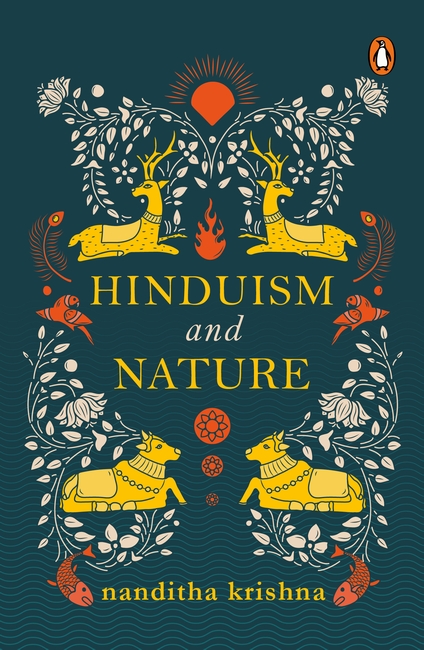
The basis of Hinduism is dharma or righteousness, incorporating duty, cosmic law and justice. Five thousand years ago, the Vedas showed a clear appreciation of the natural world and its ecology, the importance of the environment and the management of natural resources.
Hinduism and Nature delves into the religion’s deep respect for all life forms, the forests and trees, rivers and lakes, animals and mountains, which are all manifestations of divinity. Nature is venerated all over India: every village has a sacred grove, every temple a sacred garden and sacred tree. In this fascinating book, scholar and environmentalist Nanditha Krishna explores both the classical and the tribal traditions that venerated nature, and convincingly argues that we can save the environment only by seeking answers in ancient wisdom.
The Islamic Connection
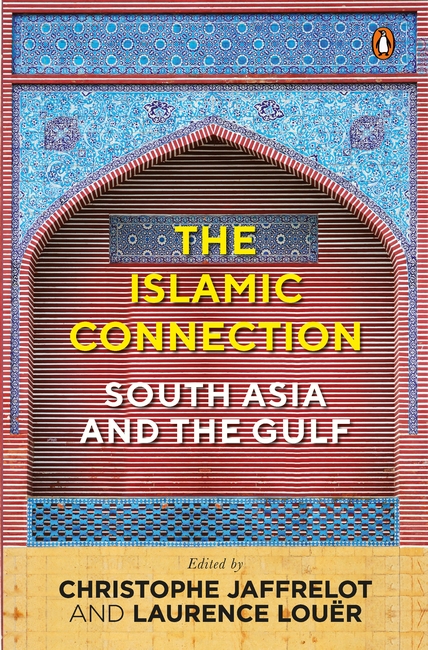
The region inhabited by the largest number of Muslims-roughly 500 million-today is South Asia. In the course of the Islamization process that began in the eighth century, the region developed a distinct Indo-Islamic civilization that culminated in the Mughal Empire. In the Gulf, while paying lip service to the power centres, including Mecca and Medina, this civilization cultivated its own variety of Islam, which was based on Sufism.
Over the last fifty years, pan-Islamic ties have intensified between these two regions. Gathering together some of the best specialists on the subject, this volume explores these ideological, educational and spiritual networks, which have gained momentum due to political strategies, migration flows and increased communications. At stake are both the resilience of the civilization that imbued South Asia with a specific identity and the relations between Sunnis and Shias in a region where Saudi Arabia and Iran are fighting a cultural proxy war. The Islamic Connection investigates the nature and implications of the cultural, spiritual and socio-economic rapprochement between these two Islams.
The Dramatic Decade
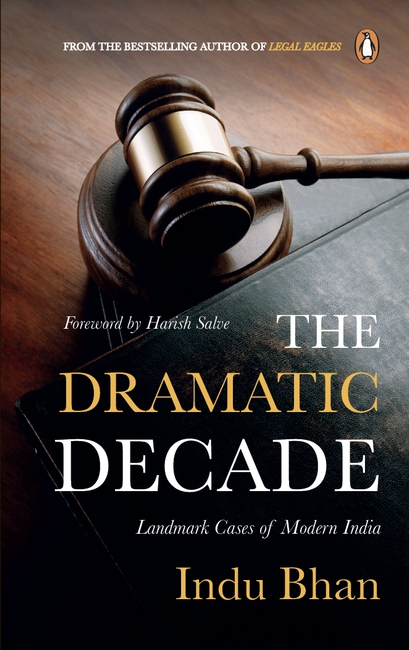
The courts in India are struggling with a huge backlog of cases. As of 2016, there are 27 million pending cases and close to 90 million people are still waiting for justice.
To the common man, this is just a number. But some cases have impacted the collective conscious of the entire nation. These include the trial of Afzal Guru, the Nirbhaya case, the criminalization of homosexuality, the Parliament attack case, the Babri Masjid demolition and the 26/11 Mumbai attacks.
There was a lot that happened inside the courts during these trials which has remained hidden from public view. The Dramatic Decade is a collection of these stories. The book gives the reader a ringside view of what happened both inside and outside the courts. What were the arguments made, which lawyers fought the cases, what was the court’s judgment and how did it affect the common man are some of the many questions answered here.