



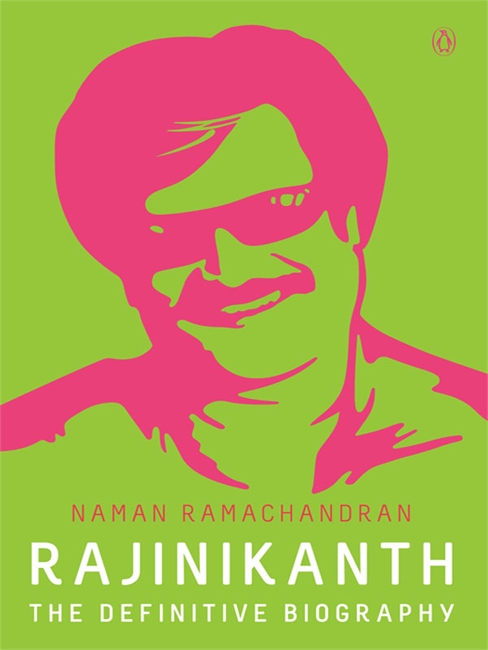
Rajinikanth is, quite simply, the biggest superstar cinema-crazy India has ever seen. His stylized dialogues and screen mannerisms are legion, and his guy-next-door-cum-superhero image has found a hysterically appreciative following among millions of moviegoers.
Naman Ramachandran’s marvellous biography recounts Rajini’s career in meticulous detail, tracing his incredible cinematic journey from Apoorva Raagangal (1975) to Kochadaiyaan (2013). Along the way, the book provides rare insights into the Thalaivar’s personal life, from his childhood days to his times of struggle—when he was still Shivaji Rao Gaekwad—and then his eventual stardom: revealing how a legend was born.
Catagory: Non Fiction
non fiction main category
The Pregnant King
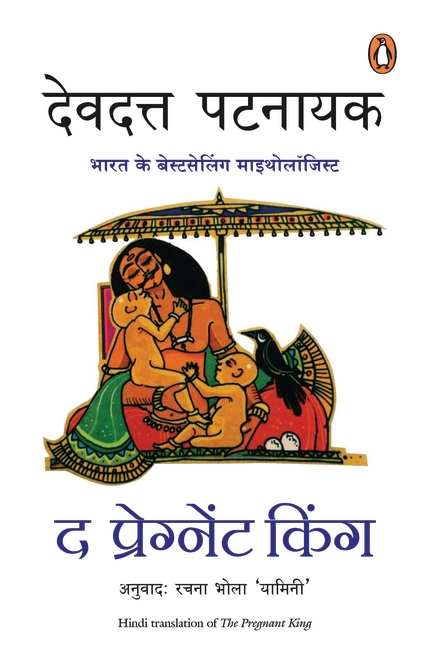
‘I am not sure that I am a man,’ said Yuvanashva. ‘I have created life outside me as men do. But I have also created life inside me, as women do. What does that make me? Will a body such as mine fetter or free me?’
Among the many hundreds of characters who inhabit the Mahabharata, perhaps the world’s greatest epic and certainly one of the oldest, is Yuvanashva, a childless king, who accidentally drinks a magic potion meant to make his queens pregnant and gives birth to a son. This extraordinary novel is his story.
It is also the story of his mother Shilavati, who cannot be king because she is a woman; of young Somvat, who surrenders his genitals to become a wife; of Shikhandi, a daughter brought up as a son, who fathers a child with a borrowed penis; of Arjuna, the great warrior with many wives, who is forced to masquerade as a woman after being castrated by a nymph; of Ileshwara, a god on full-moon days and a goddess on new-moon nights; and of Adi-natha, the teacher of teachers, worshipped as a hermit by some and as an enchantress by others.
Building on Hinduism’s rich and complex mythology-but driven by a very contemporary sensibility-Devdutt Pattanaik creates a lush and fecund work of fiction in which the lines are continually blurred between men and women, sons and daughters, husbands and wives, fathers and mothers. Confronted with such fluidity the reader is drawn into Yuvanashva’s struggle to be fair to all-those here, those there and all those in between.
The Essential Delhi Cookbook
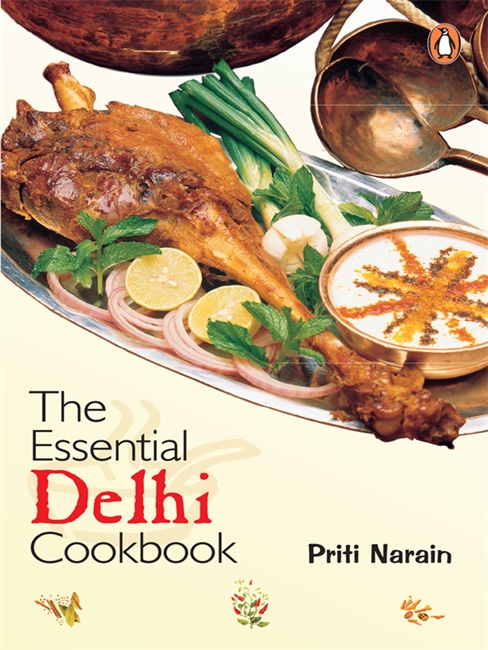
The Penguin Essential Cookbooks are a pioneering attempt to keep alive the art of traditional Indian cooking. Each of the books is written by an expert chef who brings together the special recipes of a region or community along with a detailed introduction that describes the rituals and customs related to the eating and serving of food.In the Essential Delhi Cookbook recipes are drawn from the different communities who have made Delhi their home, including the Khatris and Kayasths, in addition to Mughlai and Punjabi dishes. The recipes include: Raan, Bheja, Methi Dal ki Pakori, Muthanjan Pulao, Mathri, Papri, Chaat, Sharbat-e-Ghulab.
The Princess and the Political Agent
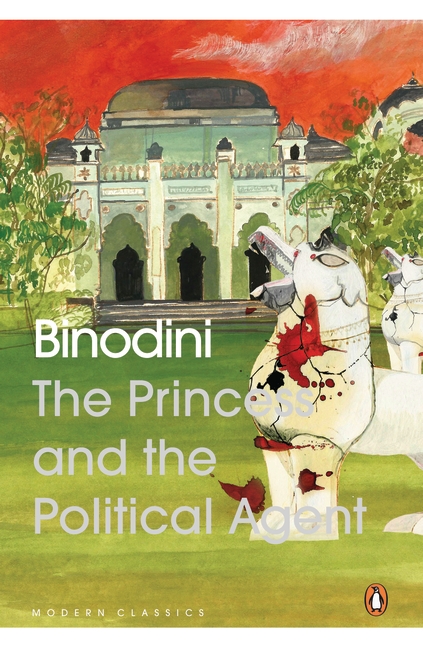
The Manipuri writer Binodini’s Sahitya Akademi Award-winning historical novel The Princess and the Political Agent tells the love story of her aunt Princess Sanatombi and Lt. Col. Henry P. Maxwell, the British representative in the subjugated Tibeto-Burman kingdom of Manipur. A poignant story of love and fealty, treachery and valour, it is set in the midst of the imperialist intrigues of the British Raj, the glory of kings, warring princes, clever queens and loyal retainers. Reviving front-page global headlines of the day, Binodini’s perspective is from the vanquished by love and war, and the humbling of a proud kingdom. Its sorrows and empathy sparkle with wit and beauty, as it deftly dissects the build-up and aftermath of the perfidy of the Anglo-Manipuri War of 1891. Binodini is the supreme stylist of contemporary Manipuri literature and an icon of Manipuri modernism, and her tale of a forbidden love and ostracism vividly brings to life the court and manners of a little-known Asian kingdom. In doing so, she recovers its little-known history, its untold relations with India and Great Britain, and a forgotten chapter of the British Raj.
The Essential North – East Cookbook

If there is one part of this country that is still to be discovered, at least in terms of its cuisine, it is the North East. Those who live in, or have visited the seven sister states” Arunachal Pradesh, Assam, Manipur, Meghalaya, Mizoram, Nagaland and Tripura” would tell you that the kitchens of the North East are the source of an extraordinary range of dishes that blend tradition and innovation in unexpected ways. The basic tribal diet of jungle produce has over the years been shaped by the influence of various other communities: the Thais, who once ruled over some parts of the territory the Chinese, because of their proximity and the Bengali migrants, and it is this unusual combination that makes the food of the region unique in India. Lightly spiced, with hardly any oil, and flavoured with herbs that are now available in stores across the country, the stews, chutneys and curries in this book can transform the most ordinary meal into an exotic experience.
Home Remedies
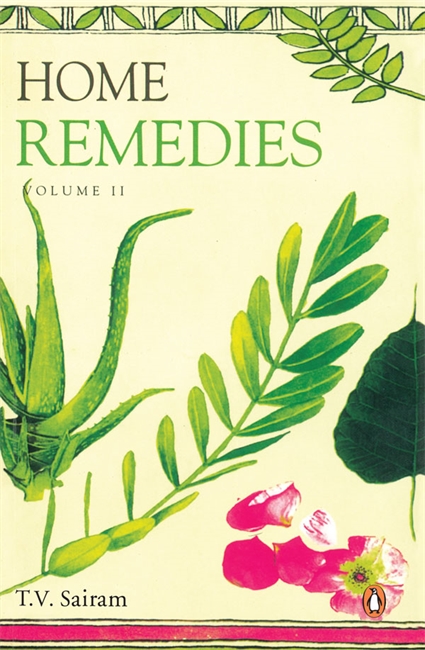
Even before Charaka compiled the Samhita, his treatise on Ayurveda, in the second century B.C., women and men were using herbs from their kitchens, fields and forests to alleviate pain and cure sickness. But with the coming of Western medicine, such indigenous practices were condemned out of court as ‘unscientific’. This book, the outcome of over three decades of journeying and interactions with barely recognized vaids, ohjas and small community physicians, attempts to document these practices, while presenting also the findings of Western science that has only recently begun to acknowledge and legitimize them. Forty of the most common herbs in every Indian kitchen, including well-loved familiars such as garlic, ginger and pudina and the more special saffron, almonds and figs, are described here as known in local, specialized healing traditions. The botanical profile of each herb is followed by an extensive record of its medicinal uses in particular ailments, with detailed notes on the preparation and dosage of each remedy and an extensive bibliography of research articles. Comprehensive and separate glossaries of English and non-English technical terms and unfamiliar herbs, a multi-language index of plant names, and detailed illustrations make Home Remedies a unique reference guide to rediscovering a host of remedies for the most commonly encountered ailments.
Home Remedies Vol. 4

The use of herbs from kitchens, fields and forests to alleviate pain and cure sickness has been known in India for centuries. Researched over three decades, the volumes in this series meticulously document many parallel and ancient traditions and systems, bringing together medicinal and cosmetic recipes, and the uses of individual plants to cure and comfort. Each herb is described in meticulous detail through its botanical profile, uses in particular ailments and notes on the preparation and dosage of each remedy. Forty common plants such as tea, amaltas, periwinkle, aparajita, coffee, custard apple, ash gourd, lemon grass, cotton, water lily and ashoka along with the not-so-familiar Jamaican thyme, Indian sorrel, ponnanganni and jujube are included in this book. A comprehensive bibliography of scientific articles, separate glossaries for English and non-English technical terms and detailed illustrations make it an easy-to-use reference guide for cures to common ailments. The final volume in the best-selling series.
Saratchandra Omnibus Volume – 1
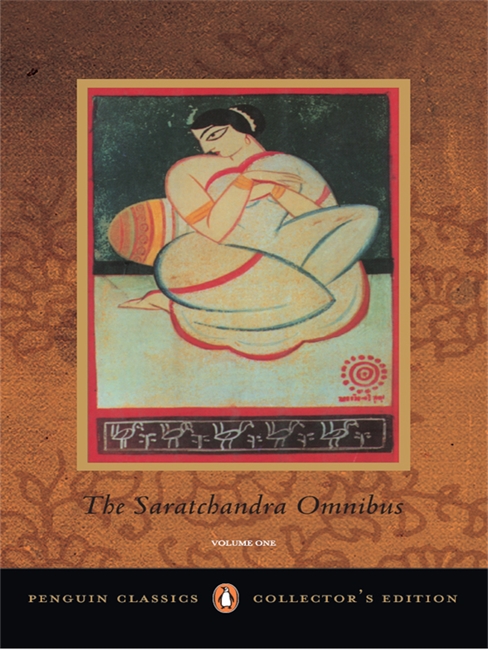
Saratchandra Chattopadhyay is widely acknowledged as one of the greatest Indian novelists of the twentieth century. His novels, serialized in periodicals and subsequently published in book form, earned Saratchandra immense fame in the early decades of the century, and established him as Bengal’s master storyteller. Even today, seven decades after his death, Saratchandra remains one of the most popular novelists in Bengal, and is widely read in translation across India as well. This collector’s edition of Saratchandra’s works in English translation brings together the writer’s most renowned and best-loved novels in two omnibus volumes. The first volume features five novels: Srikanta, Devdas, Parineeta, Palli Samaj and Nishkriti. Srikanta is the story of a wanderer who observes the people around him; through them- especially the women he loves and respects, from the sacrificing Annada Didi and the rebellious Abhaya to the housewife Rajlakshmi and the courtesan Pyari Bai- he tries to arrive at an understanding of life. Devdas, on the other hand, is the tragic tale of a man who drives himself to drink and debilitation when he is unable to marry his childhood sweetheart Paro. In Parineeta (Espoused), the orphaned Lalita is secretly in love with her guardian Shekhar, but circumstances conspire to drive the two apart. Palli Samaj (The Village Life) has Ramesh, an engineer, returning to the village of his birth to try and rid it of the backwardness that plagues it, even as he tries to revive his childhood ties with Rama, now a widow. In Nishkriti (Deliverance), the strong-willed Shailaja, the youngest daughter-in-law in a joint family, is made an outcast as a result of a misunderstanding; much later, her elders realize their mistake, just in time to save the family from disintegration. Each of the novels showcases the qualities Saratchandra is famous for: everyday stories told in a simple yet gripping style, strong characters, meticulous plotting, true-to-life dialogue, and unforgettable depictions of life in turn-of-the-century Bengal. Translated especially for Penguin, these classic novels will delight those new to Saratchandra’s works as well as those who want to return to them again.
The Penguin Food Guide To India
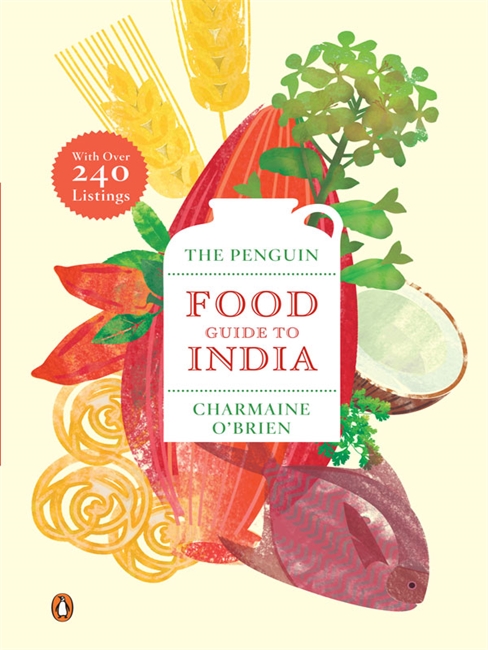
This first-ever comprehensive guide to regional food across India takes
you on a mouth-watering journey through the homes, streets and
restaurants of each state, exploring exotic and everyday fare in equal
measure. Be it the lime-laced Moplah biryani, the Goan Galinha cafreal,
the bhang ka raita of Uttarakhand, or the Singpho people’s Wu san tikye,
India’s rich palette of flavours is sure to drum up an insatiable appetite in
you. Laden with historical information, cultural insights and personalized
recommendations, The Penguin Food Guide to India is your ideal
companion to the delightful world of Indian cuisine.
Realizing Vision 2020
The progress of a nation that has over a billion people depends on how its people think. But for change to happen, action upon those thoughts is necessary. And somehow, over the years, India has developed the habit of giving less priority to actual action.
Fortunately, a large part of our population is young and raring to go. They are prepared to explore new avenues of work and employment and not wait for a secure job in government. Moreover, there is substantial political devolution of power to the states. But how does one initiate that action?
In Realizing Vision 2020, A.P.J. Abdul Kalam and Y.S. Rajan lay down a clear-cut agenda for the way forward towards a developed India.