This is a book of pictures.
Of a park bench and a prescription. And a toothbrush in a mug. It’s got half-lit cigarettes and broken geysers. And a cute apartment in Prague. There’s a fortune cookie, some pigeons in cages and stars tumbling from the sky. There’s the usual traffic, a digital wristwatch and a violin from Uncle James.
We can go on, but you’d rather see for yourself.
For we think this book has pictures.
But some say it’s full of poems.
After their first bestseller, Terribly Tiny Tales and Penguin come together on the same page once again.

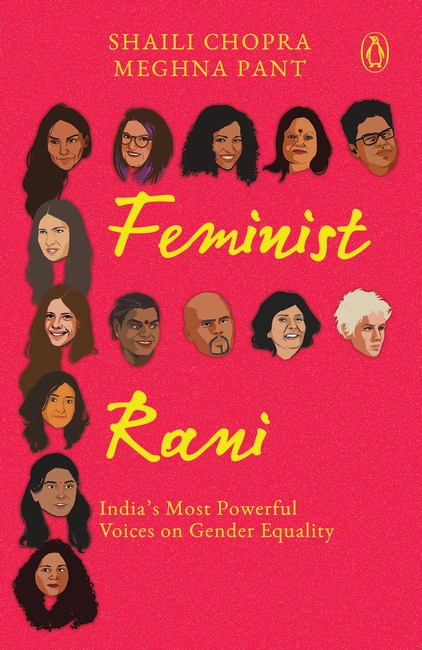
Feminist Rani is a collection of interviews with path-breaking and fascinating opinion leaders–Kalki Koechlin, Tanmay Bhatt, Gul Panag, Aditi Mittal, Gauri Sawant, and many more. These are women and men who have advocated gender equality and women’s rights through their work. These compelling conversations provide a perspective on the evolving concept of feminism in an age when women are taking charge and leading the way.

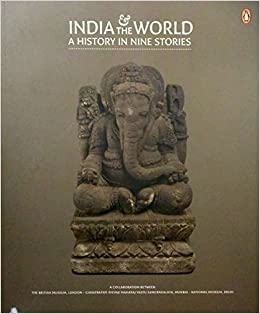
What is the earliest evidence of human history in India and how does that compare with other parts of the world? What was happening in India when the pyramids were being built in Egypt? What was different about Ashoka’s inscriptions when compared with the public inscriptions of other emperors? How have different civilizations pictured the divine? How did rulers promote themselves through grand court art and aesthetics? What have been the routes of civilizational exchange over land and sea that make India a part of the world? And have those exchanges always been peaceful? How have different countries and communities articulated their quest for freedom in recent history? Does everyone in the world perceive history and time in the same way?
Objects-be they coins, sculptures, documents or paintings-tell rich stories. India & the World accompanies a collaborative exhibition that creates dialogues between the world and India through a fascinating array of artefacts. On the one hand they reveal how different people have responded to situations in their own way, and on the other, they provide an understanding of the complex panorama of a deeply interconnected global history.

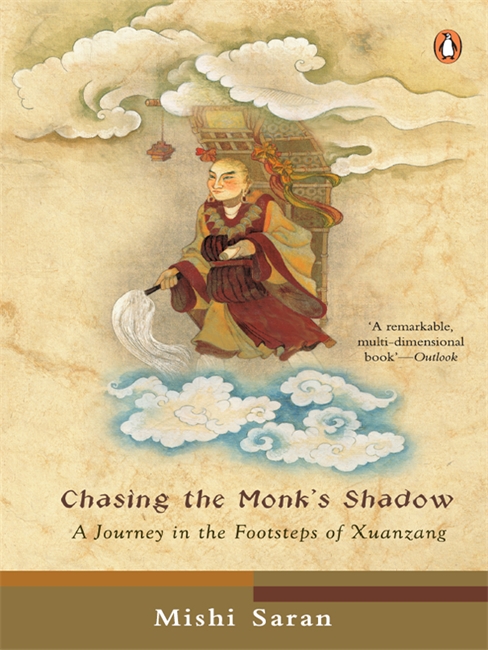
An Indian woman with a China craze retraces the footsteps of a Chinese monk with an Indian obsession
In the seventh century AD, the Chinese monk Xuanzang (earlier spelt as Hiuen Tsang or Hsuan Tsang) set off on an epic journey to India to study Buddhist philosophy from the Indian masters. Travelling along the Silk Road, through the desolate wastes of the Gobi desert and the icy passes of Central Asia, braving brigands and blizzards, Xuanzang finally reached India, where his spiritual quest took him to Buddhist holy places and monasteries throughout the subcontinent. By the time he returned to China eighteen years later, carrying with him nearly 600 scriptures which he translated from Sanskrit into Chinese, Xuanzang had covered an astonishing 10,000 miles. He also left a detailed record of his journey, which remains a valuable source of historical information on the regions he traversed. Fourteen hundred years later, Mishi Saran follows in Xuanzang’s footsteps to the fabled oasis cities of China and Central Asia, and the Buddhist sites and now-vanished kingdoms in India, Pakistan and Afghanistan that Xuanzang wrote about. Travelling seamlessly back and forth in time between the seventh century and the twenty-first, Saran uncovers the past with consummate skill even as she brings alive the present through her vivid and engaging descriptions of people and places. Her gripping chronicle includes an extraordinary eyewitness account of Kabul under the Taliban regime, just one month before 9/11. Running parallel to the account of her travels is the moving story of the author’s inner journey towards a new understanding of her roots and her identity. With its riveting mix of lively reportage, high adventure, historical inquiry and personal memoir, this delightfully written book is a path-breaking travelogue.

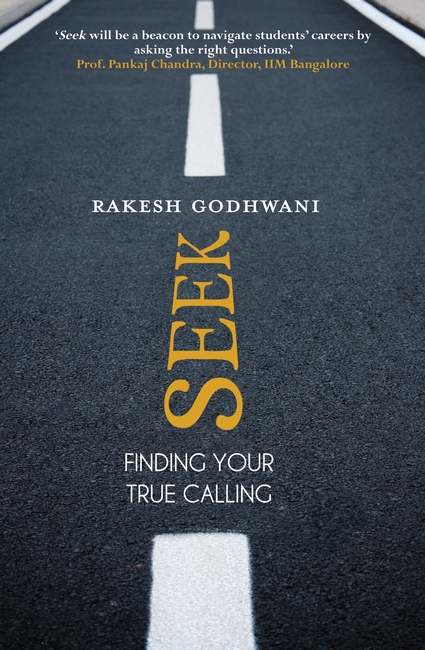
If I don’t crack this job, how will I repay my education loan?
If I join an IT company, will I be able to shift to banking after two years?
These questions seem very familiar, don’t they? Every student has similar concerns about which career path they should tread. Seek provides insights into the various fields and industries-Consulting, IT, Media, Oil and Gas, and others-by delving into stories of successful IIM-Bangalore alumni like Arun Balakrishnan, Malavika Harita, and Apurva Purohit who have made a dent in their respective professions and fields. Rakesh Godhwani offers smart, practical advice on following your passion and finding your dream job.

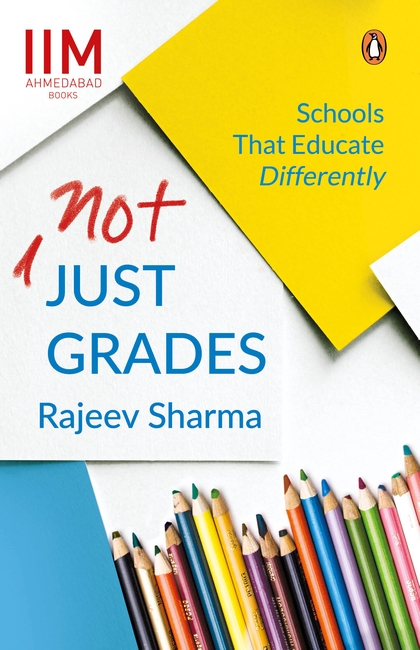
In the race to admit more and more children in privately run, English-medium schools and orient them to a world of cut-throat competition and grades-based performance, the quality of education is suffering. Children, teachers and, of course, educational institutions themselves are constantly struggling to survive in such an atmosphere.
However, while most schools play to the gallery, there are some that have attempted to swim against the current. They aim for the overall development of their students and try to establish a healthy learning environment.
Not Just Grades is about schools that have proved that it is possible to weave positive personal development together with academic excellence. Innovative and full of creative ideas, these schools have a made in difference in imparting education in the absence of extensive resources or capital.

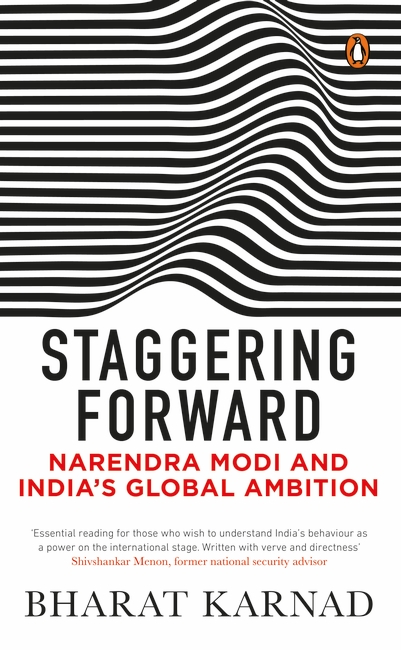
There is a paradigm shift in India’s politics. With his clean reputation, proven track record as chief minister of Gujarat and formidable leadership qualities on display, Narendra Modi seemed the right fit for the prime minister’s job, and just the man to turn the country around after the decade-long UPA rule by the modest and tongue-tied Manmohan Singh.
Prime Minister Modi’s first term, however, raises troubling questions. How has his strongman persona and social background impacted policymaking? Has Modi delivered on the high expectations to advance India’s national interest and security? Has the country’s role in the region, in Asia and the world changed, become more meaningful? What has been the effect of Modi’s India First foreign policy on neighbours, and with respect to raising India’s stock in the world and showing the Indian military has teeth? Especially with regard to the UUS, Russia and China.
Analysing Prime Minister Modi’s foreign and military policies in the context of India’s evolving socio-political and economic milieu, this book offers a critical perspective that helps explain why India has not progressed much towards becoming a consequential power. Argumentative and thought-provoking, Staggering Forward is a must-read to understand India’s foreign and national security policies since 2014.

A riveting account of love and desire
India is the only civilization to elevate kama-desire and pleasure-to a goal of life. Kama is both cosmic and human energy, which animates life and holds it in place. Gurcharan Das weaves a compelling narrative soaked in philosophical, historical and literary ideas in the third volume of his trilogy on life’s goals: India Unbound was the first, on artha, ‘material well-being’; and The Difficulty of Being Good was the second, on dharma, ‘moral well-being’. Here, in his magnificent prose, he examines how to cherish desire in order to live a rich, flourishing life, arguing that if dharma is a duty to another, kama is a duty to oneself. It sheds new light on love, marriage, family, adultery and jealousy as it wrestles with questions such as these: How to nurture desire without harming others or oneself? Are the erotic and the ascetic two aspects of our same human nature? What is the relationship between romantic love and bhakti, the love of god?
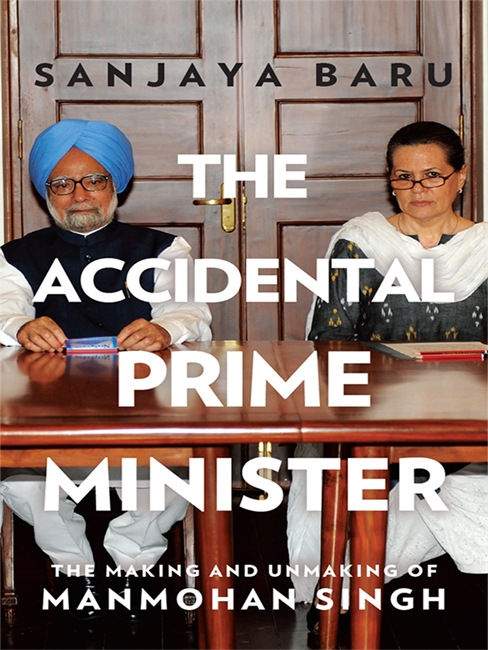
When The Accidental Prime Minister was published in 2014, it created a storm and became the publishing sensation of the year. The Prime Minister’s Office called the book a work of ‘fiction’, the press hailed it as a revelatory account of Prime Minister Manmohan Singh’s first term in the UPA. Written by Singh’s media adviser and trusted aide, the book describes Singh’s often troubled relations with his ministers, his cautious equation with Sonia Gandhi and how he handled the big crises from managing the Left to pushing through the nuclear deal. Insightful, acute and packed with political anecdotes, The Accidental Prime Minister is one of the great insider accounts of Indian political life.
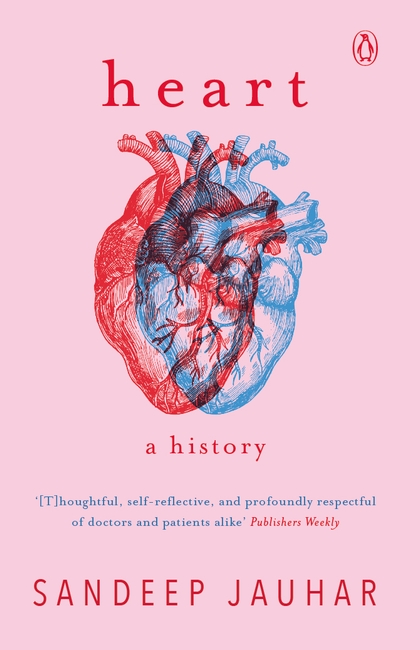
The spark of life, fount of emotion, house of the soul–the heart lies at the centre of every facet of our existence. It’s so bound up in our deepest feelings that it can physically change shape when we experience emotional trauma.
For centuries, the human heart seemed beyond our understanding: an inscrutable shuddering mass that was somehow the driver of emotion and the seat of the soul. As the cardiologist and bestselling author Sandeep Jauhar shows in Heart: A History, it was only recently that we demolished age-old taboos and devised the transformative procedures that have changed the way we live.
Deftly alternating between key historical episodes and his own work, combining his family’s own moving history of heart disease with gripping scenes from the operating theatre, Jauhar tells the colourful and little-known story of the doctors who risked their careers and the patients who risked their lives to know and heal our most vital organ. He introduces us to Daniel Hale Williams, the African American doctor who performed the world’s first open heart surgery in Gilded Age Chicago. We meet C. Walton Lillehei, who connected a patient’s circulatory system to a healthy donor’s, paving the way for the heart-lung machine. And we encounter Wilson Greatbatch, who saved millions by inventing the pacemaker?by accident. Jauhar deftly braids these tales of discovery, hubris, and sorrow with moving accounts of his family’s history of heart ailments and the patients he’s treated over many years. He also confronts the limits of medical technology, arguing that future progress will depend more on how we choose to live than on the devices we invent.
Affecting, engaging, and beautifully written, Heart: A History takes the full measure of the only organ that can move itself.