



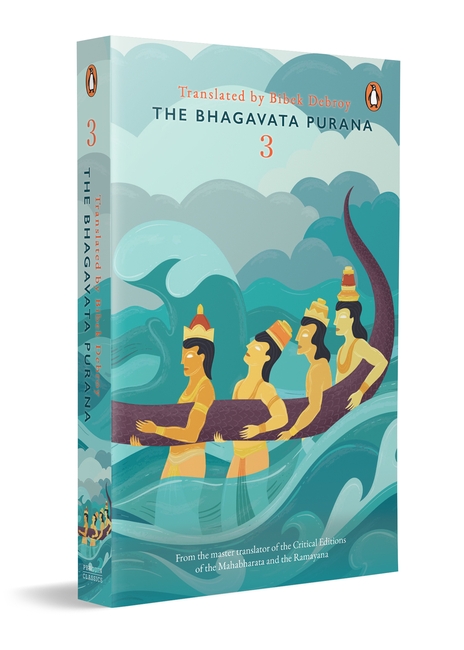
A seamless blend of fable and philosophy, the Bhagavata Purana is perhaps the most revered text in the Vaishnava tradition. It brings to life the legends of gods, asuras, sages and kings-all the while articulating the crucial ethical and philosophical tenets that underpin Hindu spiritualism.
The narrative unfolds through a series of conversations and interconnected stories. We are told how the sage Vyasa was inspired by Narada to compose the Bhagavata Purana as a means to illumine the path to a spiritual life. We learn of the devotion of Prahlada, the austerity of Dhruva, and the blinding conceit of Daksha. Also recounted are tales of the many incarnations of Vishnu, especially Krishna, whom we see grow from a beloved and playful child to a fierce protector of the faithful.
Catagory: Non Fiction
non fiction main category
God of Sin
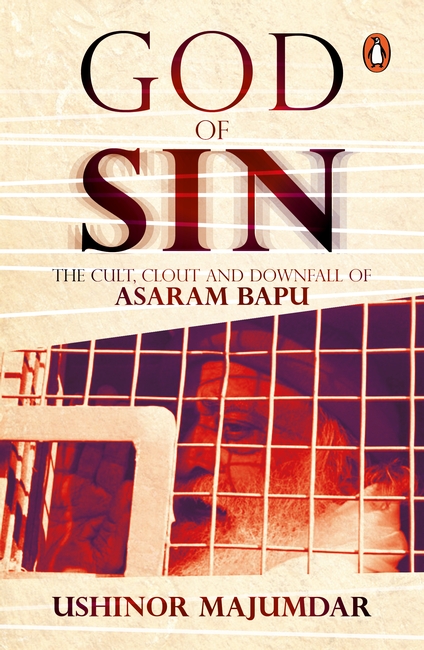
For decades, Asaram Bapu presided over a politically influential empire built on blind faith. Along with his son and heir, Narayan Sai, he has now become an example of everything that is wrong with self-styled godmen and the cults they spawn. The two stand accused of sexual assaults on vulnerable devotees, land grabbing, money laundering, intimidation, exploitative black magic rituals and the horrific murder of witnesses who testified against them. Politically, Asaram Bapu held significant boroughs of influence across north India and the Hindi belt, and there are photos of him with almost every known political leader throughout the 1990s and 2000s, till his arrest in a sexual assault case in 2013.
Asaram originated the business model of branding goods and selling them to followers, using faith as a marketing tool-which other godmen emulated to great success. His commercial empire, now being investigated by economic offences agencies, was built on unaccounted donations, loans given on hefty rates of interest, investments in dubious companies, money laundering and dodgy real estate deals.
God of Sin pieces together Asaram’s journey to spiritual godhood, his fall from grace and the long and arduous road to bring him to justice.
A Dream I Lived Alone
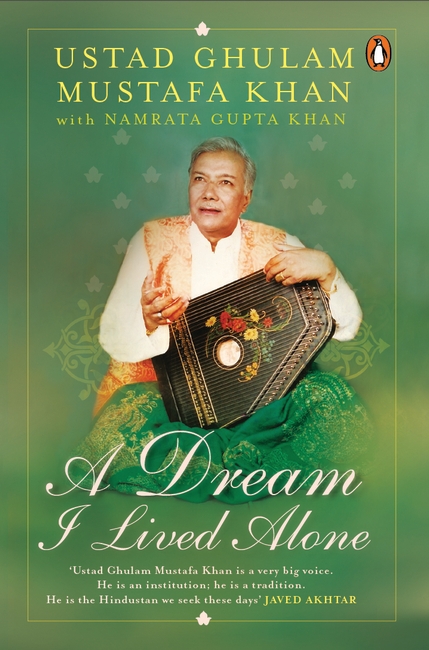
Padma Vibhushan-awardee Ustad Ghulam Mustafa Khan narrates his life’s story-from practicing music in a graveyard as a young boy to teaching stalwarts of the music industry, his journey is as lyrical as his songs.
The octogenarian has nourished his family with love and care, even in his absence. Guru to Shaan, Sonu Nigam, Lata Mangeshkar, and many others, he is modest even about his own achievements. Captured in its essence by Namrata Gupta Khan, his daughter-in-law, A Dream I Lived Alone is a heart-warming story of love, riyaz, dedication and the maestro of music, Ustad Ghulam Mustafa Khan.
Duryodhanization
Duryodhana was a man of strong character and integrity.
Duhsshasana was respectful, generous and kind towards women.
Shakuni was a simple man who loved his subjects unconditionally.
Dhana Nanda, Aurangzeb and Hitler possessed admirable leadership traits.
‘Duryodhanization’ refers to the birth and processes of development of a villainous character-whether in works of history or mythology. In this book, Uppal ekes out the dark side of management and leadership by studying fascinating characters from the Mahabharata. He probes into what it really means to be a villain, and if villainous traits are inherent or cultivated.
Original and thought-provoking, the book draws from history, mythology and literature, and unpacks the process of villainization through the character of the legendary villain, Duryodhana.
Democrats and Dissenters
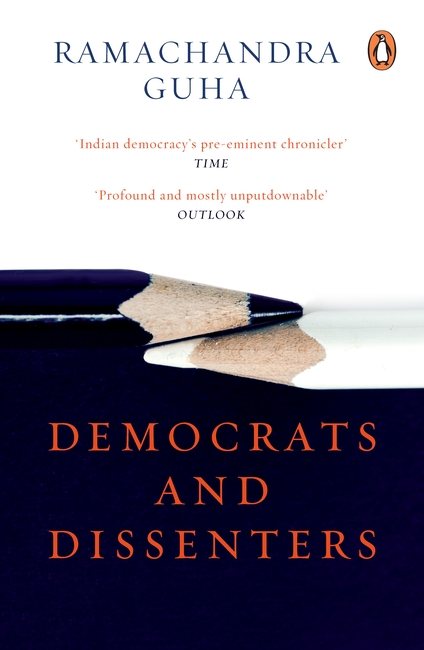
A major new collection of essays by Ramachandra Guha, Democrats and Dissenters is a work of rigorous scholarship on topics of compelling contemporary interest, written with elegance and wit.
The book covers a wide range of themes: from the varying national projects of India’s neighbours to political debates within India itself, from the responsibilities of writers to the complex relationship between democracy and violence. It has essays critically assessing the work of Amartya Sen and Eric Hobsbawm, commentaries on the tragic predicament of tribals in India–who are, as Guha demonstrates, far worse off than Dalits or Muslims, yet get a fraction of the attention–and on the peculiar absence of a tradition of conservative intellectuals in India.
Each essay takes up an important topic or an influential intellectual, as a window to explore major political and cultural debates in India and the world. Democrats and Dissenters is a book that is widely read, and even more widely discussed.
Gandhi
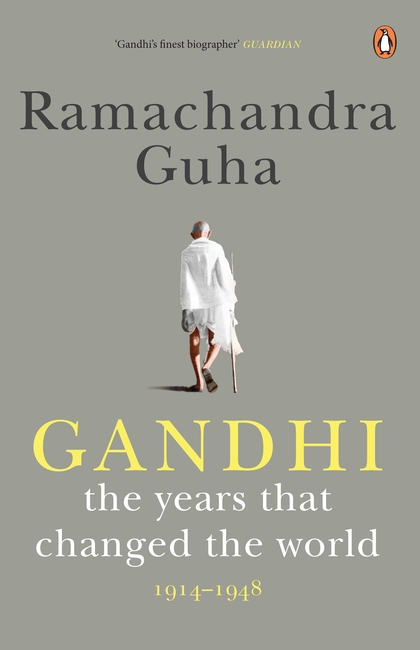
Gandhi lived one of the great 20th-century lives. He inspired and enraged, challenged and delighted millions of men and women around the world. He lived almost entirely in the shadow of the British Raj, which for much of his life seemed a permanent fact, but which he did more than anyone else to bring down. In a world defined by violence and warfare and by fascist and communist dictatorships, he was armed with nothing more than his arguments and example. While fighting for national freedom, he also attacked caste and gender hierarchies, and fought (and died) for inter-religious harmony.
This magnificent book tells the story of Gandhi’s life from his departure from South Africa to his dramatic assassination in 1948. It has a Tolstoyan sweep, showing us Gandhi as he was understood by his contemporaries, with new readings of his arguments with (among others) Ambedkar, Jinnah, and Churchill, and new insights on our freedom movement and its many strands. Drawing on never-before-seen sources and animated by its author’s wonderful sense of drama and politics, Gandhi: The Years That Changed the World is the most ambitious book on the father of the nation.
Games Customers Play
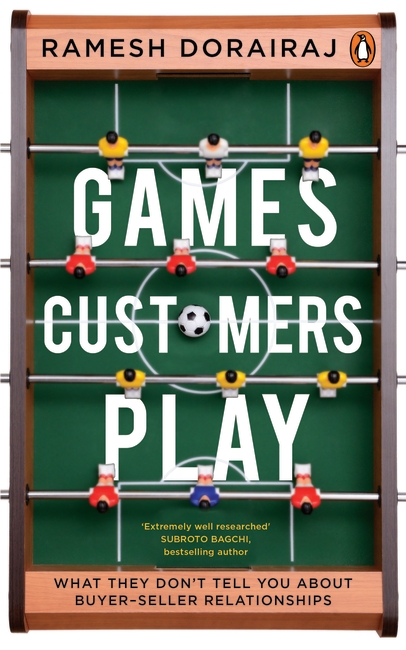
Are you coming across clients who no longer believe in win-win deals? Do you think customers are negotiating even harder? Do you have a feeling that you are playing a different game now?
Business has been an endless series of games played by buyers and sellers-with one difference. Both sides could win at the same time.
But somewhere along the way, many customers have changed the rules of these games in their favour. As a seller, when do you give in and when do you hold back? When do you walk away? Do you search for other markets? Or do you grin and bear it in the hope of better times?
In Games Customers Play, Ramesh Dorairaj shows you how to spot such games and change the rules to your advantage. So that it doesn’t matter what the deal is, you will always win!
Win-Win Corporations
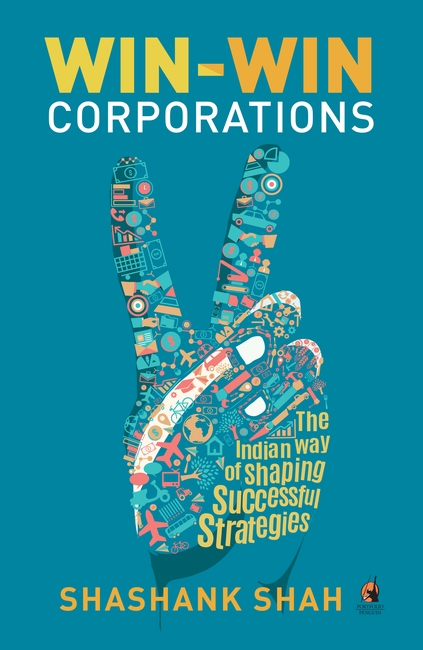
Why did Ratan Tata decide to pay for all the
victims of 26/11, whether injured in the Taj
or elsewhere?
How did Hindustan Unilever develop a cheaper
and better product to beat its competitor Nirma?
How did TVS Motor Company craft a turnaround
after breaking up with Suzuki?
How did Larsen & Toubro Construction
complete the Tirumala Water Supply Project
in just seventy-seven days?
What do the Taj Hotels, Hindustan Unilever,
TVS Motor Company, Larsen & Toubro, HDFC
Bank and Bharat Petroleum have in common?
They are Win-Win Corporations! Based on over
a decade of research, Shashank Shah identifies
six Indian companies and tells you how they are
truly outstanding in the way they do business.
Each of them has remarkable practices when it
comes to stakeholder management. Whether the
stakeholder is a customer, employee, investor,
vendor, dealer or even society at large, these
companies exemplify that looking at their interests
doesn’t really mean compromising on your own.
Often, the two complement each other and that is
what makes it a win-win solution for everyone.
This book gives an insightful glimpse into what
motivates exceptional companies and how they
are a cut above the rest. It also tells you how you
can make your company a Win-Win Corporation.
Full of fascinating anecdotes, the management
philosophies of eminent leaders, background
stories of organizations and an implementation
toolkit-this book is an inspiring read.
Nehru
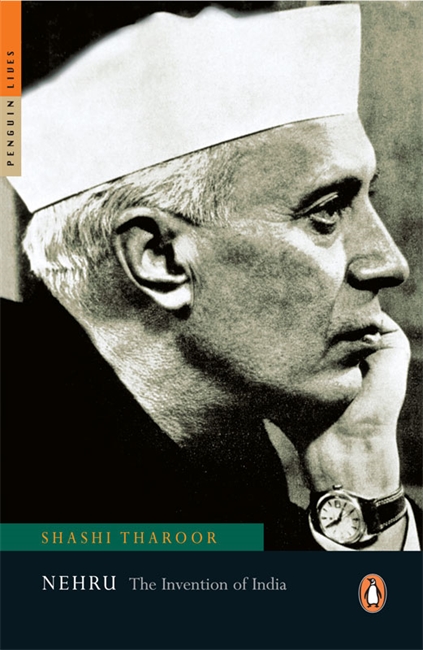
The author of India: From Midnight to the Millennium provides a close-up portrait of Jawaharlal Nehru, India’s first prime minister, the influential politician who led his newly independent nation from colonialism into the modern world, and his lasting legacy in terms of India’s history and world.
Animal Intimacies
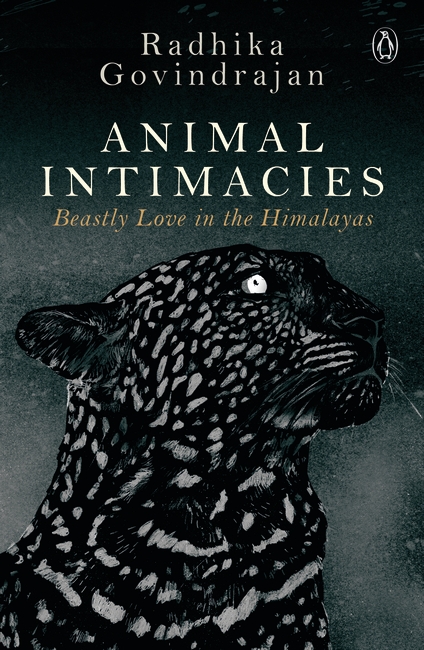
What do we really know of the intimate-and intense-moments of care, kinship, violence, politics, indifference and desire that occur between human and non-human animals?
Built on extensive ethnographic fieldwork in the mountain villages of India’s Central Himalayas, Radhika Govindrajan’s book explores the number of ways that human and animal interact to cultivate relationships as interconnected, related beings. Whether it is through the study of the affect and ethics of ritual animal sacrifice, analysis of the right-wing political project of cow protection, or examination of villagers’ talk about bears who abduct women and have sex with them, Govindrajan illustrates that multispecies relatedness relies on both difference and ineffable affinity between animals.