



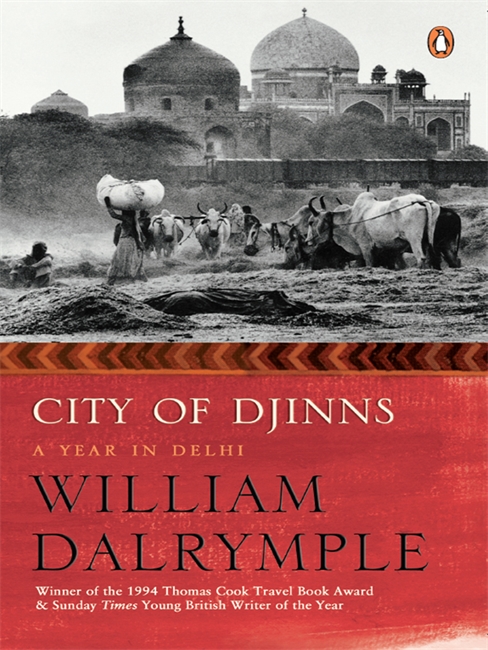
Winner of the 1994 Thomas Cook Travel book Award and Sunday Times Young British Writer of the Year -Dalrymple is probably the best travel writer of his generation'”Daily Mail -As the author of the best travel book of recent years at the intensely irritating age of twenty-two, William Dalrymple has now shown that In Xanadu was no fluke. City of Djinns is an entertaining mix of history and diary informed by a deep curiousity about the ways in which the ghosts of even the most distant past still walk in the twentieth century.'”Christopher Lockwood, Daily Telegraph -Dalrymple has pulled it off again – At a time when the book of travels is beginning to lose its fashionable allure, City of Djinns is not really a travel book at all. It is a kind of memoir recording the response of a single, gentle, merry and learned mind to the presence of an ancient city … Dalrymple is anything but avoyeur. Even his excursions into the world o the eunuchs are conducted with a kind of grave innocence. He is more a pilgrim than an observer, always trying to understand – It is the work of a man who has consciously chosen to commit himself to the profession of letters, and in it we see the first fine rapture of In Xanadu deepening to a profounder dedication – hours and hours of pleasure for his readers.'”Jan Morris, Independent -One one level there are the amusing rites of passage, the struggles with bureaucracy, the eccentricity of Dalrymple’s landlord, all entertainingly related. Dalrymple has a way of letting you smell and feel the city. There are beautifully chiselled descriptions of a grand capital – but much of the book’s strength lies in Dalrymple’s skill in peeling the historical onion and showing how (the) New Delhi resonates with the old – A splendid tapestry.'”Trevor Fishlock, Sunday Telegraph -A sympathetic and engaging portrait of this age-old city'”Nicholas Wordsworth, Financial Times -Scholalry and marvellously entertaining – A considerable feat.'”Dervia Murphy, Spectator -Unlike much of modern travel writing [City of Djinns] is informative, learned and funny – a lively and sometimes profound book.'”Emma duncan, Economist -An expansive and inclusive work, richly peopled – an enlightening and entertaining book.'”Iain Wetherby, Literary Review.
Catagory: Non Fiction
non fiction main category
Kaifiyat
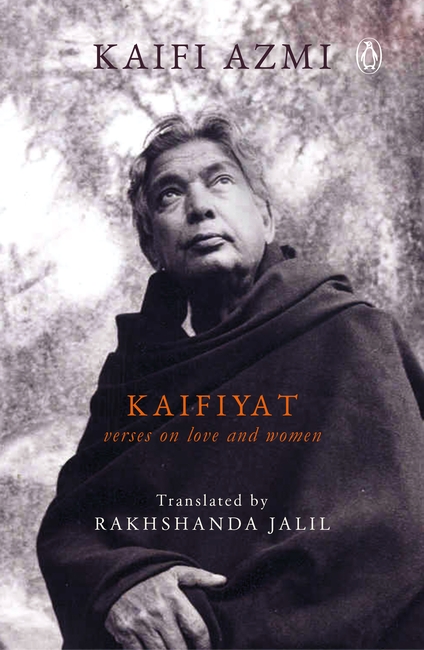
Kaifi Azmi’s literary legacy remains a bright star in the firmament of Urdu poetry. His poetic temperament-ranging from timeless lyrics in films like Kagaz Ke Phool to soaring revolutionary verses that denounced tyranny-seamlessly combined the radical and the progressive with the lyrical and the romantic.
Love and romance, in fact, run like warp through the woof of politics and protest in Kaifi’s poetry. This beautifully curated volume brings together poems and lyrics that reflect Kaifi’s views on women and romance-from sweetly lyrical odes like ‘The First Greeting’ to the powerful, anthem-like ‘Woman’; from the haunting ‘Regret’ to the mercurial ‘She of Many Faces’. These stunning verses conjure a dynamic portrait of womanhood as seen through the eyes of an exquisitely gifted poet.
This scintillating new translation is accompanied by an illuminating introduction by Rakhshanda Jalil on Kaifi Azmi’s life and legacy, as well as a moving foreword by his daughter Shabana Azmi.
Ganga
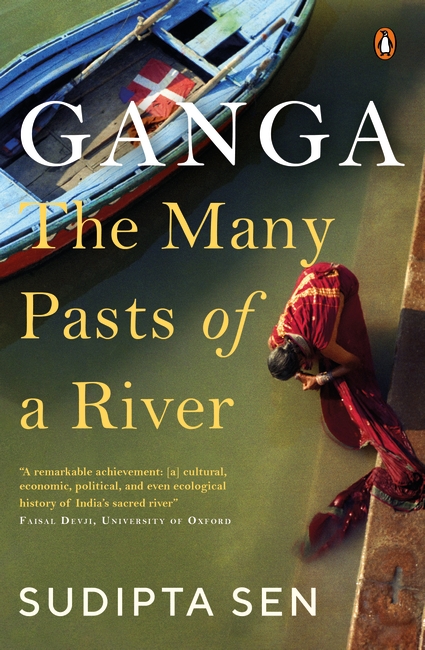
The Ganga enjoys a special place in the hearts of millions. In this unprecedented work, historian Sudipta Sen tells the fascinating story of the world’s third-largest river from prehistoric times to the present.
Sen begins his chronicle with the river’s first settlers, its myths of origin in Hinduism and its significance in popular Buddhism. He traces the communities that arose on its banks, the merchants that navigated its waters and the many empires that shaped the river’s identity. Seamlessly weaving together geography, ecology and religious history, this lavishly illustrated volume paints a remarkable portrait of India’s most sacred and beloved river.
The Age of Awakening
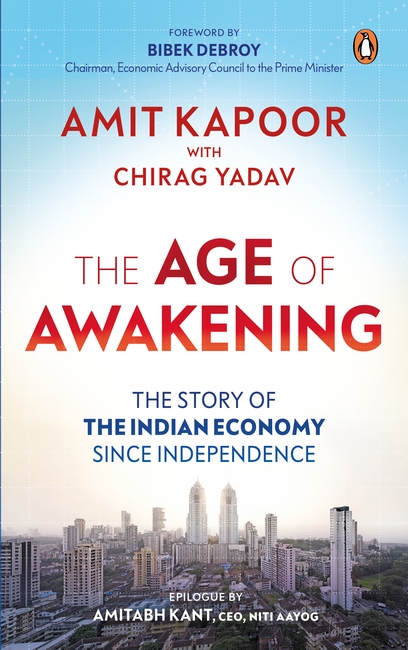
Indian leaders at the time of Independence had their tasks cut out. The nation that was marred by an ugly Partition, had to be prevented from coming apart at the seams. A Constitution had to be framed for a complex society. An election system had to be designed for an electorate that was mostly illiterate. An economic policy had to be shaped for a widely impoverished population.
Among these aspects, the success of India’s economic policy has been debatable. The economic path that India chose at that time is often questioned and criticised. It led to lacklustre growth outcomes which eventually ended in a full-blown crisis in 1991. Since then India has shifted gears. The economy has become more welcoming of the outside world and grown at a pace that has never been witnessed in its history.
But why did India make these choices? What was the role of our political leaders? Where did they falter and where did they succeed?
The Age of Awakening tells India’s economic story since the country gained independence. It unfolds a tale of titanic figures, colossal failures, triumphant breakthroughs and great moral shortcomings. Weaving together vivid history and economic analysis, this book makes for a gripping narrative.
The Girl From Nongrim Hills

Bok, a guitar player with a Shillong band, has a lot on his mind. His elder brother Kitdor has lost 50 lakh rupees on a trip to Nagaland to purchase arms for a group of militants. Kitdor is given a week to repay the money, and the only person he can turn to is his laidback younger brother. Bok is helpless until a chance encounter with a beautiful woman provides him with a desperate solution. But fate can’t be cheated and soon the hapless musician is tangled in her web of lies. He must outmanoeuvre her and the trail of politicians, militants and cops she leaves in her wake, and find the 50 lakh in time if he is to save his brother.
Dark, atmospheric and utterly gripping, The Girl from Nongrim Hills is a superb thriller and a great Shillong novel.
The Begum
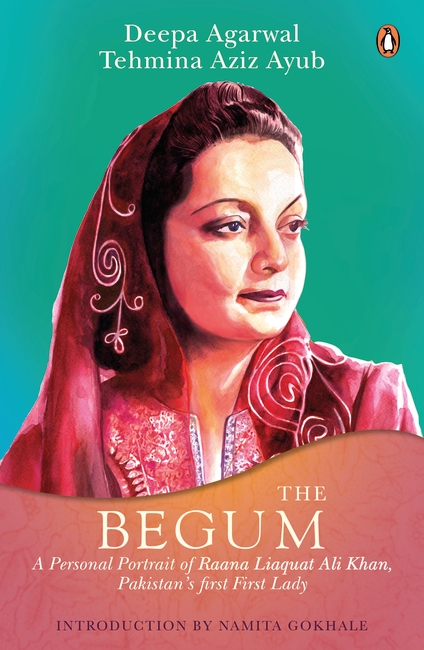
Begum Ra’ana Liaquat Ali Khan was the wife of Pakistan’s first prime minister. She was born
Irene Margaret Pant in Kumaon in the early twentieth century. A generation earlier, her family
had converted to Christianity, and Irene grew up in the shadow of the Brahmin community’s still
active outrage. Always intelligent, outgoing and independent, she was teaching economics in a
Delhi college when she met the dashing Nawazada Liaquat Ali Khan, a rising politician in the Muslim
League and an ardent champion of the cause for Pakistan.
She was immediately inspired by both the man and the idea; they married in 1933 and Irene Pant
became Ra’ana Liaquat Ali Khan. In August 1947 they left for Pakistan-led by Liaquat’s mentor
and friend, Mohammad Ali Jinnah. Ra’ana threw herself into the work of nation building, but in
1951 Liaquat Ali Khan was assassinated, and the reasons for his murder are still shrouded in mystery.
Ra’ana continued to be active in public life-and her contribution to women’s empowerment in
Pakistan is felt to this day.
Ra’ana’s life story embodies all the major tropes of the Indian subcontinent’s recent history.
Three religions-Hinduism, Christianity and Islam-had an immense impact on her life,
and she participated actively in all the major movements of her time-the freedom struggle,
the Pakistani movement and the fight for women’s empowerment. She could see clearly what went
wrong after 1947 and wasn’t afraid to say so. She spoke out openly against the rise of religious
conservatism in Pakistan and the growing role of corruption. She occasionally met with opposition,
but she never gave up. It is this spirit that The Begum captures.
One Day in the Season of Rain
In a remote village in the foothills of the Himalayas, a gifted but unknown poet named Kalidas nurtures an unconventional romance with his youthful muse, Mallika. When the royal palace at Ujjayini offers him the position of court poet, Kalidas hesitates, but Mallika persuades him to leave for the distant city so that his talent may find recognition. Convinced that he will send for her, she waits. He returns years later, a broken man trying to reconnect with his past, only to discover that time has passed him by.
A classic of postcolonial theatre, Mohan Rakesh’s Hindi play is both an unforgettable love story and a modernist reimagining of the life of India’s greatest classical poet. It comes alive again in Aparna and Vinay Dharwadker’s new English translation, authorized by the author’s estate. This literary rendering is designed for performance on the contemporary cosmopolitan stage, and it is enriched by extensive commentary on the play’s contexts, legacy, themes and dramaturgy.
The Great March of Democracy
As India gears for its seventeenth Lok Sabha elections in 2019, the Election Commission of India, guardian of the world’s grandest electoral experiment, marks the beginning of its seventieth year. This book celebrates seven decades of India’s vibrant democracy and the Election Commission’s excellence and rigour, with a remarkable collection of essays written by those who have studied India’s unique experiment in electoral democracy, as well as analysts, politicians, social workers, activists, businesspersons and public servants.
The essays in this book cover a range of subjects, from the evolution of the Election Commission, the exciting story of the first electoral roll, election laws, the deepening of democratic institutions over the decades to the participation revolution ushered in by the Election Commission’s untiring and targeted efforts at voter education. Contemporary issues, such as the corrupting influence of money and the creeping criminalization in politics, have been addressed, as have been the electoral reforms proposed by experts on these subjects. There is a peek into how India’s experience with elections has inspired its neighbours Nepal and Bhutan and impacted observers who have had a chance to witness, first-hand, the mammoth exercise held in the largest democracy on the planet.
The diversity of perspectives from keen observers of India’s democracy makes this volume an enthralling read.
How to Win an Indian Election
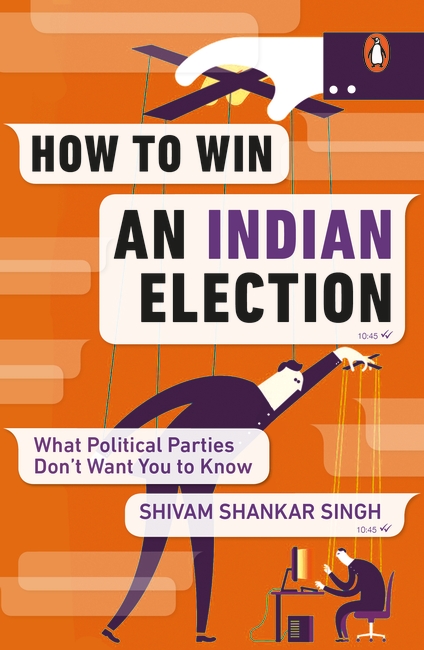
What role do political consultants play in election campaigns? How are political parties using technological tools such as data analytics, surveys and alternative media to construct effective, micro-targeted campaigns? How does the use of money impact election results? What aids in the en masse dissemination of divisive propaganda and fake news? What does it take to win an election in India today? What is the future of politics in the country?
Written by a former election campaign consultant for a major political party, How to Win an Indian Election takes readers into the forbidden world of election war-rooms and gives them a glimpse of how strategy is formulated, what works with voters on the ground and what doesn’t. Based on research, interviews and the author’s own experiences, this book is invaluable for its insight into the inner workings of politics, political parties and what really makes for a winning election campaign.
The Reluctant Family Man
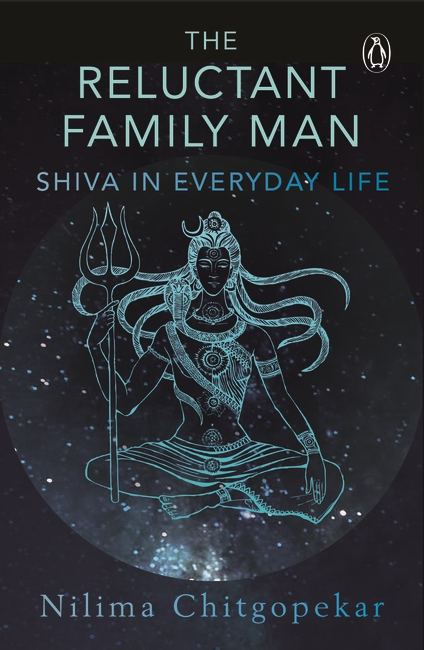
He’s the destroyer of evil, the pervasive one in whom all things lie. He is brilliant, terrifying, wild and beneficent. He is both an ascetic and a householder, both a yogi and a guru. He encompasses the masculine and the feminine, the powerful and the graceful, the Tandava and the Laasya, the darkness and the light, the divine and the human.
What can we learn from this bundle of contradictions, this dreadlocked yogi? How does he manage the devotions and duties of father, husband and man of the house, and the demands and supplications of a clamorous cosmos?
In The Reluctant Family Man, Nilima Chitgopekar uses the life and personality of Shiva-his self-awareness, his marriage, his balance, his detachment, his contentment-to derive lessons that readers can practically apply to their own lives.With chapters broken down into distinct frames of analysis, she defines concepts of Shaivism and interprets their application in everyday life.