



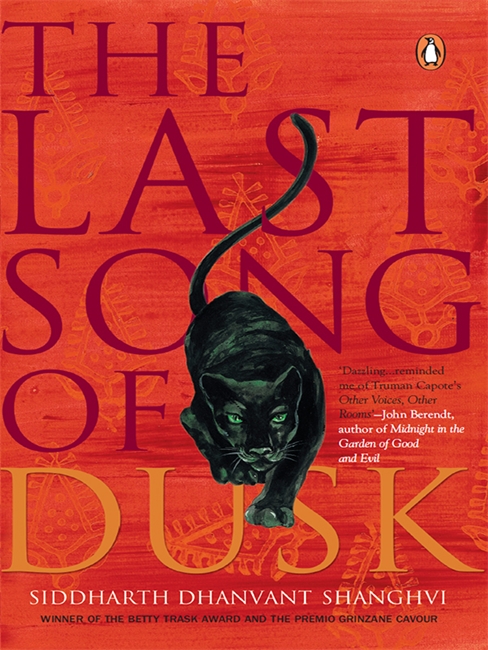
Siddharth Dhanvant Shanghvi’s stunning debut tells the story of four extraordinary lives. Anuradha Gandharva, gifted with astonishing beauty and magical songs; her husband, Vardhmaan, struggling with secret losses; Nandini, a deviously alluring artist with a penchant for panthers and walking on water; and Shloka, the Gandharvas’ delicate, disturbingly silent child. As their fates unravel in an old villa in 1920s’ Bombay, they learn to navigate the ever-changing landscape of love. Told with tenderness and dazzling wit, The Last Song of Dusk will haunt you long after you have turned the final page.
Catagory: Non Fiction
non fiction main category
The Unreasonable Fellows
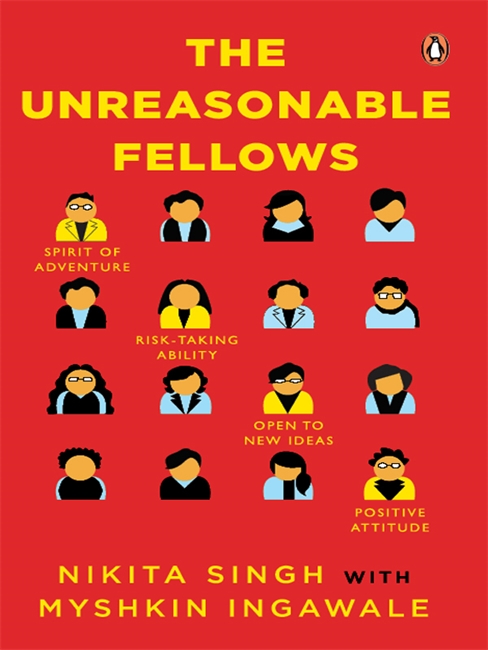
To achieve what you want to, to do what you truly believe in, you’ve got to be unreasonable!
How many of us dream about changing the world when we grow up?
How many of us actually have the courage to take the path less trodden?
The Unreasonable Fellows chronicles the journeys of ten social and environmental entrepreneurs who, with their go-getting attitude and passionate ventures, are doing their bit to make the world a better place. It is an inspiring account of how, despite the initial setbacks, these fiery men and women refused to give up. Instead, they learnt from each of their failures and turned it into success.
This book teaches you to do the same and to never ever give up!
Derek’s Picks
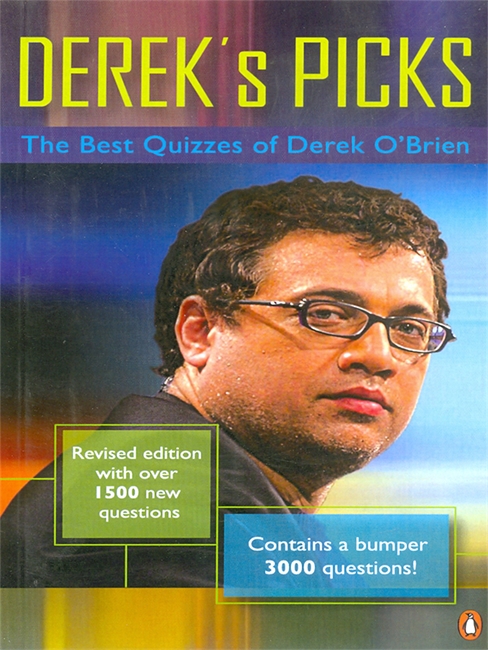
Personal favourites of Asia’s no. 1 quizmaster Derek O’Brien, recognized as India’s leading quizmaster. From his vast repertoire of questions that span the informative and educational, thought-provoking facts and trivia, he has gleaned hundreds of his favourites for this unputdownable volume. The questions cover subjects as diverse as the Chinese New Year, coffee, crocodiles and Cleopatra to the Grammy Awards, Gujarat, Mars, swans, tsunamis and West Asia. There are also sets of questions on famous personalities like Asha Bhonsle, Isaac Newton, Lady Diana, Pablo Picasso, Shakespeare and Winnie the Pooh. Each set tests both the extent and depth of the readers’ knowledge on the subject. Among the questions readers will find answers to in this book are:
Millions of years ago, which super-continent did Antarctica originally form a part of?
What were the two styles of shading which Leonardo used to great effects in his paintings?
What special feature of a camel’s eyelids protects it from dust and sun?
What is the study of fishes called?
Whether you are a student, teacher, professional, quiz aficionado, or just a casual reader, this book will keep you engrossed for days.
The Travel Gods Must Be Crazy
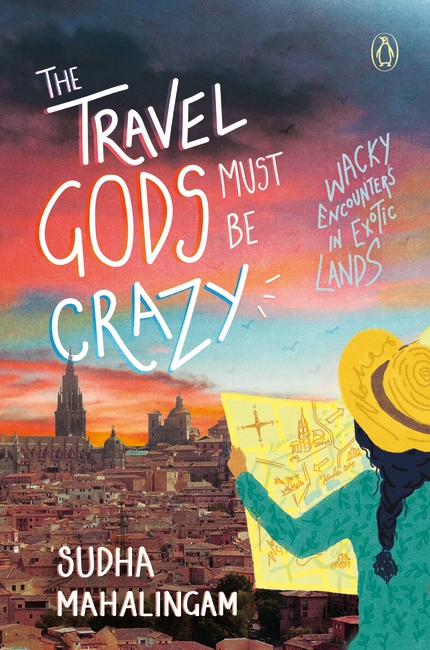
Ever suffered the collective flatulence of eighty co-passengers while sailing on a serene Asian river? Or called out for rescue in true Bollywood style while locked up in a minaret in Persia? Or had to cross a pack of hyenas en route to the loo?
Dreaming of glorious sunrises and architectural marvels in exotic places, Sudha often landed up in situations that were uproariously bizarre or downright dangerous. Tongue firmly in cheek, she recounts her journeys through the raw wildernesses of Borneo and the African savannah, into the deserts of Iran and Uzbekistan, and up the Annapurna and the Pamirs, revealing the quirky side of solo travel to side-splitting effect. Punctuating her droll stories with breathtaking descriptions and stunning photographs, Sudha invites readers on an unexpected and altogether memorable tour around the world!
RSS

The RSS is the most influential cultural organization in India today, with affiliates in fields as varied as politics, education and trade. This book fundamentally addresses three key questions: Why has the Rashtriya Swayamsevak Sangh (RSS) and its affiliates expanded so rapidly over the past twenty-five years? How have they evolved in response to India’s new socio-economic milieu? How does their rapid growth impact the country’s politics and policy?
With unprecedented access, Walter K. Andersen and Shridhar D. Damle lift the curtains to help us understand the inner workings of the Sangh.
Backed by deep research and case studies, this book explores the evolution of the Sangh into its present form, its relationship with the ruling party, the BJP, their overseas affiliates and so much more.
Rajneeti
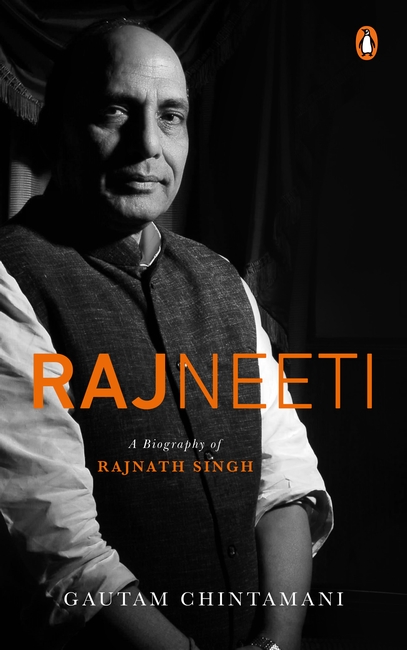
Rajneeti mein “neeti” hai, to “aneeti” kyon?’ – Rajnath Singh
Rajnath Singh rose from a Swayamsevak in the RSS to the Chief Minister of Uttar Pradesh, and also served as a Cabinet Minister in the Vajpayee Government. Jailed during the Emergency, Singh was the president of the BJP’s youth wing, the Bharatiya Janata Yuva Morcha. A two-term President, Singh saw the elevation of Narendra Modi as the party’s PM candidate and delivered BJP’s biggest elections victory in 2014. Since then, as India’s Home Minister, he has ushered in a new phase in the country’s security where both internal and external threats have been minimised. Under Singh, the Red menace from Naxalites and Maoists has been nearly wiped out, and the state of Jammu and Kashmir saw the first local body elections in over a decade.
Read on to know more about one of the tallest politicians in present-day India. In a career spanning nearly fifty years, Rajnath Singh has not only witnessed but also played a significant role in shaping the history of this country. Drawing from a vast amount of research and in-depth interviews, Gautam Chintamani’s engaging narrative reveals for the first-time a politician who never shied away from doing the right thing.
Do Better With Less
This groundbreaking book, by the bestselling authors of Jugaad Innovation, shows how India can harness the three megatrends — the sharing economy, the maker movement and the circular economy — and disruptive technologies such as AI and 3D printing to generate jobs and drive inclusive and sustainable growth in the decades to come.
The world faces a stark challenge: meeting the needs of over 7 billion people without bankrupting the planet. India, with its large population and limited resources, is at the very epicentre of this challenge. It also offers a creative way out. Its resilient jugaad mindset, dynamic ecosystem of start-ups and enterprises, and the practice of NGOs and governments working together promises not only to meet its own requirements in a sustainable way but also the needs of billions around the world.
Packed with over fifty case studies, Do Better with Less offers six proven principles that Indian entrepreneurs and businesses can use to co-create frugal solutions in education, energy, healthcare, food and finance that are highly relevant to India and the world.
This book is India’s guide to claiming global leadership in frugal innovation.
A Necklace of Skulls
Eunice de Souza wrote poetry for over three decades. Her poems in collections such as Fix (1979), Women in Dutch Painting (1988) and Ways of Belonging (1990) have been critically acclaimed and reflect a strong sense of individuality and feminism. Compelling and succinct, they dwell on the themes of love, relationships and family. Through her poetry Eunice explores the dependency of lovers and the fraught relationships between parents and their children. She also examines the Roman Catholic community she grew up in, exposing it for its hypocrisy and conservatism. Relying on sound and rhythm, her well-chosen, hard-hitting words bring out her sharp, clear imagery. A Necklace of Skulls contains all the verse Eunice de Souza has published during her illustrious career, as also unpublished new and early poems. This is a profoundly intimate and intensely personal collection.
Ladies Coupe
The story of a woman’s search for strength and independence Meet Akhilandeshwari, Akhila for short: forty-five and single, an income tax clerk and a woman who has never been allowed to live her own life—always the daughter, the sister, the aunt, the provider. Until the day she gets herself a one-way ticket to the seaside town of Kanyakumari, gloriously alone for the first time in her life and determined to break free of all that her conservative Tamil brahmin life has bound her to. In the intimate atmosphere of the ladies coupe which she shares with five other women, Akhila gets to know her fellow travellers: Janaki, pampered wife and confused mother; Margaret Shanti, a chemistry teacher married to the poetry of elements and an insensitive tyrant too self-absorbed to recognize her needs; Prabha Devi, the perfect daughter and wife, transformed for life by a glimpse of a swimming pool; fourteen-year-old Sheela, with her ability to perceive what others cannot; and Marikolanthu, whose innocence was destroyed by one night of lust. As she listens to the women’s stories, Akhila is drawn into the most private moments of their lives, seeking in them a solution to the question that has been with her all her life: Can a woman stay single and be happy, or does a woman need a man to feel complete?
The Lost Rebellion
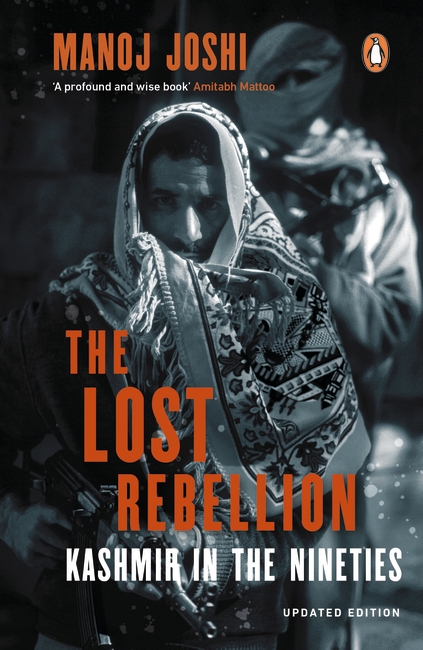
The Lost Rebellion is an acclaimed classic on the rise of Kashmir militancy, which chronicles how a simple call for azadi by bands of disgruntled youth was transformed within a year into a full-scale jihad against India. It dwells at length on Pakistan’s proxy war against India, exposes the US position on Kashmir and unsparingly critiques the political bungling and bureaucratic ineptitude that hamstrung the fight against insurgency.
This updated edition includes an insightful foreword by Amitabh Mattoo, a new introduction and a detailed aftermath chapter on what has transpired in the new millennium. Manoj Joshi reveals that although violence has come down drastically, there has been no closure to the nearly three-decade-old conflict. The alienation of the Kashmiris has, if anything, grown and is now manifesting itself in violent civil protest.
Raw, compelling and meticulously researched, The Lost Rebellion is a riveting account of the human drama that lies at the heart of the crisis that is Kashmir.
‘In its sheer wealth of detail it far surpasses anything that has been written so far’-Prem Shankar Jha
‘A compelling and breathtaking account’-Sumit Ganguly
‘The best book on the Kashmir militancy’-Ashok Banker