Sonu got up and stood by my pillow. ‘I’m scared. Can I share your bed?’ she pleaded. I made room for her. She clung to me like a frightened child. Every time there was lightning and thunder she dug deeper into my embrace. I soothed her nerves by holding her close to me. We began to kiss; this time she opened her mouth to let me explore its depths.
When Mohan comes back from America, his father knows that it is now time for him to marry. The girl is from a good family, and as is tradition, they get very little time to get to know each other—but on this honeymoon, they discover each other in a deeply intimate way. Mohan wants to make sure his wife knows that he won’t hurt her—but her young, innocent sensuality makes it very hard to keep himself in check. Will Mohan find his way into his young bride’s . . . heart?
Khushwant Singh writes a thrilling, brazen story of first times in this traditionally sexy story.
Suddenly, she put her arms round my neck and said, ‘It is our last evening together. Make love to me. Something to remember you by for the rest of my days.’
She did not give me a chance to protest. She took me by my hand and led me to the bedroom. She took off everything save her jewellery.’
When Mohan goes to Princeton, the last person he expects to meet is a loud, opinionated Kashmiri woman—Yasmeen Wanchoo. She was, as the Punjabis say, goree chittee gole matole—fair and roly-poly. But her fierce demeanor hides a tender, sensuous heart. Effortlessly, he is brought into her life and heart. Feeding Mohan on rich Kashmiri food with her own fingers, will Yasmeen be able to satisfy the hunger in Mohan’s soul? Can India–Pakistan find a way to make love, not war?
Two countries torn asunder find common ground across the sheets in Khushwant Singh’s exquisite, sexy story.
‘When saying good night, we started with a peck on the cheeks, progressed to kissing on the lips, and then full-blooded mouth kissing—she would roll her tongue in my mouth. She sensed that I lacked the confidence to go further and decided to take the initiative.
She asked me to have a drink with her in her room.’
Mohan leaves India for the first time to go to Princeton to study. It’s a new world, where everything is different—but some things stay the same no matter where you are. For the first time, Mohan meets women who are unafraid of sex and want him as much as he wants them. And Jessica Browne introduces him to what he only dreamt of knowing before—the wonders of a woman’s body.
Khushwant Singh’s magnificent prose meets the universal pleasure for the first time in this short, compelling story.
He slipped his hand under her dressing gown and gently rubbed her shoulders and the back of her neck. Then her spine and her little buttocks. The tension went out of her body and she faced him. ‘Switch off the table lamp,’ she said.
Mohan is a rich, cultured man from an old south Delhi family. When his wife leaves him, he must find a way to satisfy his manly desires. He writes a matrimonial ad—but scandalously, just for sex. Sarojini responds—a professor of literature, demure and pure, but equally desperate to slake her lust. Can Mohan convince her to leave her modesty behind, and let herself succumb to her desire for him? And will the lady professor give Mohan the satisfaction he craves?
All he wanted was someone for his bed, but Sarojini’s classy, sexy wit gives him more than he knew he wanted—a woman who understood him.
Khushwant Singh’s effortless prose finds release in this potent, sexy story.
Dhanno was stark naked. ‘Not like this, sahib,’ she murmured. ‘You must be like me.’ She unbuckled his belt and pulled his trousers down. She gasped. ‘Sahib, I have never seen anything so big!’
Mohan is a high-class man from a rich south Delhi family, who has it all. But after Mohan’s wife leaves him, he must find a way to satisfy his urges elsewhere. He can’t stop noticing his jamadarni—the sweeper’s wife. Every time she gets down on the floor to wipe it, he can’t take his eyes of her ample skin, her sari hitched up to her knees for ease of vigorous cleaning. And when she looks at him from the corner of her eye and adds a little wiggle to her bottom, he knows she wants him as badly.
He can never take her out in public. But can he take her, for his own, when nobody is watching? And how badly does she want her sahib’s . . . love?
Khushwant Singh’s classic writing meets unbearably sexy tension in this erotic story.
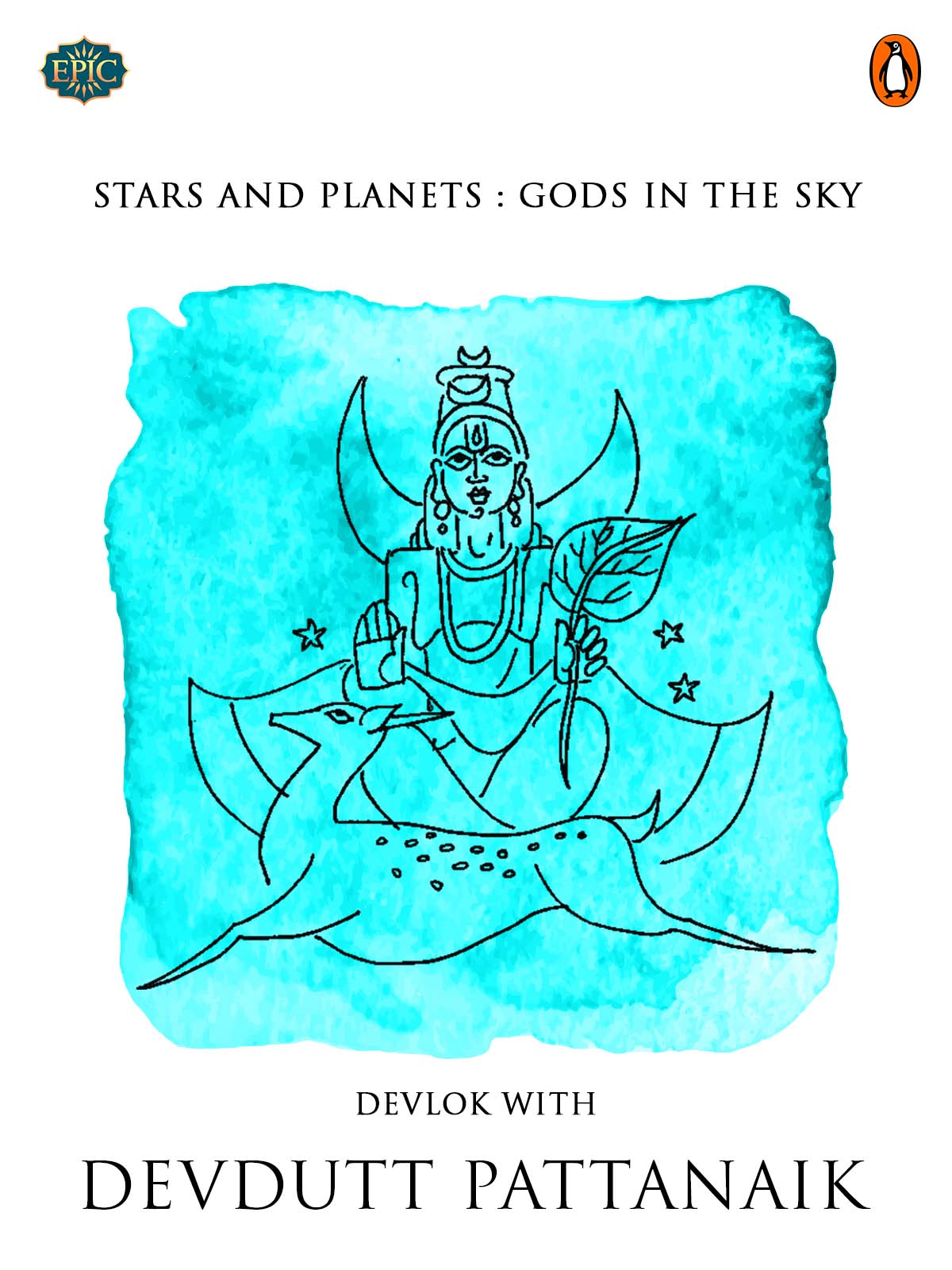
Why do the Vedas give so much importance to stars and planets? What is a rashi, and what is a nakshatra? Are all nakshatras wives of the moon Chandra, and why does Chandra wax and wane? Do you know the love story of the sun and the the flower raat ki rani? What is Shanivar, Saturday, there to teach you?
Devdutt brings the sky to life with his thrilling stories of our celestial folklore. From the place of homosexuality in the puranas to the enchanting wedding ritual of searching for the star Arundhati, the night sky comes alive with romance and wonder in this short, sweet read from Devlok.
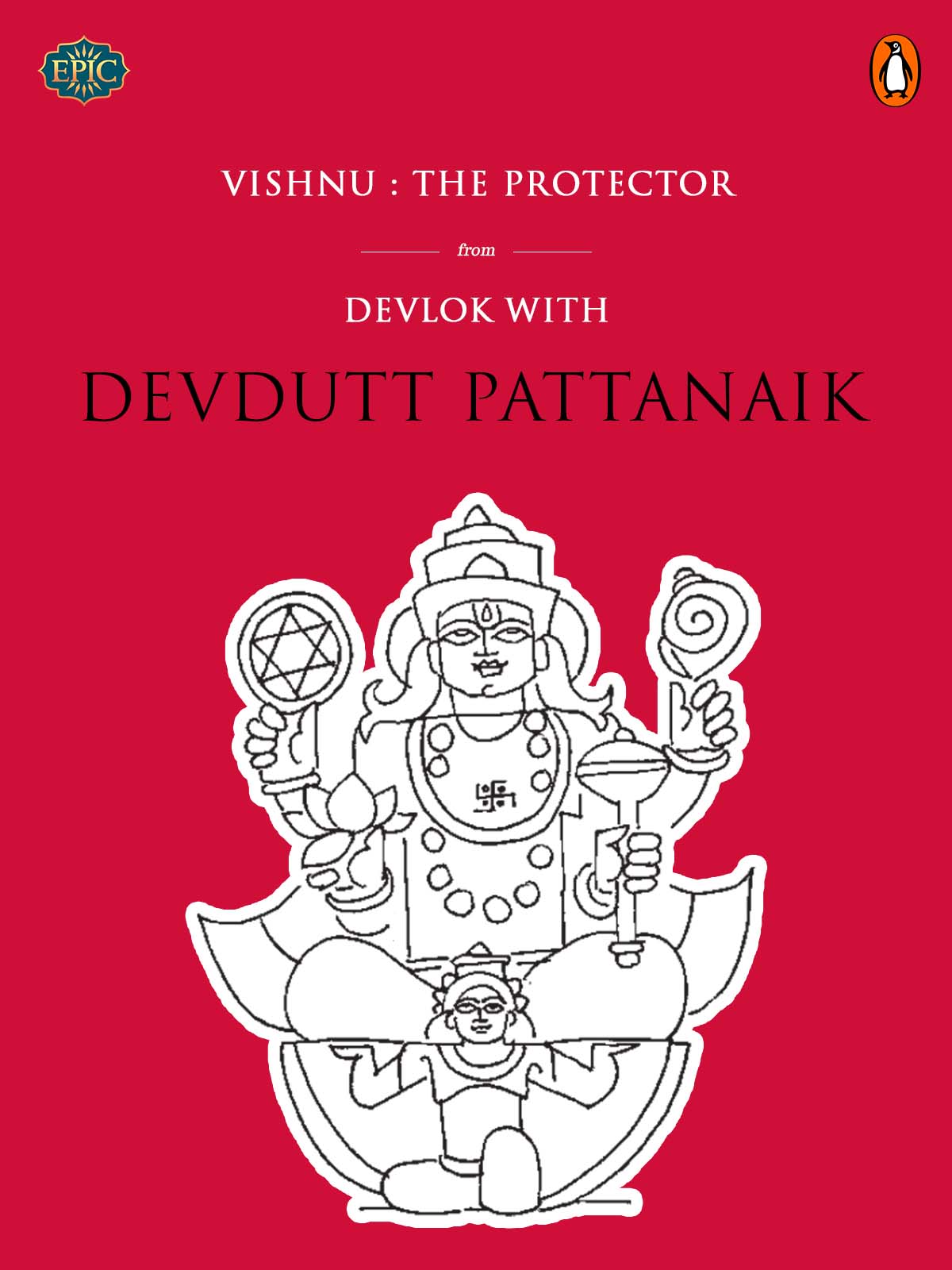
How many avatars does Vishnu actually have? Is Buddha an avatar of Vishnu? What do Bodhisattva and Vishnu have in common? What do all of his avatars symbolize? Is there a connection between Vishnu’s avatars and Darwin’s theory of evolution?
It is believed that Vishnu always comes to earth when Devi is suffering—Parashurama for Renuka, Ram for Sita. Another belief is that every time Vishnu takes an avatar, Devi too is born. A Vishnu avatar went on a rampage destroying all Kshatriyas, but also strives to protect the weeping earth goddess who appeared before him as a cow.
Which of these many personas does Vishnu represent? Find out more about the rich symbolism of his multitude of personas in this short, sweet read from Devlok.
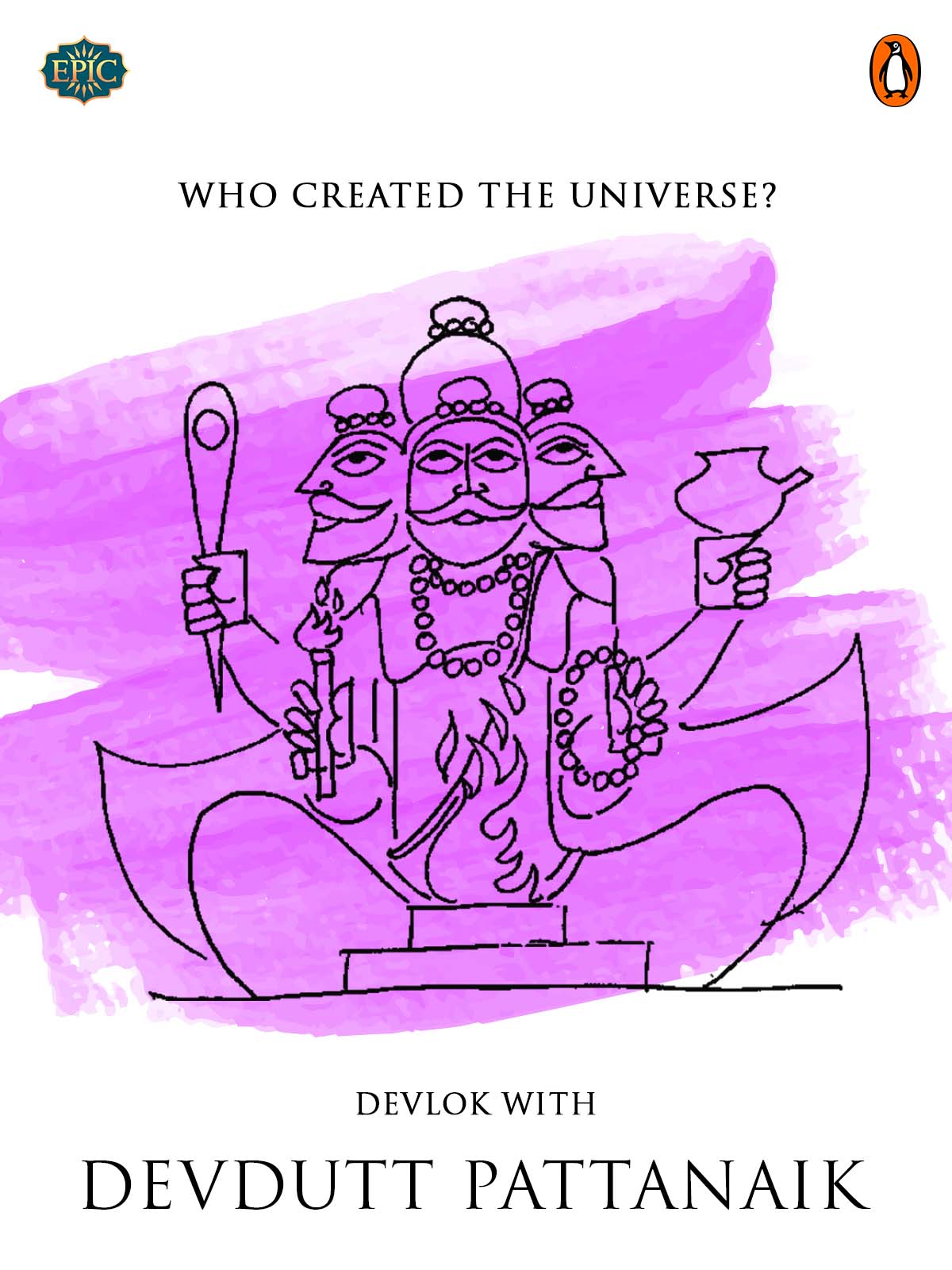
Did Brahma create the universe? Was it born out of the sacrifice of Prajapati? Did his wife Shatarupa create animals while being pursued by him? Or was it all a product of Manu?
A Vedic poet says that for anything to be created in the universe, it must be preceded by desire. If desire is the seed, the cosmos is its fruit. A Shaiva story says that in the beginning there was a golden woman in the shape of a lotus, and when it bloomed, Brahma was in it, and he then divided into Shiva and Shakti. The Vaishnava tradition says that in the beginning, everything was asleep – and then Vishnu awoke, and the first creation was born of the fear of loneliness. The Shakta tradition says that before the earth was born, Shiva was doing tapasya and there was pralaya – everything was frozen and barren. Then Parvati emerged from the mountain and seduced and married him. The heat or energy within him was then released and the snow started to melt and the earth became fertile.
Which is it? Discover all these origin myths and more in this short, sweet read from Devlok.
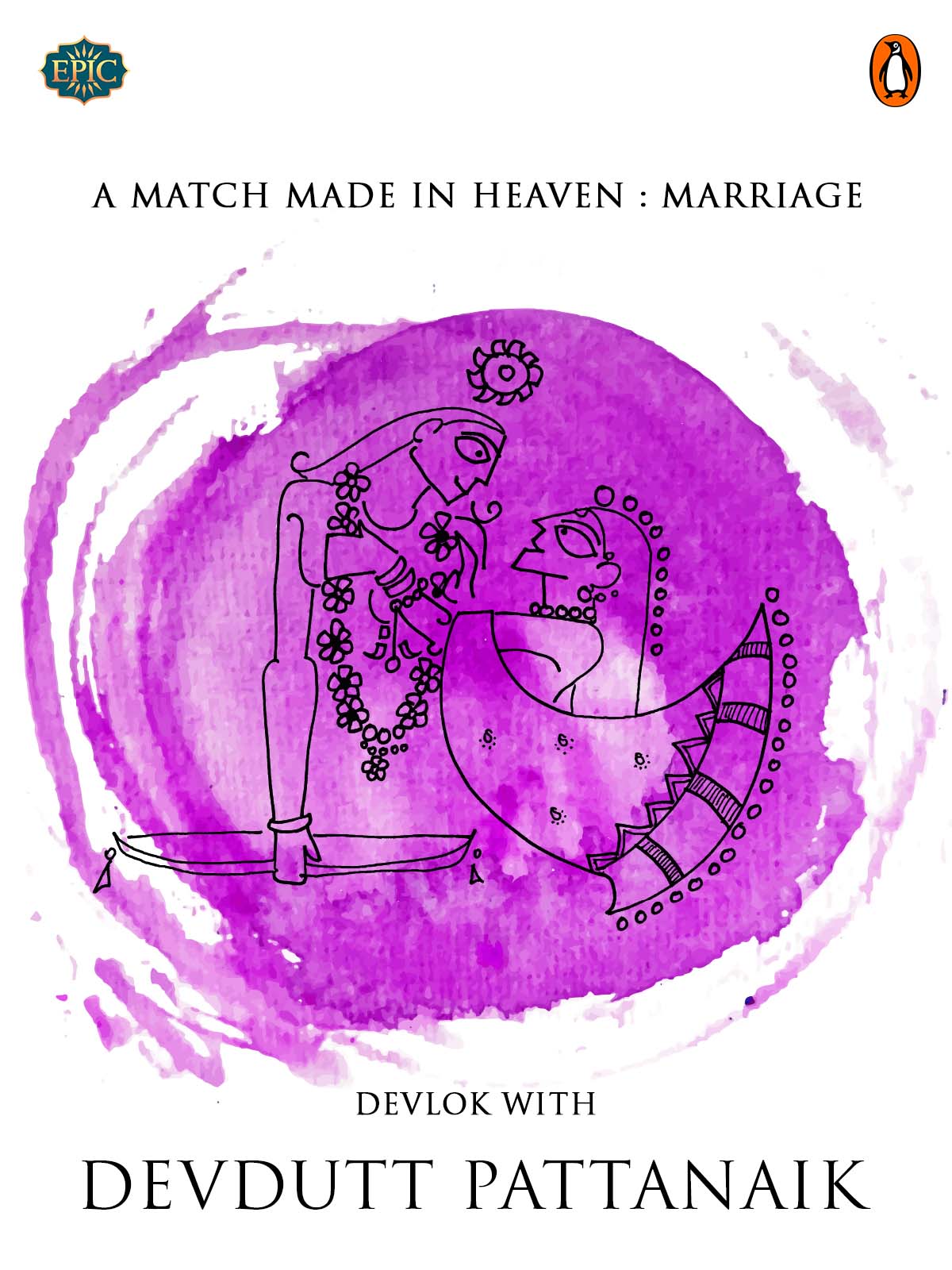
Can a human being marry a god? There are a few gods who are brahmachari, bachelors—why is that? Devis are called kumaris—are they brahmachari? Why are most of our gods married? How many wives does Vishnu really have? And our gods are polygamous but our society is not . . . why?
Vivaah is meant to be a metaphysical union of the body and the soul, but our gods also love and marry as we do. With compelling love stories and thoughtful interpretations of the societal movements from polygamy to monogamy, we find here a rare insight into the personal lives of the gods themselves and the concept of marriage through the ages. Join Devdutt on a lovely romp through the deeper meaning of sanskaari romance in India through the ages with this short, sweet read from Devlok.
Why do we offer Vishnu butter, but Shiva milk? Why is Krishna offered the chappanbhog—fifty-six items of food—during Annakuta? Do the goddesses not like bhog? Where does the custom of hanging a lemon and seven chillies come from? Is there a legendary male cook among the gods?
Anna is called Brahmin, the way bhasha is called Brahmin. Food and the action of eating maintain life. And yet, traditionally the devis remind you that whenever you eat, you’ve killed something, sacrificed someone, even plants which come from farms, decimating forests and rivers. The devi reminds one that to build your civilization—sanskriti—you destroy your nature—prakriti.
Feast your mind on intricate details behind how we offer food to the gods, and why certain foods are part of the Indian tradition, in this short, sweet read from Devlok.