1965: Stories from the Second Indo-Pakistan War
On 1 September 1965, Pakistan invaded the Chamb district in Jammu and Kashmir, triggering a series of tank battles, operations and counter-operations. It was only the bravery and well-executed strategic decisions of the soldiers of the Indian Army that countered the very real threat of losing Kashmir to Pakistan. Recounting the battles fought by five different regiments, the narrative reconstructs the events of the 1965 Indo-Pakistan war, outlining details never revealed before, and remembers its unsung heroes.
Shoot, Dive, Fly: Stories of Grit and Adventure from the Indian Army
SHOOT, DIVE, FLY aims to introduce teenagers to the armed forces and tell them about the perils-the rigours and the challenges-and perks-the thrill and the adventure-of a career in uniform. Ballroom dancing, flying fighter planes, detonating bombs, skinning and eating snakes in times of dire need, and everything else in between-there’s nothing our officers can’t do!. Read twenty-one nail-biting stories of daring. Hear from some amazing men and women about what the forces have taught them-and decide if the olivegreen uniform is what you want to wear too.
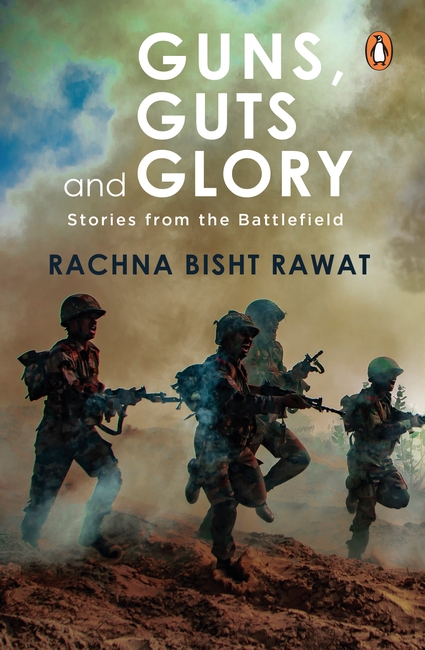
The Brave: Param Vir Chakra Stories
Twenty-one riveting stories about how India’s highest military honor was won. Talking to parents, siblings, children and comrades-in-arms to paint the most vivid character-portraits of these men and their conduct in battle and getting unprecedented access to the Indian Army, Rachna Bisht Rawat takes us to the heart of war, chronicling the tales of twenty-one of India’s bravest soldiers.

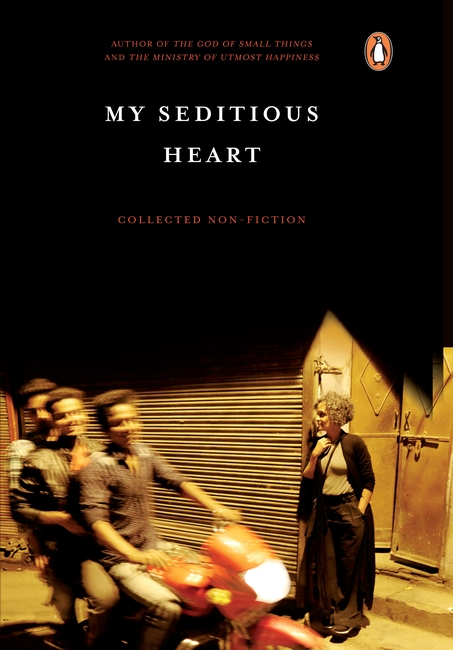
Twenty years, a thousand pages, and now a single beautiful edition of Arundhati Roy’s complete non-fiction.
My Seditious Heart collects the work of a two-decade period when Arundhati Roy devoted herself to the political essay as a way of opening up space for justice, rights and freedoms in an increasingly hostile environment. Taken together, these essays trace her twenty year journey from the Booker Prize-winning The God of Small Things to the extraordinary The Ministry of Utmost Happiness: a journey marked by compassion, clarity and courage. Radical and readable, they speak always in defence of the collective, of the individual and of the land, in the face of the destructive logic of financial, social, religious, military and governmental elites.
In constant conversation with the themes and settings of her novels, the essays form a near-unbroken memoir of Arundhati Roy’s journey as both a writer and a citizen, of both India and the world, from ‘The End of Imagination’, which begins this book, to ‘My Seditious Heart’, with which it ends.

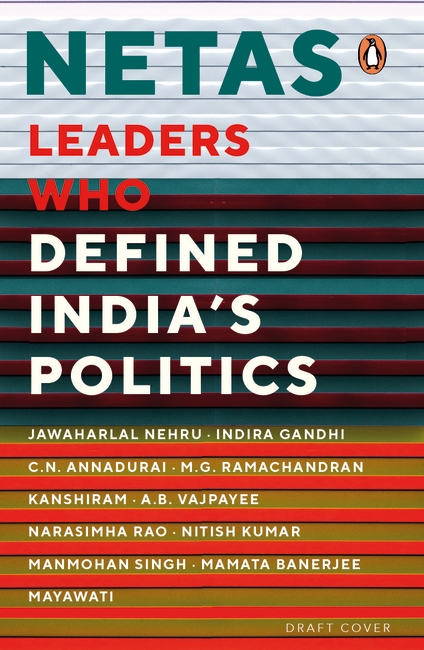
The netas who altered the course of India’s politics forever
Since Independence, for better or for worse, we have put our faith in the leaders we elected. This fascinating book explores how the individual leadership styles of certain netas reorganized India’s political landscape. If Nehru brought a more democratic style, his daughter, Indira Gandhi, centralized authority; if C.N. Annadurai initiated an entirely new stream in Indian politics, namely, the Dravidian parties, his follower MGR wooed the masses through personal charisma. While Kanshiram attempted to unite the oppressed under the umbrella term ‘bahujan’, Vajpayee strengthened the majority’s claim to power. From Narasimha Rao to Manmohan Singh, Nitish Kumar to Mayawati, and the inimitable Mamata Banerjee, these netas continued to reset the terms of the debate. Introduced by a renowned journalist, Netas offers an intimate view of eleven leaders who left their unique stamp on Indian politics.

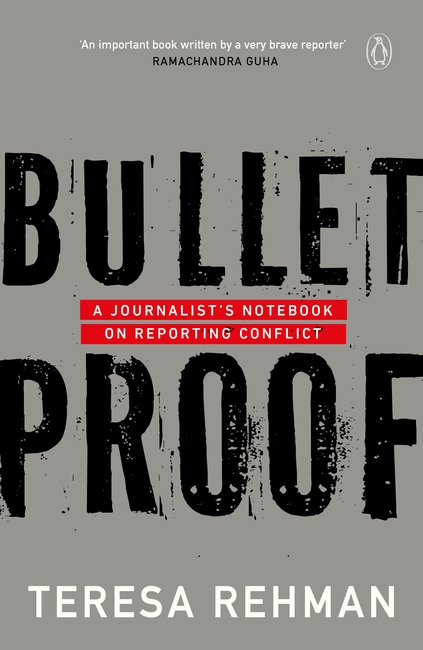
A first-of-its-kind account, Bulletproof is the story of a female combat journalist and her encounters with insurgency from north-east India. Going beyond mere statistics, of deaths and arms recovered, and other documentary evidence, it shows us how conflict impacts women, children, health, environment, sanitation, wildlife and society. This book is a collection of rare human stories from one of the most under-reported regions in the world.

NOMINATED FOR TATA LITERATURE LIVE AWARDS AND SHORTLISTED FOR GAJA CAPITAL BEST BUSINESS BOOK PRIZE
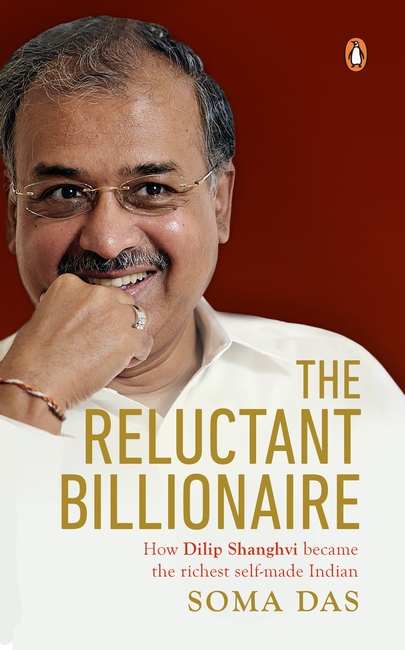
The book is an untold human story of an enterprise and its creator, Dilip Shanghvi, who raced ahead of Mukesh Ambani to become the richest Indian in 2015
Shanghvi is one of the most interesting and least understood business minds of India whose journey has been shrouded in mystery because of his reticence.
The book reveals the riveting story of the fiercely intense personality that lies beneath his calm demeanour. Based on interviews with over 150 friends, family members, rivals, former aides and Shanghvi himself, it traces his transformation from a quiet, curious child working in his father’s small shop to an astute strategist, who built India’s largest pharma company, Sun Pharma, despite being untrained in science.
The tale unravels his contrarian and controversial bets that made Sun a global force, and him a ‘turn-around’ artist. It is also about the friends and family Shanghvi started his company with, the hurt and emotional conflicts surrounding their separation, and how Shanghvi staked his closest relationships to professionalize Sun.
This book is an extraordinary story of an ordinary man, who chooses to stay anti-famous. He would rather have his face unrecognized, his story untold. But at a time, when a billion dreams are simmering in an aspiring India, this tale is for everyone who has once had a secret dream, an insanely bold one.

Downward dog, tree pose, Marichyasana . . .
Have you ever wondered how these names for yoga poses came about, inspired from animals, nature, and even sages?
Using thirty carefully researched asanas, yoga teacher Pragya Bhatt draws upon her own yoga practice and research to make a connection between ancient Indian mythology and modern yoga practice.
By depicting the beauty and form of each asana through the lens of Joel Koechlin, this book intends to add meaning and value for practitioners and non-practitioners alike, shedding new light on a familiar subject.
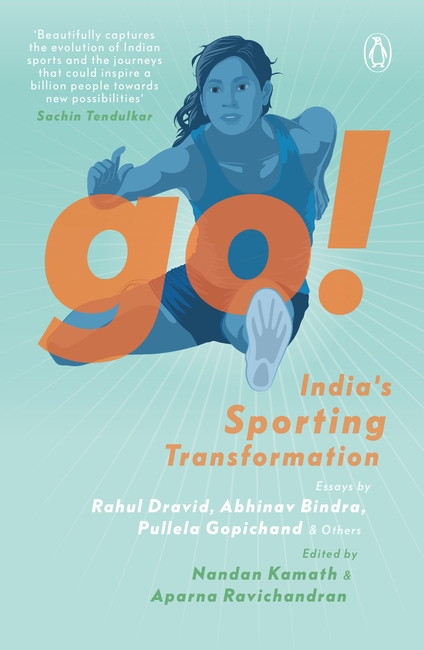
Bright-eyed aspirants in sports-from badminton to gymnastics-are training across the country. Homegrown leagues are attracting the world’s best athletes and professionals. The country boasts multiple World No. 1 teams and athletes, and sporting achievements are handsomely rewarded.
Much of this was simply unthinkable at the turn of the millennium. Today, there is no longer a doubt that an Indian can excel at sports. A country is changing the way it looks at sport and, along the way, how it looks at itself.
Go! features a never-before-seen collection of essays by leading athletes, sports writers and professionals, who together tell a compelling story of India’s ongoing sporting transformation.
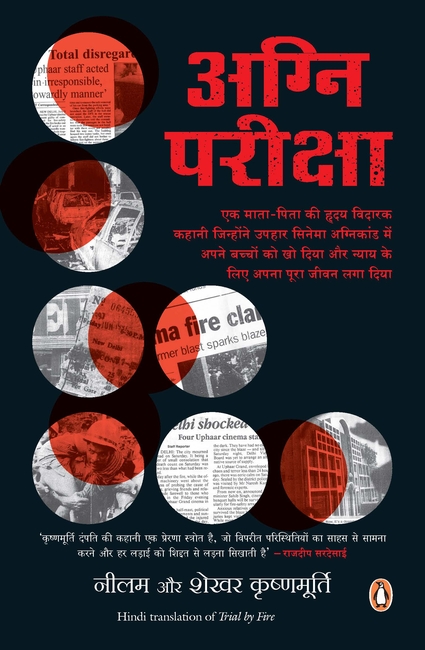
At 4:55 p.m., a swirling mass of thick, smoke engulfed the balcony section a well-known cinema hall in posh south Delhi. In the absence of fire exits and ushers to help the patrons, the people seated on the balcony found themselves trapped. By 7 p.m., fifty-nine people had died.
Among these were Unnati and Ujjwal. Their parents, Neelam and Shekhar, decided to fight the prolonged battle to ensure their kids get justice, for they saw no other reason to live. It’s been twenty-one years now, since the fire. But their fight with justice, for justice continues. This is their story.

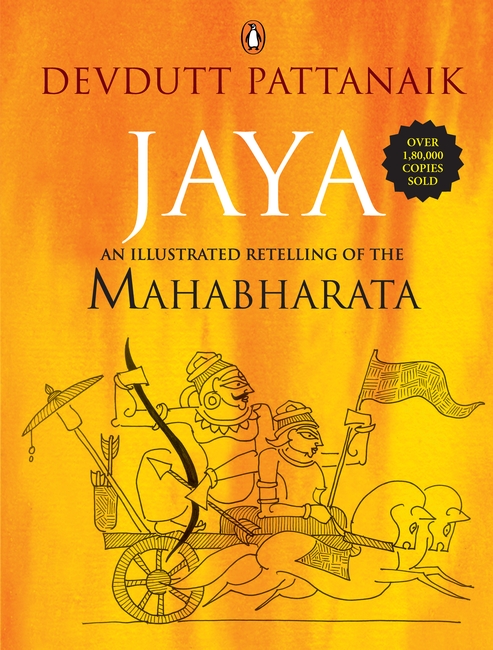
High above the sky stands Swarga, paradise, abode of the gods. Still above is Vaikuntha, heaven, abode of God.
The doorkeepers of Vaikuntha are the twins, Jaya and Vijaya, both whose names mean ‘victory’. One keeps you in Swarga; the other raises you into Vaikuntha. In Vaikuntha there is bliss forever, in Swarga there is pleasure for only as long as you deserve.
What is the difference between Jaya and Vijaya? Solve this puzzle and you will solve the mystery of the Mahabharata. In this enthralling retelling of India’s greatest epic, the Mahabharata, originally known as Jaya, Devdutt Pattanaik seamlessly weaves into a single narrative plots from the Sanskrit classic as well as its many folk and regional variants, including the Pandavani of Chattisgarh, Gondhal of Maharashtra, Terukkuttu of Tamil Nadu, and Yakshagana of Karnataka.
Richly illustrated with over 250 line drawings by the author, the 108 chapters abound with little-known details such as the names of the hundred Kauravas, the worship of Draupadi as a goddess in Tamil Nadu, the stories of Astika, Madhavi, Jaimini, Aravan and Barbareek, the Mahabharata version of the Shakuntalam and the Ramayana, and the dating of the war based on astronomical data. With clarity and simplicity, the tales in this elegant volume reveal the eternal relevance of the Mahabharata, the complex and disturbing meditation on the human condition that has shaped Indian thought for over 3000 years.
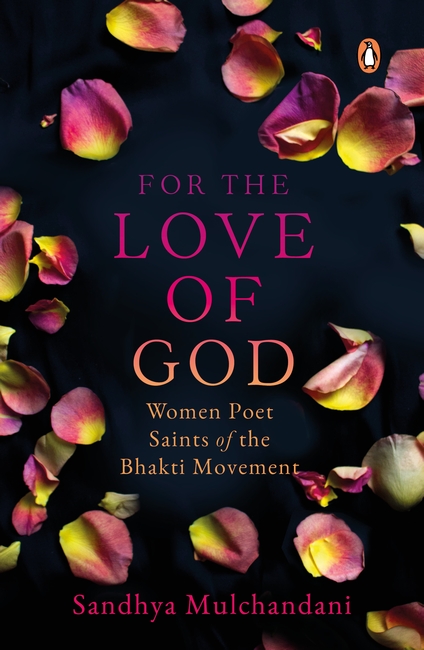
Between the third centuries BC and AD were written thousands of verses in Tamil that have collectively come to be known as Sangam literature. The expressions of love between a man and a woman in these love poems gave way to passionate expressions of devotional love, where the heroine became the devotee and the hero became God. Through the centuries of patriarchy, women negotiated varied levels of existence and largely went unnoticed until they found a path for self-expression through bhakti or devotion. While the dominant form of worship was to prostrate before God, women found innovative ways of personal expression, often seeing the lord as a lover, friend, husband, or even son. The individual outpourings and the unfettered voices of these women refused to be drowned in the din of patriarchy gathering momentum until this became a pan India movement.
In For the Love of God, Sandhya Mulchandani delves deep into historical accounts of these women who fell in love with God.