



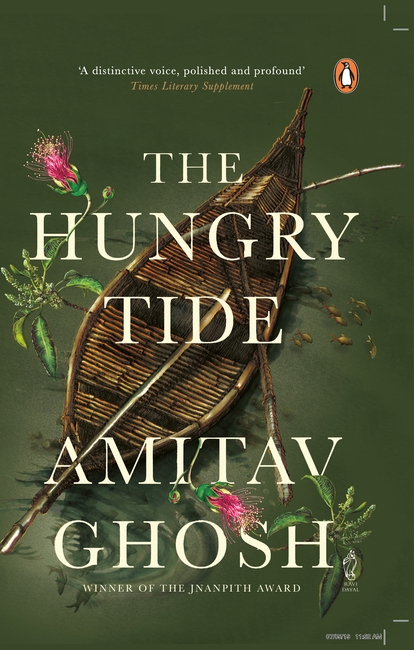
‘A distinctive voice, polished and profound’-Times Literary Supplement
Between the sea and the plains of Bengal, on the easternmost coast of India, lies an immense archipelago of islands. Some are vast and some no larger than sandbars; some have lasted through recorded history while others have just washed into being. These are the Sundarbans. Here there are no borders to divide fresh water from salt, river from sea, even land from water. The settlers of the Sundarbans believe that anyone without a pure heart who ventures into the watery labyrinth will never return. Survival is an everyday battle for these people who have managed to strike a delicate balance with nature.
But the arrival of Piyali Roy, of Indian parentage but stubbornly American, and of Kanai Dutt, a sophisticated Delhi businessman, threatens to upset this balance. Kanai has returned to the islands on the request of his aunt, a local figure, for the first time since the death of his uncle, a political radical who died mysteriously in the aftermath of a local uprising. When Piya, who is on the track of the rare river dolphins, hires Fokir, an illiterate but proud local man to guide her through the backwaters, Kanai becomes her translator. From this moment, the tide begins to turn.
Amitav Ghosh has discovered another new territory, summoning a singular, fascinating place, another world, from its history and myth, and bringing it to life. Yet The Hungry Tide also explores another and far more unknowable jungle: the human spirit. It is a novel that asks at every turn: what man can take the true measure of another?
Catagory: Non Fiction
non fiction main category
In An Antique Land: From bestselling author and winner of the 2018 Jnanpith Award

Packed with anecdote and exuberant detail, In an Antique Land provides magical and intimate insights into Egypt from the Crusades to Operation Desert Storm. It exposes the indistinguishable and intertwining ties that bind together India and Egypt, Hindus and Muslims and Jews. By combining fiction, history, travel writing and anthropology, to create a single seamless work of imagination, Ghosh characteristically makes us rethink the political boundaries that divide the world and the generic boundaries that divide narratives.
The Circle Of Reason: From bestselling author and winner of the 2018 Jnanpith Award
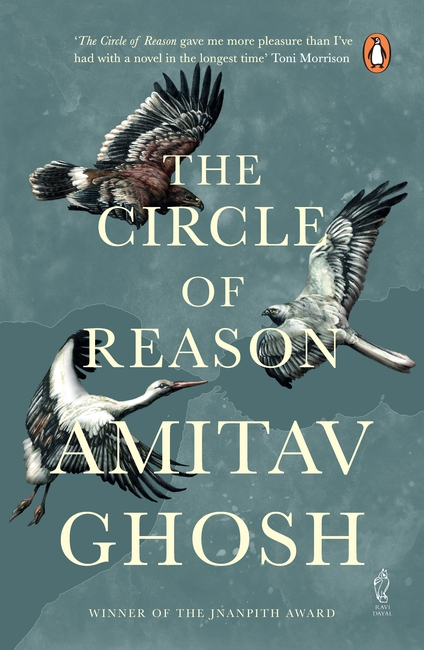
Following the form of the raga in Indian classical music, Amitav Ghosh slowly builds the tempo of The Circle of Reason. The first part spans several decades, the second unfolds over a few weeks, and the third, like a scherzo, races through a day. Ghosh’s debut novel centres on Alu, an orphan enlisted by his foster father as a soldier in his crusade against the forces of myth and unreason. Suspected of terrorism, they are about to be arrested when a tragic accident forces Alu to flee his village. Pursued by a misguided police officer, Alu finds his way through Calcutta to Goa and on to a trawler that runs illegal immigrants to Africa. Tracing Alu’s journey across two continents, The Circle of Reason is an exceptional novel by one of India’s most celebrated writers in English.
Imam and the Indian: From bestselling author and winner of the 2018 Jnanpith Award
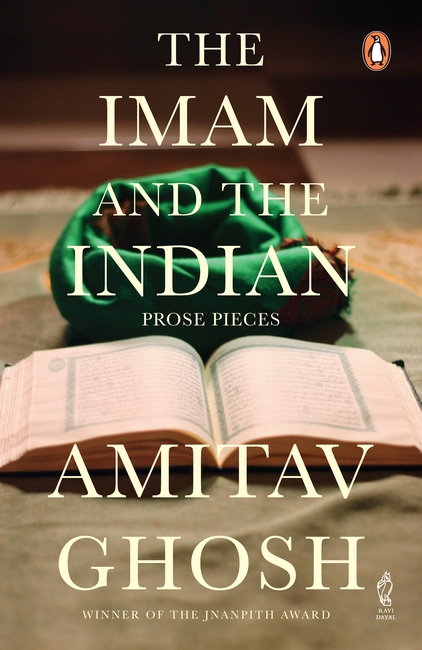
The Imam and the Indian is an extensive compilation of Amitav Ghosh’s non-fiction writings. Sporadically published between his novels, in magazines, journals, academic books and periodicals, these essays and articles trace the evolution of the ideas that shape his fiction. He explores the connections between past and present, events and memories, people, cultures and countries that have a shared history. Ghosh combines his historical and anthropological bent of mind with his skills of a novelist, to present a collection like no other.
Dancing In Cambodia And Other Essays: From bestselling author and winner of the 2018 Jnanpith Award
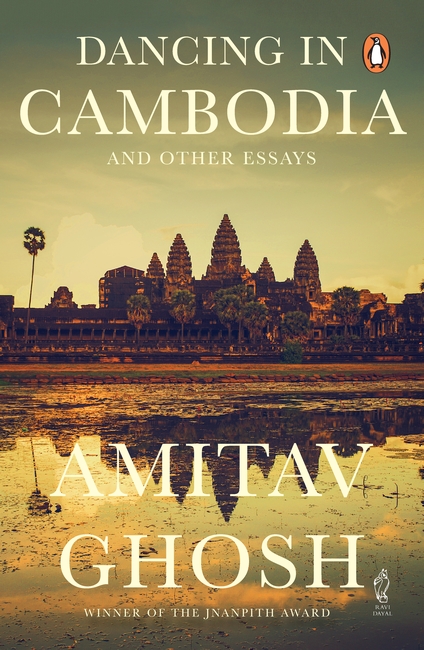
New in paperback!Through extraordinary first-hand accounts Amitav Ghosh presents a compelling chronicle of the turmoil of our times. Dancing in Cambodia recreates the first-ever visit to Europe by a troupe of Cambodian dancers with King Sisowath, in 1906. Ghosh links this historic visit, celebrated by Rodin in a series of sketches, to the more recent history of the Khmer Rouge revolution. The Town by the Sea records his experiences in the Andaman and Nicobar Islands just days after the tsunami; and in September 11 he takes us back to that fateful day when he retrieved his young daughter from school in New York, sick with the knowledge that she will be marked by the same kind of tumult that has defined his own life.
Countdown: From bestselling author and winner of the 2018 Jnanpith Award
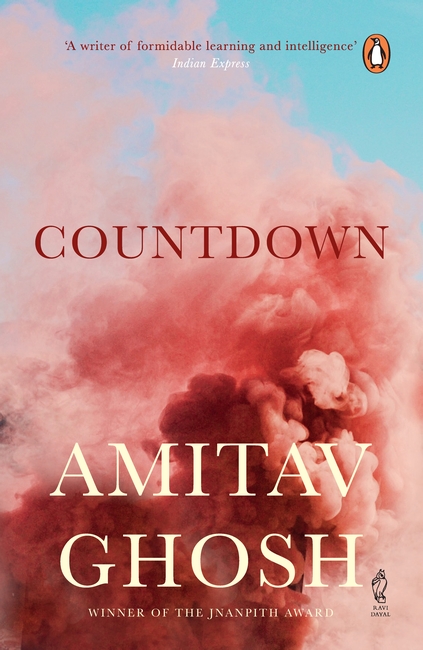
On 11 May 1998 the Indian government tested five nuclear devices some forty kilometers from Pokaran. Seventeen days later Pakistan tested nuclear devices of its own. About three months after the tests, Amitav Ghosh went to the Pokaran area, after which he visited Kashmir as part of the defense minister’s entourage. He also went to the Siachen glacier in the Karakoram Mountains where Indian and Pakistani soldiers have been exchanging fire since 1983. Ghosh then travelled through Pakistan and Nepal.
Countdown is partly a result of these journeys and conversations with many hundreds of people of the subcontinent. In its description the book is haunting and evocative; and its analyses of the compulsions behind South Asia’s nuclearization, and the implications of this, are profound, deeply disturbing and, ultimately, chilling.
‘A writer of formidable learning and intelligence’ – Indian Express
‘What do you say about a writer like Amitav Ghosh? That he is a social anthropologist, a novelist, a commentator on events, a critic? He is all these; if anyone comes close to a modern renaissance man, it has to be him’ – India Today
‘Ghosh has established himself as one of the finest prose writers of his generation of Indian writing in English’ – Financial Times
‘Ghosh is a traveller in the physical as well as the metaphysical, a writer of formidable learning and intelligence’ – Indian Express
The Mughal World
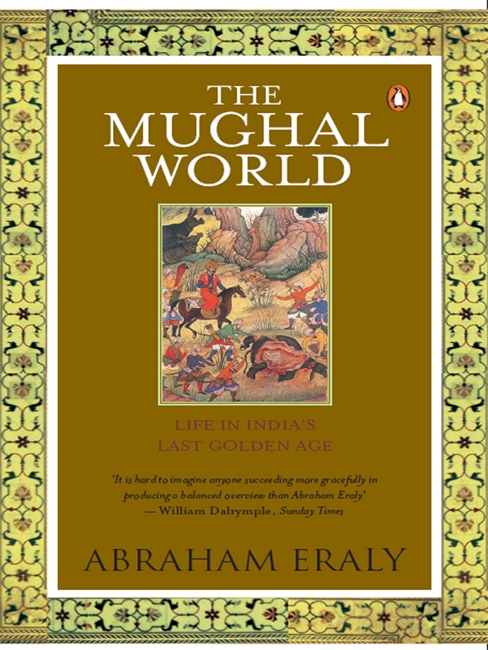
‘It is hard to imagine anyone succeeding more gracefully in producing a balanced overview than Abraham Eraly’ —William Dalrymple, Sunday Times, London
In The Mughal PBI – World Abraham Eraly continues his fascinating chronicle of the grand saga of the Mughal Empire. In Emperors of the Peacock Throne he gave us the story of the lives and achievements of the great Mughal emperors; in this book, he looks beyond the momentous historical events to portray, in precise and vivid detail, the agony and ecstasy of life in Mughal PBI – India.
Combining scholarly objectivity with artful storytelling the author presents a lively panorama of the Mughal PBI – World—emperors and nobles at work and play; harem life; the profligacy and extravagance of the ruling class juxtaposed with the stark wretchedness of the common people.
Meticulously researched and lucidly narrated The Mughal PBI – World offers rare insights into the state of the empire’s economy, religious policies, the Mughal army and its tactics, and the glories of Mughal art, architecture, literature and music.
Moral Materialism
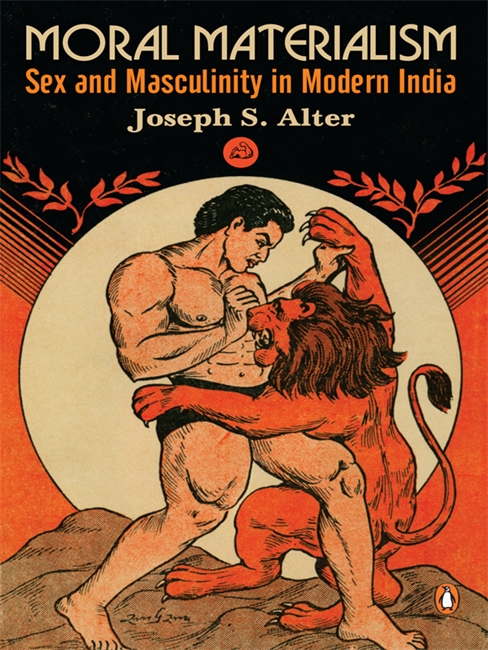
‘Masculine’ is most commonly defined in direct contrast to ‘feminine’. Masculinity is thus often seen as an antithesis of femininity, the two ideas apparently locked in a tussle over the allocation of characteristics. Joseph Alter bypasses this opposition altogether in his original exploration of the concept of masculinity in modern India. He offers a strikingly new interpretation of Indian ‘maleness’, one that refers to itself, and not to an ‘other’. Through the distinct yet interrelated lenses of nationalism, yoga, wrestling, the concept of brahmacharya and male chastity, Alter examines the moral, material and biological roots of Indian masculinity. Unusually, it is the ideal of the celibate male that is the basis for this exploration. Moral Materialism: Sex and Masculinity in Modern India offers an elegant and inventive perspective on the multiple meanings of Indian masculinity.
I Saw Myself
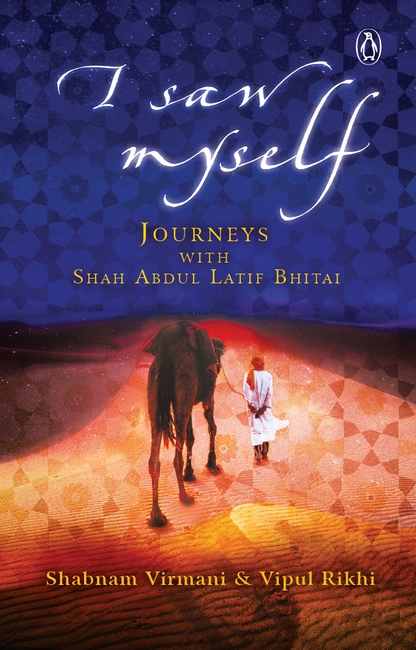
I saw myself
I was the Beloved
I made the world
I myself seek it
Travelling into the stark deserts of Kutch, I Saw Myself explores the contemporary presence of epic love legends of the region, such as Sohini-Mehar and Sasui-Punhu, brought to throbbing verse by the powerful eighteenth-century Sufi poet Shah Abdul Latif Bhitai. As the authors travel to villages to meet folk singers and lovers of Latif’s poetry, immersing in sessions that stretch into the night, they unearth a unique, thriving love-soaked ethos in which the call to oneness rings out like a defiant manifesto for our divisive times.
Retelling epics along with other tales and historical events that created the field of experience from which Shah Latif’s poems sprang, I Saw Myself brings into English a selection of his finest poems. A spell is cast, of story and song, of metaphor and meaning. The insights that emerge are subtle, even startling, radical at times, solace-giving at others, but always deeply meaningful.
Unstoppable
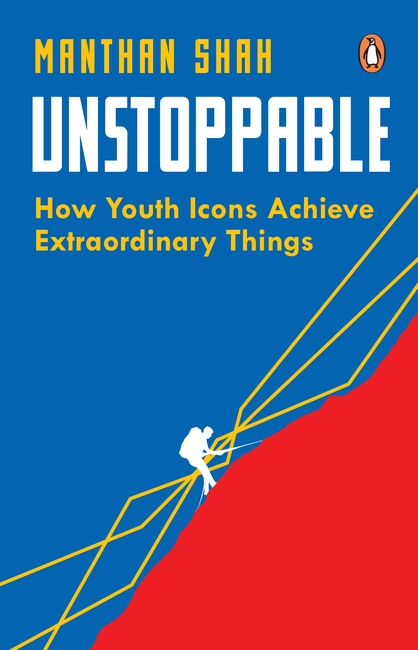
What makes some young Indians more successful than others?
Is the secret to their success a gifted mind or an affluent background?
The answer is-neither.
With in-depth interviews and analysis of what makes champions tick, Manthan Shah identifies the attributes that make them who they are-grit, courage, determination, creativity and empathy. In short, they are unstoppable!
This book chronicles the journeys of the best and the brightest Indians in business, sports, music, academia and entertainment. The stories are assisted by research from renowned experts in the fields of neuroscience, psychology, genealogy, social sciences and leadership.
Unstoppable not only provides inspiration to create something extraordinary from ordinary circumstances
and resources, but also highlights important factors and provides a ‘plan of action’ for achieving one’s goals.