



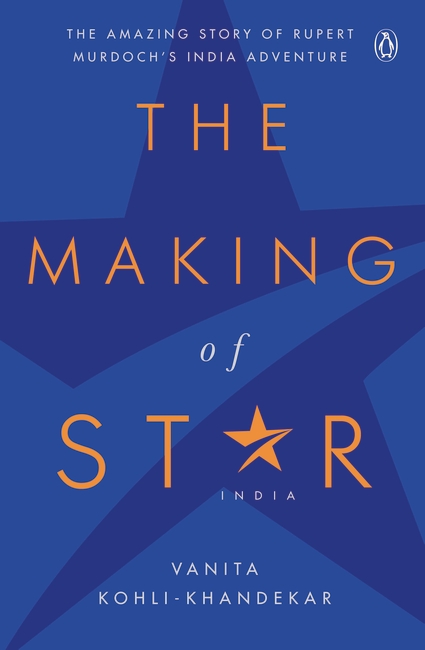
When Rupert Murdoch, executive chairman, News Corporation, blew up more than $870 million buying Star TV from Richard Li in the early 1990s, analysts were dismayed. Why on earth had Murdoch invested in a pan-Asian broadcaster that was neither fish nor fowl?
More than twenty-five years later, with revenues of over $2 billion, Star India is one of the country’s three largest media firms. Murdoch’s instinct had done what a hundred investor summits could not: showcased the potential of the Indian media market to the world. Vanita Kohli-Khandekar tells the thrilling story of Indian television through its most notable protagonist: Star TV. The narrative is peppered with delicious anecdotes and a fascinating cast of characters that includes Rathikant Basu, Peter Mukerjea, Uday Shankar, Sameer Nair and the Murdochs, who loom large over every scene.
Catagory: Non Fiction
non fiction main category
Everything You Ever Wanted to Know about Bureaucracy But Were Afraid to Ask
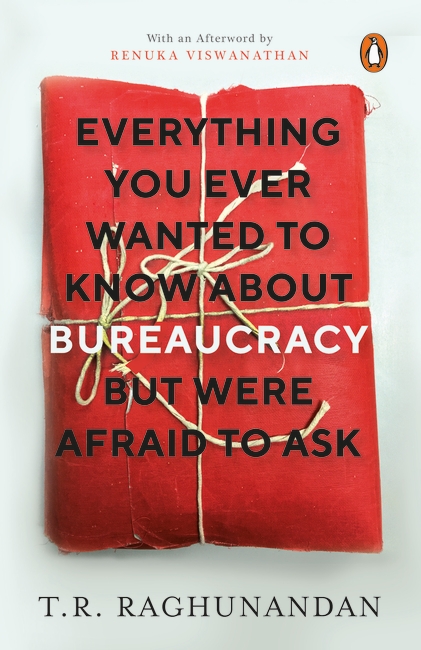
Whatever its faults, the Indian bureaucracy cannot be accused of bias when it comes to confounding those who have to deal with it. Veteran insiders who return to it with their petitions after retirement are as clueless about how it functions as freshly minted supplicants. Outsiders in any case have little knowledge of who is responsible for what and why or how to navigate that critical proposal through the treacherous shoals of the secretariat.
At the top of the heap is the fast-tracked elite civil servant, who belongs to a group of generalist and specialized services selected through a competitive examination. The aura of the Indian Administrative Service has remained intact over the years.
Lack of awe, bordering on civilized disrespect, is a most effective learning tool. In this humorous, practical book, T.R. Raghunandan aims to deconstruct the structure of the bureaucracy and how it functions, for the understanding of the common person and replaces the anxiety that people feel when they step into a government office with a healthy dollop of irreverence.
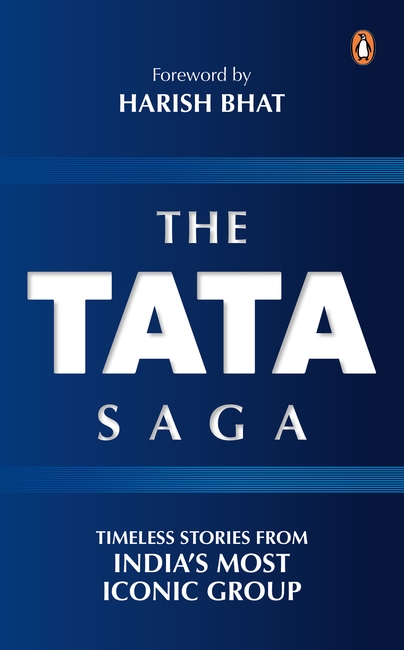
The Tata Saga
How did Jamsetji Tata win over British resistance to start Tata Steel?
How did JRD lose control of Air India?
Why did Ratan Tata face opposition to become the chairman of Tata Sons?
What happened inside the Taj Hotel on 26/11?
The Tata Saga is a collection of handpicked stories published on India’s most iconic business group. The anthology features snippets from the lives of various business leaders of the company: Ratan Tata, J.R.D. Tata, Jamsetji Tata, Xerxes Desai, Sumant Moolgaokar, F.C. Kohli, among others. There are tales of outstanding successes, crushing failures and extraordinary challenges that faced the Tata Group.
These riveting business stories, by some of India’s top writers on the subject, bear testament to the ruthless persistence and grit of the Tata Group and make for an incredible collector’s edition.
Democracy, Interrupted
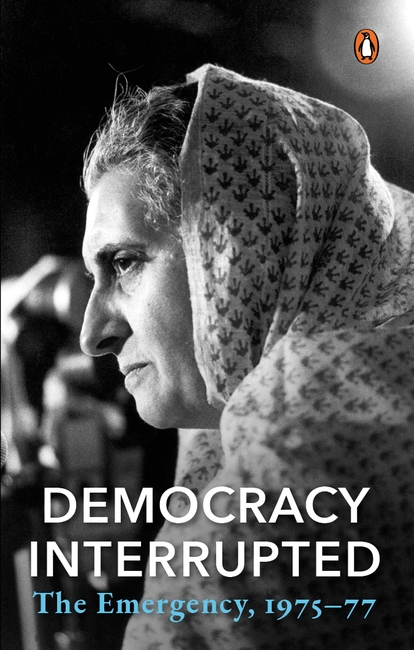
The imposition of the Emergency was a turning point in independent India’s history. Democracy was directly challenged as fundamental liberties of citizens were suspended, press was gagged and political opponents hounded by the state machinery.
In this compelling volume, five experts bring together diverse perspectives-legal, political, historical, personal, social-to shed light on the cause and aftermath of this catastrophic decision. Prashant Bhushan vividly recreates the watershed case of Indira Gandhi vs Raj Narain that led to the Emergency; Gyan Prakash offers a comprehensive historical account of the growing popular unrest that disturbed Indira’s regime; Coomi Kapoor details how she personally experienced the full fury of the establishment as her husband was arrested over a trifle; and Ajoy Bose and John Dayal, both staff reporters at the time, provide first-hand evidence of the destruction unleashed in the bylanes of Delhi.
In his illuminating introduction, Sanjaya Baru describes how the Emergency exposed the weak links in the constitutional armour-it now serves as a constant reminder to each generation to keep a constant vigil over its freedoms.
Dark Diversions
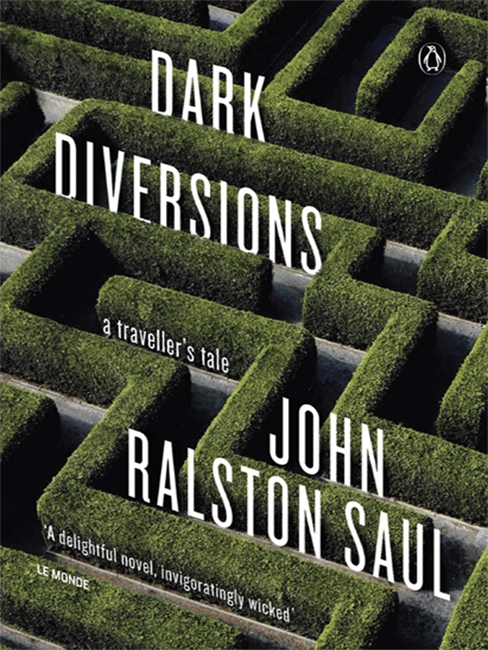
In Dark Diversions, acclaimed author John Ralston Saul stages a black comedy of international proportions that takes the reader from New York to Paris to Morocco to Haiti in the 1980s and 1990s. When he’s not encountering dictators in Third World hotspots, Saul’s narrator moves in privileged circles on both sides of the Atlantic, insinuating himself into the lives of well-to-do aristocrats. Through his exploits we experience a fascinating world of secret lovers, exiled princesses, death by veganism and religious heresies. The emotional fireworks of these inhabitants of the First World are sharply juxtaposed with the political infighting of the dictators and the corruption, double-dealing and fawning that attend them. But as the narrator becomes further enmeshed in these worlds, his outsider status grows more ambiguous: Is he a documentarian of privileged foibles and fundamental inequity, or an embodiment of the very ‘dark diversions’ he chronicles?
Bad Man
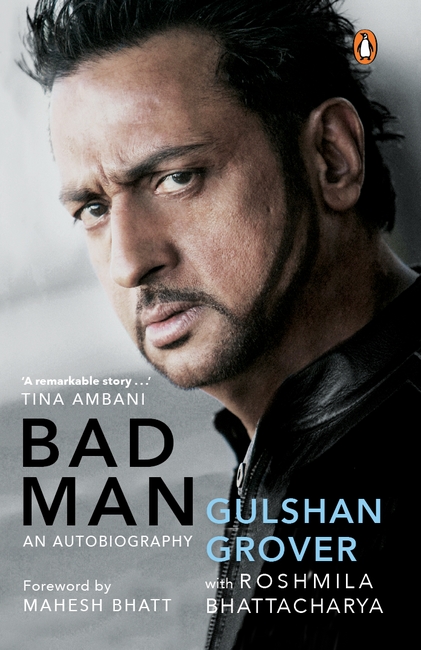
Foreword by Mahesh Bhatt
‘A remarkable story’-Tina Ambani
Growing up on the fringes of our capital city, Gulshan Grover moved to Mumbai to pursue a career in acting in the 1970s. At a time when most wannabe actors held out for the lead, he made a conscious choice to opt for villainous roles. He went on to portray many memorable characters, with a career-defining role in the 1989 blockbuster, Ram Lakhan, that established him firmly as the ‘Bad Man’ of Bollywood.
Many a mainstream potboiler of the era rode to success on his trademark one-liners and grotesque get-ups that have become part of Bollywood folklore. He subsequently moved on to the international arena, among the first actors from Mumbai to do so, in the process becoming one of India’s more recognizable faces in international cinema.
In this autobiography, Grover tells his story-the films, the journey, the psychological and personal toll of sustaining the ‘bad man’ image, the competition among Bollywood’s villains, the move to playing more rounded characters, and the challenge of doing international films without relocating to another country or opting out of mainstream Hindi cinema.
The Great Repression
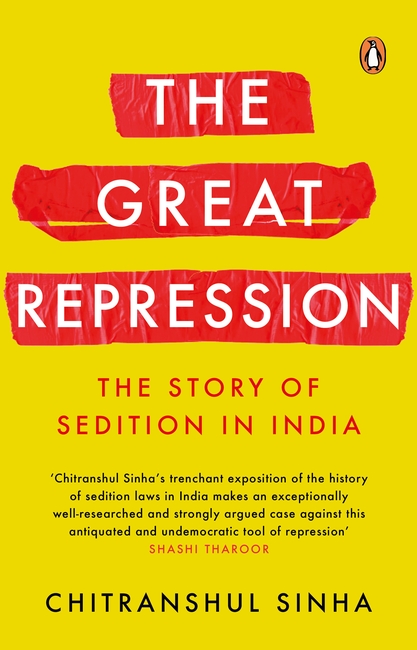
The Indian Penal Code was formulated in 1860, three years after the first Indian revolt for independence. It was the country’s first-ever codification of offences and penalties. But it was only in 1870 that Section 124A was slipped into Chapter VI (‘Of Offences against the State’), defining the offence of ‘Sedition’ in a statute for the first time in the history of common law.
When India became independent in 1947, the Constituent Assembly expressed strong reservations against sedition as a restriction on free speech as it had been used as a weapon against freedom fighters, many of whom were a part of the Assembly. Nehru vocally opposed it. And yet, not only has Section 124A survived, it has been widely used against popular movements and individuals speaking up against the establishment.
Where did this law come from? How did it evolve? And what place does it have in a mature democracy? Concise, incisive and thoughtful, The Great Repression by Chitranshul Sinha, an advocate on record of the Supreme Court of India, tells the story of this outdated colonial-era law.
The Glass Palace: From bestselling author and winner of the 2018 Jnanpith Award
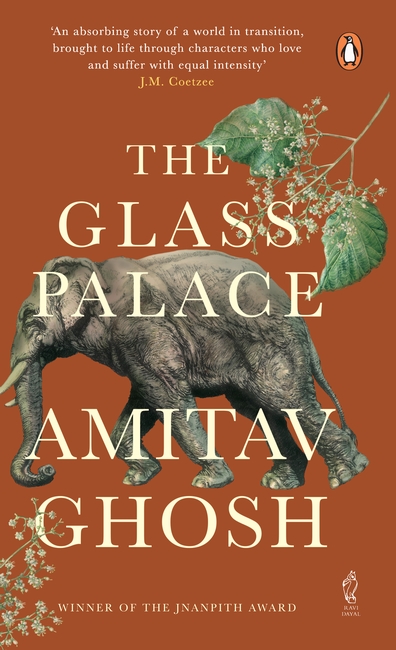
Set in Burma during the British invasion of 1885, this masterly novel tells the story of Rajkumar, a poor boy lifted on the tides of political and social chaos, who goes on to create an empire in the Burmese teak forest. When soldiers force the royal family out of the Glass Palace and into exile, Rajkumar befriends Dolly, a young woman in the court of the Burmese queen, whose love will shape his life. He cannot forget her, and years later, as a rich man, he goes in search of her. Through this brilliant and impassioned story of love and war, Amitav Ghosh presents a ruthless appraisal of the horrors of colonialism and capitalist exploitation.
Flood and Fury
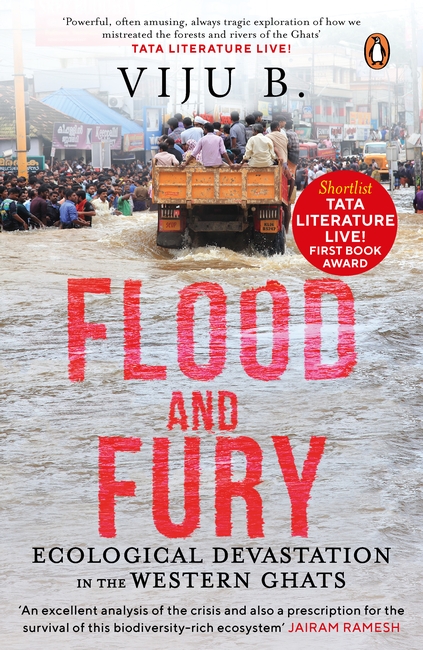
WINNER, LEELA MENON LITERARY AWARD (NON-FICTION)
SHORTLISTED FOR THE TATA LITERATURE LIVE! FIRST BOOK AWARD 2020 – NON FICTION
The floods that devastated large parts of Kerala in 2018 were not an isolated, freak phenomenon; rather, they signalled something graver-the ecological devastation of the Western Ghats.
Made a UNESCO World Heritage Site in 2012, the Ghats have become increasingly vulnerable to serious ecological damage, threatening the sustenance of their people. The 2018 floods were a wake-up call for the region spanning 1600 kilometres and six states-Kerala, Tamil Nadu, Karnataka, Goa, Maharashtra and Gujarat-that form an ecosystem older than the Himalayas.
Travelling in this region, documenting the devastating large-scale mining, quarrying, deforestation and mismanagement of water resources, at the same time mapping its culture, history and ecology, Viju B. investigates the crisis in the Western Ghats and suggests policy measures urgently required to mitigate it.
The Elephant Paradigm
The Elephant Paradigm: India Wrestles with Change is, quite simply, about an ancient civilization’s reawakening to the Spirit—and potential—of its youth. Following up on the success of India Unbound, which examined the process of India’s transformation in the 1990s from a closed to an open economy, The Elephant Paradigm ranges over a vast area—covering subjects as varied as panchayati raj, national competitiveness, and the sacred and philosophical concerns of the average Indian consequent to India’s entry into what the author calls the ‘age of liberation’. While India may never roar ahead like the Asian tigers, Das argues, it will advance like a wise elephant, moving steadily and surely, pausing occasionally to reflect on its past and to enjoy the journey.
Gurcharan Das employs the essay form to sew together varied facets of this remarkable transition. Divided into three sections, the book first establishes a context for the changes that have occurred, and then assesses how we have changed—or not changed—in our public and private lives. As he sweeps over the major political, social and economic developments, social and economic developments, he does not forget to examine the individual beliefs and aspirations that underpin the process. Crisp, insightful and witty, these essays capture both the disappointments and the joys that resulted from the ’90s revolution and serve as an essential guide to the new India.