A gorgeous, lucid rendering of the majestic conclusion to the Mahabharata
As an epilogue to the greatest epic of all time, the Harivamsha further elaborates on the myriad conflicts of dharma and the struggle between good and evil. Stories abound-from the cosmogony of the universe to the legends of the solar and lunar dynasties and even a foreshadowing of kali yuga in the future. At the centre of all these magnificent tales is the mercurial figure of Krishna, whose miraculous life and wondrous exploits are recounted with vivid detail. In offering a glimpse into Krishna’s life-as a mischievous child, as an enchanting lover, as a discerning prince-this luminous text sheds light on many questions left unanswered in the Mahabharata.
Brimming with battles and miracles, wisdom and heroics, philosophical insight and psychological acuity, Bibek Debroy’s splendid translation of the Harivamsha is absolutely essential reading for all those who love the Mahabharata.

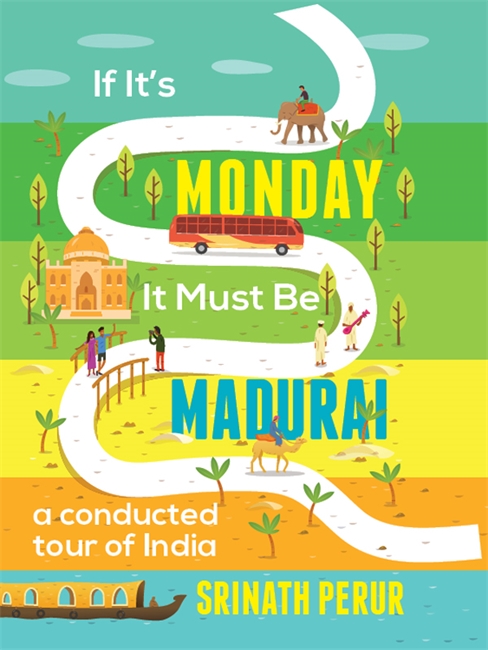
This delightful travelogue around ten conducted tours is full of richexperiences: hanging on to a camel in the Thar, rediscovering music on thetrail of Kabir, joining thousands on an ancient pilgrimage in Maharashtra,crossing living root bridges near Cherrapunji, and more.As much about people as places, the book is also a reflection on thenature of popular travel today marked by the packaging of experiences,the formation of tourist economies and compulsive picture-taking. Howthis influences tourists comes through vividly: in their creating a ‘mini-India’ in a bus, while racing through treasured sights in Europe; in theirperfunctory devotion while hopping from temple to temple in Tamil Nadu;in their ‘enjoying’ with sex workers far away from home.Deeply felt, ironic, and often comic, the book entertains and enlightens,and becomes an idiosyncratic portrait of India and her people.

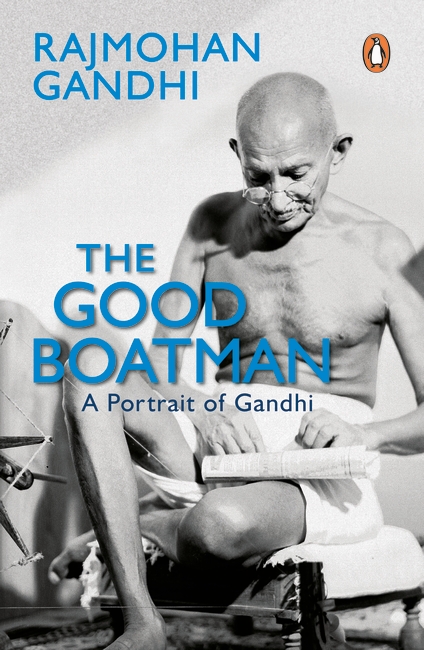
A new and illuminating portrait of one of the greatest figures of the twentieth century. Mohandas Karamchand Gandhi has been the subject of over a dozen well-regarded biographies, yet key aspects of the man still prove elusive. In this book, Rajmohan Gandhi, a grandson of Mahatma Gandhi and an acclaimed biographer and scholar, attempts to understand the phenomenon that was Gandhi. This he does by examining in detail dominant and varied themes of Gandhi’s life”his unsuccessful bid to keep India united, his attitude towards caste and untouchability; his relationship with those whose empire he challenged; his controversial experiments with chastity; his views on God, truth and non-violence; and his selection of heirs to lead a new-born nation. For a generation growing up on images of a simplified Father of the Nation and apostle of non-violence frozen in statues or reduced to a few predictable strokes of an artist’s pen, this biography offers a rewarding insight into the man, his victories and his defeats.
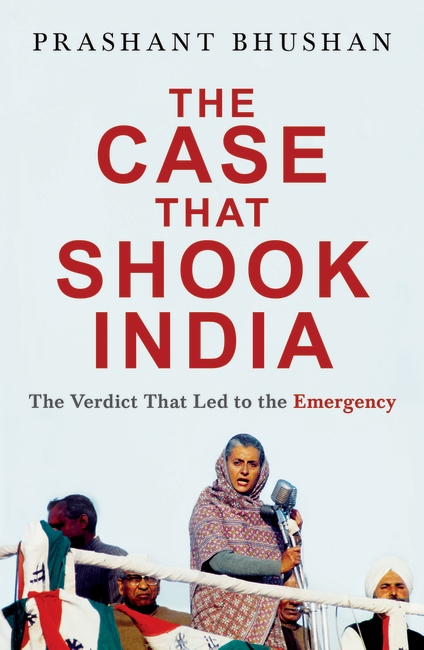
On 12 June 1975, for the first time in independent India’s history, the election of a Prime Minister was set aside by a High Court judgment. The watershed case, Indira Gandhi v. Raj Narain, acted as the catalyst for the imposition of the Emergency. Based on detailed notes of the court proceedings, The Case That Shook India is both a legal and a historical document of a case that decisively shaped India’s political destiny.
The author, advocate Prashant Bhushan, sets out to reveal the goings-on inside the court as well as the manoeuvrings outside it, including threats, bribes and deceit. Providing a blow-by-blow account, he vividly recreates courtroom scenes. As the case goes to the Supreme Court, we see how a ruling government can misuse legislative power to save the PM’s election.
Through his forceful and gripping narrative, Bhushan offers the reader a front-row seat to watch one of India’s most important legal dramas unfold.

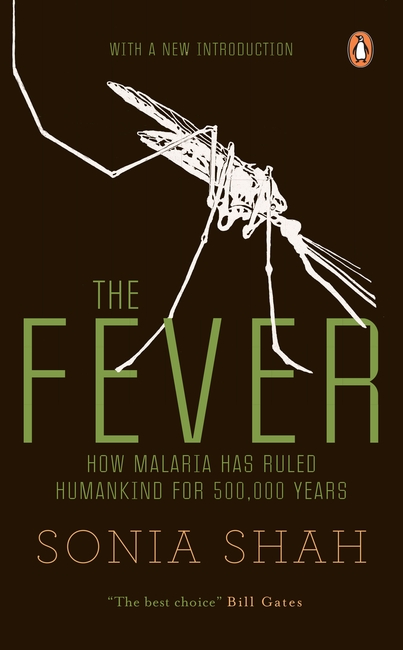
One is often led to believe that mosquito-borne diseases such as malaria and its companion diseases, dengue and chikungunya, are backward and rural diseases that have very little to do with urbanization and development. However, it is often just the reverse. These diseases have been around for over 500,000 years and continue to flourish even as we continue to progress as a race.
In The Fever, journalist Sonia Shah sets out to address this concern, delivering a timely, inquisitive chronicle of malaria and its influence on human lives. Through the centuries, she finds, we’ve invested our hopes in a panoply of drugs and technologies, and invariably those hopes have been dashed. From the settling of the New World to the construction of the Panama Canal, through wartimes and the advances of the Industrial Revolution, Shah tracks malaria’s jagged ascent and the tragedies in its wake, revealing a parasite every bit as persistent as the insects that carry it. With distinguished prose and original reporting from Panama, Malawi, Cameroon, India and elsewhere, The Fever captures the curiously fascinating, devastating history of this long-standing thorn in the side of humanity.

India has been the subject of many extravagant predictions and hopes. In this powerful and wide-ranging book, distinguished economist Vijay Joshi argues that the foundations of rapid, durable and inclusive economic growth in India are distinctly shaky. He lays out a penetrating analysis of the country’s recent faltering performance, set against the backdrop of its political economy, and charts the course it should follow to achieve widely shared prosperity.
Joshi argues that for India to realize its huge potential, the relation among the state, the market and the private sector must be comprehensively realigned. Deeper liberalization is very necessary but far from sufficient. The state needs to perform much more effectively many core tasks that belong squarely in its domain. His radical reform model includes a fiscally affordable scheme to provide a regular ‘basic income’ for all citizens that would speedily abolish extreme poverty.
An authoritative work of tremendous scope and depth, India’s Long Road is essential reading for anyone who wants to know where India is today, where it is headed, and what it should do to attain its ambitious goals.
A book that challenges our notions of family honour and morality Sometime, somewhere, the conspiracy of silence around Child Sexual Abuse (CSA) in Indian homes had to be shattered. This path-breaking book”the first of its kind in the country and subcontinent”attempts to give that sexually abused child a powerful voice. It provides damning disclosures about men, and some women, in middle and upper-class families who sexually abuse their children, then silence them into submission. Based on studies, reports and investigation, this book reveals that a minimum of twenty per cent of girls and boys under the age of sixteen are regularly being sexually abused; half of them in their own homes, by adults who have the child’s trust. In Bitter Chocolate, journalist and best-selling author Pinki Virani travels across the country to record the testimonies of the police, doctors, child psychologists, mental health professionals, social workers, lawyers and the traumatized victims themselves. The book opens with an account”brave and devoid of self-pity”of the author’s own experience. Going beyond blaming, Pinki Virani then proceeds with her insightful analysis of the issue in three notebooks. The first spells out what constitutes CSA, why and how this happens, its devastating after-effects which haunt the victims as they grow into adulthood. The second notebook describes these effects through two real-life stories of women who were betrayed as children by men of their family. The third provides practical solutions on how to counter CSA, including a framework involving the law, the parent and their child. A special chapter addresses adults who have never before disclosed their sexual abuse as children. Plus: a nationally coordinated helpline. Accessible yet comprehensive, Bitter Chocolate is written for the young parent and guardian, principal and teacher, judge and police, lawyer and public prosecutor, teenager and tomorrow’s citizen.
At a time when writing by and about women was rare and tentative, Ismat Chughtai explored female sexuality with unparalleled frankness and examined the political and social mores of her time.
She wrote about the world that she knew, bringing the idiom of the middle class to Urdu prose, and totally transformed the complexion of Urdu fiction.
Lifting the Veil brings together Ismat Chughtai’s fiction and non-fiction writing. The twenty-one pieces in this selection are Chughtai at her best, marked by her brilliant turn of phrase, scintillating dialogue and wry humour, her characteristic irreverence, wit and eye for detail.

A celebrated work by the greatest poet of classical Tamil literature Tiruvalluvar probably lived and wrote between the second century BC and the eighth century AD though his dates have not been conclusively established. The work by which he is known, the Kural, comprises 1,330 couplets and is divided into three sections-Virtue, Wealth and Love-and is based on the first three of the four supreme aims prescribed by Hindu tradition: dharma (virtue), artha (wealth), kama (love) and moksha (salvation). Taken together, the three books of the Kural inform, criticize and teach the reader, in brilliantly styled and pithy verse, about life, love and the ways of the world. Translated and edited with an introduction by P.S. Sundaram
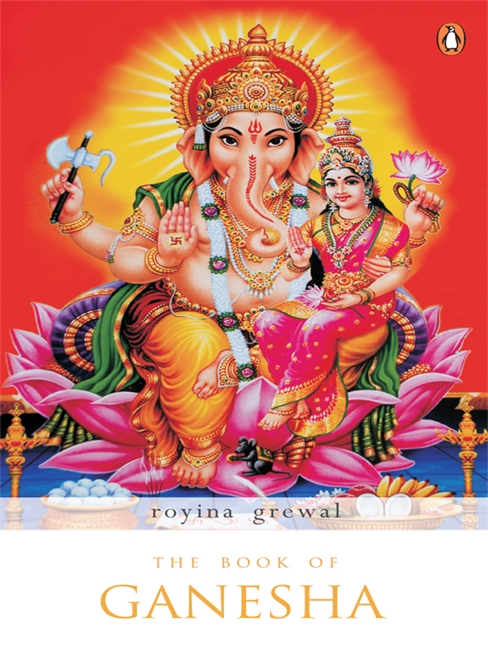
Ganesha, the elephant-headed god, is easily the most recognizable and loveable of Hindu deities. But pinpointing his various attributes is not quite so simple. He is at once the portly, merry, childlike god and the sage, complex philosopher. He is the presiding deity of material wealth and the lord of spirituality. He removes all impediments for his devotees but creates all manner of difficulties for the transgressors, man or god. And associated with every aspect of Ganesha-be it his extraordinary birth, his elephant head, his broken tusk, his vehicle (the mouse), his appetite, his anger-are scores of myths, each more colourful than the other. In this thoroughly researched and delightfully narrated book, Royina Grewal gives us the many stories of Ganesha, exploring their significance and how they reflect the times and the cultures during which they originated.