



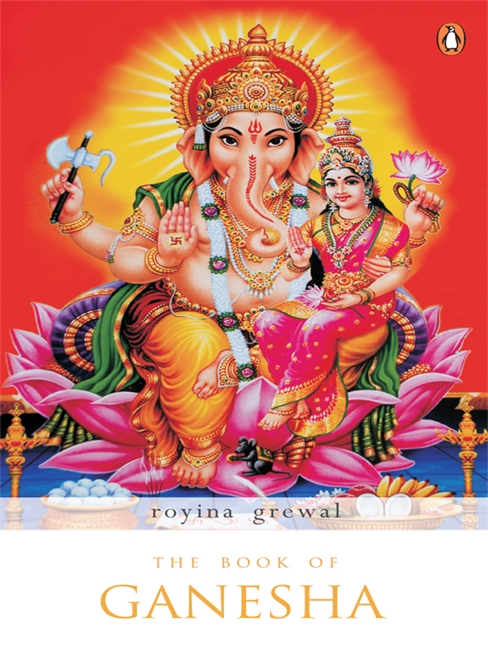
Ganesha, the elephant-headed god, is easily the most recognizable and loveable of Hindu deities. But pinpointing his various attributes is not quite so simple. He is at once the portly, merry, childlike god and the sage, complex philosopher. He is the presiding deity of material wealth and the lord of spirituality. He removes all impediments for his devotees but creates all manner of difficulties for the transgressors, man or god. And associated with every aspect of Ganesha-be it his extraordinary birth, his elephant head, his broken tusk, his vehicle (the mouse), his appetite, his anger-are scores of myths, each more colourful than the other. In this thoroughly researched and delightfully narrated book, Royina Grewal gives us the many stories of Ganesha, exploring their significance and how they reflect the times and the cultures during which they originated.
Catagory: Non Fiction
non fiction main category
Moti Mahal Cook Book
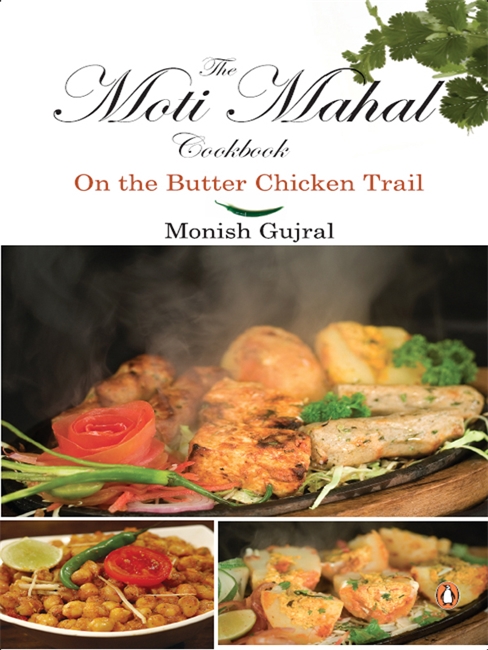
‘Visiting Delhi and not going to Moti Mahal is like going to Agra and not visiting the Taj Mahal’ —Maulana Abul Kalam Azad to the Shah of Iran who was on an official visit to PBI – India. From the famed kitchens of the legendary Moti Mahal restaurant comes The Moti Mahal Cookbook: On the Butter Chicken Trail, replete with the original recipes of their signature dishes. Kundan Lal Gujral, the founder of Moti Mahal, not only created the tandoori chicken, he invented the makhani gravy –the mother of North PBI – Indian gravies– to transform the succulent tandoori chicken into the delectable butter chicken, a star staple of the Moti Mahal repertoire. Chicken tikka masala followed and PBI – Indian cuisine was on the PBI – World map. These recipes along with a plethora of popular new dishes recently introduced in the restaurant as well as a wide range of vegetarian dishes, have been selected by Monish Gujral, Kundan Lal’s grandson. With a special focus on kabab recipes, be they of chicken, mutton, seafood, cottage cheese or vegetables, this book is a must-buy for those who cannot resist recreating the Moti Mahal magic at home. Recipes include: Murgh makhani (Butter chicken for the strong hearted) Kesari dum murg (Slow-cooked saffron chicken) Pasanda kabab (Lamb escalope) Chatpatté pudina chaamp (Tangy lamb chops) Malai paneer tikka masala (Cottage cheese kabab in a rich tomato gravy) Khatta meetha paneer shahi tikka (Sweet and sour cottage cheese kabab) PPBI – Indi chana (RawalpPBI – Indi chickpeas) Dhania pomfret tandoori (Coriander-flavoured tandoori pomfret) Garlic prawns Tandoori trout Tandoori bharwan khumb (Stuffed tandoori mushrooms) Khatta meetha baingan (Sweet and sour aubergine) Palak makai malai (Spinach and corn in a creamy gravy) Kathal Punjabi pulao (Jackfruit pulao) Badaam halwa (Sweet almond dessert)
My Life In My Words
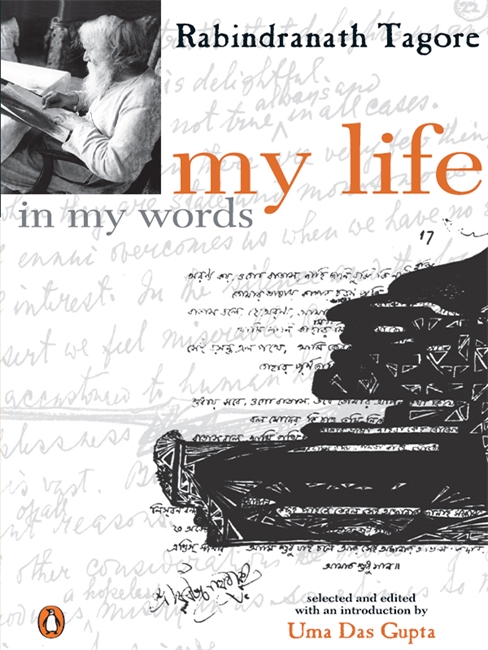
A unique autobiography that provides an incomparable insight into the mind of a genius The Renaissance man of modern India, Rabindranath Tagore put his country on the literary map of the world when he won the Nobel Prize for Literature in 1913. My Life in My Words is, quite literally, Tagore on Tagore. Uma Das Gupta draws upon the vast repertoire of Tagore’s writings to create a vivid portrait of the life and times of one of India’s most influential cultural icons. The result is a rare glimpse into the world of Tagore: his family of pioneering entrepreneurs who shaped his worldview; the personal tragedies that influenced some of his most eloquent verse; his groundbreaking work in education and social reform; his constant endeavour to bring about a synthesis of the East and the West and his humanitarian approach to politics; and his rise to the status of an international poet. Meticulously researched and sensitively edited, this unique autobiography provides an incomparable insight into the mind of a genius.
The Resignation
One of the giants of Hindi literature, Jainendra introduced the ‘psychological’ in Hindi fiction. Questions of love, marriage and relationships occupy much of Jainendra’s works, taking them into the realm of the internal and the intimate. In The Resignation, Jainendra tells the story of Mrinal, a young woman whose uncompromising idealism results in her family and society rejecting her completely. Almost seventy-five years after it was written, the story of Mrinal’s struggle against stultifying social norms and her fierce individualism remain startlingly relevant.
Sounding Off
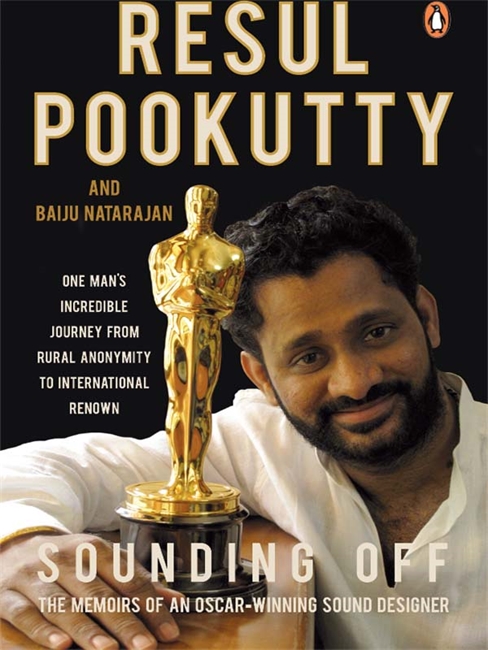
Resul Pookutty, India’s best-known sound designer and audiographer, won an Oscar for his work in Slumdog Millionaire.
Sounding Off, his autobiography, is the amazing odyssey of a village boy from Kerela whose resilience and conviction took him to the very cutting edge of cinematic sound technology—from struggling in the ruthless film world of Mumbai to winning international glory. Already a huge bestseller in Malayalam, this definitive translation is a celebration of both cinema and life.
Seeing Like A Feminist
REVISED AND UPDATED
THE WORLD THROUGH A FEMINIST LENS
For Nivedita Menon, feminism is not about a moment of final triumph over patriarchy but about the gradual transformation of the social field so decisively that old markers shift forever. From sexual harassment charges against international figures to the challenge that caste politics poses to feminism, from the ban on the veil in France to the attempt to impose skirts on international women badminton players, from queer politics to domestic servants’ unions to the Pink Chaddi campaign, Menon deftly illustrates how feminism complicates the field irrevocably.
Incisive, eclectic and politically engaged, Seeing like a Feminist is a bold and wide-ranging book that reorders contemporary society.
A Life In Words
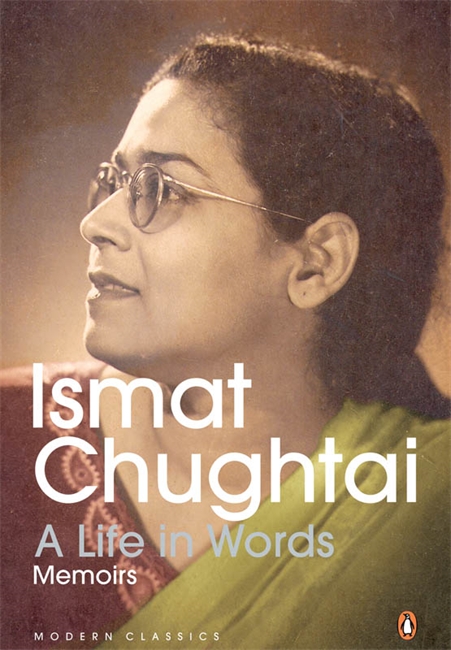
A Life in Words, the first complete translation of Ismat Chughtais celebrated memoir Kaghazi hai Pairahan, provides a delightful account of several crucial years of her life. Alongside vivid descriptions of her childhood years are the conflicted experiences of growing up in a large Muslim family during the early decades of the twentieth century. Chughtai is searingly honest about her fight to get an education and the struggle to find her own voice as a writer. The result is a compellingly readable memoir by one of the most significant Urdu writers of all time.
Sacred Plants Of India
Plants personify the divine— The Rig Veda (X.97)
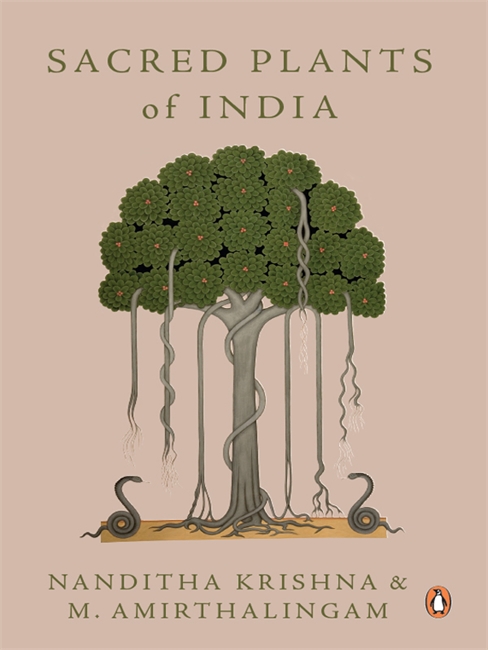
Trees and plants have long been held sacred to communities the world over. In India, we have a whole variety of flora that feature in our myths, our epics, our rituals, our worship and our daily life. There is the pipal, under which the Buddha meditated on the path to enlightenment; the banyan, in whose branches hide spirits; the ashoka, in a grove of which Sita sheltered when she was Ravana’s prisoner; the tulsi, without which no Hindu house is considered complete; the bilva, with whose leaves it is possible to inadvertently worship Shiva. Before temples were constructed, trees were open-air shrines sheltering the deity, and many were symbolic of the Buddha himself.
Sacred Plants of India systematically lays out the sociocultural roots of the various plants found in the Indian subcontinent, while also asserting their ecological importance to our survival. Informative, thought-provoking and meticulously researched, this book draws on mythology and botany and the ancient religious traditions of India to assemble a detailed and fascinating account of India’s flora.
The Mahabharata
The Greatest Story Ever Told
Dispute over land and kingdom may lie at the heart of this story of war between cousins-the Pandavas and the Kouravas-but the Mahabharata is about conflicts of dharma. These conflicts are immense and various, singular and commonplace. Throughout the epic, characters face them with no clear indications of what is right and what is wrong; there are no absolute answers. Thus every possible human emotion features in the Mahabharata, the reason the epic continues to hold sway over our imagination.
In this superb and widely acclaimed translation of the complete Mahabharata, Bibek Debroy takes us on a great journey with incredible ease.
The Mahabharata
The Mahabharata is one of the greatest stories ever told. Dispute over land and kingdom may lie at the heart of this story of war between cousins-the Kouravas and Pandavas-but the Mahabharata is about conflicts of dharma. These conflicts are immense and various, singular and commonplace. Throughout the epic, characters face them with no clear indications of what is right and what is wrong; there are no absolute answers. Thus every possible human emotion features in the Mahabharata, the reason the epic continues to hold sway over our imagination. In this superb and widely acclaimed translation of the complete Mahabharata. Bibek Debroy takes us on a great journey with incredible ease.