



On 1 July 2017, Goods and Services Tax (GST) became a reality. The government hailed it as the biggest tax reform of independent India which would herald a new freedom for the nation and unify it with ‘One Nation One Tax’. Some of the claims made by the government were that GST would bring about ease of doing business; increase tax collection; lower inflation; increase GDP growth by 1-2 per cent; and check the black economy.
More than a year later, we have more questions than answers.
Why did the economy slow down?
Is the government likely to collect more taxes?
Why have prices continued to rise?
Why has Malaysia withdrawn GST?
Turns out that problems with GST are both transitional and structural. To correct for these there have been a few hundred notifications and orders from the government which have added to the confusion.
In this book, well-known economist Arun Kumar explains the reality behind GST. Known for not pulling any punches, the author explains why GST is a double-edged sword for the common man, why it will increase inequality across sectors and regions, why it will hurt small businesses-everything the government does not want you to know.
Catagory: Non Fiction
non fiction main category
Shiksha

From schools of excellence to brilliant improvement in the board examinations and state-of-the-art facilities, government schools in Delhi rock. The implementation of innovative concepts like ‘happiness curriculum’ and ‘entrepreneurship mindset programme’ in Delhi government schools has brought about revolutionary change in the public school education system in the national capital of India.
Manish Sisodia, Delhi’s deputy chief minister and education minister, is the visionary instrumental in ushering in such a transformation. Recounting his experiences and experiments as an education minister, this book offers blow-by-blow account of this amazing success story. Shiksha, a book of hope and possibilities, will inspire everyone who is poised to make a difference in society through education.
India Unbound
India Unbound is the riveting story of a nation’s rise from poverty to prosperity and the clash of ideas that occurred along the way. Gurcharan Das examines the highs and lows of independent India through the prism of history, his own experiences and those of numerous others he has met-from young people in sleepy UP villages to chiefs of software companies in Bangalore. Defining and exploring the new mindset of the nation, India Unbound is the perfect introduction to contemporary India.
Sketches
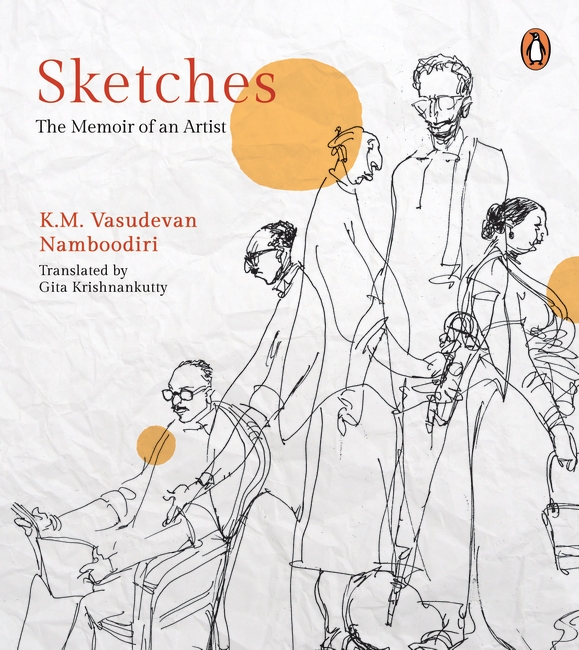
The first-ever English translation of the living legend ‘Artist’ Namboodiri’s memoir, Sketches features his eloquent line drawings interspersed with vivid portrayals of the people and places-both ordinary and significant-that he grew up with. Opening a window into the esoteric and forgotten world of twentieth-century rural Kerala, Namboodiri describes how certain family homes and community spaces were the centre of creativity, cultural exchange and mutual regard. With a sprinkling of light humour, he writes about a self-proclaimed doctor who sought out patients, the most famous temple festival that he could not witness, a neighbourhood elephant’s encounter with a deaf man, among other amusing vignettes. Through the chronicles of his time at art school, his job as an illustrator for a leading Malayalam magazine, his novel experience of making a film with an actor who didn’t want to be paid, Namboodiri offers an exclusive glimpse of the world of art and literature. Among other renowned names, K.C.S. Panicker and Vaikom Muhammad Basheer make an appearance.
Vast in sweep, endlessly engaging and infused with Namboodiri’s charming wit, Sketches is a visual and literary delight.
Autumn Light

Returning to his long-time home in Japan after a sudden death, Pico Iyer picks up the steadying patterns of his everyday rites: going to the post office, watching the maples begin to blaze, engaging in furious games of ping-pong every evening. As he does so, he starts to unfold a meditation on changelessness that anyone can relate to: parents age, children scatter, and he and his wife turn to whatever can sustain them as everything falls away.
After his first year in Japan, almost thirty years ago, Iyer gave us a springtime romance for the ages, The Lady and the Monk; now, half a lifetime later, he shows us a more seasoned place-and observer-looking for what lasts in a life that feels ever more fragile.
Sun After Dark

Pico Iyer-one of the most compelling and profoundly provocative travel writers-invites us to accompany him on an array of exotic explorations, from L.A. to Yemen to Haiti and Ethiopia, from a Bolivian prison to a hidden monastery in Tibet. He goes to Cambodia, where the main tourist attraction is a collection of skulls from the Khmer Rouge killing fields, and travels through southern Arabia in the weeks before 11 September 2001. He practices meditation with Leonard Cohen and discusses geopolitics with the Dalai Lama, travels to Easter Island and through the imaginative terrains of W.G. Sebald and Kazuo Ishiguro, weaving physical and psychological challenges together into a seamless narrative.
Throughout his travels, the familiar thrill of adventure is haunted by the unsettling questions that arise for Iyer everywhere he goes: How do we reconcile suffering with the sunlight often found around it? How does the foreign instruct the traveler, precisely by discomfiting him? And, how does travel take us more deeply into reality, both within us and without? Intensely affecting, Iyer’s explorations are a road map of thinking in new ways about our changing world.
A Beginner’s Guide to Japan
After thirty-two years in Japan, Pico Iyer can use everything from anime to Oscar Wilde to show how his adopted home is both hauntingly familiar and the strangest place on earth. He draws on readings, reflections and conversations with Japanese friends to illuminate an unknown place for newcomers, and to give longtime residents a look at their home through fresh eyes.
A Beginner’s Guide to Japan is a playful and profound guidebook full of surprising, brief and incisive glimpses into Japanese culture. Iyer’s adventures and observations as he travels from a meditation-hall to a love-hotel, from West Point to Kyoto Station, make for a constantly surprising series of provocations guaranteed to pique the interest and curiosity of those who don’t know Japan, and to remind those who do of the wide range of fascinations the country and culture contain.
Falling Off the Map

What does the elegant nostalgia of Argentina have in common with the raffish nonchalance of Australia? And what do both these countries have in common with North Korea? They are all ‘lonely places’ cut off from the rest of the world by geography, ideology or sheer weirdness. And they have all attracted the attention of Pico Iyer.
Whether he is documenting the cruising rites of Icelandic teenagers, being interrogated by tipsy Cuban police or summarizing the plot of Bhutan’s first feature film (‘a $6500 spectacular about a star-crossed couple: she dies, he throws himself on the funeral pyre, and both live happily ever after as an ox and a cow’), Iyer is always uncannily observant and acerbically funny.
The Lady and the Monk
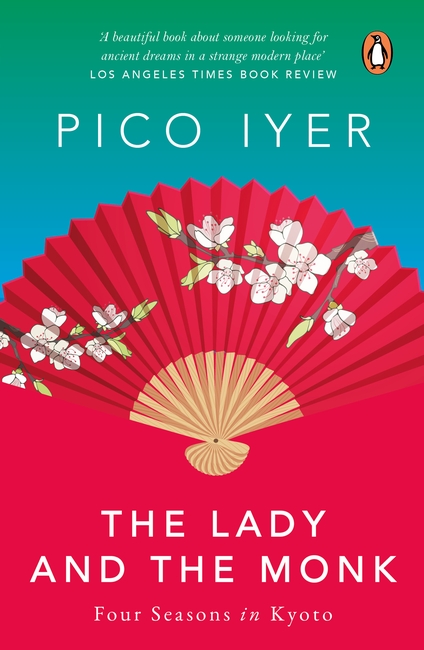
When Pico Iyer decided to go to Kyoto and live in a monastery, he did so to learn about Zen Buddhism from the inside, to get to know Kyoto, one of the loveliest old cities in the world, and to find out something about Japanese culture today-not the world of businessmen and production lines, but the traditional world of changing seasons and the silence of temples, of the images woven through literature, of the lunar Japan that still lives on behind the rising sun of geopolitical power.
All this he did. And then he met Sachiko.
Vivacious, attractive, thoroughly educated, speaking English enthusiastically, if eccentrically, the wife of a Japanese ‘salaryman’ who seldom left the office before 10 p.m., Sachiko was as conversant with tea ceremonies and classical Japanese literature as with rock music, Goethe and Vivaldi. With the lightness of touch that made Video Night in Kathmandu so captivating, Pico Iyer fashions from their relationship a marvellously ironic yet heartfelt book that is at once a portrait of cross-cultural infatuation-and misunderstanding-and a delightfully fresh way of seeing both the old Japan and the very new.
The Man Within My Head

Ever since he first read Graham Greene, Pico Iyer has been obsessed by the figure of the writer and by one of the great themes of Greene’s work: what it means to be an outsider. Wherever he has travelled-usually as an outsider himself-Iyer has found reminders of Greene’s life, observed scenes that might have been written by Greene, written stories that recall Greene. Yet, as Iyer recounts the history of his obsession, another phantom image begins to assert itself, one that Iyer had long banished from his inner life-that of his father.