



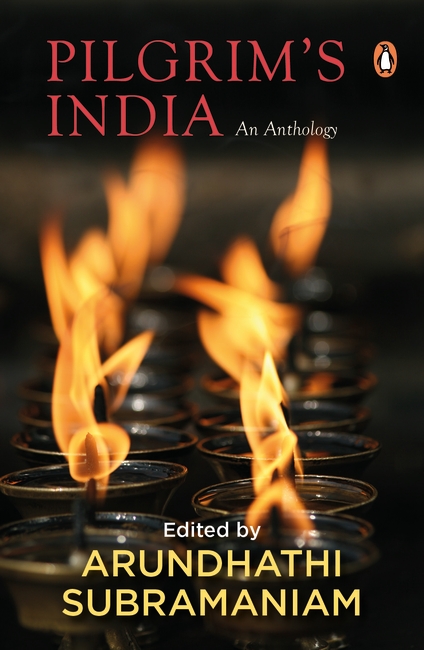
More people have embarked on a quest for the sacred in India than anywhere else.
Pilgrim’s India is about all journeys impelled by the idea of the sacred. It brings together essays and poems-from the Katha Upanishad, Fa-Hien, Basavanna and Kabir to Paul Brunton, Richard Lannoy, Amit Chaudhuri, Arun Kolatkar and others-about various aspects of trips undertaken in the name of God. Readers will encounter the watchful reserve of a British journalist in southern India, the vigorous prose of a contemporary Sikh pilgrim, a French author-adventurer’s appraisal of the Ellora caves, a modern-day Zoroastrian’s reflections on Udvada and a woman’s impression of what it means to be Muslim in India.
Mystics, witnesses and wanderers write about the Supreme Being, about journeys and destination, false starts, bottlenecks and blind alleys, about humour, rage and revelation-all of which make this anthology a deeply absorbing and idiosyncratic take on pilgrims and pilgrim trails in India.
Catagory: Non Fiction
non fiction main category
Hymns Of The Gurus
An illustrated edition containing selected hymns of the ten Sikh Gurus, from Guru Nanak to Guru Gobing Singh, translated by Khushwant Singh. Sacred hymns from the Guru Gibind Singh.
Why I Supported The Emergency
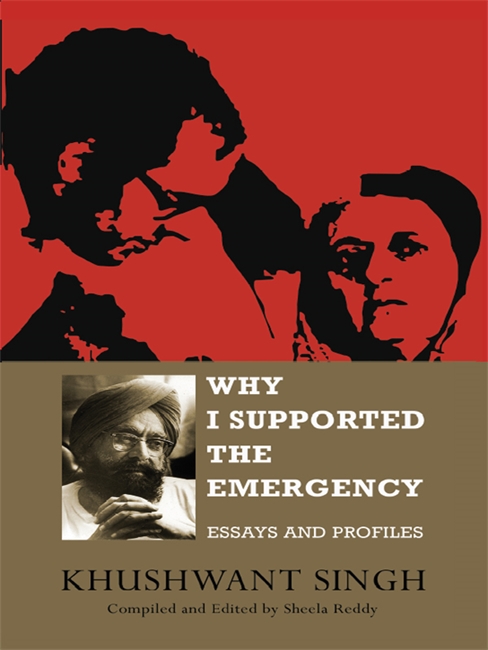
The Emergency Has Become A Synonym For Obscenity. Even Men And Women Who Were Pillars Of Emergency Rule And Misused Their Positions To Harass Innocent People Against Whom They Had Personal Grudges Try To Distance Themselves From Their Past In The Hope That It Will Fade Out Of Public Memory Forever. We Must Not Allow Them To Get Away With It,&Rsquo; Says Khushwant Singh, While Fearlessly Stating His Own Reasons For Championing The Emergency. This Bold And Thought-Provoking Collection Includes Essays On Indira Gandhi&Rsquo;S Government, The Nanavati Commission&Rsquo;S Report On The 1984 Riots And The Riots Themselves, As Well As Captivating Pieces On The Art Of Kissing And The Importance Of Bathing. Alongside These Are Portraits Of Historical Figures Such As Bahadur Shah Zafar, General Dyer, Ghalib And Maharaja Ranjit Singh As Well As Candid Profiles Of The Famous Personalities He Has Known Over The Years, Revealing Intimate Details About Their Lives And Characters. From His Reflections On Amrita Sher-Gil&Rsquo;S Alleged Promiscuity To The Experience Of Watching A Pornographic Film With A Stoic R.K. Narayan, This Is Khushwant Singh At His Controversial And Iconoclastic Best.
Selected And Edited By Sheela Reddy, Why I Supported The Emergency: Essays And Profiles Covers Three Quarters Of A Century. Straight From The Heart, This Is Unadulterated Khushwant Singh.
Delhi
I return to Delhi as I return to my mistress Bhagmati when I have had my fill of whoring in foreign lands . . .’ Thus begins Khushwant Singh’s vast, erotic magnum opus on the city of Delhi. The principal narrator of the saga, which extends over six hundred years, is a bawdy, ageing reprobate who loves Delhi as much as he does the hijda Bhagmati, half-man, half-woman, with sexual inventiveness and energy of both the sexes. Travelling through time, space and history to ‘discover’ his beloved city, the narrator meets a myriad of people-poets and princes, saints and sultans, temptresses and traitors, emperors and eunuchs-who have shaped and endowed Delhi with its very special mystique. And as we accompany the narrator on his epic journey we find the city of emperors transformed and immortalized in our minds forever.
The Fall of the Kingdom of the Punjab
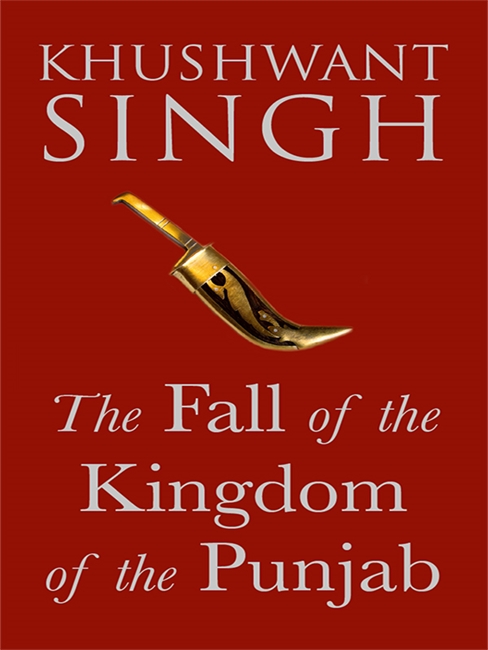
A forgotten classic from India’s favourite storyteller
This riveting historical narrative is more full of drama than any fiction. With the death of Maharaja Ranjit Singh, the great Punjab empire he had built was riven by intrigues, betrayals, assassinations and wars until the British finally annexed it, seizing the Kohinoor diamond and sending the young Maharaja Duleep Singh into exile in Britain. Khushwant Singh brings this turbulent period to vivid life in this page-turning account of the collapse of a once-mighty kingdom.
Not A Nice Man To Know
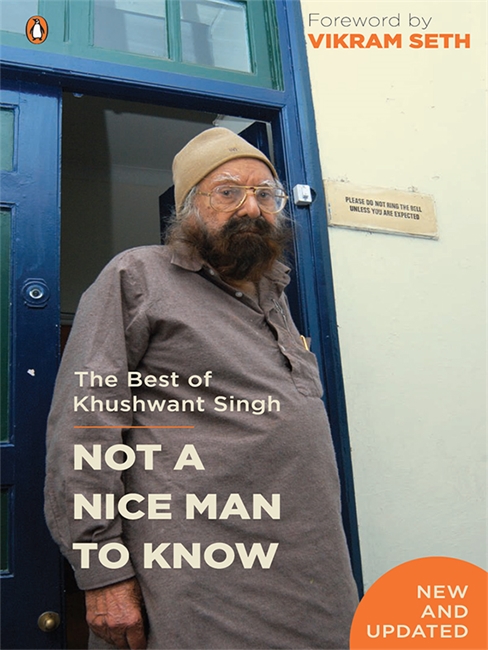
In an essay in this anthology, Khushwant Singh claims that he is not a nice man to know. Whatever the truth of that assertion, there is little question about his skill as a witty, eloquent and entertaining writer. This book collects the best of over three decades of the author’s prose, including his finest journalistic pieces, short stories, translations, jokes, plays as well as excerpts from his non-fiction books and novels. Taken together, the pieces in this selection (some of which have never been published before) show just why Khushwant Singh is the country’s most widely read columnist and one of its most celebrated authors.
Absolute Khushwant
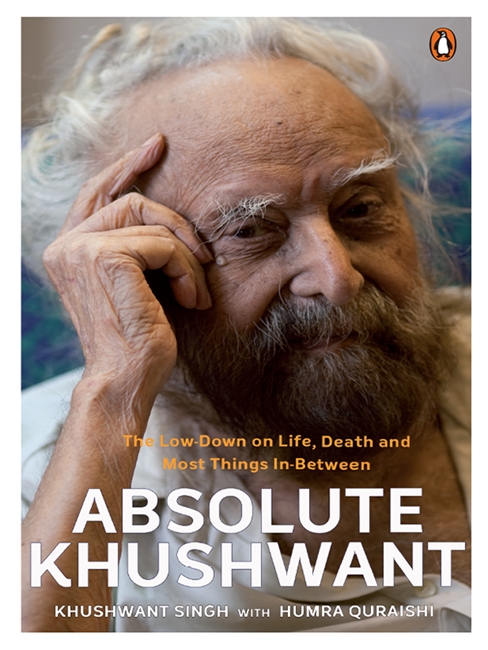
I would like to be remembered as someone who made people smile.’ One of the great icons of our time, Khushwant Singh, 95, is a man of contradictions. An agnostic who’s well-versed in the holy scriptures; a vocal champion of free speech who supported the Emergency; a ‘dirty old man’ who sees ‘the world in a grain of sand and beauty in a wild flower’. Born in 1915 in pre-Partition Punjab, Khushwant Singh has been witness to almost all the major events in modern Indian history and has known most of the figures who have shaped it. In a career spanning over six decades as writer, editor and journalist, his views have been provocative and controversial, but they have also been profound, deeply perceptive and always compelling. Khushwant Singh has never been less than honest. In Absolute Khushwant, India’s grand old man of letters tells us about his life, his loves and his work. He writes on happiness, faith and honesty. And, for the first time, about his successes and failures, his strengths and weaknesses, his highs and lows. He tells us what makes him tick and the secret of his longevity; he confesses his deepest fears and what he holds dear. He writes about sex, marriage, worship and death; the people he’s admired and detested. With personal anecdotes and rare photographs, Absolute Khushwant is uncompromising, moving, and straight from the heart.
Truth, Love & A Little Malice
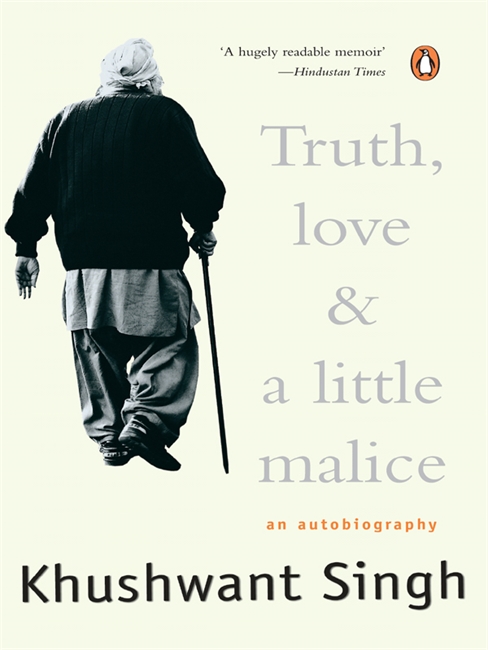
Born in 1915 in pre-Partition Punjab, Khushwant Singh, perhaps India’s most widely read and controversial writer has been witness to most of the major events in modern Indian history from Independence and Partition to the Emergency and Operation Blue Star and has known many of the figures who have shaped it. With clarity and candour, he writes of leaders like Jawaharlal Nehru and Indira Gandhi, the terrorist Jarnail Singh Bhindranwale, the talented and scandalous painter Amrita Shergil, and everyday people who became butchers during Partition.
Writing of his own life, too, Khushwant Singh remains unflinchingly forthright. He records his professional triumphs and failures as a lawyer, journalist, writer and Member of Parliament; the comforts and disappointments in his marriage of over sixty years; his first, awkward sexual encounter; his phobia of ghosts and his fascination with death; the friends who betrayed him, and also those whom he failed.
Sources of Indian Traditions
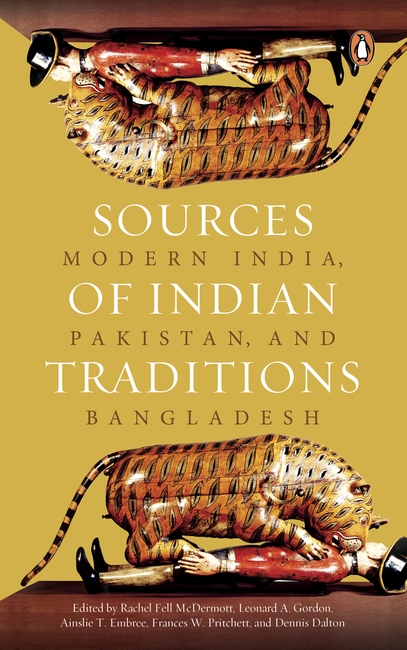
An accessible yet thorough introduction to Indian civilizations
Sources of Indian Traditions is an indispensable and essential selection of primary readings on the social, intellectual, and religious history of India from the decline of Mughal rule in the eighteenth century to today. It details the advent of the East India Company, British colonization, the struggle for liberation, the partition of 1947, and the creation of Pakistan, Bangladesh, and contemporary India.
Divided thematically, it begins with a chapter on eighteenth-century intellectual and religious trends that set the stage for India’s modern development. Nineteenth-century debates over social reform, featuring the leaders of reform and revival movements, follow. Chapters on Gandhi and his reception both nationally and abroad, and different perspectives on and approaches to partition, precede a section devoted to the drafting of the Indian constitution, the rise of nationalism, the influence of Western thought, the conflict in Kashmir, nuclear proliferation, minority religions, secularism, and the role of the Indian political left. The last two sections portray Pakistan and its struggle for national identity, and Bangladesh and the controversies over the fruits of freedom.
The Cousins Thackeray
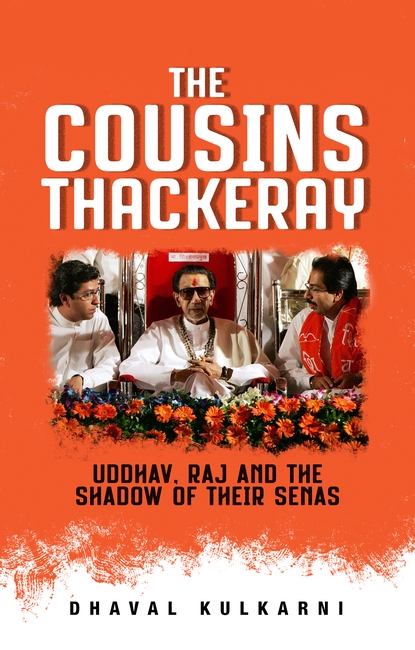
They are first cousins twice over, but have had widely divergent political trajectories. One, an abrasive, fire-breathing demagogue, was seen as his uncle’s political heir whose behavioural traits he cultivated. The other, an introvert, is at his best when plotting strategies on the drawing board rather than the rough-and-tumble of street-corner politics that his party is known for in India’s financial capital.
Starting out as brothers-in-arms, they had a bitter falling out over inheriting the party mantle. The younger cousin branched out on his own, hijacked the populist, ethno-centric plank of his parent party, putting his cousin-turned-political foe on the defensive. A series of miscalculations later, the boot seems to be on the other foot. The elder cousin has managed to keep his flock together and cemented his position as his late father Bal Thackeray’s political heir, while the other, one of the most popular crowd-pullers in Maharashtra, is itching for an electoral comeback.
The Cousins Thackeray evaluates the political careers of Shiv Sena president Uddhav Thackeray and Maharashtra Navnirman Sena (MNS) chief Raj Thackeray. It also examines questions about identity politics, and the social, cultural and economic matrix that catalysed the formation of the Shiv Sena and the MNS from it. Above all, it is a look at what makes the Thackeray cousins so integral to the politics of India, Maharashtra and Mumbai.