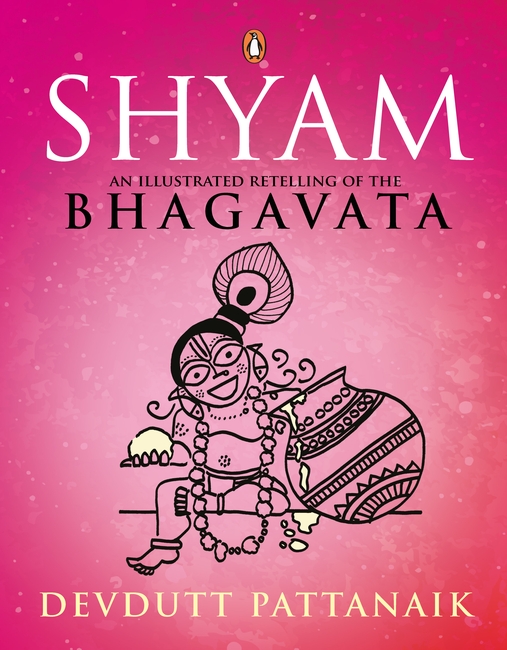
In the forest of insecurities, is it possible to discover humanity through pleasure?
Can we stop seeing each other as predator, prey, rival or mate, and rediscover ourselves as lovers?
Does the divine reside in sensual delight, in emotional intimacy and in aesthetic experience?
Yes, yes, yes.
That is the promise of the Bhagavata.
The Bhagavata is the story of Krishna, known as Shyam to those who find beauty, wisdom and love in his dark complexion. It is the third great Hindu epic after the Mahabharata and the Ramayana. However, this narration was composed in fragments over thousands of years, first as the Harivamsa, then as the Bhagavata Purana, and finally as the passionate songs of poet-sages in various regional languages.
This book seamlessly weaves the story from Krishna’s birth to his death, or rather from his descent to the butter-smeared world of happy women to his ascent from the blood-soaked world of angry men.

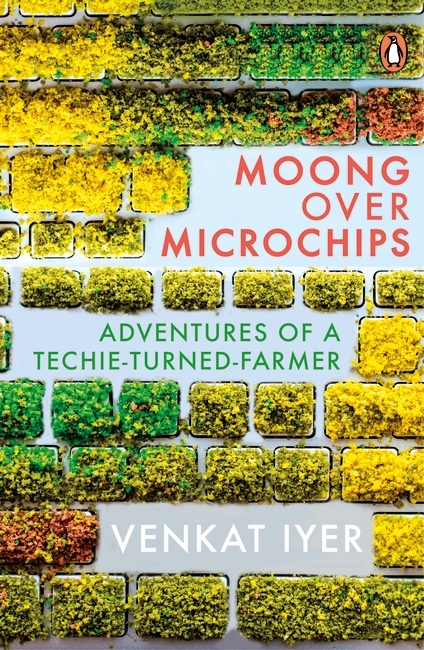
Venkat Iyer was living a fast-paced life in the IT world in Mumbai when he decided to stop and take a long, hard look at where he was headed. Disheartened by his stressful existence in the city, he decided to give it all up and take up organic farming in a small village near Mumbai. But it wasn’t easy. With no experience in agriculture, his journey was fraught with uncertainty. He soon went from negotiating tough clients, strict deadlines and traffic to looking forward to his first bumper crop of moong. As he battled erratic weather conditions and stubborn farm animals, he discovered a world with fresh air and organic food, one where he could lead a more wholesome existence. At times hilarious, and other times profound, this book follows his extraordinary story.

In 1980, a brilliant young American scholar, George H. Gadbois, Jr., met five judges of the Supreme Court of India. The judges gave him astonishing details: about what they actually thought of their colleagues, about the inner workings and politics of the court, their interactions with the government and the judicial appointments process, among many other things. This was only the beginning. Over the course of that decade, Gadbois visited India on two more occasions and conducted over 116 interviews with more than sixty-six judges of the Supreme Court of India (nineteen of whom held the post of chief justice of India),
and others such as senior lawyers, politicians, relatives of deceased judges, and court staff. During each meeting, Gadbois diligently took down handwritten notes, which he later typed up on his typewriter, recording nearly every detail of what the judges had told him, sometimes to a fault.
Relying on these typewritten interviews, Abhinav Chandrachud sheds light on a decade of politics, decision-making and legal culture in the Supreme Court of India. This book yields a fascinating glimpse into the secluded world of the judges of the Supreme Court in the 1980s and earlier.

An invaluable encyclopedia of Hinduism
Hinduism is one of the world’s oldest religions; an amalgam of diverse beliefs and schools, it originates in the Vedas and is rooted in Indian culture. Hinduism: An Alphabetical Guide illuminates complex philosophical concepts through lucid definitions, a historical perspective and incisive analyses. It examines various aspects of Hinduism, covering festivals and rituals, gods and goddesses, philosophers, memorials, aesthetics, and sacred plants and animals. The author also explores pivotal ideas, including moksha, karma, dharma and samsara, and details the diverse commentaries on the Bhagavad Gita and other important texts. Citing extensively from the regional languages, the book describes Hinduism’s innumerable myths and legends, and looks at the many versions of texts including the Ramayana and Mahabharata, placing each entry in its historical context and tracing its evolution to the present.
• Outlines all eighteen major Puranas, the 108 Upanishads, and a selection of Vaishnava, Sahiva and Tantric texts
• Provides quotations from rare original texts
• A product of years of research, with a wide range of entries
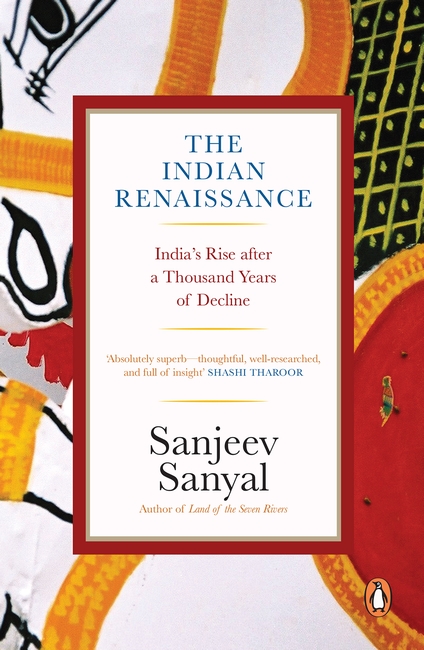
One thousand years ago, India was at the height of its power, influencing the world with its ideas and trade. Now, ten centuries later, India’s recent economic performance is once again attracting world attention as the country re-awakens not just as an economy but as a civilization.
In The Indian Renaissance: India’s Rise after a Thousand Years of Decline, Sanjeev Sanyal looks at the processes that led to ten centuries of decline. He also examines the powerful economic and social forces that are working together to transform India beyond recognition. These range from demographic shifts to rising literacy levels and, the most important revolution, the opening of minds and changed attitude towards innovation and risk-fundamental, if India is to take advantage of the twenty-first century.

The Valmiki Ramayana remains a living force in the lives of the Indian people. A timeless epic, it recounts the legend of the noble prince Rama and his battle to vanquish the demon king Ravana.
Even before he is crowned king of Ayodhya, Rama is exiled to the Dandaka forests where he is accompanied by his beauteous wife Sita and loyal brother Lakshmana. Deep in the jungle, Sita is abducted by Ravana and taken to his island kingdom Lanka, setting into motion a dramatic chain of events that culminates in an epoch-defining war. Filled with adventure and spectacle, the Ramayana is also the poignant story of a family caught up in the conflict between personal duty and individual desires.
In Bibek Debroy’s majestic new translation, the complete and unabridged text of the Critical Edition of this beloved epic can now be relished by a new generation of readers.

THE ENDURING EPIC OF GOOD VERSUS EVIL, NOW IN ITS DEFINITIVE TRANSLATION
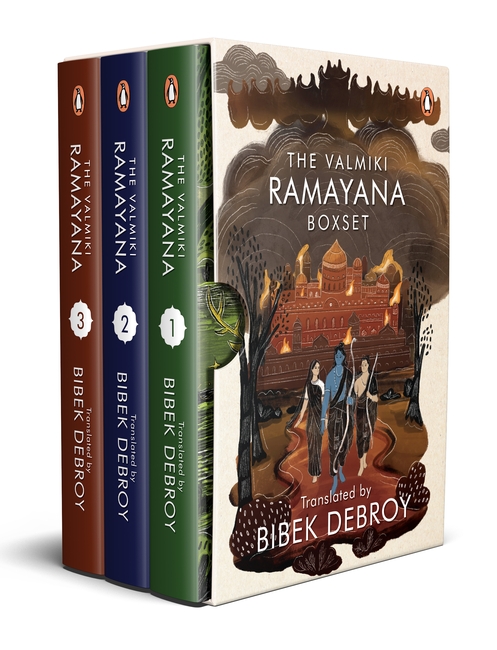
A timeless tale of duty, honour and the triumph of good over evil, the Valmiki Ramayana remains one of India’s greatest literary and spiritual treasures. This complete and unabridged translation of the Critical Edition brings to life the legendary journey of Prince Rama, his exile, the abduction of Sita by Ravana and the epic battle that changed the course of generations. Filled with adventure, devotion and profound reflections on dharma, this collection is an essential addition for readers of Indian mythology and classical literature.
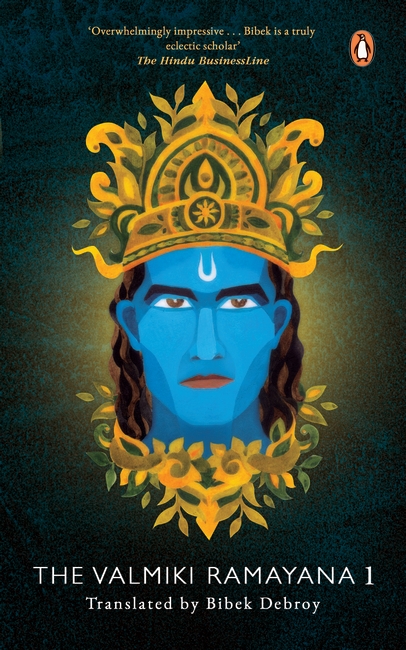
Valmiki Ramayana: Volume 1
Discover the origins of the epic, the birth and early life of Rama, and the events that lead to his exile into the forests of Dandaka.
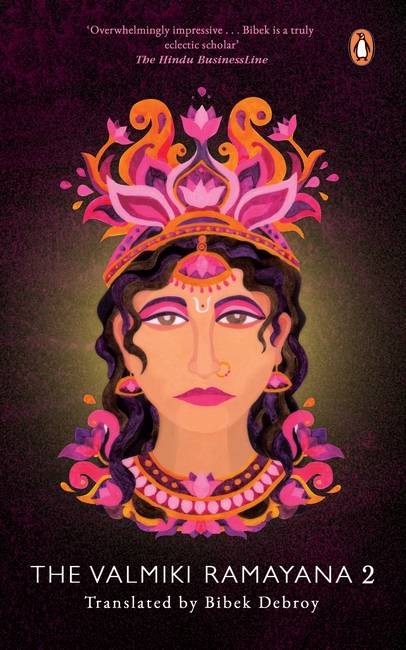
Valmiki Ramayana: Volume 2
Follow Rama’s journey through the wilderness, Sita’s abduction by Ravana and the alliances forged in the quest to rescue her.
Valmiki Ramayana: Volume 3
Experience the climactic battle between Rama and Ravana, and the timeless lessons on duty, sacrifice and righteousness that define the epic.
The Valmiki Ramayana remains a living force in the lives of the Indian people. A timeless epic, it recounts the legend of the noble prince Rama and his battle to vanquish the demon king Ravana.
Even before he is crowned king of Ayodhya, Rama is exiled to the Dandaka forests where he is accompanied by his beauteous wife Sita and loyal brother Lakshmana. Deep in the jungle, Sita is abducted by Ravana and taken to his island kingdom Lanka, setting into motion a dramatic chain of events that culminates in an epoch-defining war. Filled with adventure and spectacle, the Ramayana is also the poignant story of a family caught up in the conflict between personal duty and individual desires.
In Bibek Debroy’s majestic new translation, the complete and unabridged text of the Critical Edition of this beloved epic can now be relished by a new generation of readers.
The Valmiki Ramayana remains a living force in the lives of the Indian people. A timeless epic, it recounts the legend of the noble prince Rama and his battle to vanquish the demon king Ravana.
Even before he is crowned king of Ayodhya, Rama is exiled to the Dandaka forests where he is accompanied by his beauteous wife Sita and loyal brother Lakshmana. Deep in the jungle, Sita is abducted by Ravana and taken to his island kingdom Lanka, setting into motion a dramatic chain of events that culminates in an epoch-defining war. Filled with adventure and spectacle, the Ramayana is also the poignant story of a family caught up in the conflict between personal duty and individual desires.
In Bibek Debroy’s majestic new translation, the complete and unabridged text of the Critical Edition of this beloved epic can now be relished by a new generation of readers.

Ever wondered how Farhan Akhtar trained to play a professional athlete in Bhaag Milkha Bhaag, or what diet plan Aamir Khan followed to maintain those rock-hard abs in Dhoom 3? If yes, this is the book for you. Veteran journalists Ram Kamal Mukherjee and Devyani Ghosh interview the fitness trainers behind the amazing physiques of Hrithik Roshan, Shahid Kapoor, Aamir Khan, Bipasha Basu, Farhan Akhtar, Tiger Shroff, Priyanka Chopra, Varun Dhawan and Sonu Sood.
With detailed daily workouts, diets and plans followed by these actors for specific roles, this book will show you how to get in shape like your favourite movie star. The authors also provide a peek into each star’s fitness philosophy, along with interesting personal anecdotes and the ways in which they motivate themselves to not only achieve great bodies but also maintain them. Whether you’re just starting your fitness journey or looking to ramp it up a notch, this book is sure to help you look like a star.