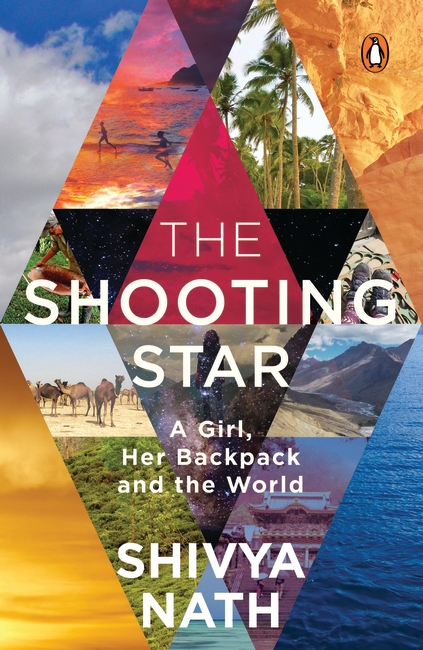
Shivya Nath quit her corporate job at age twenty-three to travel the world. She gave up her home and the need for a permanent address, sold most of her possessions and embarked on a nomadic journey that has taken her everywhere from remote Himalayan villages to the Amazon rainforests of Ecuador. Along the way, she lived with an indigenous Mayan community in Guatemala, hiked alone in the Ecuadorian Andes, got mugged in Costa Rica, swam across the border from Costa Rica to Panama, slept under a meteor shower in the cracked salt desert of Gujarat and learnt to conquer her deepest fears.
With its vivid descriptions, cinematic landscapes, moving encounters and uplifting adventures, The Shooting Star is a travel memoir that maps not just the world but the human spirit.

In Temptations of the West, Pankaj Mishra brings literary authority and political insight to bear on journeys through South Asia, and considers the pressures of Western-style modernity and prosperity on the region. Beginning in India, his examination takes him from the realities of Bollywood stardom, to the history of Jawaharlal Nehru’s post-independence politics. In Kashmir, he reports on the brutal massacre of thirty-five Sikhs, and its intriguing local aftermath. And in Tibet, he exquisitely parses the situation whereby the atheist Chinese government has discovered that Tibetan Buddhism can be “packaged and sold to tourists.” Temptations of the West is essential reading about a conflicted and rapidly changing region of the world.
In Butter Chicken in Ludhiana, Pankaj Mishra captures an India which has shrugged off its sleepy, socialist air, and has become instead kitschy, clamorous and ostentatious. From a convent-educated beauty pageant aspirant to small shopkeepers planning their vacation in London, Pankaj Mishra paints a vivid picture of a people rushing headlong to their tryst with modernity. An absolute classic, this is a witty and insightful account of India’s aspirational middle class.
This superb anthology, edited and with an introduction by Pankaj Mishra, gives us some of the finest writings on India by foreigners over the past two centuries. From Mark Twain’s puzzled fascination with Indian castes and customs to J.R. Ackerley’s delightful recollections of his visits with an eccentric gay Maharajah, here are pieces that will amuse, charm and surprise.
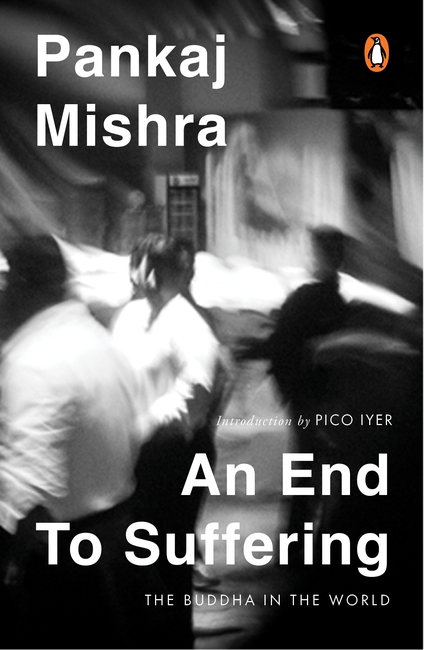
Is the Buddha still relevant today and, if so, in what way? Pankaj Mishra tries to answer this question as he travels through poverty-ridden South Asia to gilded Europe and America. Along the way he discovers how Buddhist thought has flowered even in a materialistic world, and reveals the parallels between the age of the Buddha and the contemporary world. A rich, challenging and deeply contemplative work, An End to Suffering is regarded as many to be Mishra’s masterpiece.

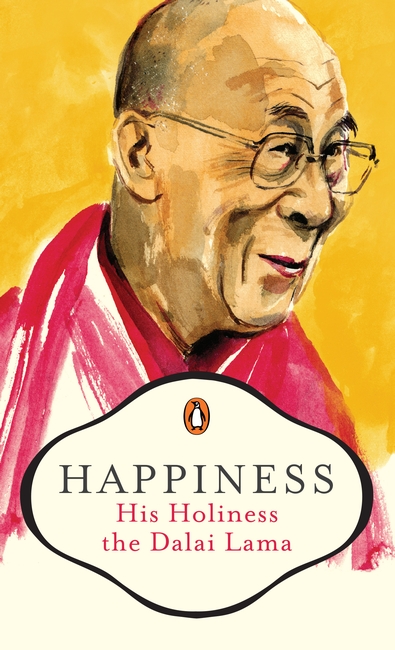
From the realization of mental peace to the experience of illness, suffering, death, pain, pleasure, desire and contentment, the Dalai Lama opens a window into the attainment of absolute happiness in day to day life.

Mirza Asadullah Khan Ghalib was born in Agra in the closing years of the eighteenth century. He wrote in both Urdu and Persian and was also a great prose stylist. Ghalib fascinates his readers for many reasons, but one of the most noted qualities in Ghalib was that he was a careful, even strict, editor of his work. It is said that he discarded or disregarded more than half of his Urdu verses. These verses were forgotten for long, until as late as 1918, in the library of the princely state of Bhopal. In 1921, they were edited and published as a new Divan-e Ghalib.
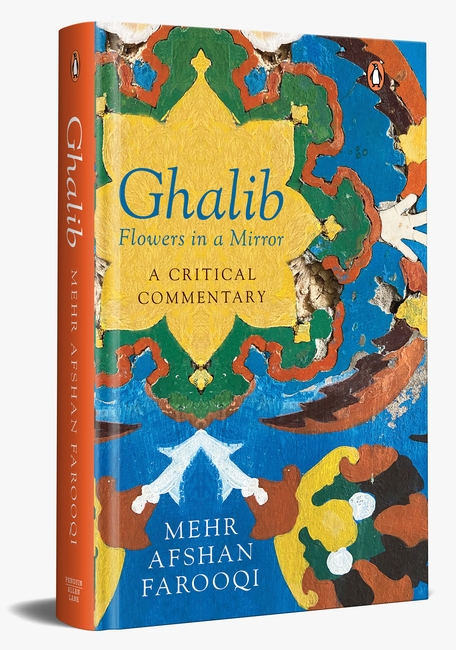
In Flowers in a Mirror, Mehr Afshan Farooqi continues her research in the strain of her first book, A Wilderness at My Doorstep. She examines Ghalib’s approach to his work, the world in which he lived and composed, and ultimately, his genius. She selects 30 ghazals from the rejected corpus, translates them into English and provides an erudite, sparkling critical commentary. Through this book, she highlights the significance of marginalized poetry and the need to reinstate the forgotten verses in our lives and hearts.

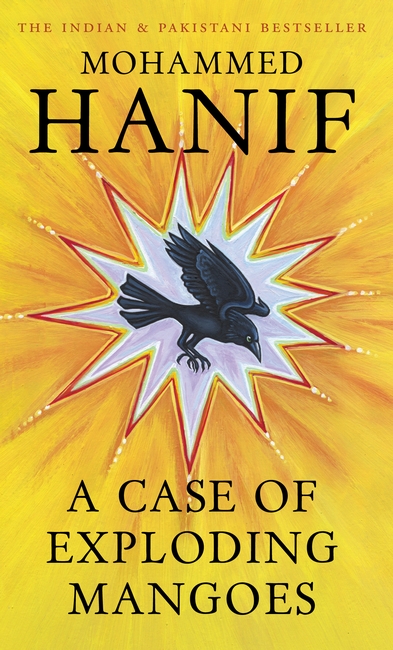
In August 1988, Zia gets into the presidential plane, Pak One, which explodes midway. Who killed him? The army generals growing old waiting for their promotions, the CIA, the ISI, RAW, or Ali Shigri, a junior officer at the military academy whose father, a whisky-swilling jihadi colonel, was murdered by the army?
A Case of Exploding Mangoes is sharp, black, inventive, and utterly gripping. It marks the debut of a brilliant new writer
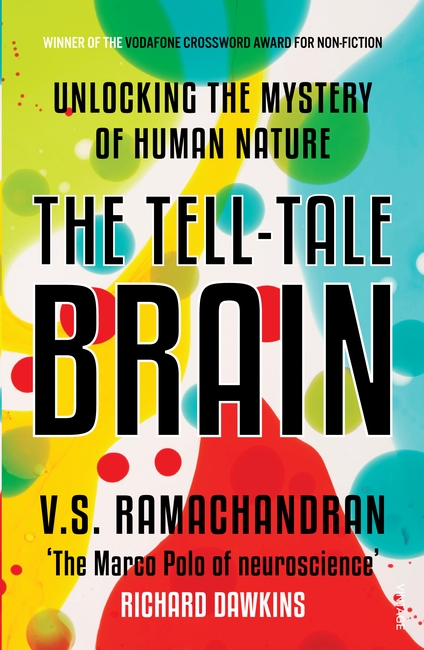
The brain remains a mystery to us. How can a three-pound mass of jelly that can fit in our palm imagine angels, contemplate the meaning of infinity, and even question its own place in the cosmos? Renowned neuroscientist Prof. V.S. Ramachandran takes us on a fascinating journey into the human brain by studying patients who exhibit bizarre symptoms and using them to understand the functions of a normal brain. Along the way he asks big questions: How did abstract thinking evolve? What is art? Why do we laugh? How are these hardwired into the neural mechanisms of the human brain, and why did they evolve? Brilliant, lucid, and utterly compelling, The Tell-Tale Brain is a path-breaking book from one of the leading neuroscientist

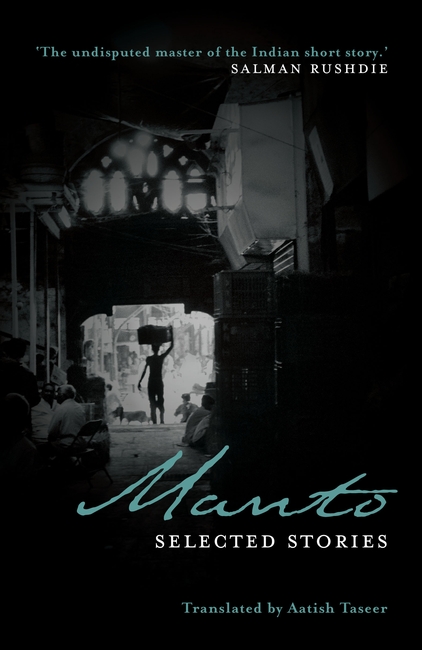
The gentle dhobi who transforms into a killer, a prostitute who is more child than woman, the cocky, young coachman who falls in love at first sight, a father convinced that his son will die before his first birthday. Saadat Hasan Manto’s stories are vivid, dangerous and troubling and they slice into the everyday world to reveal its sombre, dark heart. These stories were written from the mid 30s on, many under the shadow of Partition. No Indian writer since has quite managed to capture the underbelly of Indian life with as much sympathy and colour. In a new translation that for the first time captures the richness of Manto’s prose and its combination of high emotion and taut narrative, this is a classic collection from the master of the Indian short story.