




Motherhood is a life-changing event in a woman’s life. Keeping in mind the fast-paced lives of nuclear families and sometimes unhealthy lifestyles, Bollywood’s most celebrated yoga expert, Payal Gidwani Tiwari, brings to fore the importance of preparing the body and soul for such a change. From pre-pregnancy to post-natal, Gidwani utilizes her age-old knowledge of yoga and provides essential advice to take care of oneself before, during and after the birth. Her workout sessions are especially designed for modern parents.
Catagory: Non Fiction
non fiction main category
For Reasons of State
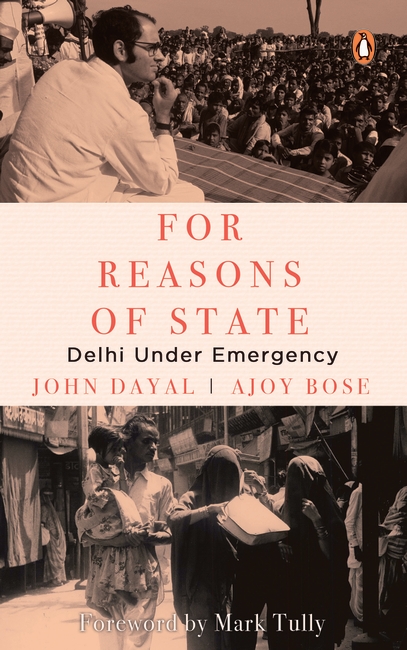
In 1977, two staff reporters at the Patriot, both in their twenties, occupied highly advantageous positions during the nineteen months of the Emergency to observe the turmoil wrought in the capital city of Delhi. In For Reasons of State, they have supplied first-hand evidence of the ruthlessness with which people’s homes were torn down and the impossible resettlement schemes introduced. The nation found itself in a whirlwind of fear, confusion, violence and destabilization, stemming from forced sterilizations, heartless evictions in the thousands, and the cruel imprisonment of many.
Part reportage and part human stories, this definitive volume evokes the life and times of the Emergency and how it unfolded, and remains perennially relevant.
Me against the Mumbai Underworld
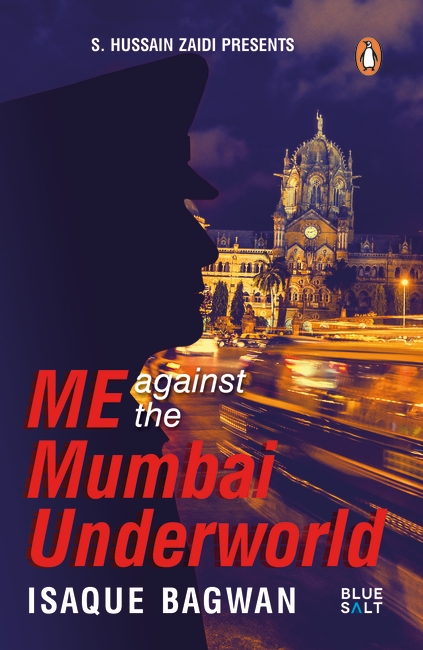
On some days, you are no less than Sherlock Holmes. But on others, you are just a regular policeman on bundobast duty.
Me against the Mumbai Underworld is the story of Isaque Bagwan, three-time recipient of the President’s Police Medal for Gallantry and a small-town boy who pursued his big-city dreams and ambitions as an upright police officer. Bagwan, who is credited with carrying out the first encounter in the history of Mumbai Police, was witness to several of the city’s defining moments-the 1980s when smuggling was at an all-time high, the blasts that tore through Bombay in the ’90s, the gang wars that marked the city, and the devastating 26/11 terror attack. His life, which has captured the imagination of many writers and filmmakers, is presented here with all its gut-wrenching details.
How India Manages Its National Security
In this authoritative and comprehensive survey of the challenges a changing global security environment poses to India, former deputy national security advisor Arvind Gupta outlines the important aspects of the country’s security apparatus and how they interface to confront internal and external conflicts. We have today a turbulent Middle East to the west; a rising and assertive China to the north; Pakistan in the grip of the military and the militants across our border and an increasingly militarizing Indian Ocean region surrounding us. Additionally, climate change, cyber security and the vulnerability of our space assets are major areas of concern. Anything that weakens a nation weakens its security, which makes the issues of food, water, health, economics and governance critically significant. Arvind Gupta draws on his long experience in these areas to argue that instead of tactical remedies, a strategic, coherent, institutional approach is needed to deal with these challenges. Strengthening the National Security Council, for instance, could be one way forward.
How India Manages Its National Security explains with great clarity and thoroughness the concept and operation of India’s national security apparatus. This book will be of great interest to practitioners, analysts and laymen alike and offer an important voice in the discussion on how national security challenges should be resolved in the decades to come.
IIMA: Why I Am Paying More
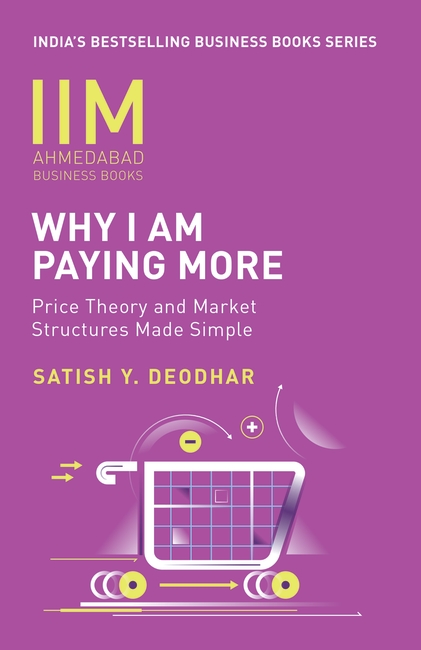
Why do saree emporiums and apparel shops offer heavy discounts on a few occasions during the year? Why is it that airline tickets booked well in advance are always cheaper? How would Phoolan Devi and Veerappan react to a case of Prisoners’ Dilemma?
Professor Deodhar explains the dynamics of pricing with respect to demand and supply and various market structures like perfect competition, monopoly, monopolistic competition and oligopoly through engaging everyday examples and case studies. With illustrative diagrams and interactive examples, Why I am Paying More is a highly useful and accessible book on microeconomics for both the uninitiated and the seasoned. A must-buy for students, professionals, and laypersons alike.
Not Quite Not White

A first-generation American’s searing appraisal of race and assimilation in the US
At the age of twelve, Sharmila Sen emigrated from India to the US. The year was 1982, and everywhere she turned, she was asked to self-report her race. Rejecting her new ‘not quite’ designation-not quite white, not quite black, not quite Asian-she spent much of her life attempting to blend into American whiteness. But after her teen years, watching shows like The Jeffersons, dancing to Duran Duran, and perfecting the art of Jell-O no-bake desserts, she was forced to reckon with the hard questions: Why does whiteness retain its cloak of invisibility while other colours are made hypervisible?
Part memoir, part manifesto, Not Quite Not White is a witty and poignant story of self-discovery.
Ways of Being Desi
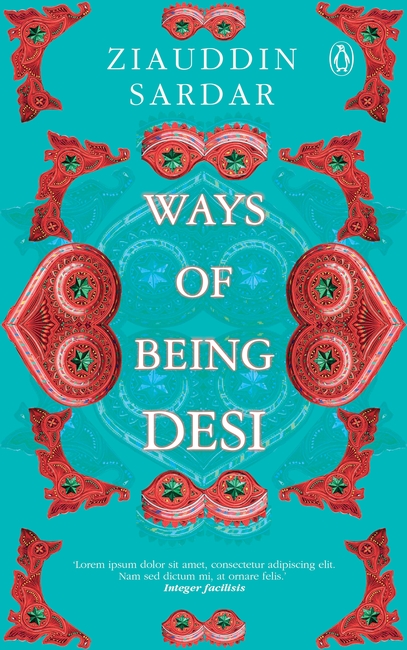
How do we define being Desi? We all know what we mean by it but what are the actual sights, scents, sounds and tastes-the myriad elements from the South Asian imagination that come together in various combinations to conjure ‘self’ for all of us? Because being Desi is no respecter of national boundaries; Desi cultures are truly transnational and cannot be defined by the rupture of Partition or lines on a map. Ziauddin Sardar is a Person of Pakistani Origin-and proud of it-but he boldly says that his identities draw on antecedents from all parts of the subcontinent. From the beauty of Bharatanatyam, to the poetic genius of Amir Khusrau and Faiz; from the universes created by Dilip Kumar and Guru Dutt to the untranslatable, indescribable taste of a perfect golgappa.
Ways of Being Desi is a brilliant, provocative and deeply honest exploration of the ingredients that make us who we are. It is not a simple listing of food, films or even the universal importance of ‘Aunties’ in South Asian culture; it is a meditation on the subcontinent’s recent past and all that happens when we decide to forget our shared histories.
Imagining Lahore
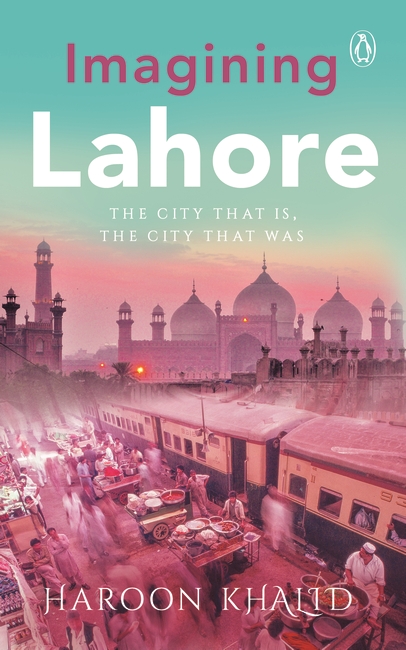
An anecdotal travelogue about Lahore – which begins in the present and travels through time to the mythological origins of the city attributed to Ram’s son, Lav. Through the city’s present – its people, communities, monuments, parks and institutions – the author paints a vivid picture of the city’s past. From its emergence under Mahmud Ghaznavi to the Mughal centuries where several succession intrigues unfolded on its soil, its recasting as the capital of Maharaja Ranjit Singh’s Khalsa Empire, the role it played in preserving the British Raj, to acting as an incubator of revolutionaries and people’s movements, Lahore influenced the subcontinent’s political trajectory time and again.
Today, too, Lahore often determines which way the wind will blow on Pakistan’s political landscape. The Lahore Resolution of 1940, which laid the blueprint for the creation of the country, was signed here. The city saw the birth of Zulfikar Ali Bhutto’s PPP, as well as his downfall. It was to Lahore that Benazir Bhutto returned to combat a military dictator, and where Imran Khan heralded his arrival as a main contender on the political battlefield. As the capital of Punjab, Lahore continues to cast a long shadow over the federal state.
India Moving
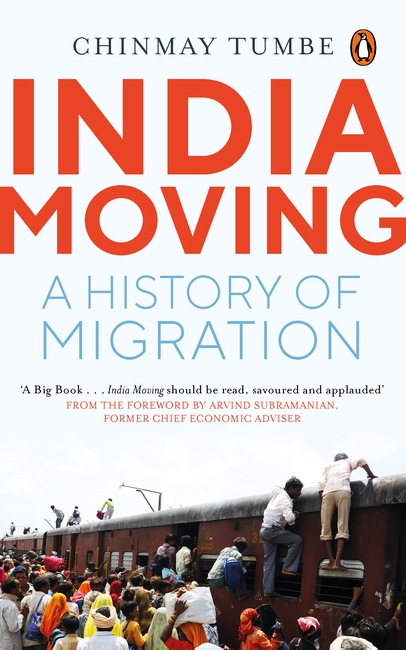
From adventure to indenture, martyrs to merchants, Partition to plantation, from Kashmir to Kerala, Japan to Jamaica and beyond,
the many facets of the great migrations of India and the world are mapped in India Moving, the first book
of its kind.
To understand how millions of people have moved-from, to and within India-the book embarks on a journey laced with evidence, argument and wit, providing insights into topics like the slave trade and migration of workers, travelling business communities such as the Marwaris, Gujaratis and Chettiars, refugee crises and the roots of contemporary mass migration from Bihar and Kerala, covering terrain that often includes diverse items such as mangoes, dosas and pressure cookers.
India Moving shows the scale and variety of Indian migration and argues that greater mobility is a prerequisite for maintaining the country’s pluralistic traditions.
Your Happiness was Hacked

We’ve become a tribe of tech addicts, and it’s not entirely our fault.
Taking advantage of vulnerabilities in the human brain function, tech companies entice us to overdose on technology interaction. This damages our lives, work, families and friendships. Swipe-driven apps train us to evaluate people like products, diminishing our relationships. At work, we email on an average of seventy-seven times a day, ruining our concentration. At home, light from our screens contributes to epidemic sleep deprivation.
But we can reclaim our lives without dismissing technology. The authors explain how to avoid getting hooked on tech and how to define and control the roles that it plays and could play in our lives. This profound and timely book turns personal observation into a handy guide to adapting to our new reality of omnipresent technology.