



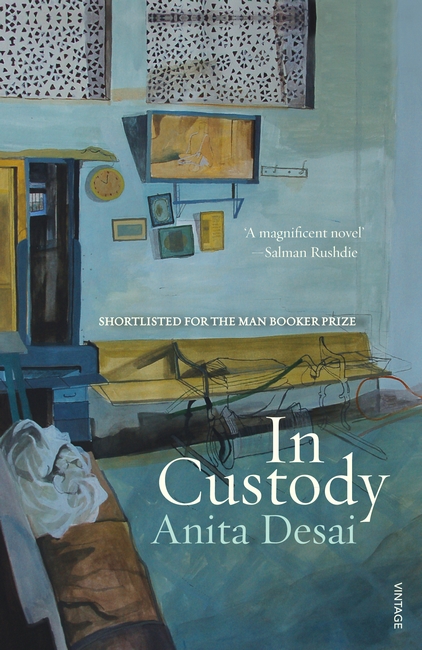
In this sensitive portrayal of human nature, Anita Desai, one of India’s foremost writers, paints an intimate portrait of lives impacted by the quest for identity and purpose. Deven, a Hindi lecturer in small-town Mirpore, lives a humdrum existence. A chance to interview Nur—India’s greatest living Urdu poet—offers him an escape from his dreary life. But the Nur he meets is an enfeebled man, surrounded by clashing wives and preying sycophants. Deven’s decision to be the custodian of Nur’s verse gives birth to an unusual alliance between the two. Stimulating and thought provoking, In Custody is a brilliant parable lamenting the gradual corrosion of culture and tradition in the face of modernity, and a dazzling study of the complexity of human relationships.
Catagory: Non Fiction
non fiction main category
Supermarketwala

• Rita, the young bahu, avoids buying personal products from the family grocer.
• Sonu’s breakfast table on a Sunday represents global cuisines. Do you know how it is possible?
• Where do big corporates and MNC retailers fumble, and what helps simple DMart get its model right?
• What is Ching’s Sercret that is not Knorr’s, Maggi’s, or Yippie’s?
Supermarketwala, Damodar Mall’s intriguing and revelatory debut book, answers these questions and much more. Damodar, in Supermarketwala, provides the very basics for the growth of modern retail and consumerism in India, through interesting and carefully studied consumer behaviour, an art that few in his domain possess.
Supermarketwala, is intended to be the go-to book for all consumer business enthusiasts and readers alike, who wish to understand how and why we as consumers behave in a certain manner at different places. These insights, which are the analyses of the sector so far, could become the pillars for shaping successful consumer products and retail businesses in the huge consumer economy that India will soon be.
Everyman’s War
What do Naxal terrorists have in common with Somali pirates? What man-made event triggers more refugees than all wars put together? How do terrorist movements end? And how can you help?
Everyman’s War is a collection of insightful essays that describe our participatory role in securing ourselves and our progeny. Defence, internal security and terrorism are important yet closely guarded issues. Even as outrage over safety of women and rising terror take centrestage, there continues to be limited access to information on the subjects of national defence and security, especially in language that a layman can understand. Raghu Raman, an expert on security and terrorism, presents issues of defence, strategy and national security in an engaging narrative, with historical and contemporary examples. He recalibrates the great ‘India rising’ story with its real and present dangers and the role of a regular citizen in this everyman’s war.
Rokda
Baniya—a derivative of the Sanskrit word Vanij, is a term synonymous with India’s trader class. Over the decades, these capitalists spread their footprint across vast sectors of the economy from steel and mining to telecom and retail. And now even e-tail.
Nikhil Inamdar’s Rokda features the stories of a few pioneering men from this mercantile community—Radheshyam Agarwal and Radheshyam Goenka, founders of the cosmetic major Emami; Rohit Bansal, co-founder of Snapdeal; Neeraj Gupta, founder of Meru Cabs; and V.K. Bansal, a humble mathematics tutor whose genius spawned a massive coaching industry in Kota—amongst others.
Through the triumphs and tribulations of these men in the epoch marking India’s entire post independence struggle with entrepreneurship—from the License Raj to the opening up of the floodgates in 1991, and the dawn of the digital era—Rokda seeks to uncover the indomitable spirit of the Baniya.
The Blood Telegram
In 1971, the Pakistani army launched a devastating crackdown on what was then East Pakistan (today’s independent Bangladesh), killing thousands of people and sending ten million refugees fleeing into India. The events also sparked the 1971 Indo-Pakistani War.
Drawing on recently declassified documents, unheard White House tapes, and meticulous investigative reporting, Gary Bass gives us an unprecedented chronicle of the break-up of Pakistan, and India’s role in it. This is the pathbreaking account of India’s real motives, the build-up to the war, and the secret decisions taken by Indira Gandhi and her closest advisers.
This book is also the story of how two of the world’s great democracies-India and the United States-dealt with one of the most terrible humanitarian crises of the twentieth century. Gary Bass writes a revealing account of how the Bangladeshis became collateral damage in the great game being played by America and China, with Pakistan as the unlikely power broker. The United States’ embrace of the military dictatorship in Islamabad would affect geopolitics for decades, beginning a pattern of Ameranti-democratic engagement in Pakistan that went back far beyond General Musharraf.
The Blood Telegram is a revelatory and compelling work, essential reading for anyone interested in the recent history of our region.
What To Say And When To Shut Up
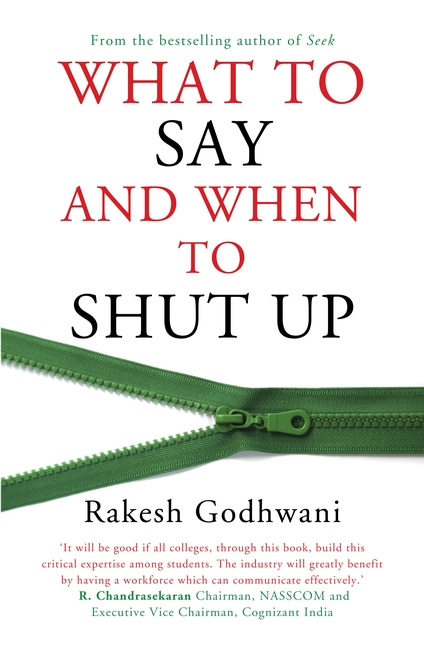
What to Say and When to Shut Up is a useful and interactive book on persuasive communication for corporates, students, entrepreneurs, and anybody who is looking to make a lasting impression on their audience. Through a practical AEIOU Xtra E framework and examples from inspiring leaders like Mahatma Gandhi, Malala Yousafzai, Steve Jobs, Martin Luther King, J.K. Rowling, among others, this book will help you become a persuasive communicator.
Rakesh Godhwani’s invaluable advice includes ways to:
Motivate audiences to action
Nail the interview for your dream job
Make impressive business presentations
Pitch to investors to raise money
Sell a product to a client
Negotiate a win-win
Network professionally and socially
Resolve conflicts
The Suriani Kitchen
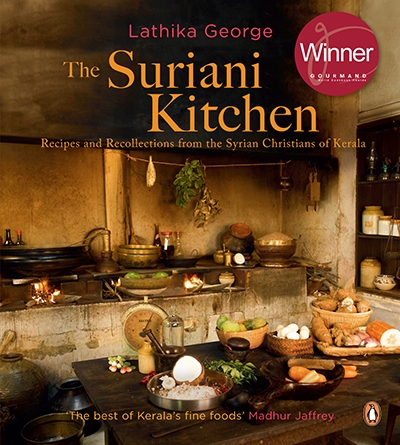
Since ancient times, the lure of spices has drawn seafarers and traders to Kerala. Saint Thomas also travelled this spice route, converting several Brahmin families who later intermarried with Syrians settled here. Thus was born the vibrant Syrian Christian community of Kerala. Today, Ayurveda massage resorts and backwater cruises make this scenic land a top tourist destination, and spices still draw both travellers and gourmands to this rich culinary heritage. It is this legacy that The Suriani Kitchen brings us, through 150 delectable recipes and the unforgettable stories that accompany them. Featured here are savoury delights such as Meen Vevichathu (fish curry cooked in a clay pot), Parippu (lentils with coconut milk) and Thiyal (shallots with tamarind and roasted coconut). Equally mouth-watering are a variety of rice preparations such as Puttu (steamed rice cake) and Paalappam (lace-rimmed pancakes), and tempting desserts like Karikku Pudding (tender coconut pudding). Authentic and easy to prepare, these recipes are accompanied by a guide to spices, herbs and equipment, as well as a glossary of food terms. Interwoven with these recipes, in the best tradition of a cookbook memoir, are tales of talking doves, toddy shops, travelling chefs and killer coconuts. Full of beautiful pictures, charming illustrations and lyrical memories of food and family, The Suriani Kitchen is a delicious, memorable read.
IIMA – Being Ethical
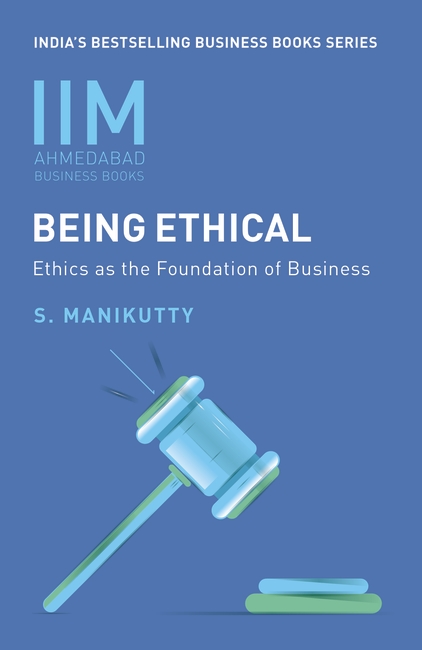
Businesses have to act in self interest but to what extent should they sacrifice ethical behaviour? The question has become increasingly relevant with the recent high profile corporate scandals such as Satyam and the 2G scam.
But can, and should, a business behave ethically at all? Is the corporate social responsibility of a company just to make profits as Nobel Prize winning economist, Milton Friedman, once famously declared?
In this timely book, Professor Manikutty takes us through the minefield of business and ethics looking at the ways in which ethics enters work and the choices available to companies and to individuals. He argues that being ethical is not a simple question of doing the right thing vs the wrong thing; it is to find a balance between multiple right or wrong choices, arriving at not a solution but a compromise. Using a variety of examples and case studies from Indian businesses, Being Ethical is an indispensable book for any responsible manager.
Dreaming Big
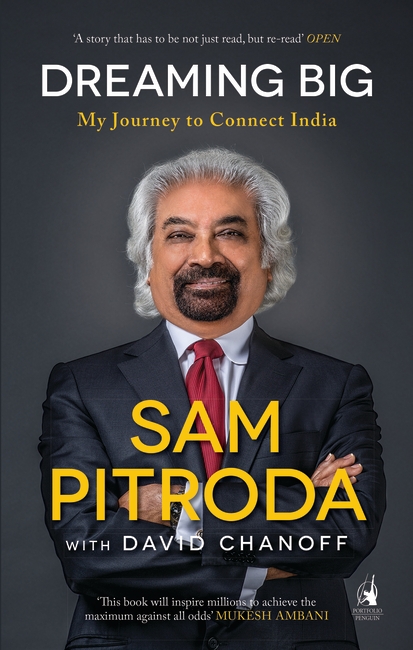
A young man from Titilagarh, Orissa, buoyed by nothing but dreams, boards a boat to America in 1964. There, in the land of opportunity, Satyanarayan Gangaram Pitroda strikes gold in the burgeoning tech space to become the American millionaire Sam Pitroda. Armed with global patents and a vision supported by Prime Minister Rajiv Gandhi, he vows to return home and fix India’s telephone troubles.
Sam Pitroda became synonymous with the bright-yellow PCO/STD booths that sprang up across the country, and was a dynamo in the Congress machinery in the 1980s. But his world came crashing down when he was dealt one blow after the other-a heart attack, false corruption charges and the assassination of his dear friend Rajiv Gandhi. To make matters worse, he realized that he had run out of money.
This is the astonishing and heart-warming story of how one man at the top hits rock bottom-only to rise again and make a bigger dent in the world.
Three Plays

The first of the three extraordinary plays written by Gurcharan Das in his twenties is Larins Sahib, a historical play set in the 1840s — a confused period after the death of Ranjit Singh when the British first arrived in the Punjab. The second play is Mira, which explores what it means for a human being to become a saint through the story of Mirabai, the sixteenth-century Rajput princess-poet. 9 Jakhoo Hill, the third play in this volume, is set in the autumn of 1962 in Simla. It examines a number of themes, including the changing social order with the rise of a new middle class (while the old class foolishly clings on to spent dreams), the hold of Indian mothers on their sons, and the eventual betrayal of sexual hurt. This trio of unusual plays will fascinate readers and theatre buffs alike.