




When Namita is ten, her mother takes her to Dhondutai, a respected Mumbai music teacher from the great Jaipur Gharana. Dhondutai has dedicated herself to music and her antecedents are rich. She is the only remaining student of the legendary Alladiya Khan, the founder of the gharana and of its most famous singer, the tempestuous songbird, Kesarbai Kerkar. Namita begins to learn singing from Dhondutai, at first reluctantly and then, as the years pass, with growing passion. Dhondutai sees in her a second Kesar, but does Namita have the dedication to give herself up completely to music-or will there always be too many late nights and cigarettes? Beautifully written, full of anecdotes, gossip and legend, The Music Room is perhaps the most intimate book to be written about Indian classical music yet
Catagory: Non Fiction
non fiction main category
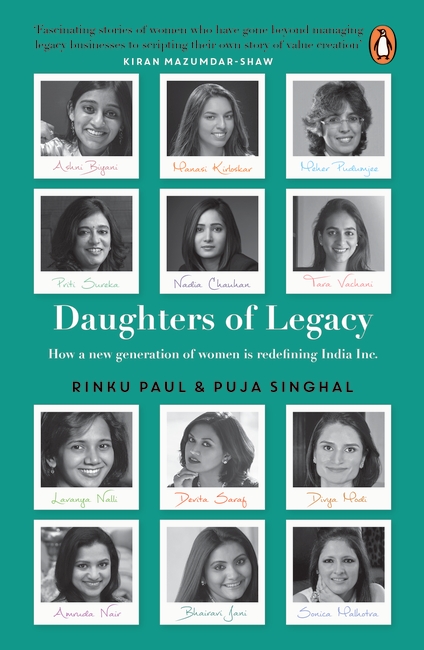
Daughters of Legacy
What are the challenges and perks of handling age-old legacies?
If you come into a position of power through a position of privilege, how do you make sure that you earn respect, more so if you are a woman?
These and many more questions are what Daughters of Legacy seeks to answer through the stories of twelve successful women who grew up with strong business lineages.
While Ashni Biyani, chief ideator, Future Group, looks at herself as a co-creator of the business rather than a just a legacy bearer, Manasi Kirloskar, executive director and CEO, Kirloskar Systems Ltd, admits that she is hugely privileged in inheriting a large business, but also goes on to point out that she could lose everything overnight if she isn’t competent. And Meher Pudumjee’s acceptance as non-executive chairperson of Thermax Global that legacies can sometimes feel like a burden is followed close on the heels by the realization that there is nothing more that one can do except give one’s best.
Chosen from a wide cross section in terms of scale of business, roles and hierarchy these women have not only kept the legacies alive but have also gone on to carve a niche for themselves as individuals beyond their famous last names. Clearly for all of them legacy is far more than mere inheritance.
Kannur
Kannur, a sleepy coastal district in the scenic south Indian state of Kerala, has metamorphosed into a hotbed of political bloodshed in the past few decades. Even as India heaves into the age of technology and economic growth, the town has been making it to the national news for horrific crimes and brutal murders with sickening regularity.
What makes this region so susceptible to vendetta politics and such deadly violence? How is it an anomaly in Kerala, the state with the highest social development parameters in India? Born in Kannur and brought up amidst some of the tallest political leaders of the state, author Ullekh N.P. delves into his personal experiences while drawing a modern-day graph that charts out the reasons, motivations and the local lore behind the turmoil. He analyses the numbers that lay bare the truth behind the hype, studies the area’s political and cultural heritage, and speaks to the main protagonists and victims. With his journalistic skills and years of on-the-field reporting, he paints a gripping narrative of the ongoing bloodbath and the perceptions around it.
Ullekh’s investigations and interviews reveal a bigger game at work involving players who will stop at nothing to win.
Today’s Pasts: A Memoir
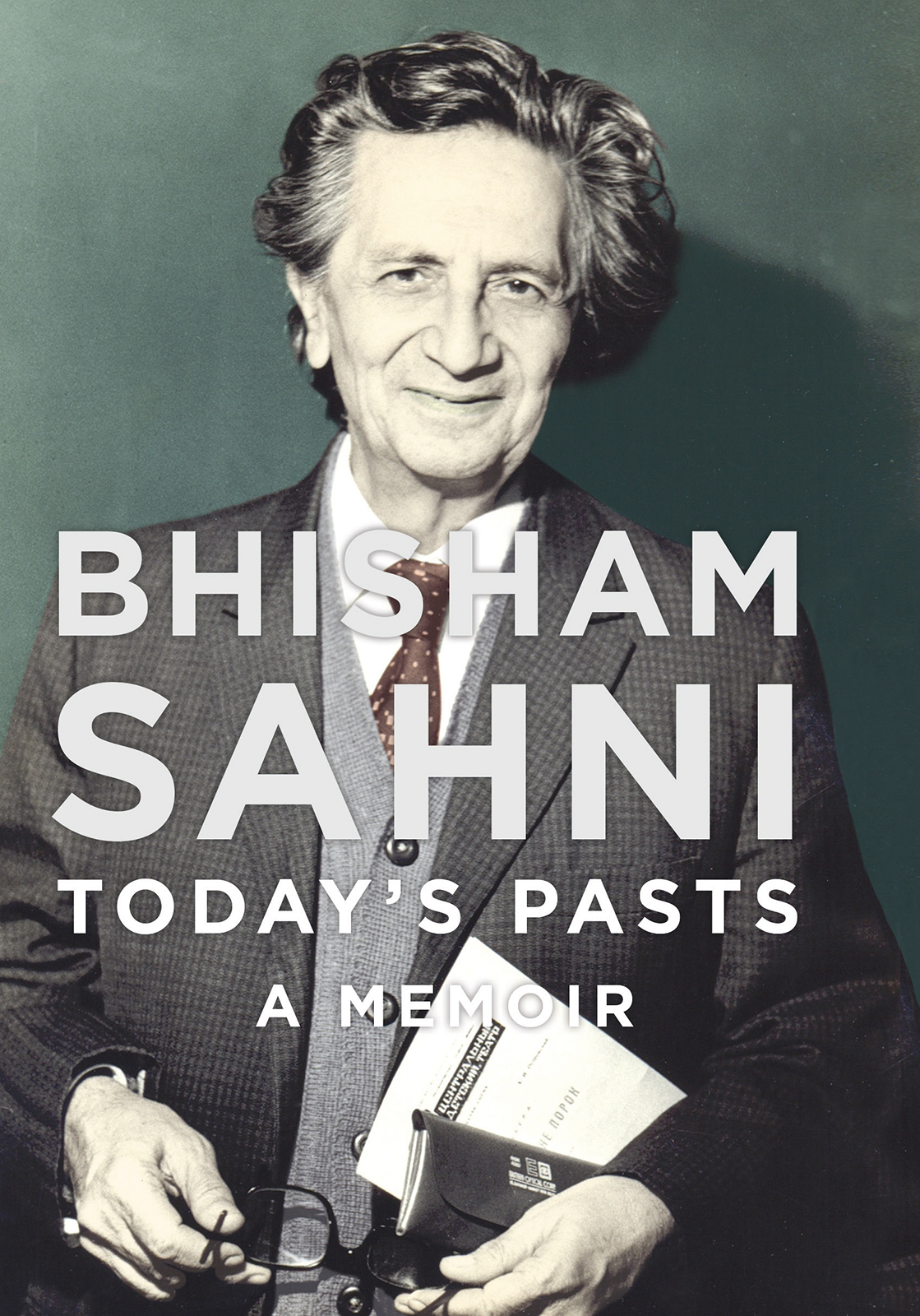
Rawalpindi in the first few decades of the twentieth century is a prosperous, bustling town, witnessing the first stirrings of the freedom movement. It is in this place and time that a delicate child grows into adolescence, at the heart of an unusual family. Adulthood and the horrific business of Partition drive the young man to Bombay, then Ambala and finally Delhi. As he gathers life experience and hones his talent at writing, his politics are formed. We observe the making of one of the icons of modern Hindi literature: Bhisham Sahni.
In addition to being the story of Sahni’s life and art, Today’s Pasts also chronicles the great cultural highpoints of modern India: the IPTA, the Progressive Writer’s Association, the Nayi Kahani movement. The stars of Hindi and Urdu literature enter and exit the text as friends and familiars.
In Bhisham Sahni’s hands a life story is transformed into a history of our present: one life bears witness to the tale of a nation.
Master Growth Hacking
How did Hotmail amass 30 million active members before getting acquired?
How did Netflix build a user base of over 125 million worldwide?
How did Facebook acquire more than 2 billion users?
The answer is simple: Growth hacking.
Growth hacking is a combination of coding, data intelligence and marketing. It doesn’t take a lot of investment-just a whole lot of creativity, smart data analysis and agility. It has now emerged as the preferred term for growth used by start-ups and entrepreneurs in India and across the world-the new mantra they swear by, but don’t want you to learn about.
Full of riveting stories, Master Growth Hacking lets you learn from the pioneers of the field in India. The book includes interviews with the founders of Zomato, IndiaMART, ShopClues, UrbanClap, Paisabazaar, Furlenco, FusionCharts, WittyFeed, UpGrad and a lot more.
For further details, visit: www.mastergrowthhacking.com
Reva Ev
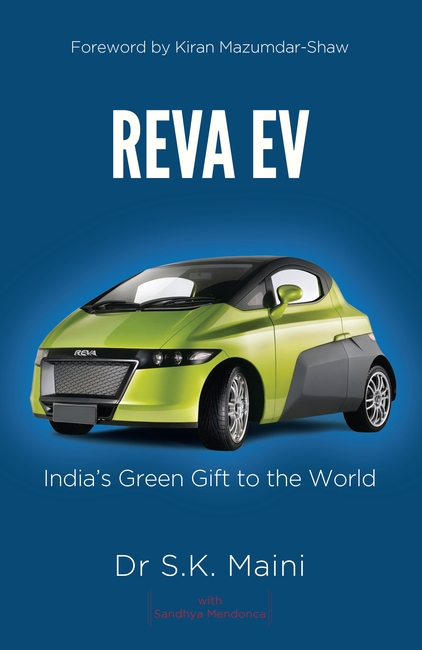
To counter seas of cars, rising petrol prices, and snarling traffic—Reva Electric Vehicle is India’s offering to the world in the shape of a zero emission, green mobility option.
Dr Maini recounts the story of Reva—India’s first commercial electric vehicle—from the inception, ideation, designing the car to taking it to the world. It is a story coloured with hope, determination, disappointment, success, and jubilation—it is the passion for making green commuting a viable possibility come alive in these pages from Reva’s journey.
It is the story of a team that believed in its products against all odds. A story of many firsts, this book is an immortal account of India soundly on the forefront of electric vehicle movement with this unique car.
Disrupt and Conquer
The TTK Group was founded in 1928 in Chennai (then Madras) by T.T. Krishnamachari, who later became a Union minister and held the portfolios of finance, industry and commerce for close to fifteen years.
In this book, the current chairman T.T. Jagannathan, along with Sandhya Mendonca, takes us through the journey of this extraordinary company which fought off bankruptcy and rose like a phoenix to become a highly profitable, successful entity.
Like a phoenix, the group and its constituent companies, have risen from the ashes, many times over, to stand tall and proud. This is the story of a journey that began with early success and experienced catastrophic disasters, and set about turning its fortunes around in stunning comebacks, time and again.
With invaluable business lessons, decades of experience and innovation distilled in these pages, Disrupt and Conquer is a must-read for aspiring entrepreneurs, executives and business leaders.
Ninety-Seven Poems

This is a book of pictures.
Of a park bench and a prescription. And a toothbrush in a mug. It’s got half-lit cigarettes and broken geysers. And a cute apartment in Prague. There’s a fortune cookie, some pigeons in cages and stars tumbling from the sky. There’s the usual traffic, a digital wristwatch and a violin from Uncle James.
We can go on, but you’d rather see for yourself.
For we think this book has pictures.
But some say it’s full of poems.
After their first bestseller, Terribly Tiny Tales and Penguin come together on the same page once again.
Feminist Rani
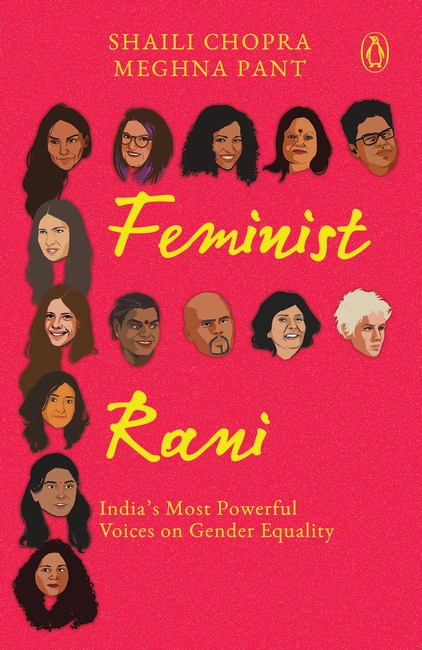
Feminist Rani is a collection of interviews with path-breaking and fascinating opinion leaders–Kalki Koechlin, Tanmay Bhatt, Gul Panag, Aditi Mittal, Gauri Sawant, and many more. These are women and men who have advocated gender equality and women’s rights through their work. These compelling conversations provide a perspective on the evolving concept of feminism in an age when women are taking charge and leading the way.
India and the World
What is the earliest evidence of human history in India and how does that compare with other parts of the world? What was happening in India when the pyramids were being built in Egypt? What was different about Ashoka’s inscriptions when compared with the public inscriptions of other emperors? How have different civilizations pictured the divine? How did rulers promote themselves through grand court art and aesthetics? What have been the routes of civilizational exchange over land and sea that make India a part of the world? And have those exchanges always been peaceful? How have different countries and communities articulated their quest for freedom in recent history? Does everyone in the world perceive history and time in the same way?
Objects-be they coins, sculptures, documents or paintings-tell rich stories. India & the World accompanies a collaborative exhibition that creates dialogues between the world and India through a fascinating array of artefacts. On the one hand they reveal how different people have responded to situations in their own way, and on the other, they provide an understanding of the complex panorama of a deeply interconnected global history.