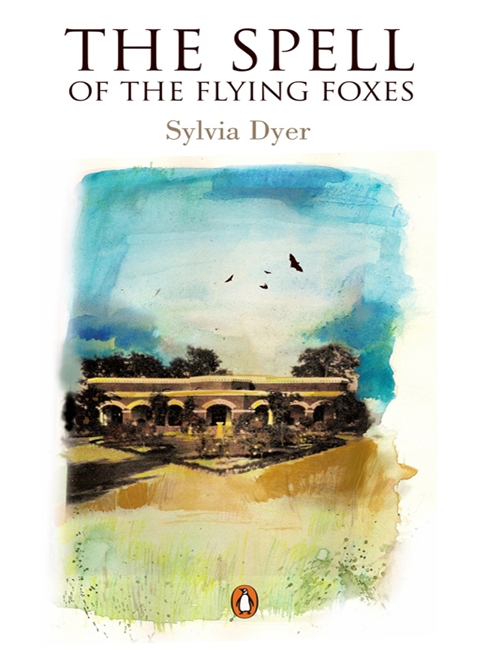
Champaran, 1845. Drawn to the rich, fertile land to farm Blue Gold, indigo, Alfred Augustus Tripe settles by the river Baghmati. A whole village of workers emerges nearby as Tripe starts a family with an Indian heiress. Nearly a century later, Tripe’s sprawling home and most of his family are destroyed in the devastating Bihar earthquake of 1934. Now his only granddaughter, Gladys, must find a way to stop her unscrupulous cousin Harry from usurping her entire inheritance and turning her young children destitute. A formidable dacoit leader miraculously comes to her rescue, India gains independence, and the flying foxes, the bearers of good fortune, disappear.
In sparkling, lyrical prose, Sylvia Dyer, Gladys’s daughter, brings to life a world of picturesque beauty, love and hope intertwined with social ills, and a time when the passionate freedom struggle threatened the very existence of Anglo-Indians in India.

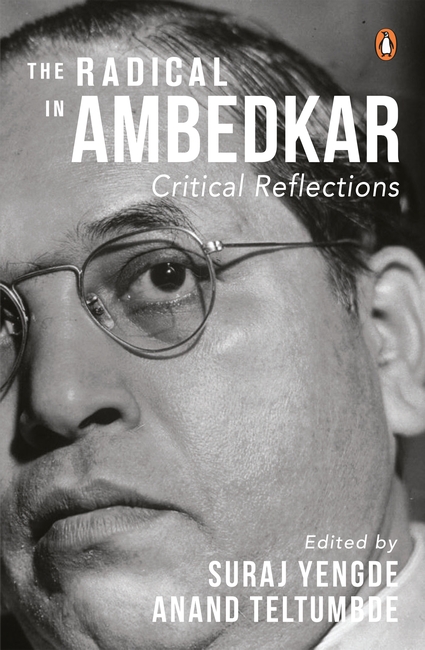
This landmark volume, edited and introduced by Anand Teltumbde and Suraj Yengde, establishes B.R. Ambedkar as the most powerful advocate of equality and fraternity in modern India. While the vibrant Dalit movement recognizes Ambedkar as an agent for social change, the intellectual class has celebrated him as the key architect of the Indian Constitution and the political establishment has sought to limit his concerns to the question of reservations. This remarkable volume seeks to unpack the radical in Ambedkar’s legacy by examining his life work from hitherto unexplored perspectives.
Although revered by millions today primarily as a Dalit icon, Ambedkar was a serious scholar of India’s history, society and foreign policy. He was also among the first dedicated human rights lawyers, as well as a journalist and a statesman. Critically evaluating his thought and work, the essays in this book-by Jean Drèze, Partha Chatterjee, Sukhadeo Thorat, Manu Bhagavan, Anupama Rao and other internationally renowned names-discuss Ambedkar’s theory on minority rights, the consequences of the mass conversion of Dalits to Buddhism, Dalit oppression in the context of racism and anti-Semitism, and the value of his thought for Marxism and feminism, among other global concerns.
An extraordinary collection of immense breadth and scholarship that challenges the popular understanding of Ambedkar, The Radical in Ambedkar is essential reading for all those who wish to imagine a new future.

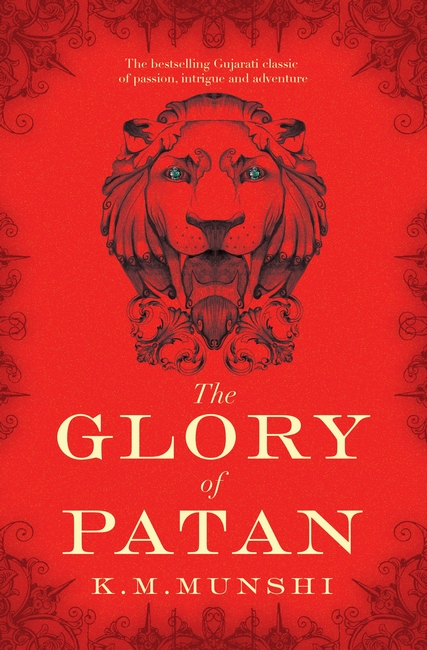
The kingdom of Patan faces an ominous future. King Karnadev lies on his deathbed. His son, Jaydev, is too young to ascend the throne. Rumours abound of scheming warlords intent on establishing their own independence and powerful merchants plotting to wrest control from Patan Fort. There is also the shadowy monk Anandsuri and his vision to unite Patan under one religion: Jainism.
In the eye of this gathering storm are Queen Minaldevi and the shrewd chief minister Munjal Mehta. Both have striven to maintain order in Patan and ensure that Jaydev’s succession is secure. But the attraction between them is threatened by betrayal and intrigue, with dramatic consequences for the future of Patan.
A sprawling, fast-paced saga in the oeuvre of Alexandre Dumas, The Glory of Patan is the first book in an epic trilogy about the exploits of the magnificent Chalukya dynasty at a crucial period in the history of Gujarat.

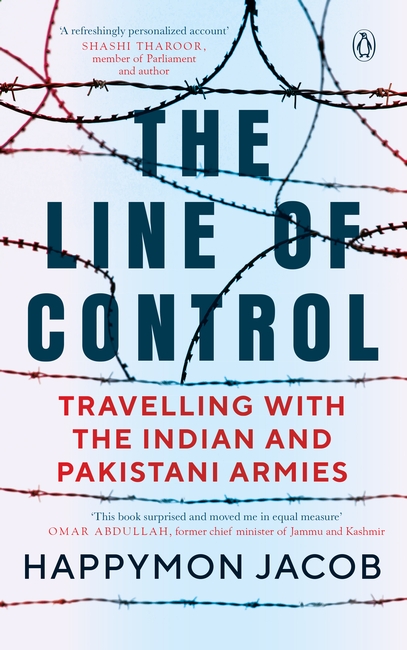
Happymon Jacob was given the unique opportunity to see the border between India and Pakistan from both sides. He travelled with the armies of both countries and could study what is effectively the ground zero-the location where entrenched animosities as well as sudden surges of comradeship are enacted. This is one of the most fortified places on the planet.
Jacob writes, ‘I was keen on getting into their world, the world of men in uniform, fighting each other and yet respecting each other. It was a curious world. It had breath-taking adventure, mind blowing stories and unforgettable heroism. I loved it, and I was welcome.’
This vividly told, fast paced narrative brings the border area to life. Jacob was given unprecedented access by the Indian and Pakistani armies and he explores how the border is seen-both in the popular imagination and by those who exist in its shadow. He chronicles the lives of civilians and soldiers, their courage and resilience in the face of constant danger and the extraordinary similarities between the two sides.

Don’t Lose Your Mind, Lose Your Weight has revolutionized the way Indians think about food and their eating habits. Funny, easy to read and full of great advice, it argues that we should return to our traditional eating roots (yes, ghee is good for you), nutrients are more important than calories (cheese over biscuits) and, most importantly, the only way to lose weight is to keep eating. In the ten-year anniversary edition of this classic, read about the simple steps you can take towards maintaining a healthy and proper diet and understanding your body and its nutritional requirements.

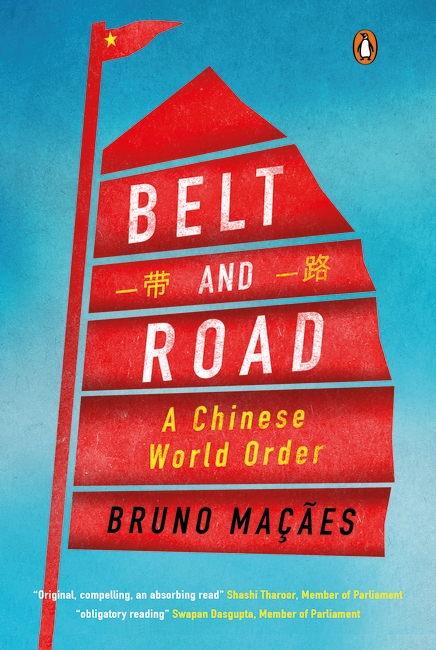
China’s Belt and Road strategy is acknowledged to be the most ambitious geopolitical initiative of the age. Covering almost seventy countries by land and sea, it will affect every element of global society from shipping to agriculture, digital economy to tourism and politics to culture. Most importantly, it symbolizes a new phase in China’s ambitions as a superpower: to remake the world economy and crown Beijing as the new centre of capitalism and globalization.
Bruno Macaes traces this extraordinary initiative’s history, highlighting its achievements to date and its staggering complexity. He asks whether Belt and Road is about more than power projection and profit. Will it herald a new set of universal political values, to rival those of the West? Is it, in fact, the story of the century?

Looking out of my corner fourth-floor office with a full-frontal view, across First Avenue of the headquarters of the United Nations with the flags of the 193 member states fluttering majestically, I was reminded ever so often of what Bertrand Russell said: ‘The trouble with the world is that the stupid are cocksure and the
intelligent are full of doubt.’
Many democratically elected leaders of the twenty-first century have displayed streaks of recklessness, megalomania, bizarre self-obsession and political views that are difficult to characterize. This book studies the actions of these contemporary political leaders and covers Brexit, the election of Donald Trump, the rise of the BJP under Prime Minister Narendra Modi and decision-making with respect to global governance, terrorism
and trade. It brings to light the fact that at the heart of delusional politics is perhaps the delusional politician.
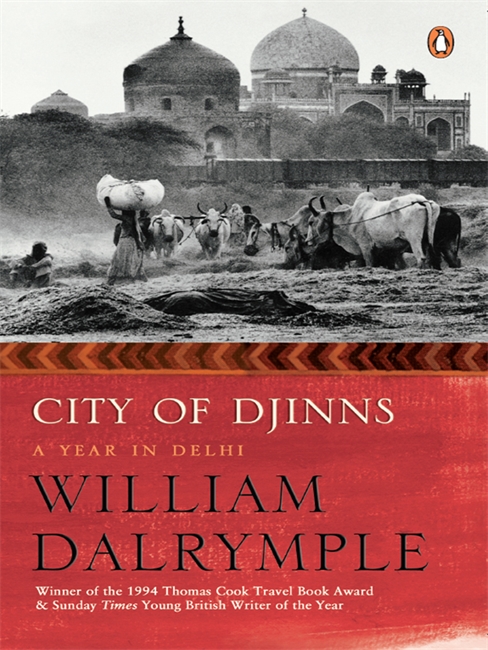
Winner of the 1994 Thomas Cook Travel book Award and Sunday Times Young British Writer of the Year -Dalrymple is probably the best travel writer of his generation'”Daily Mail -As the author of the best travel book of recent years at the intensely irritating age of twenty-two, William Dalrymple has now shown that In Xanadu was no fluke. City of Djinns is an entertaining mix of history and diary informed by a deep curiousity about the ways in which the ghosts of even the most distant past still walk in the twentieth century.'”Christopher Lockwood, Daily Telegraph -Dalrymple has pulled it off again – At a time when the book of travels is beginning to lose its fashionable allure, City of Djinns is not really a travel book at all. It is a kind of memoir recording the response of a single, gentle, merry and learned mind to the presence of an ancient city … Dalrymple is anything but avoyeur. Even his excursions into the world o the eunuchs are conducted with a kind of grave innocence. He is more a pilgrim than an observer, always trying to understand – It is the work of a man who has consciously chosen to commit himself to the profession of letters, and in it we see the first fine rapture of In Xanadu deepening to a profounder dedication – hours and hours of pleasure for his readers.'”Jan Morris, Independent -One one level there are the amusing rites of passage, the struggles with bureaucracy, the eccentricity of Dalrymple’s landlord, all entertainingly related. Dalrymple has a way of letting you smell and feel the city. There are beautifully chiselled descriptions of a grand capital – but much of the book’s strength lies in Dalrymple’s skill in peeling the historical onion and showing how (the) New Delhi resonates with the old – A splendid tapestry.'”Trevor Fishlock, Sunday Telegraph -A sympathetic and engaging portrait of this age-old city'”Nicholas Wordsworth, Financial Times -Scholalry and marvellously entertaining – A considerable feat.'”Dervia Murphy, Spectator -Unlike much of modern travel writing [City of Djinns] is informative, learned and funny – a lively and sometimes profound book.'”Emma duncan, Economist -An expansive and inclusive work, richly peopled – an enlightening and entertaining book.'”Iain Wetherby, Literary Review.

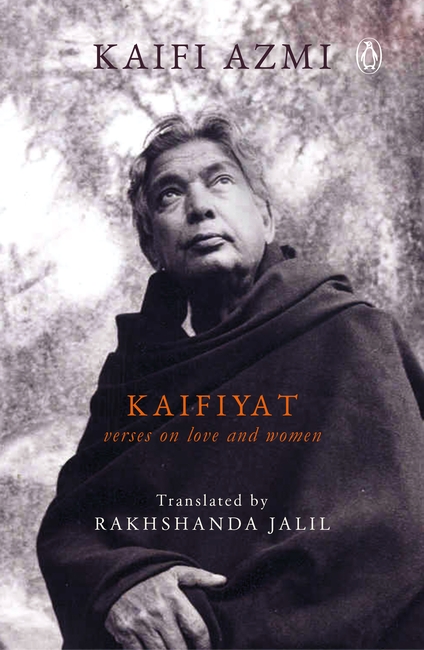
Kaifi Azmi’s literary legacy remains a bright star in the firmament of Urdu poetry. His poetic temperament-ranging from timeless lyrics in films like Kagaz Ke Phool to soaring revolutionary verses that denounced tyranny-seamlessly combined the radical and the progressive with the lyrical and the romantic.
Love and romance, in fact, run like warp through the woof of politics and protest in Kaifi’s poetry. This beautifully curated volume brings together poems and lyrics that reflect Kaifi’s views on women and romance-from sweetly lyrical odes like ‘The First Greeting’ to the powerful, anthem-like ‘Woman’; from the haunting ‘Regret’ to the mercurial ‘She of Many Faces’. These stunning verses conjure a dynamic portrait of womanhood as seen through the eyes of an exquisitely gifted poet.
This scintillating new translation is accompanied by an illuminating introduction by Rakhshanda Jalil on Kaifi Azmi’s life and legacy, as well as a moving foreword by his daughter Shabana Azmi.
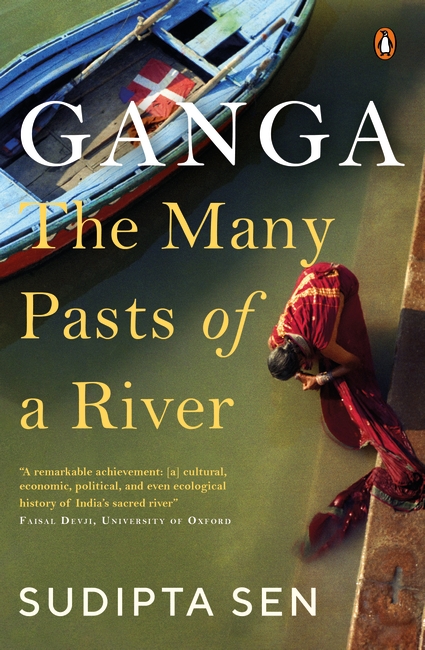
The Ganga enjoys a special place in the hearts of millions. In this unprecedented work, historian Sudipta Sen tells the fascinating story of the world’s third-largest river from prehistoric times to the present.
Sen begins his chronicle with the river’s first settlers, its myths of origin in Hinduism and its significance in popular Buddhism. He traces the communities that arose on its banks, the merchants that navigated its waters and the many empires that shaped the river’s identity. Seamlessly weaving together geography, ecology and religious history, this lavishly illustrated volume paints a remarkable portrait of India’s most sacred and beloved river.