



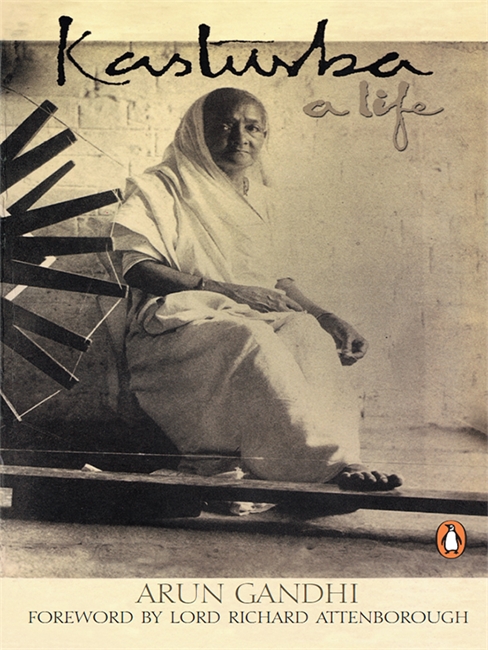
‘I LEARNED THE LESSON OF NONVIOLENCE FROM MY WIFE. HER DETERMINED RESISTANCE TO MY WILL ON THE ONE HAND, AND HER QUIET SUBMISSION IN THE SUFFERING MY STUPIDITY INVOLVED ON THE OTHER HAND, ULTIMATELY MADE ME ASHAMED OF MYSELF AND CURED ME OF MY STUPIDITY’ —GANDHI
Kastur Kapadia was betrothed to Mohandas Gandhi when they were both just seven years old. The couple married when they were thirteen and Kastur had five children, the first of whom was born when she was sixteen.
Together Gandhi and Kastur laid the foundations for the movement of nonviolence to which they devoted their lives. When Gandhi was imprisoned, Kastur was often jailed with him. No obstacle was too great for this extraordinary woman who gave up a life of comfort for one of utter poverty. When Kastur died, the whole nation wept for the woman the people called simply ’Ba’ … Mother.
Kasturba: A Life is the result of a lifetime of research by Arun Gandhi, grandson of the Mahatma and Kasturba. As well as recounting historical events behind the birth of a nation, it is also a love story, which ended with the terrible tragedy of Gandhi’s assassination in New Delhi in 1948.
Until now, Gandhi’s biographers have dwelled upon his legend. This biography is the powerful story of two human beings, triumphing together against overwhelming odds.
Catagory: Non Fiction
non fiction main category
Jugaad 3.0
This book will prove that every organization’s best chance, to survive and become better than ever, lies within itself. Against the decidedly progressive, action-oriented, and above all restless backdrop of disruption, the DNA of established business is starting to realign. It’s the beginning of a groundswell that has started to make lean entrepreneurship a core competency within big business.
Based on hundreds of interviews, as well as the author’s consulting work within companies, Jugaad 3.0 Hacking the Corporation identifies the competencies these corporate hackers possess. It also offers a spectrum of carefully crafted archetypes to help people see themselves in this trend and allow organizations identify the innovators in their midst.
No Full Stops In India
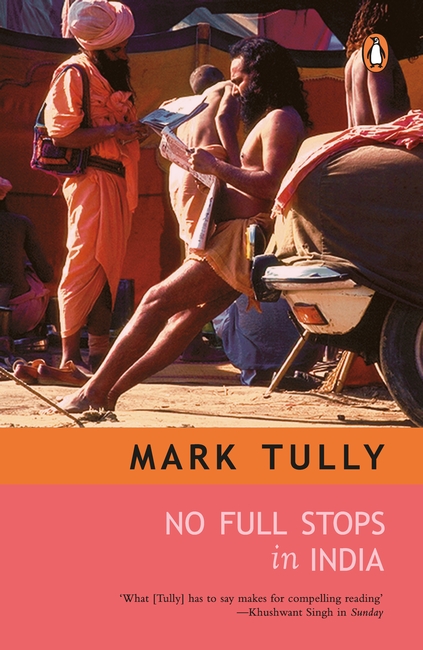
India’s Westernized elite, cut off from local traditions, ‘want to write a full stop in a land where there are no full stops’. From that striking insight Mark Tully has woven a superb series of ‘stories’ which explore Calcutta, from the Kumbh Mela in Allahabad (probably the biggest religious festival in the world) to the televising of a Hindu epic. Throughout, he combines analysis of major issues with a feel for the fine texture and human realities of Indian life. The result is a revelation.
‘The ten essays, written with clarity, warmth of feeling and critical balance and understanding, provide as lively a view as one can hope for of the panorama of India.’ K. Natwar-Singh in the Financial Times
The Tiger and the Ruby
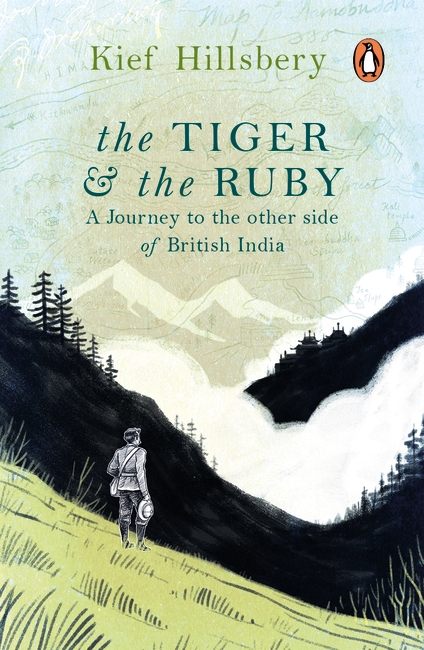
In 1841, Nigel Halleck left Britain as a clerk in the East India Company. He served in the colonial administration for eight years before leaving his post, eventually disappearing in the mountain kingdom of Nepal, never to be heard from again.
A century-and-a-half later, Kief Hillsbery, Nigel’s nephew many times removed, sets out to unravel the mystery. Tracing his ancestor’s journey across the subcontinent, his quest takes him from Lahore to Calcutta, and finally to the palaces of Kathmandu. What emerges is an unexpected personal chapter in the history of the British Empire in India.
The Shape of the Beast
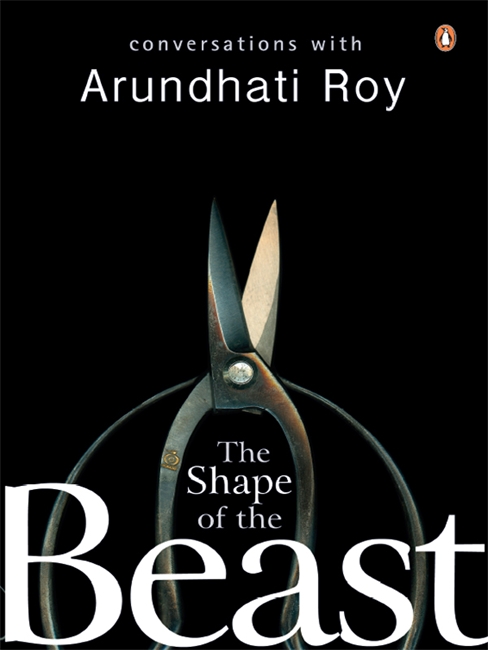
The Shape of the Beast is our world laid bare, with great courage, passion and eloquence, by a mind that has engaged unhesitatingly with its changing realities, often anticipating the way things have moved in the last decade. In the fourteen interviews collected here, conducted between January 2001 and March 2008, Arundhati Roy examines the nature of state and corporate power as it has emerged during this period, and the shape that resistance movements are taking. As she speaks, among other things, about people displaced by dams and industry, the genocide in Gujarat, Maoist rebels, the war in Kashmir and the global War on Terror, she raises fundamental questions about democracy, justice and non-violent protest. Unabashedly political, this is also a deeply personal collection. Through the conversations, Arundhati talks about the necessity of taking a stand, as also the dilemma of guarding the private space necessary for writing in a world that demands urgent, unequivocal intervention. And in the final interview, she discusses with uncommon candour her ambiguous feelings about success and both the pressures and the freedom that come with it.
An Ordinary Person’s Guide To Empire
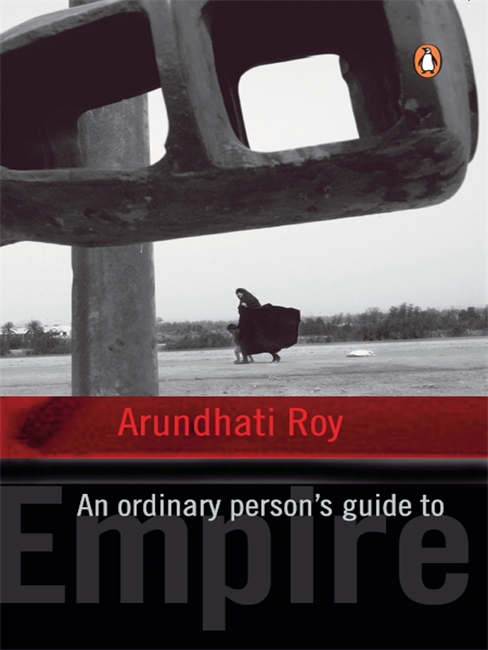
In her Ordinary Person’s Guide, Roy’s perfect pitch and sharp scalpel are, once again, a wonder and a joy to behold. No less remarkable is the range of material subjected to her sure and easy touch, and the surprising information she reveals at every turn’— Noam Chomsky This second volume of Arundhati Roy’s collected non-fiction writing brings together fourteen essays written between June 2002 and November 2004. In these essays she draws the thread of empire through seemingly unconnected arenas, uncovering the links between America’s War on Terror, the growing threat of corporate power, the response of nation states to resistance movements, the role of NGOs, caste and communal politics in India, and the perverse machinery of an increasingly corporatized mass media. Meticulously researched and carefully argued, this is a necessary work for our times. ‘The scale of what Roy surveys is staggering. Her pointed indictment is devastating’— New York Times Book Review ‘She raises many vital questions [in this book], which we can ignore only at our peril’— Statesman ‘With fierce erudition and brilliant reasoning, Roy dwells on Western hypocrisy and propaganda, vehemently questioning the basis of biased international politics’— Asian Age ‘Whether you agree with her or disagree with her, adore her or despise her, you’ll want to read her’— Today ‘Reading Arundhati Roy is how the peace movement arms itself. She turns our grief and rage into courage’— Naomi Klein
Walking with the Comrades
‘The terse, typewritten note slipped under my door in a sealed envelope confirmed my appointment with “India’s single biggest internal security challenge”. I’d been waiting for months to hear from them…’ In early 2010, Arundhati Roy travelled into the forests of Central India, homeland to millions of indigenous people, dreamland to some of the world’s biggest mining corporations. The result is this powerful and unprecedented report from the heart of an unfolding revolution.
Walking with the Comrades

‘The terse, typewritten note slipped under my door in a sealed envelope confirmed my appointment with “India’s single biggest internal security challenge”. I’d been waiting for months to hear from them…’ In early 2010, Arundhati Roy travelled into the forests of Central India, homeland to millions of indigenous people, dreamland to some of the world’s biggest mining corporations. The result is this powerful and unprecedented report from the heart of an unfolding revolution.
Wise & Otherwise
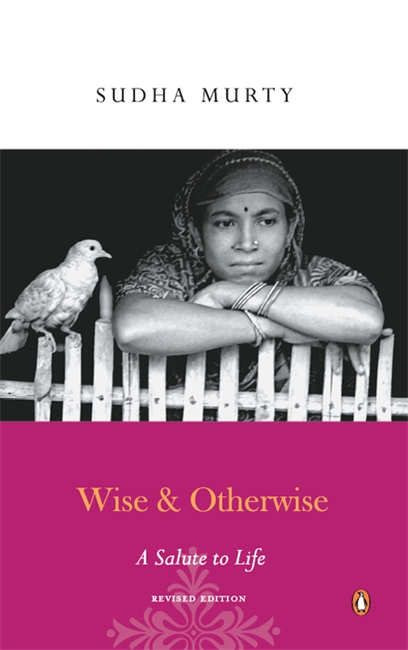
Fifty vignettes showcase the myriad shades of human nature A man dumps his aged father in an old-age home after declaring him to be a homeless stranger, a tribal chief in the Sahyadri hills teaches the author that there is humility in receiving too, and a sick woman remembers to thank her benefactor even from her deathbed. These are just some of the poignant and eye-opening stories about people from all over the country that Sudha Murty recounts in this book. From incredible examples of generosity to the meanest acts one can expect from men and women, she records everything with wry humour and a directness that touches the heart.
First published in 2002, Wise and Otherwise has sold over 30,000 copies in English and has been translated into all the major Indian languages. This revised new edition is sure to charm many more readers and encourage them to explore their inner selves and the PBI – World around us with new eyes.
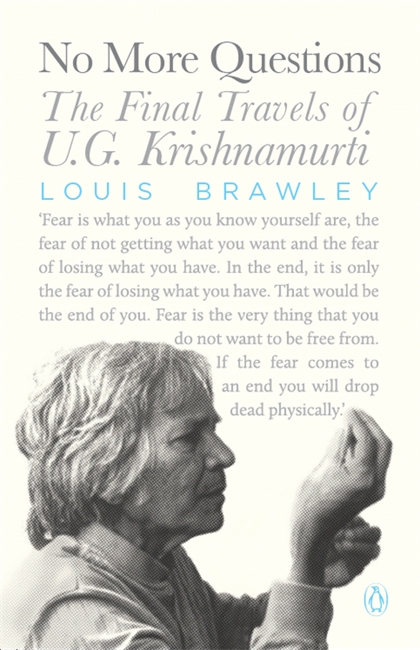
No More Questions
The way he lived, his living quarters and his mode of expression were one continuous movement, a three dimensional, living book of teaching.’
Louis Brawley met U.G. Krishnamurti or UG in 2002 and spent the following five years travelling with him in the USA, India and Europe. He soon became the foil to UG’s bizarre interactions with his friends and audience and, as UG’s health deteriorated, his informal caregiver. No More Questions chronicles Louis’s life with this remarkable ‘non-teacher’.
As much a story of Louis’s own struggles and shortcomings as that of sage and devoted follower, the book describes how his ideas about life, love and enlightenment were tossed around and demolished by UG. Out of this churning a layered portrait emerges of the man who gave up everything for truth but delighted in ridiculous fabrications; one who mocked do-gooders but was deeply kind, who decried the supernatural, yet strange coincidences happened around him.