



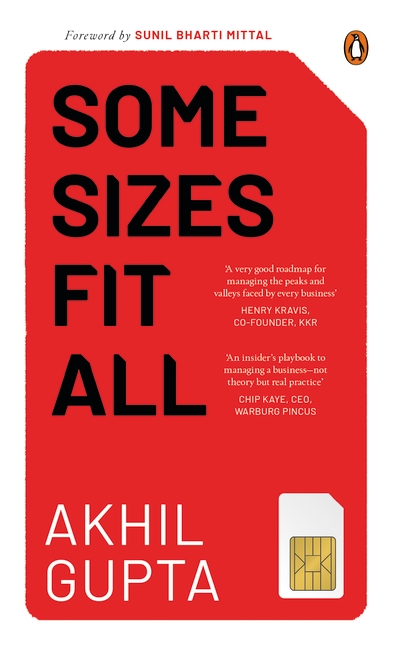
An oft-repeated dictum every time a company fails to replicate its past successes when introducing a new product or entering a new market is that one size does not fit all. Business gurus advise that every new situation, market and environment calls for a fresh approach and requires ‘unlearning’ what one might have learnt elsewhere, even if that had met with great success. While this statement may appear to be obvious, it is often quoted out of context. The fact is that certain fundamentals of business-irrespective of line of business, geography or scale-are universally applicable.
Some Sizes Fit All is an attempt to explain these fundamental pillars for any kind of business. An authentic and lucid presentation of management concepts and practices-which Akhil Gupta has tried and tested first hand through his illustrious career-this is a must-read for anyone trying to build a robust and financially sound business.
Catagory: Non Fiction
non fiction main category
Poetry of Protest

The world has erupted in a groundswell of protests in the last few decades: against authoritarian rule, the stranglehold of global capitalism and rising injustice. Some of these have led to regime or policy change, others to war and mass displacement. Protesters have turned time and again to poetry for it is words alone that can spread the spirit of resistance and offer release from the grip of tyranny.
This specially curated volume brings together some of the best known poetry to have been written against different kinds of oppression from around the globe. Featuring voices as diverse as Anna Akhmatova from the erstwhile USSR to Rabindranath Tagore in India, Pablo Neruda in Chile to Mahmoud Darwish in Palestine, Maya Angelou in the US to Bei Dao in China, Poetry of Protest celebrates the innate tenacity of human beings to defend freedom, equality and dignity.
Not Many, But One Volume I
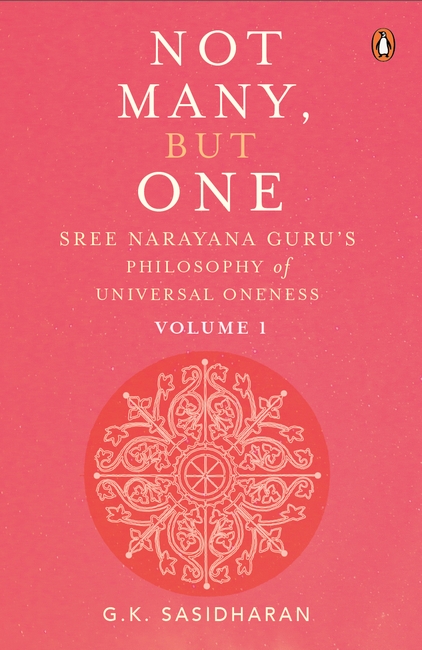
Sree Narayana Guru (1855-1928) was a spiritual leader and social reformer who led powerful movements to promote social equality. Not Many, But One brings together his work in two rich volumes of translation and interpretation, pieced together for a modern readership.
In Volume 1, we see Sree Narayana Guru’s philosophy of Advaita. He foresees the potential and the need for a new approach to science and technology. As a result, he discovered new dimensions of Advaita and revived it in a manner that suited the most sophisticated developments in physics and modern cosmology. This volume is a study of the works and teachings of Sree Narayana Guru on a spiritual and scientific footing. In his work, one can see a deep-rooted correlation of Advaita and quantum cosmology. The translations, explanations and commentary given are simple and conceivable by ordinary readers who may not be well equipped to grasp the complexities of the intuitional spiritual findings of Advaita and hypothetic conclusions of quantum physics-but without compromising on the authenticity of the works.
Vedic philosophers, physicists, cosmologists and enthusiasts of science and spirituality will appreciate this enterprising effort-though with limitations-in bringing closer two hitherto uncompromising schools of thought. The devotees of Sree Narayana Guru will find an opportunity to delve deeper into his work.
Not Many, But One Volume II

Sree Narayana Guru (1855-1928) was a spiritual leader and social reformer who led powerful movements to promote social equality. Not Many, But One brings together his work in two rich volumes of translation and interpretation, pieced together for a modern readership.
In Volume 2, we see how Sree Narayana Guru revived the Advaita philosophy. The book also focuses on the correlation between the teachings of Advaita, the conclusions of modern physics and cosmology, and how Advaita reveals the complex secrets of the universe. It explains the theoretical, observational and experimental findings given by science about the origin, evolution, existence and future of our universe. Volume 2 also explores the Big Bang theory, the inflation theory, the role of dark matter and dark energy, the concept of space and time, the anthropic principle, supersymmetry, spontaneous symmetry breaking, string theory and other latest avenues of modern science. The translations, explanations and commentary given are simple and conceivable by ordinary readers who may not be well equipped with the complexities of intuitional spiritual findings of Advaita and hypothetic conclusions of quantum physics-but without compromising on the authenticity of the works.
Vedic philosophers, physicists, cosmologists and enthusiasts who love science and spirituality will appreciate this enterprising effort – though with limitations – in bringing closer the two hitherto uncompromising schools of thought. The devotees of Sree Narayana Gurudev will find an opportunity to go deeper into his works.
Memory of Light
SHORTLISTED FOR THE TATA LITERATURE LIVE! AWARD FOR FICTION 2020
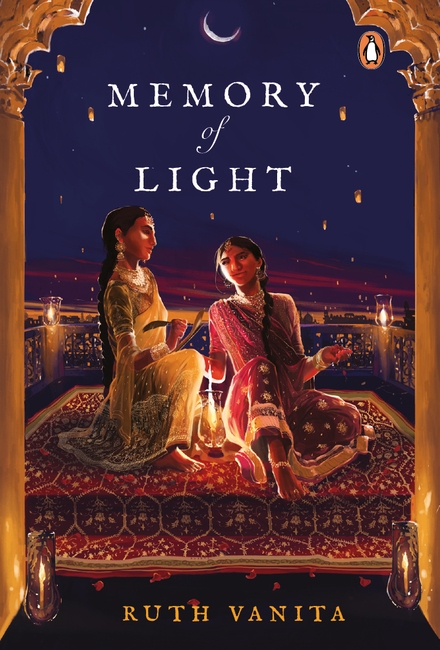
Preparations for King George the Third’s fiftieth birthday gala are in full swing in Lucknow. As poets and performers vie to be part of the show, Chapla Bai, a dazzling courtesan from Kashi, briefly enters this competitive world, and sweeps the poet Nafis Bai off her feet. An irresistible passion takes root, expanding and contracting like a wave of light. Over two summers, aided by Nafis’s friends, the poets Insha and Rangin, and Sharad, himself in love with a man, they exchange letters and verses, feeding each other the heady fruit of desire. When Chapla leaves for home, they part with the dream of building a life together. Can their relationship survive the distances?
Narrated in the voice of Nafis, Memory of Light weaves an exquisite web of conversations, songs, reminiscences around a life-changing love.
The Lost Generation
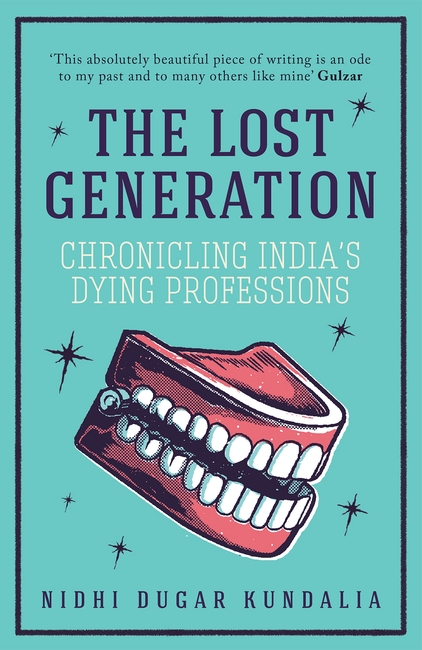
A Haridwar pandit who maintains genealogical records of families for centuries; a professional mourner who has mastered the art of fake tears; a letter writer who overlooks the lies that a sex worker makes him write to her family back home.
These are remnants of an India that still exist in its old streets and neighbourhoods, an unshakeable sense of belonging to a time that was the everyday life of our ancestors. In The Lost Generation, Nidhi Dugar Kundalia narrates the unforgettable stories of eleven professionals-from the hauntingly beautiful rudaalis to the bizarre tasks of a street dentist-uncovering the romance, tragedy and old-world charm of India’s ageing bylanes and its incredible living history.
India 2020
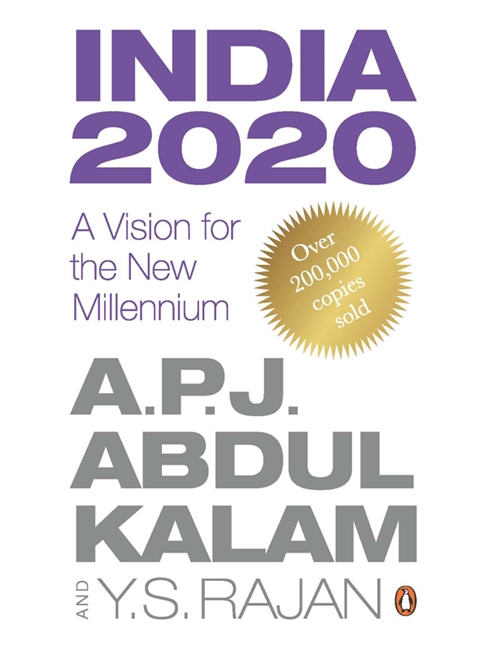
‘A book of dreams rooted in reality’ Indian Express
In this ground-breaking vision document, first published in 1998, Dr A.P.J. Abdul Kalam and Y.S. Rajan offer a blueprint for India to be counted among the world’s top five economic powers by the year 2020. They cite growth rates and development trends to show that the goal is not unrealistic. Past successes—the green revolution and satellite-based communication linking remote regions of the country, for instance-bear them out. The same sense of purpose can make us a prosperous, strong nation in a matter of years, assert Kalam and Rajan.
This is a book that every citizen who hopes for a better India must read.
‘Combines the ideas of a visionary, the expertise of a great planner and the considered recommendations of some of India’s best technology experts’ Businessworld ‘This is no ordinary book . . . It should be in all libraries and on the desk of everyone who dreams about the future of India’ Tribune
Same-sex Love in India
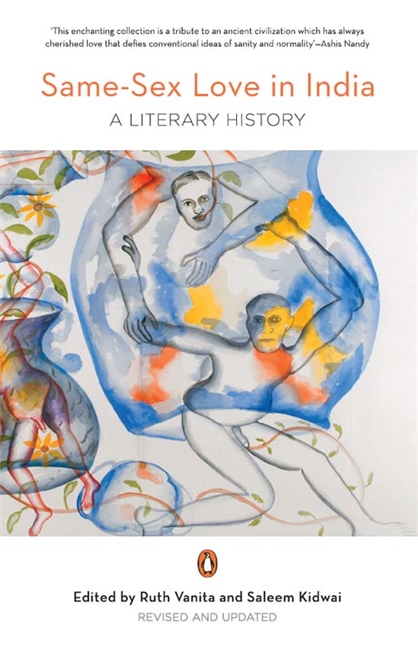
In 2009, the Delhi High Court’s historic judgment overturning Section 377 as violative of the Indian Constitution referred to Same-Sex Love in India. So did the 2018 Supreme Court decision which upheld that judgment. All the petitions against this anti-sodomy law have cited this landmark book to prove that homosexuality is not a Western import.
Same-Sex Love in India is the book that brought to light the long, incontestable history of same-sex love and desire in the Indian subcontinent. Covering over 2000 years, from the Mahabharata to the late twentieth century, the book contains excerpts from stories, poems, letters, biographies and histories in fifteen languages. The editors’ introductions to each period and text trace the changing depictions of and debates around same-sex relations, illuminating their social, political and literary contexts. These essays have been called ‘outstanding works of scholarship’. Including writings that range from romantic to analytical, playful to thoughtful, this classic work will help you see Indian culture and society with new eyes.
Lallan Sweets
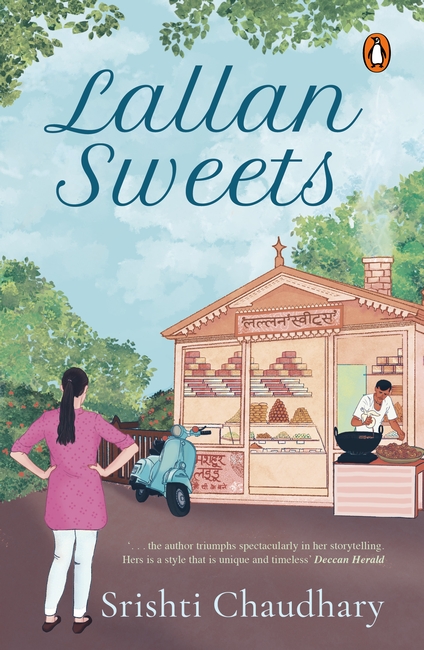
Can food lead Tara Taneja to love?
Tara Taneja lives in the small town of Siyaka; she runs a Mathematics Tuition Centre and works at her grandfather’s sweets shop, Lallan Sweets.
Nikku Sabharwal, her long lost best friend and crush, returns to Siyaka after many years. Sparks fly between them, as an adventure awaits.
The laddoos at Lallan Sweets are made from a secret magic ingredient. Lalaji, Tara’s grandfather, retires and decides that Lallan Sweets will not be inherited, but must be earned. So he devises a quest for his three grandchildren, Tara, Rohit and Mohit to find the magic ingredient. Whoever discovers it first will run the shop.
Nikku joins Tara in her pursuit to outsmart her cousins. The quest takes them from Mathura to Ludhiana, and together they battle old Family secrets, family legacies and unexpected dangers. Will the journey bring them together or lead to a bittersweet end?
Lallan Sweets is a heartwarming tale about love, family, food and the little things that matter in life.
Collected Short Stories
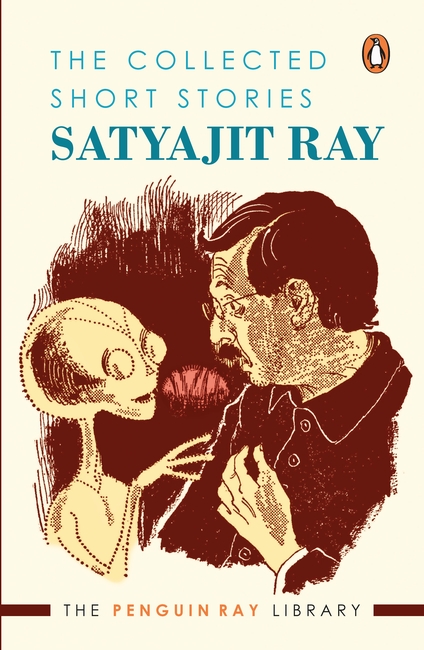
Best known for his immensely popular Feluda mysteries and the adventures of Professor Shonku, Satyajit Ray was also one of the most skilful short-story writers of his generation. Ray’s short stories often explore the macabre and the supernatural, and are marked by the sharp characterization and trademark wit that distinguish his films. This collection brings together Ray’s best short stories, including timeless gems such as ‘Khagam’, ‘Indigo’, ‘Fritz’, ‘Bhuto’, ‘The Pterodactyl’s Egg’, ‘Big Bill’, ‘Patol Babu, Film Star’ and ‘The Hungry Septopus’, which readers of all ages will enjoy.