Exactly sixty-five years ago, in 1955, the release of Pather Panchali heralded the arrival of a master in the world of cinema. Over the next forty years, Satyajit Ray came to be regarded as one of the world’s finest film-makers. Today, more than a decade after his death, he continues to be India’s most respected name in international film circles. Apart from a brilliant director, Ray was also a prolific writer of novels, short stories, and essays on cinema.
Speaking of Films brings together some of Ray’s most memorable writings on film and film-making. With the masterly precision and clarity that characterize his films, Ray discusses a wide array of subjects. He also writes about his own experiences, the challenges of working with rank amateurs, and the innovations in the face of technological, financial and logistical constraints. Ray provides fascinating behind-the-scenes glimpses of the people who worked with him.
This first-ever translation of Bishay Chalachitra, a seminal collection of essays on cinema, Speaking of Films retains the lucidity and simplicity that is a hallmark of Ray’s writing, and gives an invaluable insight into the mind of a genius.

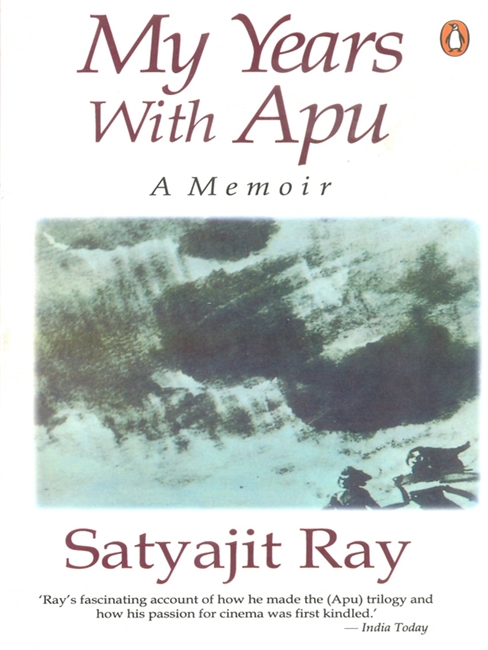
Pather Panchalii, Aparajito and Apur Sansar, three cult films by Satyajit, constitute the Apu trilogy. The making of each movie is a story in itself.
In My Years with Apu Ray brings to light the story behind the making of the three films in the Apu trilogy. Completed shortly before his death, this memoir covers the key aspects of his career: his decision to give up a lucrative job in advertising in order to make his first film, early setbacks, a chronic shortage of funds, the guidance and support of directors such as Jean Renoir, his solutions to problems, and the acclaim for his films at home and abroad.

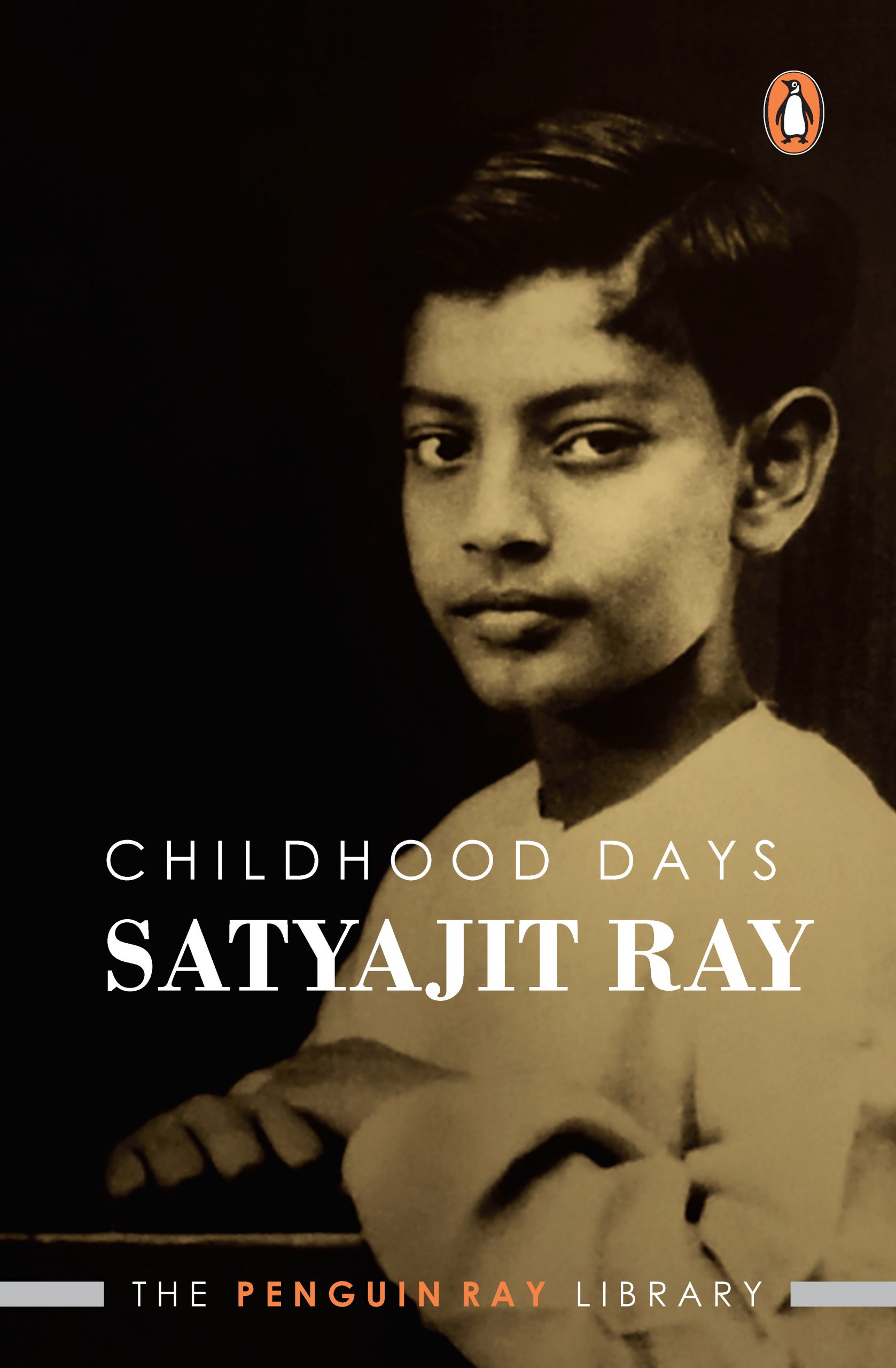
Childhood Days takes readers through legendary storyteller Satyajit Ray’s early life, exploring the people who were around him during his childhood, the places he spent the early years of his life in and the man we now know as an artist, music composer, director and writer. It displays the lesser-known side of Ray -affectionate, tender and humorous, quite different from the serious, introverted man the world knew.
Through Childhood Days, Ray writes eloquently about his initial attempts to understand photography, his experience of tasting ice cream for the first time, his discomfort during his school years as a result of his father’s and grandfather’s fame and what he went through during the shooting of Pather Panchali, his debut and landmark film. Filled with stories that are funny and heart-warming, Childhood Days is a glimpse into the making of a genius.

John Butt came to Swat in 1970 as a young man in search of an education he couldn’t get from his birthplace in England. He travels around the region, first only with friends from his home country, but as he befriends the locals and starts to learn about their culture and life, he soon finds his heart turning irrevocably Pashtoon.
Containing anecdotes from his life both before and since he shifted to Afghanistan, and with a keen and optimistic attitude towards becoming the best version of himself, John Butt tells a wonderful and heartfelt tale of a man who finds a home in the most unexpected place.

There are people who travel to eat and people who travel for adventure.
And then there are those who travel to eat adventurously.
Divya and Vivek are one such couple.
From using sign language to haggle over ant eggs in Bangkok to being hungry enough to eat a horse in Luxembourg, from finding out the perfect eel to barbecue to discovering the best place to source emu eggs in India, Dare Eat That explores their journey to eat every species on earth, at least once!

Since its inception in 1925, the RSS has perplexed observers with its organizational skills, military discipline and single-minded quest for influence in all walks of Indian life. Often seen as insidious and banned thrice, the pace of its growth and ideological dominance of the political landscape in the second decade of the millennium have been remarkable. It believes that Hindus have exclusive ownership of the Indian nation or Bharat, as it prefers to call it, and that hitherto, forces inimical to the interests of Hindus were deciding the socio-political and economic agenda in India. With political power firmly in favour, it is now going all out to embed its ideology deep in India’s genetic code. The abrogation of Article 370 in Kashmir, the big push to construct a Ram Temple in Ayodhya and moves to amend personal laws are the first symbolic steps in establishing the primacy of Hindus in the affairs of the country.
Relying on original research, interviews with insiders and analysis of current events, The RSS and the Making of the Deep Nation traces the RSS’s roots and nearly century-long operations in the relentless pursuit for ideological dominance in a nation known for its rich diversity of thought, custom and ritual.

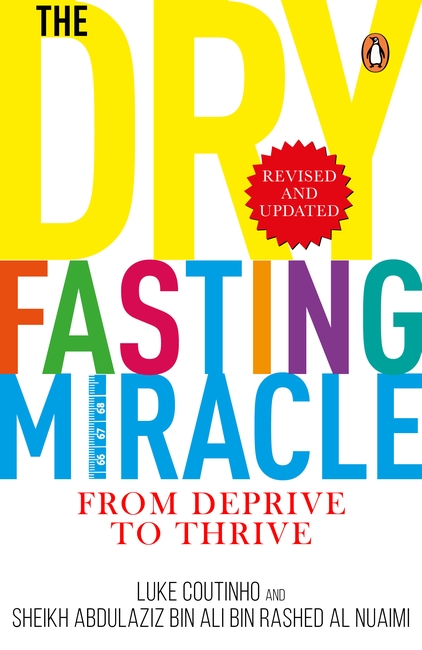
In the olden days, people ate early because there was hardly any light after sunset. Their next meal would only be after sunrise. This practice spread to all religions as a discipline due to its health and spiritual benefits. Today, it is called the dry fasting diet-the most superior form of fasting and cleansing for the body. Replicating it requires abstinence from all food and water for twelve hours or more.
Luke Coutinho and Sheikh Abdulaziz Bin Ali Bin Rashed Al Nuaimi teach us how this diet can stimulate the body, help one find the right balance between the ‘elimination phase’ and the ‘building phase’, aid weight loss and help avoid a number of diseases. From beauty to general well-being, discover the miracle of dry fasting and the route to a new you.

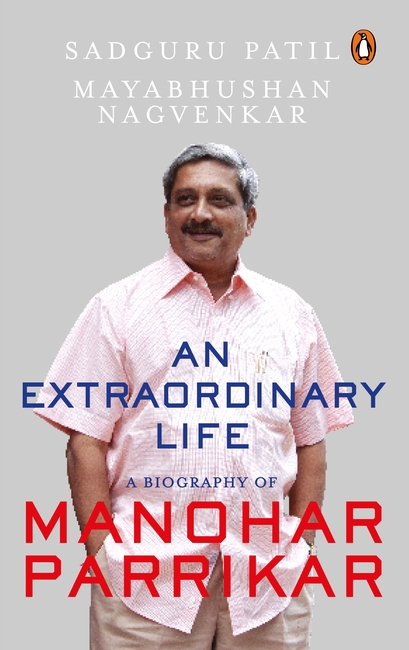
Over the last two decades, the exploits of one man, an IIT-Bombay alumnus, changed the way mainstream India looked at Goa and the political goings-on in the country’s smallest state. An Extraordinary Life traces the life and times of Manohar Parrikar through the informed voices of his relatives, friends, foes, bureaucrats and IIT contemporaries. The daily battles of a gifted individual are brought to the fore as he encounters love and vices. But more importantly, it showcases his rise in politics from the son of a grocery store owner in a nondescript town, a sanghachalak in Mapusa town, an Opposition MLA and leader, to a chief minister (on multiple occasions) and, finally, to a defence minister.

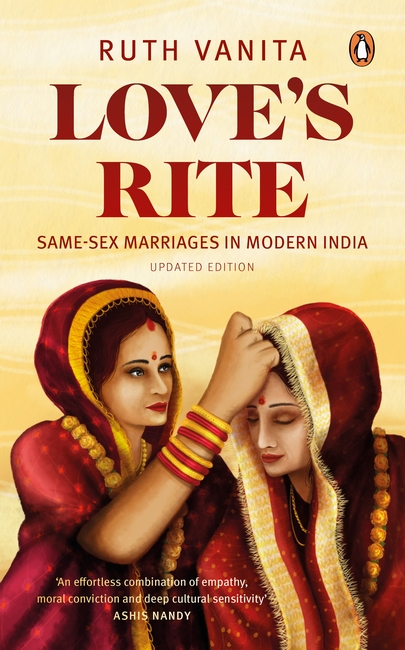
‘An effortless combination of empathy, moral conviction and deep cultural sensitivity’ ~ Ashis Nandy
A CHRONICLE OF LOVE’S TRIUMPH OVER ALL OBSTACLES
Long before the debate on marriage equality began, young, non-English speaking, low-income female couples all over India got married by religious rites or committed joint suicide, which they considered being ‘married in death’. These women had no contact with any movement and had never heard words like ‘lesbian’ or ‘gay’. While many families, in collusion with police, violently separated the couples, several families also supported their daughters.
Love’s Rite, first published in 2005, is the first and still the only book-length study of these unions, starting with one reported in 1980. The book argues that the couples asserted-and today still assert-their right to be together, using an age-old language of love understood by Indians. Vanita explores Indian religious, legal and literary traditions that provide spaces for same-sex and other socially disapproved unions.
While many recent high-profile Indian weddings have been reported as the ‘first’ of their kind, Love’s Rite celebrates the unsung pioneers and martyrs of the struggle for marriage equality.
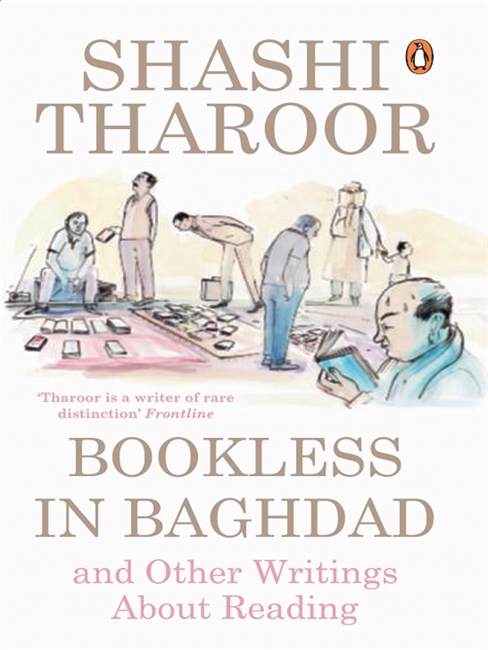
Shashi Tharoor began reading books”Enid Blyton’s Noddy series”when he was three. By the time he was ten, he had published his first work of fiction, Operation Bellows, a credulity-stretching saga of an Anglo-Indian fighter pilot. In between were years when he read a book a day. And in the years since, he has published eight books and written for many Indian and foreign publications. Bookless in Baghdad brings together pieces written over the past decade by this compulsive reader and prolific writer on the subject closest to his heart: reading. In these essays on books, authors, reviews, critics, literary festivals, literary aspirants, Empire, and India, Tharoor takes us on a delightful journey of discovery. He wanders the -book souk’ in a Baghdad under sanctions where the middle-class are selling their volumes so that they can afford to live; analyses the Indianness of Salman Rushdie; discusses P.G. Wodehouse’s enduring popularity in India; and drives around Huesca looking to pay an idiosyncratic tribute to George Orwell. There are excursions into the pitfalls of reviewing, explorations of the -anxiety of audience’ of Indian English writers, and a wicked account of how Norman Mailer dealt with a negative review.