‘Splendid . . . anyone who wants to understand Indian politics or think they do should read it’ -Indian Express
‘Delightfully written . . . he has a sharp eye for details, especially the actions of political leaders’ –
India Today
‘Captures the drama of 2014 and the men who powered it’-Open
‘Holds you to your seat, often on the edge . . . A procession of India’s colourful political characters-Lalu Yadav, Amit Shah, Rahul Gandhi, Narendra Modi and many more come intimately close through the author’s accounts’ –The Hindu
‘Candid and forthright . . . and deliciously indiscreet’ –Hindustan Times
‘A racy narrative that goes beyond recording immediate political history’ –Tehelka
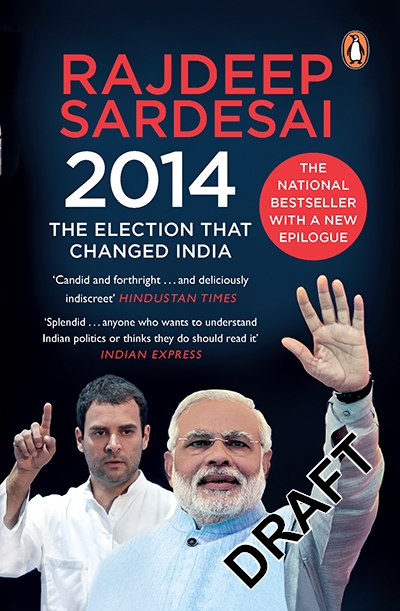
The 2014 Indian general elections has been regarded as the most important elections in Indian history since 1977. It saw the decimation of the ruling Congress party, a spectacular victory for the BJP and a new style of campaigning that broke every rule in the political game. But how and why? In his riveting book, Rajdeep Sardesai tracks the story of this pivotal election through all the key players and the big news stories. Beginning with 2012, when Narendra Modi won the state elections in Gujarat for a third time but set his sights on a bigger prize, to the scandals that crippled Manmohan Singh and UPA-II, and moving to the back-room strategies of Team Modi, the extraordinary missteps of Rahul Gandhi and the political dramas of election year, he draws a panoramic picture of the year that changed India.

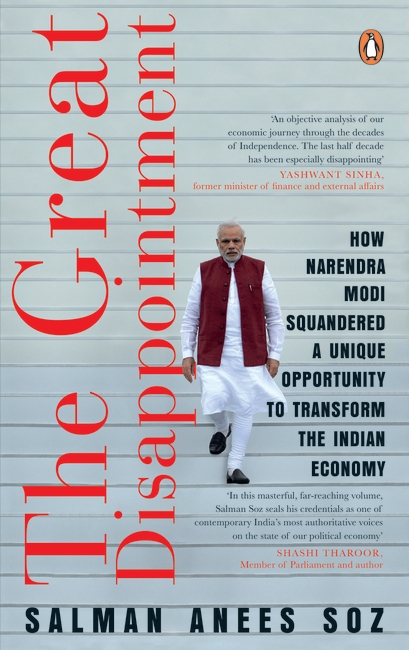
As the National Democratic Alliance (NDA) government completes its current term ahead of the General Elections 2019, it is time to evaluate its performance, specifically in terms of its management of the economy. This book is a critical assessment of five years of the brand of economics Prime Minister Narendra Modi has championed, often referred to as ‘Modinomics’.
Brought into power with the biggest political mandate in almost three decades, did the NDA government succeed in gainfully transforming India’s economic trajectory or did it squander a once-in-a-generation opportunity? The book conjectures it is the latter, and analyses why the Modi government’s stewardship of the economy is a ‘great disappointment’.

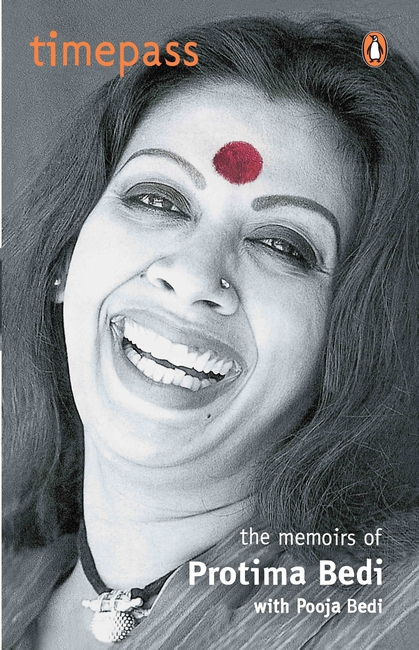
In 1974, pictures appeared in magazines and newspapers of Protima Bedi streaking down a road in the centre of Bombay in broad daylight. There was immediate uproar. The incident was, in many ways, the culmination of a life of youthful rebellion and brash sexuality that Protima, the scandalous model and wife of the rising star of Bollywood, Kabir Bedi, had lived ever since she ran away from home to live ‘in sin’. Barely four years later, the glamorous flower child had reinvented herself as an accomplished classical dancer, a devotee of Goddess Kali, and chosen the sari over slit skirts and halter-necks Shortly before her death, she had shaved her head and decided on a monk’s life. She died in August 1998, in a landslide in the Himalayas while on a pilgrimage to Kailash Mansarovar, leaving behind her most lasting achievement—a flourishing dance village, Nrityagram, where students continue to learn the classical dance styles of India Few lives have been more eventful and controversial than Protima Bedi’s, and Timepass, derived from her unfinished autobiography, journals and her letters to family, friends and lovers, is a startlingly frank and passionate memoir. Protima recounts with unflinching honesty the events that shaped her life: her humiliation as a child at being branded the ugly duckling, repeated rape by a cousin when she was barely ten, the failure of her ‘open’ marriage with Kabir Bedi, her many sexual encounters, and the romantic relationships she had with prominent politicians and artistes. She writes, too, of her involvement with dance, her relationship with her guru and fellow dancers, the difficult mission of establishing Nrityagram, and the suicide of her son—a tragedy from which she never fully recovered. In a moving afterword to the book, her daughter, Pooja Bedi, describes her last days and the circumstances of her death. Illustrated with over fifty photographs, Timepass is the story of a remarkable woman who had the spirit, the courage and the intelligence to live life entirely on her own terms.

Jordanus Catalani, the first bishop of the Church of Rome in India, introduced the northern part of the subcontinent to his readers in fourteenth-century Europe in this manner. Two hundred years before the advent of Vasco da Gama, Western Christianity-which comprises the Catholic Church, the Anglican Communion and Protestant denominations today-had already arrived in India, finding among its diverse people and faiths the Church of the East already at home since the beginning of Christianity.
This is an account of how global events, including the Crusades and the Mongol conquests, came together to bring Western Christianity to India.
A gripping narrative of two diagonally opposite impulses in Christianity: of humble scholars trying to live the Christian ideal, and of ambitious ecclesiastical empire-builders with more earthly goals.
Carpenters and Kings is a tale of Christianity, and, equally, a glimpse of the India which has always existed: a multicultural land where every faith has found a home through the centuries.

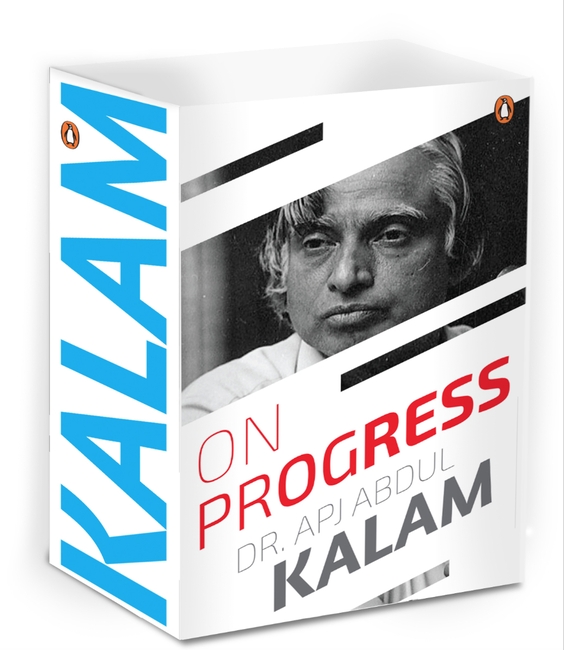
The box set contains:
Target 3 Billion: Innovative Solutions Towards Sustainable Development:
The book talks about the 3 billion people across the globe who live in villages and are often deprived of basic resources. It integrates the challenges and opportunities of the present human civilization and elaborates on providing Urban Amenities in Rural Areas (PURA), a sustainable and environment-friendly system that will uplift the rural masses. The authors pose the question-what can I do to empower 3 billion people? The answers have been provided from the perspectives of citizens, students and senior citizens.
India 2020: A Vision for the New Millennium:
The authors offer a blueprint for India to be counted among the world’s top five economic powers by the year 2020. They cite growth rates and development trends to show that the goal is not unrealistic. Past successes-the green revolution and satellite-based communication linking remote regions of the country, for instance bear them out.
Beyond 2020: A Vision for Tomorrow’s India:
Kalam and Rajan argue that a renewed policy focus is now needed for agriculture, manufacturing, mining, the chemicals industry, healthcare and infrastructure to invigorate these sectors and boost economic growth. India can still make it to the list of developed nations in a decade.

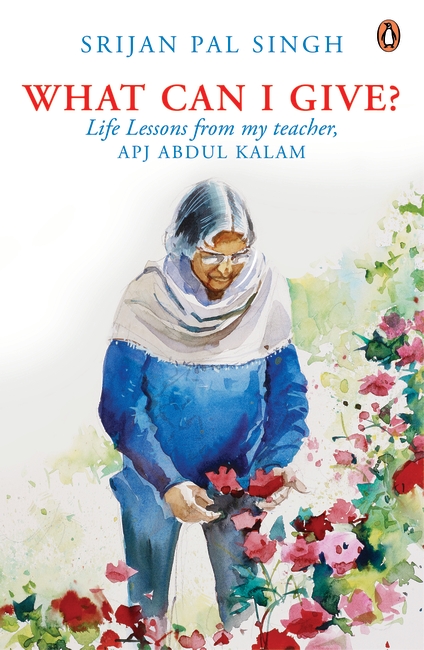
A book in memory of the country’s most-loved teacher
Dr Kalam is often remembered as a teacher par excellence, whose words, thoughts and very life were lessons in many ways.
This book is dedicated by his student Srijan Pal Singh, who worked closely with him, right till the last day of his life. Recollecting his mentor’s values, oaths and messages to the youth, Srijan beautifully shares the lessons Dr Kalam taught beyond the classroom. A peek into his daily routine, travels, reflections on various national and international issues, anecdotes and quips, this book helps readers get up-close and personal with the greatest Indian of contemporary times.
Featuring many little-known stories and never-before-seen photographs, as well as certain expressions that were classic Dr Kalam, this heart-warming memoir will inspire and enlighten, immortalizing the words and actions of a beloved leader.

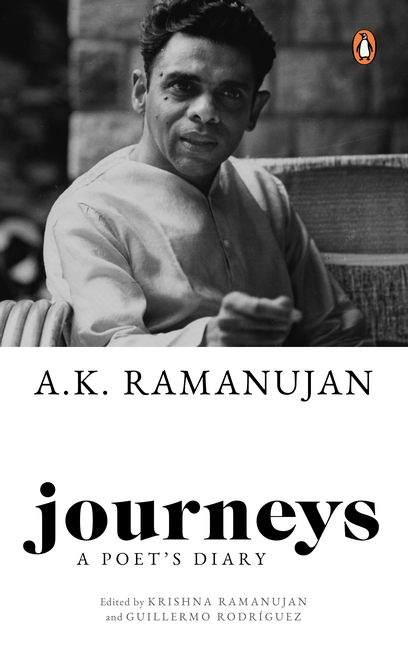
A.K. Ramanujan (1929-1993), one of India’s finest poets, translators, folklorists, essayists and scholars of the twentieth century, is a stalwart in India’s literary history. His translations of ancient Tamil and medieval Kannada poetry, as well as of UR Ananthamurthy’s novel Samskara, are considered as classics in Indian literature. A pioneering modernist poet, during his lifetime he produced four poetry collections in English, and he had also intended to publish the journals he had kept throughout the decades. After his premature death 25 years ago, his journals, diaries, papers and other documents-spanning fifty years from 1944 to 1993-were given by his family to the Special Collections Research Center at the Regenstein Library of the University of Chicago in June 1994. These unpublished writings, meticulously preserved and catalogued at the University of Chicago, were waiting for someone to unveil them to a wider readership.
Edited by Krishna Ramanujan and Guillermo Rodríguez, Journeys offers access to Ramanujan’s personal diaries and journals, providing a window into his creative process. It will include literary entries from his travels, his thoughts on writing, poetry drafts, and dreams. His diaries and journals served as fertile ground where he planted the seeds for much of his published work.

Women grow up on fairy tales and weave their love and life stories around Prince Charmings; passionate love and languorous kisses ending in happily-ever-afters. But nothing prepares them for the real world; the disillusionment and complications of modern-day relationships.When Amrita Sharma finds more and more women friends sharing their relationship secrets with her-their fears and deepest insecurities; their petty squabbles and extra-marital affairs-she realizes that their problems are vast and varied. And; more often than not; the women are to be blamed: When in love; even strong-willed; independent women become emotional fools.Candid; wise and brutally honest-from telling us how to read the early signs of a failing relationship to friendly tips on finding the right guy-What Did I Ever See in Him is the modern woman’s guide to having the perfect love life.
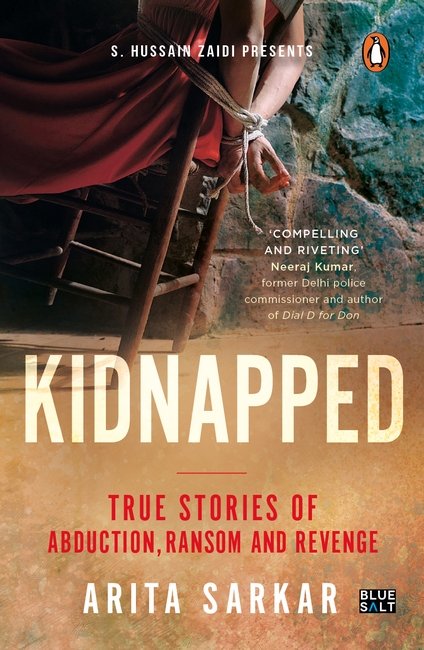
In 2016, approximately ten people were abducted every hour in India. Of them, six were children. Kidnapping is a crime where it is possibility to save the victim, which makes its treatment and results unique. Documenting ten cases of child abduction from across the country, Arita Sarkar investigates the bone-chilling details of the disappearance of each child. She delves into the trauma that the victims’ families went through, as they waited in the hope that their children would return.
This book brings to life investigations by the police, eyewitness accounts and the perspectives of the accused, recreating each case in painstaking detail. Some of the victims you read about will never come home, but their stories will stay with you.

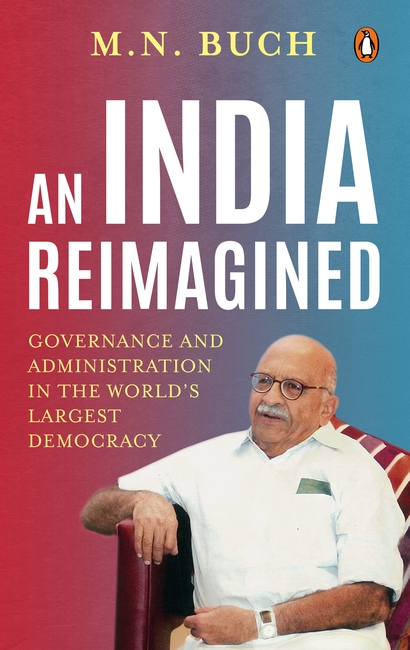
‘The civil servant who spoke truth to power’-Ramachandra Guha
M.N. Buch, known as the architect of Bhopal, was awarded the Padma Bhushan in 2011. He studied economics at Cambridge University before joining the Indian Administrative Service (IAS) in 1957. He famously wrote five letters to former Prime Minister Manmohan Singh-ranging from the deterioration of the Indian Institutes of Technology (IITs) to Indo-American relations and how India must not be deferential to the US, and to assert the country’s right to help rebuild Afghanistan.
This book is a collection of twenty articles that have been divided into six major themes, namely the IAS, reforms (police, judiciary and electoral system), economics, social challenges (health, corruption and reservation), and governance and environment. Original and thought-provoking, this is a must-read for those concerned with the idea of India and how change can be brought.