Renowned journalist Jyotirmoy Dey-fondly known as J, Dey-was murdered by members of the Chhota Rajan gang in 2011. A few months later, a fellow journalist and crime reporter Jigna Vora was arrested in connection with the murder. Seven years later, some of which were spent in prison, Jigna was acquitted of all charges. This is her story in her own words, of the time in prison, the court hearings and her years as a crime reporter of breaking many front-page stories.
Jigna’s work brought her in contact with people like Himanshu Roy, the former additional director general of police of Maharashtra, while her time in jail put her in the company of inmates such as Pragya Thakur. Behind Bars in Byculla traces the intricate web of power dynamics that govern the inmates of a prison and what it takes to survive behind bars.

Is Narendra Modi’s government innovative and free of vote-bank politics? How did Narendra Modi bring 24-hour, three-phase domestic power supply to 18,000 villages in Gujarat? How did Modi turn the forlorn Kutch into a top tourist destination?
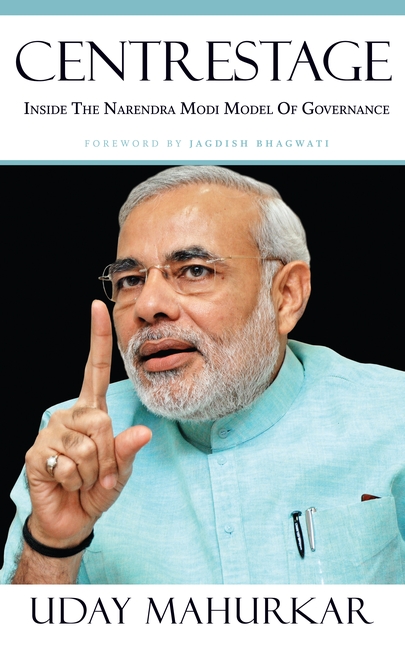
One of the most hotly debated topics in the general elections has been the development and governance of Narendra Modi’s government in Gujarat. In Centrestage, Uday Mahurkar tries to present a balanced assessment of Narendra Modi’s government by uncovering and analysing the Modi mantra of governance. With chapters on energy, technology, agriculture, finance and innovation, to name a few, Mahurkar aims at understanding and revealing the ground reality through facts and research beyond the media hype. Has Gujarat really made progress under Narendra Modi? Is Narendra Modi really a visionary and a good administrator? Read Centrestage to find out and get an insider’s view of Narendra Modi’s governance from a man who has followed him closely for the past three decades.

Winner of Publishing Next’s Printed Book of the Year Award and featuring on the Green Literature Festival Honour List.
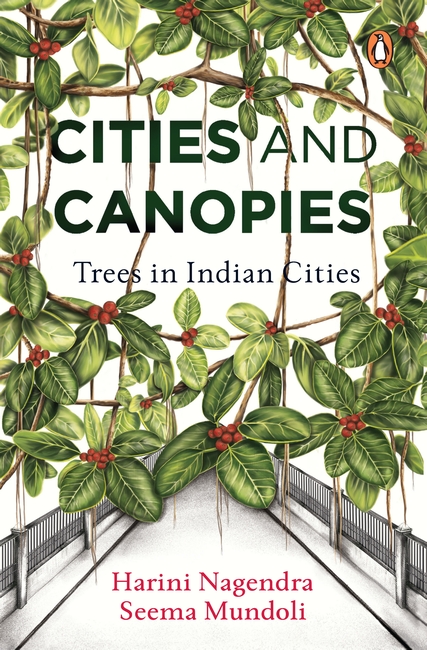
Native and imported, sacred and ordinary, culinary and floral, favourites of various kings and commoners over the centuries, trees are the most visible signs of nature in cities, fundamentally shaping their identities. Trees are storehouses of the complex origins and histories of city growth, coming as they do from different parts of the world, brought in by various local and colonial rulers. From the tree planted by Sarojini Naidu at Dehradun’s clock tower to those planted by Sher Shah Suri and Jahangir on Grand Trunk Road, trees in India have served, above all, as memory keepers. They are our roots: their trunks our pillars, their bark our texture, and their branches our shade. Trees are nature’s own museums.
Drawing on extensive research, Cities and Canopies is a book about both the specific and the general aspects of these gentle life-giving creatures.

Will Modi pass the litmus test of governance? Does his performance match his promises?
In Marching with a Billion, Uday Mahurkar analyses the Modi government’s three years in power against the backdrop of years of policy paralysis and corruption before he came to power, leaving him with a stiff salvaging job. Focusing on key areas of governance like infrastructure, foreign affairs, power, the social sector, finance, digital technology and agriculture, the author showcases the work of the present government and the monumental changes the prime minister has brought about, including digital innovation and the uprooting of middlemen, which has resulted in an unprecedented level of transparency, and a resolute assault on poverty. He also points out some of the shortfalls of Modi’s government, subjecting it to critical evaluation. Will Modi become a great institution builder, a prerequisite to becoming a nation builder? What will be the long-term impact of demonetization on the economy? This book has the answers.

Set in London, The Sandglass tells the story of two feuding families whose lives are interlinked by the changing fortunes of postcolonial Sri Lanka. After his mother’s death, Prins Ducal is driven to re-examine his family’s history. In doing so, he discovers questionable circumstances surrounding another death in his family—his father’s—and sets about unravelling the secrets shrouding it. In this beautifully constructed novel, Romesh Gunesekera expertly weaves together the fabric of 1990s London and post-war Sri Lanka, moving seamlessly between past and present.
‘A driver’s job is to stay in control behind the wheel and that is all. The past is what you leave as you go. There is nothing more to it.’
Vasantha retired early, bought himself a van with his savings and now works as a driver for hire in Sri Lanka. As he ferries new entrepreneurs, charity workers and itinerant families around the country, he reveals with self-deprecating wit and folksy wisdom their uncertain lives after the end of a decades-long war.
On his journey from the army camps of the north to the moonlit beaches of the south, he begins to wonder if the past can be left behind—especially his own, and his country’s—and what the future might hold for a lovelorn soldier out on the ramparts, a fast-moving hotelier in a bombed-out town, an eager Jaffna student of Italian, or a desperate librarian of empty shelves?
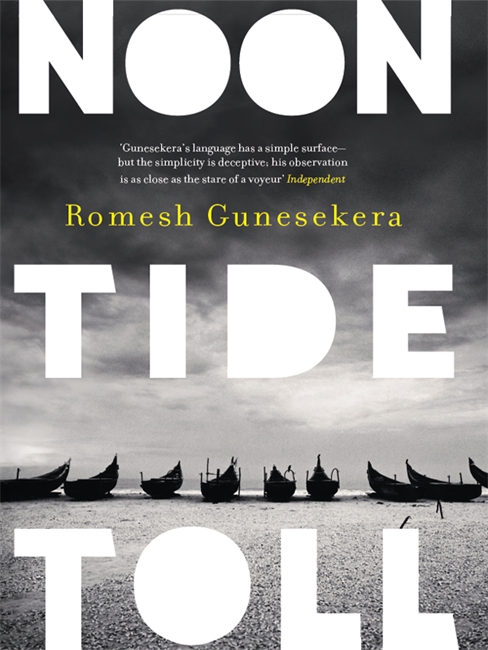
A superb collection of interlinked stories—perceptive, sombre, finely tuned—Noontide Toll draws an extraordinary portrait of post-war Sri Lanka grappling with the ghosts of its troubled past.

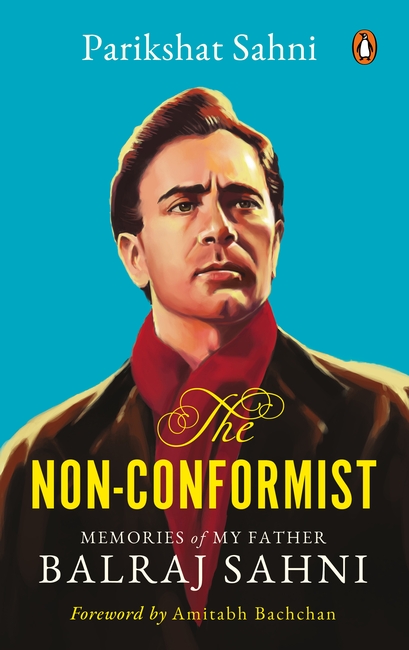
A legend with a host of admirers like Amitabh Bachchan and Om Puri, Balraj Sahni led the golden era of Indian cinema. He was known to be true to his principles, a non-conformist often remembered for his portrayals of the underprivileged. This is the untold story of one of the most iconic leading actors of this country. Written by his son Parikshat Sahni, the book–packed with unseen photos–provides personal and intimate glimpses of Balraj Sahni as a man and an actor, as a husband and friend, as a parent and patriot. It celebrates the life, times and impact of a simple man who inspired an entire generation of actors and continues to do so even today.
This vivid and haunting short-story collection creates a masterful portrait of contemporary Sri Lanka. A married couple, living in London, find their marriage strained by the fighting in their far-off homeland. An ordinary shopkeeper is burnt alive by terrorists, leaving his neighbour’s life in turmoil. Between exile and loss, Gunesekera’s characters struggle for the elusive and divided place that they call home.
At the age of eleven, Triton goes to work as a houseboy to Mister Salgado, a marine biologist obsessed with the island’s disappearing reef. It was the biggest house he had ever seen. People from all over the world came here-to sell their wares, to talk, to live; for this was where life took place. Even the sun would rise from the garage and sleep behind the del tree at night. But beyond Mister Salgado’s house and their Sri Lankan village, there is a world falling apart, and it is in this world that Triton must become a man. An absolute classic, Reef is a luminous coming-of-age novel.

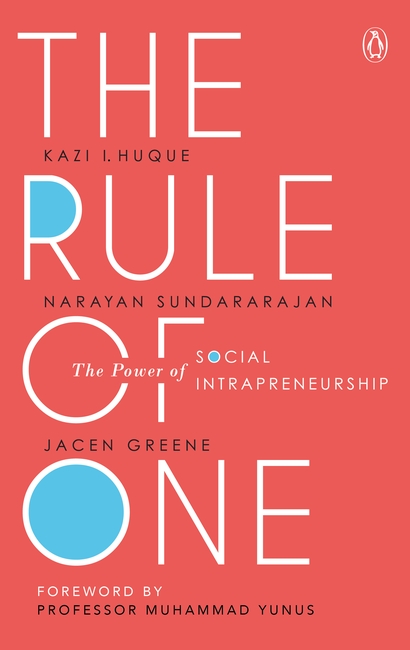
Foreword by Muhammad Yunus
The Rule of One speaks about the power of social intrapreneurship in the developing world. Colleagues at Intel, Kazi I. Huque and Narayan Sundararajan founded an intrapreneurial venture between Intel and Grameen, called Grameen Intel Social Business, working with Nobel laureate Muhammad Yunus. Along with Jacen Greene, they have collected and presented their original and transformational ideas in this book that explores crippling challenges like poverty, healthcare and education which plague the developing world and how problems related to these challenges can be solved in a sustainable and comprehensive manner.
This book tells us that nearly half of the people living in developing countries are yet to benefit from information technology. Peppered with illustrative and useful examples and case studies, The Rule of One provides a comprehensive roadmap for any foundation, development agency and company to engineer solutions to deal with social and economic issues.