



After being forced to take a sabbatical from work because of her chronic breathing troubles, Jhelum Biswas Bose turned to flowers for solace and healing. Her blossoming connection with flowers deepened her understanding of herself and the world around her. Over the years, she has learnt to recognize and respect the soft energies of blooms with the help of healing therapies such as Bach flower remedies and aromatherapy.
Phoolproof is a complimentary bouquet to flowers, especially Indian flowers, and brings to our plain sight their subtle power and meaning. From the book’s various whorls, Jhelum teaches us how to gainfully use flowers in living spaces, foods, and beauty and healing treatments.
Catagory: Non Fiction
non fiction main category
Many Rivers, One Sea
In July 2016, the world’s attention fell upon a café in a leafy Dhaka neighbourhood, as the barbarity of a distant ‘Caliphate’ was visited on this corner of South Asia. Twenty-nine died in the assault on the Holey Bakery, affixing an unbidden nightmare to the image of a supposedly tolerant Muslim nation.
Joseph Allchin dives into this burgeoning Muslim nation’s travails with extremism and politics in this penetrating work. Examining Bangladesh’s recent and not-so-recent past, Allchin explores a recent rise in Islamist politics, as well as violent terrorism. With a compelling blend of history, narrative journalism and political analysis, Allchin demonstrates how Bangladesh’s society and politics are starkly contemporary and relevant to our inter-connected world.
Delving into the local and global differences between political actors, he exposes the continued influence of the country’s independence struggle and global geopolitics on today’s tumultuous body politic. Scrutinizing the careers and dissensions of the country’s political rivals: current prime minister Sheikh Hasina, and her predecessor Khaleda Zia.
This deep-dive investigation examines the multitude of relationships between radical Islam and politics in India’s neighbourhood, laying bare the forces that seek to shape Bangladesh’s present and its destiny.
End Of The Peace Process
The End Of The Peace Process is a new edition of Edward Said’s passionate critique of the Oslo Accord and its aftermath, updated to include around twenty new essays about the events of 2000-1. Said brilliantly analyses the deficiencies of Oslo, and the reasons why the subsequent Middle East peace process failed so disastrously. His criticism of the Accord has proved acutely prescient; but he retains hope, writing in an impassioned new introduction about the growing non-violent, secular Palestinian movements, and calling for those on the Israeli, European and American left to support it.
The Little Book of Comfort (collection of comforting thoughts and words of wisdom with illustrations for motivation positivity peace and happiness by Ruskin Bond)

So, do you wish to go out into the night, walke up the hill, discover new things about the night and yourself, and come home refreshed? For just as the night has the moon and the stars, so the darkness of the soul can be lit up by small fireflies – such as these calm and comforting thoughts that Ruskin Bond has jotted down for you in The Little Book of Comfort. This book will give you an opportunity to discover yourself in this post-pandemic world to become more thoughtful and to discover the art of slowing down.
The Book of Avatars and Divinities
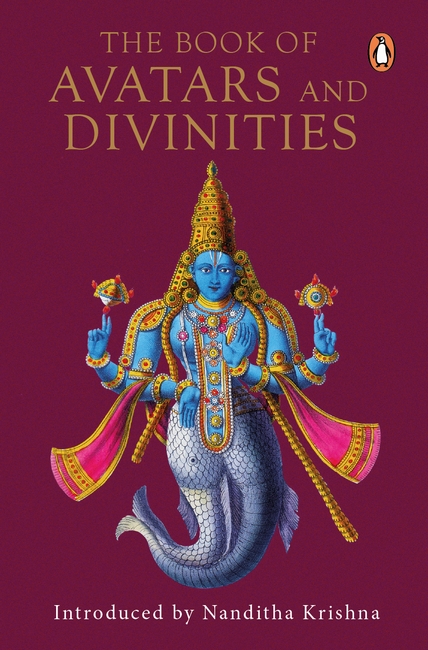
In the Hindu universe, gods and goddesses play freely among human beings to help them, nudge them towards the right action and mete out justice. They may appear to us as avatars in human form or manifest themselves as forces of nature. The many myths of Hinduism become colourful and entertaining when Shiva, Vishnu and Devi take different forms to enact their rivalries, destroy demons and teach devotees with superpowers a lesson in humility.
This first-of-its-kind book brings together the major deities of the Hindu pantheon, describing the different manifestations by which they are recognized, celebrated and worshipped-from Durga to Sita to Kali, and from Narasimha to Parashurama to Krishna. The contributions by Bulbul Sharma, Namita Gokhale, Nanditha Krishna, Parvez Dewan, Royina Grewal and Seema Mohanty offer enchanting stories about our favourite divinities.
The Beauty of All My Days
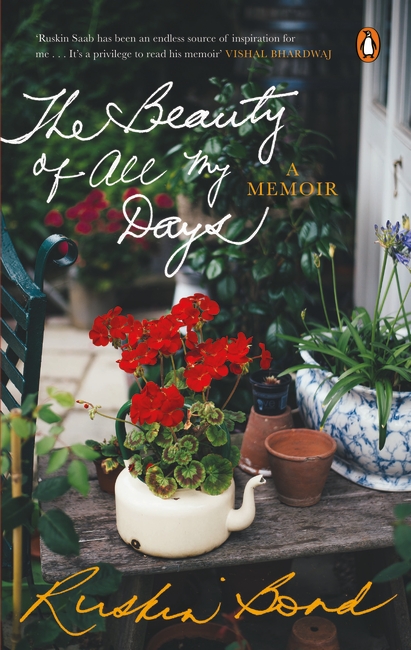
So here I am, delving into the past like Monsieur Poirot, not to solve a mystery, but to try to understand some of the events that have helped define the sort of person I have become. Some of it, naturally, is in the genes; but much of it is in the environment, in the circumstances in which we grow up, in the people who come into our lives, even in the air we breathe.
Had I grown up in London or Timbuktu, I would have been a different sort of person, I’m sure. My parents (and those before them) made me. But India made me too. The soil, the air, the wind, the rain, the trees, the grass, the proximity of people-all these things made me . . .
Different things at different times helped to make the individual that is me, just as different things at different times helped to make you, just as they went into making your brothers and sisters, who are very different from you.
‘Do I contradict myself? Very well, then, I contradict myself,’ said Walt Whitman.
Each chapter of this memoir is a remembrance of times past, an attempt to resurrect a person or a period or an episode, a reflection on the unpredictability of life. Some paths lead nowhere; others lead to a spring of pure water. Take any path and hope for the best. At least it will lead you out of the shadows.
The Strangers Of The Mist
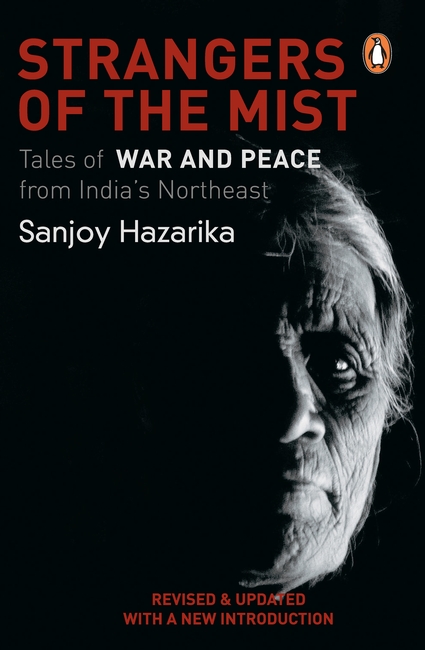
A classic on the festering issues in the North-east
In this insightful book, Hazarika systematically presents the developments in Assam and the neighbouring regions, from post-Independence onwards to the present day. He sheds light on possible causes and factors behind ethnic clashes, separatist outbreaks and political unrest, that this region has come to be known for. He candidly discusses the issue of migrating refugees from nearby countries to the north-eastern states, which has caused tension between the many ethnicities in these states. With a balanced and clear-eyed view, Hazarika urges the reader to take heed of the urgent situation in the region. Strangers of the Mist is considered a classic on the issues facing the North-east.
Rites Of Passage
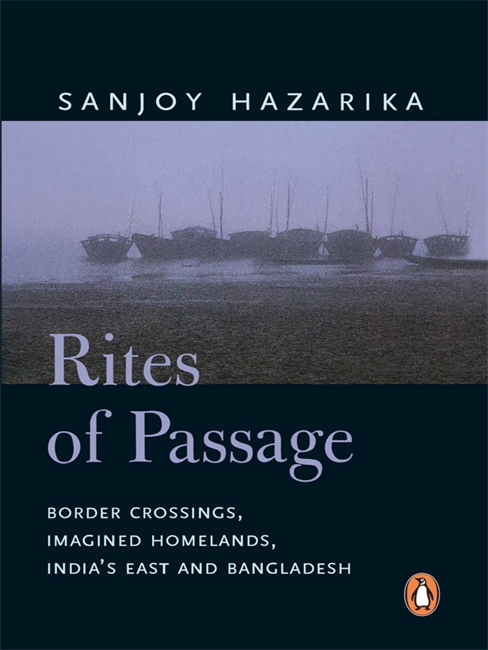
This book is a serious study of the situation in the Northeast- and that includes Bangladesh. And no better man could have been found to write about the area and its people than Sanjoy Hazarika. What sets the book apart is its focus on migrants not as just numbers but people for whom border crossing is an inevitable necessity.
Writing On The Wall
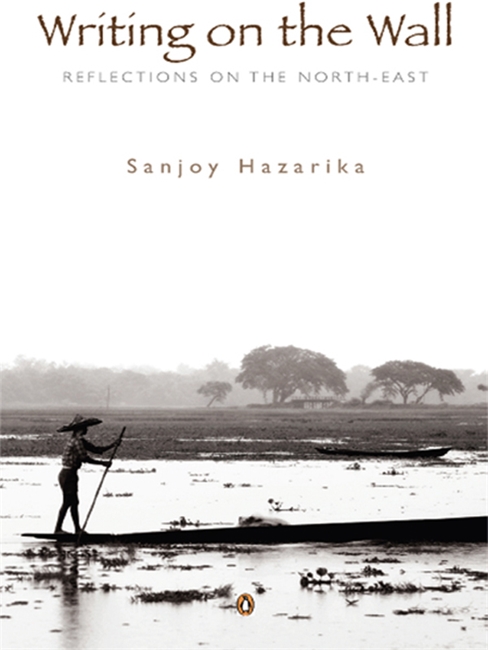
Decades of State and non-State violence in PBI – India’s landlocked North-east have taken a heavy toll on livelihoods, incomes, governance, growth and image, besides lives. Despite vast amounts of money being pumped into the region, basic needs and minimum services are yet to be met in terms of connectivity, health, education and power. What are the possible ways forward as the region stands at a crossroads? These fifteen personal essays provide an insider’s take on wide-ranging issues: from the Brahmaputra and the use of natural resources to peace talks in Nagaland; from the Centre’s failure to repeal the hated Armed Forces Special Powers Act, threats to the environment, corruption in government and extortion by armed groups to New Delhi’s Look East Policy and much more. Yet, as these essays make clear, hope, though distant, is not absent or lost. Restoring governance through people-driven development programmes, peace building through civil society initiatives, assuring the pre-eminence of local communities as evident in Hazarika’s conversations with the legendary Naga leader, Th. Muivah, and simple economic interventions through appropriate technologies — boats and health care, community mobilization and micro-credit — hold promise for solutions to the web of violence, poverty and marginalization. Writing on the Wall is a passionate call to all stakeholders in the North-east to embrace dialogue and use given platforms for peace, to go beyond the politics of tolerance to that of mutual respect. Only such multi-disciplinary, innovative approaches, rooted in realism, can bring stability and sustainable change to the region.
HOSTEL ROOM 131
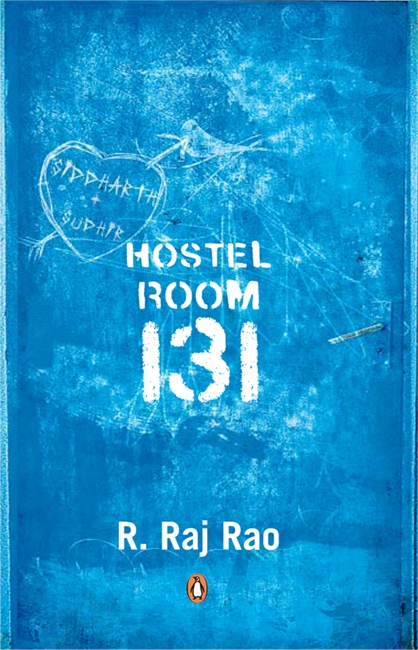
In the winter of 1978; Siddharth; twenty-three; meets Sudhir; twenty; in a friend’s friend’s room in Pune’s Engineering College Hostel. He falls instantly in love.
A man of unconventional views-he believes; for instance; that the two heroes in Sholay have the hots for each other rather than for the heroines-Siddharth becomes a full-time lover over the next seven years and stubbornly pursues the object of his lust and affection; despite his job as a college lecturer in Bombay.
There are many obstacles along the way; including Sudhir’s family; against whom Siddharth files a police complaint; and Sudhir’s classmates from Belgaum; led by the homophobic Ravi Humbe; who start an anti-Siddharth association. But Siddharth gets support from Gaurav and Vivek; a militant gay pair keen to ambush the enemy.
The author of Boyfriend returns with another irreverent look at India’s gay subculture.Deadpan humour and farce come together in this entertaining love story; giving us a glimpse of what really goes on in a boys’ hostel.