Named among “The Best Books of 2020” by Bloomberg
Shortlisted for New India Foundation’s Kamaladevi Chattopadhyay Book Prize 2020
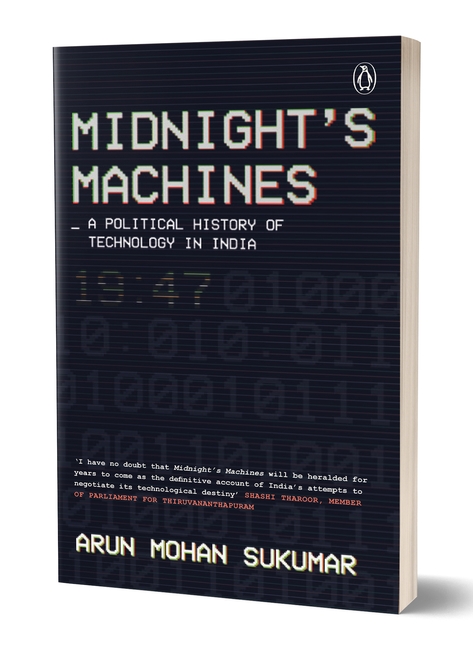
Every Prime Minister of Independent India has guided, if not personally overseen, one prized portfolio: technology. If, in the early years, Nehru and his scientist-advisors retained an iron grip on it, subsequent governments created a bureaucracy that managed everything from the country’s crown jewels – its nuclear and space programmes – to solar stoves and mechanized bullock carts.
But a lesser-known political project began on 15 August 1947: the Indian state’s undertaking to influence what the citizens thought about technology and its place in society. Beneath its soaring rhetoric on the virtues or vices of technology, the state buried a grim reality: India’s inability to develop it at home. The political class sent contradictory signals to the general public. On the one hand, they were asked to develop a scientific temper, on the other, to be wary of becoming enslaved to technology; to be thrilled by the spectacle of a space launch while embracing jugaad, frugal innovation, and the art of ‘thinking small’. To mask its failure at building computers, the Indian state decried them in the seventies as expensive, job-guzzling machines. When it urged citizens to welcome them the next decade, the government was, unsurprisingly, met with fierce resistance. From Jawaharlal Nehru to Narendra Modi, India’s political leadership has tried its best to modernize the nation through technology, but on its own terms and with little success.
In this engaging and panoramic history spanning the arc of modern India from the post-War years to present day, Arun Mohan Sukumar gives us the long view with a reasoned, occasionally provocative standpoint, using a lens that’s wide enough for the frame it encompasses. With compelling arguments drawn from archival public records and open-source reportage, he unearths the reasons why India embraced or rejected new technologies, giving us a new way to understand and appreciate the individual moments that brought the country into the twenty-first century.

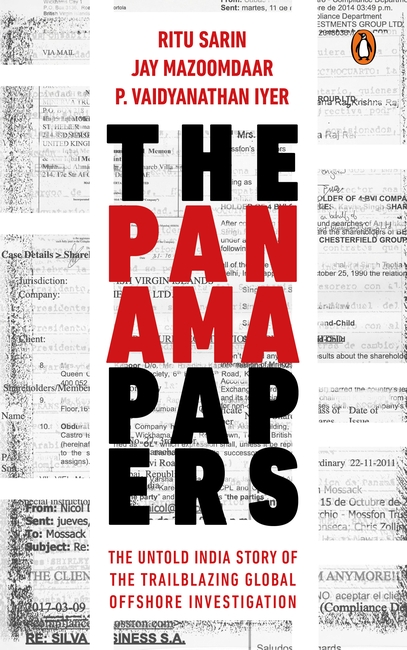
An anonymous whistle-blower and an astounding 2600 GB of data. A giant leak of 11.5 million financial and legal records. A global collaboration of over 100 news organizations working in twenty-five languages in eighty countries. More than 350 reporters on the trail for nine months in complete secrecy.
The Panama Papers exposed in black and white the crime and corruption of the rich and powerful who stashed away their wealth in tax havens. This is the India story of the mega investigation.
The Panama Papers shook the world, woke up governments and showed what investigative journalism could achieve even in a post-truth world through a path-breaking alliance between an individual whistle-blower and a coalition of global media. The only Indian publication in the global collaboration, the Indian Express played a crucial role. Now, for the first time, award-winning journalists Ritu Sarin, Jay Mazoomdaar and P. Vaidyanathan Iyer tell the backstory of hot leads and cold trails, of open denial and veiled intimidation.
The Panama Papers underlined the loot of public money and the need for tax reforms. In an age of rising inequality, the importance of public funding to fight poverty cannot be overstated. The lack of public confidence in regulatory frameworks or political will also fuels perceptions of illegitimacy of wealth. In India, black money has gained more currency than ever as a political metaphor and future electoral gains may well depend on the perceived success of a war against illegal wealth. Financial corruption though cannot be defeated without transparency in election funding. The Panama Papers reignited a global debate on surmounting these challenges.

A tale of borders and beliefs shaped by the games people play
1947
New Delhi. Cyril Radcliffe’s hands are clammy, partly from the heat but mostly from the enormity of the task assigned. Mopping the sweat off his brow, he picks up his pen, draws a deep breath–and a dark line.
Rawalpindi. A barbaric frenzy of rioters fills the streets, disrupting a game of pithoo between Toshi and her brother, Tarlok, shattering their lives unimaginably.
2008
Rawalpindi. Cricket-crazy Inaya is sneaking out behind her father’s back for net practice when she discovers that she is not the only one in her family keeping a secret.
New Delhi. Jai accidentally stumbles upon an old, hidden away diary in his kitchen. The date of its last entry: 17 August 1947.
As Jai and Inaya’s unlikely worlds collide, another story unfolds. A story that started with the drawing of a line. A story that shifts the truth in their lives.
‘Compelling and uplifting . . . lingers long after the last page is turned‘ Vidya Balan

In this autobiography, Leila talks about its joyous as well as its difficult moments. Figuring prominently are her early years of homelessness and struggle, her straying into law while in England with her husband Premo, and later practising in Patna, Calcutta and Delhi; and her happy marriage of over fifty years, including the experience of bringing up three remarkable children: writer Vikram, Zen Buddhist dharmacharya Shantum and film-maker Aradhana.
Intertwining family life with professional, Leila movingly describes the years after her father’s premature death when as children they were obliged to live with friends. There are also delightful vignettes: Premo and her turning an old mansion into a splendid home in Patna, Vikram’s writing of the novel A Suitable Boy, Shantum’s ordination as a Buddhist teacher by Thich Nhat Hanh and Aradhana’s marriage to Peter, an Austrian diplomat, and work as art director on films like Earth and Water.
Intimate, intricate, charming and often amusing, On Balance presents a rich and heart-warming portrait of an exceptional woman, her family and her times.

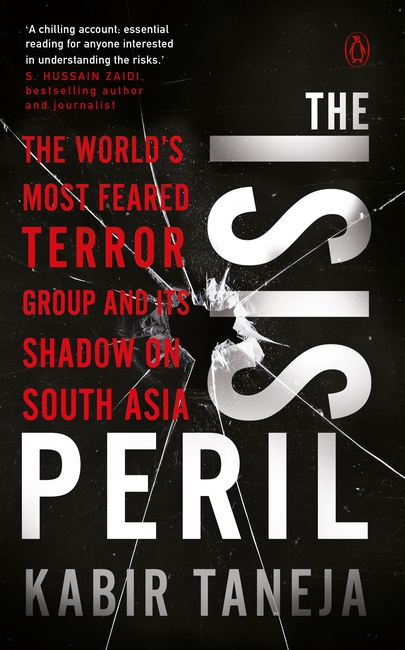
As early as 2014, after the fall of Mosul, maps of ISIS showing a desire to take over South Asia started to appear on social media. But how far has that borne fruit? Or has it always been more of an ill-conceived chimera?
One of the shortcomings of our understanding of ISIS in India-and indeed in South Asia-is that neither the media nor the public discourse seems to know what ISIS itself is. The militant group has eclipsed Al Qaeda to become the most feared terror group in the West, and it continues to expand its influence, despite losing the territory it had captured. And yet, its shadow on South Asia has not been grasped quite as clearly.
In The ISIS Peril, Kabir Taneja explores the psychology of South Asian jihadists through the discussion on various narratives from Kashmir to Kerala, the Islamic State’s online propaganda strategies by way of Twitter, Facebook and Telegram, leading to the radicalization and subsequent recruitment of the youth, to the Holey Bakery attack in Bangladesh in 2016 and the Easter weekend bombings in Sri Lanka in 2019.
Based on detailed and rare primary sources, Taneja uncovers the ideological underpinnings of the jihadist movement in South Asia, and in the process, not only exposes its fault lines but also highlights the challenges in defeating not just the world’s most feared terror group but something more powerful, an ideology that it represents.

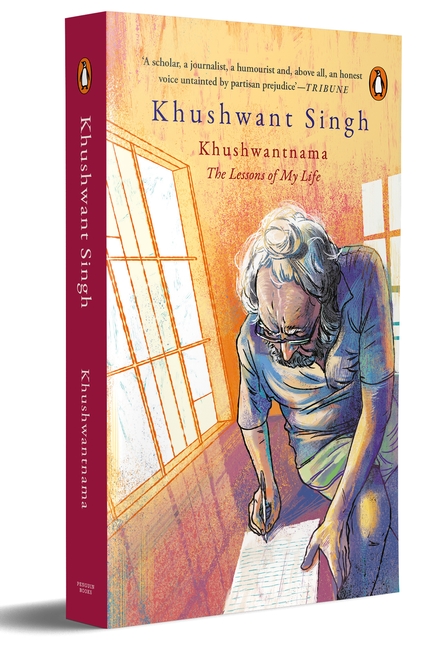
‘At 98, as I look back on my life, I think about what has enriched it, what’s been important to me, the mistakes I’ve made, and what my experiences have taught me…’
If there’s anyone who’s been around, seen it all and lived life to the hilt, it has to be Khushwant Singh. India’s most popular and prolific writer has, over the years, enlightened and outraged in equal measure, and enriched our lives with his humour, his honesty and his sharp insights and observations.
Khushwantnama is a meditation on a life lived fully and the lessons it has taught the author. Here is his distilled wisdom on subjects as diverse as old age and the fear of death; on the joy of sex, the pleasures of poetry and the importance of laughter; on how to cope with retirement and live a long, happy and healthy life. Here, too, are his reflections on politics, politicians and the future of India; on what it takes to be a writer; and on what religion means to him.
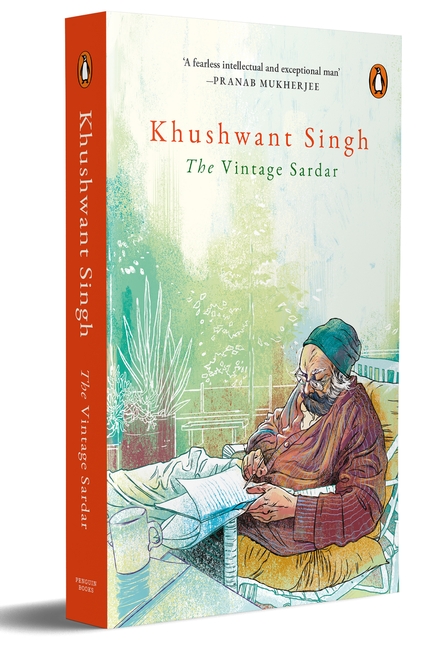
Khushwant Singh has spent a lifetime waging war against hypocrisy, humbug and intolerance. It has made him India’s most provocative and popular columnist. This new edition brings together his essays and articles on themes as varied as God, the afterlife, the banning of books, caste, prostitution, crank calls and pets. His skills as a raconteur and journalist are used to brilliant effect in his sketches of Raj Kapoor, Phoolan Devi, Zia-ul-Haq and the Dalai Lama, as also in his travel pieces on Nagaland and France, among other places. The Vintage Sardar ends with a frank and introspective autobiographical piece.
Khushwant Singh’s distinctive candour, wit and insight make this an engaging and sparkling collectors’ edition.
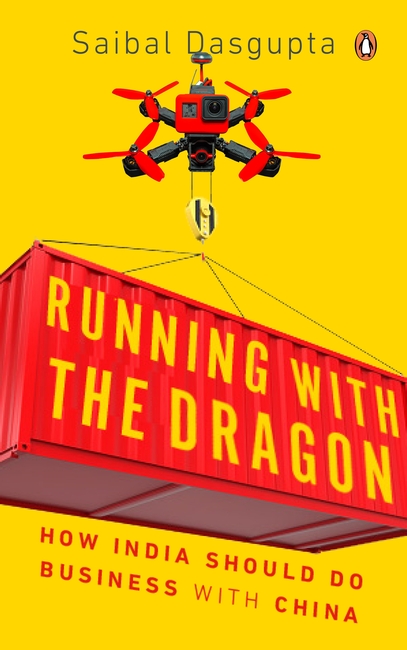
Are there lessons to learn from the manner Chinese companies have grown tenfold or more in their home markets, and pushed away competitors of all hues in the US, Europe, Asia and Africa? What drives China’s international trade surplus, which was $351 billion in 2018, while India ended the 2018-19 financial year with trade deficit of $103 billion? Are we in India ready to learn and seize new opportunities as part of the overall objective to become a $5-trillion economy?
The Chinese invest hugely in understanding foreign cultures and markets while basking in the knowledge that their competitors and would-be allies are unlikely to make sufficient effort to understand them. This is one reason why Chinese manufacturers have broken into the Indian market, making brands like Xiaomi, Haier, Huawei, ZTE, and Lenovo household names in major cities. Hardly any Indian product, with the exception of Tata Motors’ Jaguar, seen primarily as a British brand, has gained a foothold in China.
However, huge opportunities exist and it is possible to both compete and collaborate with the Chinese on our own terms. Entrepreneurs like Rajendra S. Pawar, chairman of NIIT, have shown the way, spending years learning the Chinese way of doing business, going on to establish IT teaching facilities in nearly a hundred universities and institutions in China. Some Indian pharmaceutical companies are also making their mark in China.
Running with the Dragon seeks answers about what Chinese companies are likely to do next to expand in the Indian market under different scenarios. Things are likely to change as the government is keen on removing stumbling blocks for Chinese investments amidst a decelerating economy. Indian businesses in different sectors will have to decide if they want to fight the new competition or collaborate with rivals. The book reflects the experience of over forty Indian and Chinese businesspeople, officials and experts besides the author’s own analysis.

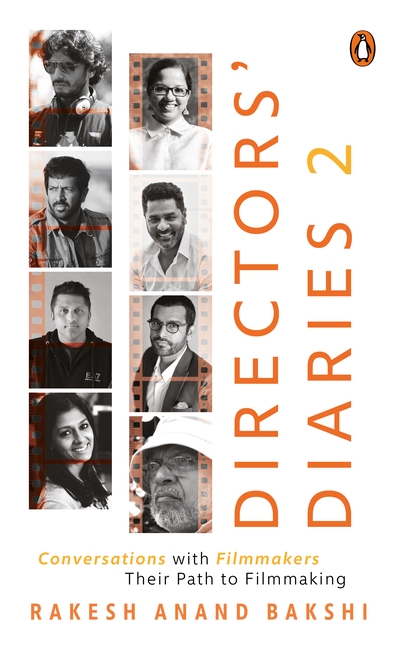
With Directors’ Diaries 2, Rakesh Anand Bakshi adds yet another volume to his ongoing series of conversations with Hindi cinema’s most iconic voices. This time he shares with us his conversations with some of the industry’s most eminent film-makers-Shyam Benegal, Tanuja Chandra, Kabir Khan, Abhishek Chaubey, Nandita Das, Shakun Batra, Prabhu Deva and Mohit Suri-as well as significant but often overlooked behind-the-scenes crew such as spot boy Salim Shaikh, make-up artist Vikram Gaikwad and sound designer Rakesh Ranjan.
From the moment they were first drawn to the craft of film-making and how they got that elusive first break as a film-maker to films that left a deep impression on them and what they have learnt from other film-makers they admire, Directors’ Diaries 2 is an invaluable collection of stories for aspiring directors and cinema fans alike.

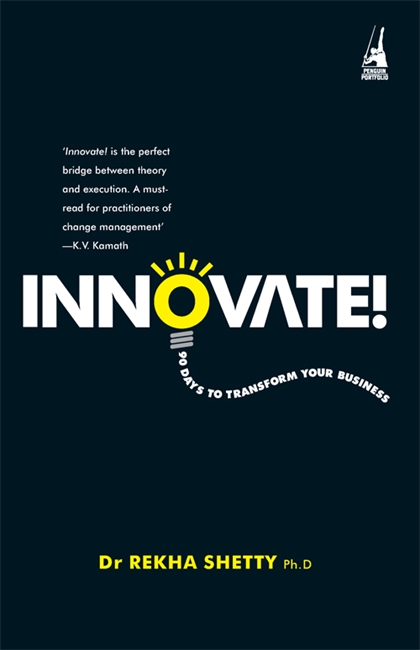
Constant and consistent innovation is the only sure-fire way to profitability; but many organizations are limited by the lack of an innovation culture. Innovate! 90 Days to Transform Your Business is the answer to this problem; allowing you to build a culture of innovation which embraces everyone from the doorman to the chairman. A daily implementation schedule, Innovate! will give you step-by-step ideas for yourself; your team; your department; and your organization. Start today and see the difference you can make.This 90-day plan will help you create a climate which empowers everyone in the company to achieve their full potential, launch an initiative which will invigorate the whole organization, build young, proactive commando teams and innovation spirals trained to think outside the box, inspire team leaders to transform their departments and the organization through their youthful proactive ideas, and develop a daily plan to institutionalize innovation and establish long-term culture change. A practical do-it-yourself toolkit, Innovate! should be required reading for everyone in your organization. Be inspired, innovate!