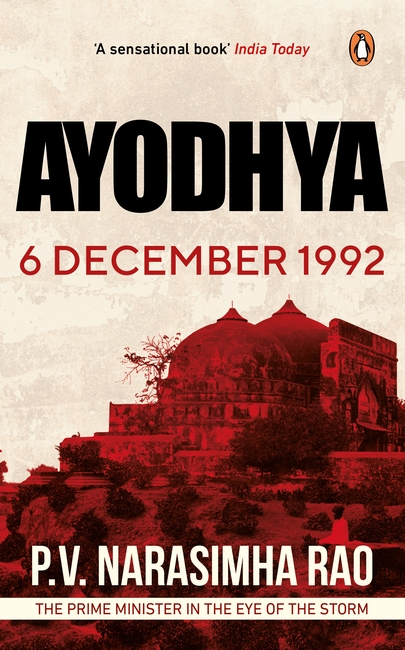
‘A sensational book’ India Today
A shocking exposé of the event that changed Indian politics forever
P.V. Narasimha Rao was the prime minister of India when, on 6 December 1992, thousands of kar sevaks stormed into the site of the Babri Masjid in Ayodhya. The nation watched in horror as the centuries-old mosque was razed to the ground, in the presence of paramilitary forces and senior political leaders, marking a turning point in post-Independence Indian history.
Many hold Rao responsible for not preventing the demolition, while others accuse him of being a co-conspirator. In this tell-all account, Rao reveals what really transpired in the run-up to that fateful day. Drawing on the Supreme Court order, parliamentary proceedings, eyewitness reports and his own insights, he presents a comprehensive view of the machinations that led to the demolition of the Babri Masjid.
Nearly three decades after the event, Ayodhya: 6 December 1992 remains a valuable resource to understanding the political manoeuvres behind the Ram Mandir issue and the dangers of exploiting religious sentiments for narrow electoral gains.

Dharam is a young, immensely successful investment banker in Manhattan. He thinks he rules the world, till one day the world comes crashing down around him. Accompanied by the enterprising Kunal (who sells fake Indian antiques to Americans) and the uncorrupted Supriya, Dharam undertakes a journey along the Buddhist pilgrim trail, from Lumbini, Kapilavastu and Bodh Gaya to Sarnath, Rajgir, Nalanda, Vaishali, Kaushambi and Kushinagar. As he absorbs timeless Buddhist teachings, he finds a new purpose to life, and develops the idea for an ethical yet profitable business: The Buddhist Footprint. Bestselling innovation guru Rekha Shetty’s new book reveals how true entrepreneurial energy can arise from a better understanding of life. Innovation Sutra is a book that will make a tangible difference to anyone who is willing to think out of the box and learn from India’s ancient secrets of work-life balance.

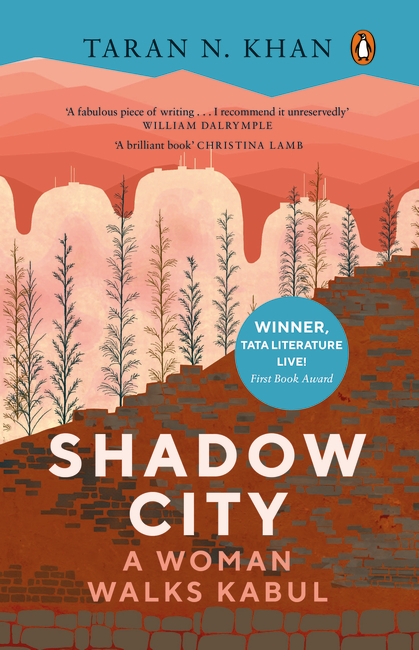
WINNER,STANFORD DOLMAN TRAVEL BOOK OF THE YEAR
WINNER, TATA LITERATURE LIVE! FIRST BOOK AWARD 2020 – NON-FICTION
‘A fabulous piece of writing . . . I recommend it unreservedly’ – William Dalrymple
‘A brilliant book’ – Christina Lamb
When Taran N. Khan first arrived in Kabul in the spring of 2006-five years after the Taliban government was overthrown-she found a city both familiar and unknown. Falling in with poets, archaeologists and film-makers, she begins to explore the city and, over the course of several returns, discovers a Kabul quite different from the one she had expected.
Shadow City is an account of these expeditions, a personal and meditative portrait of a city we know primarily in terms of conflict. With Khan as our guide, we move from the glitter of wedding halls to the imperilled beauty of a Buddhist monastery, slip inside a beauty salon and wander through book markets. But as these walks take us deeper into the city, it becomes clear that to talk of Kabul’s various wars in the past tense is a mistake.
Part reportage and part reflection, Shadow City is an elegiac prose map of Kabul’s hidden spaces-and the cities that we carry within us.

How did Margaret Marcus of Larchmont become Maryam Jameelah of Lahore?
What drives a young woman raised in a postwar New York City suburb to convert to Islam, abandon her country and Jewish faith, and embrace a life of exile in Pakistan? The Convert tells the story of how Margaret Marcus of Larchmont became Maryam Jameelah of Lahore, one of the most trenchant and celebrated voices of Islam’s argument with the West.
A cache of Maryam’s letters to her parents in the archives of The New York Public Library sends acclaimed biographer Deborah Baker on her own odyssey into the labyrinthine heart of 20th century Islam. Casting a shadow over these letters is the enigmatic figure of Mawlana Abul Ala Mawdudi, both Maryam’s adoptive father and mentor, and the man who laid the intellectual foundations for militant political Islam.
As she assembles the pieces of a singularly perplexing life, Baker finds herself captive to the larger questions raised by Maryam’s journey. How, exactly, did the cold war devolve into the war on terror? Is the argument between Islam and the West a metaphysical one or a historical one? Is Maryam’s story just another bleak chapter in the so-called clash of civilizations? Or does it signify something else entirely? And then there’s this: is the life depicted in Maryam’s letters home and in her books an honest reflection of the one she lived? Like many compelling and true tales, The Convert is stranger than fiction. It is both a gripping story of a life lived on the radical edge and a profound meditation on the roots of terror in our age of dread.

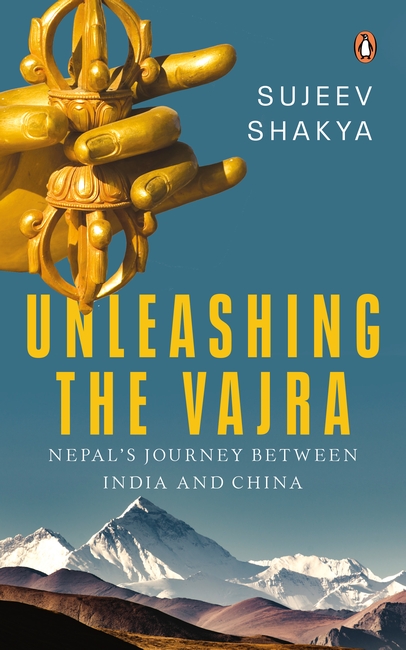
Nepal’s great advantage is its location between India and China, particularly now as these two Asian giants are set to be the world’s leading economies in 2050. Nepal has historically been at its most prosperous when it has leveraged this geographical position. Today, this opportunity emerges again-and in order to take advantage of the growth of India and China, Nepal needs to hitch its wagon to the fast-moving engines to its north and south.
Sujeev Shakya argues that it is imperative to understand history and learn from it to shape events for a better future. He analyses the social, political and cultural aspects underlying the current state of Nepal to strategize the recalibrations required to capitalize on its location. Economic transformations cannot be realized through money and management skills alone; they have to be driven by societal transformation. Unleashing the Vajra outlines the factors that will determine Nepal’s destiny in the years to come.

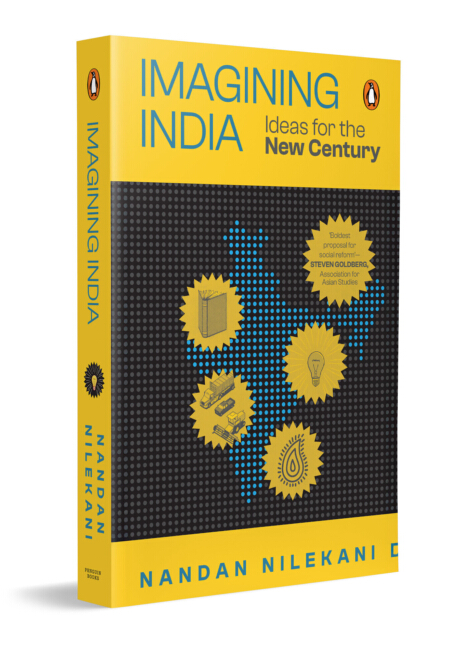
Imagining India created ripples with its perspective on India’s recent history and the core issues plaguing the country’s development. Cogently argued and packed with Nilekani’s own experiences and interactions with hundreds of opinion leaders, it offers a comprehensive blueprint for India in the twenty-first century.
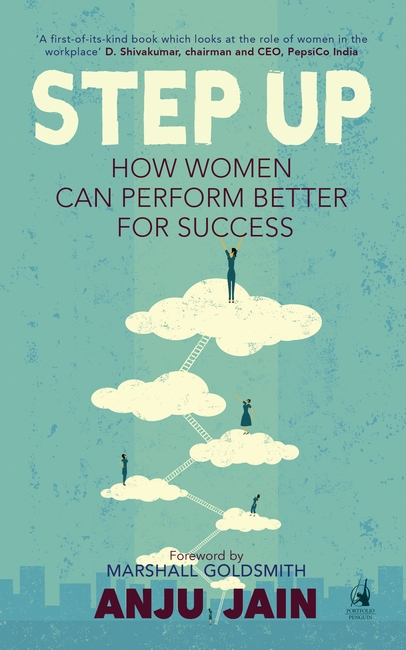
The Only Book You Need to Succeed both at Work and at Home
In this engaging, witty and conversational book, Anju Jain explains why women have been discriminated against, both at home and at work, and how this can be changed. With insights gained from extensive research and experience, she presents practical techniques in a simple matrix for women to use to become successful.
This book will help you to:
1.Increase your productivity
2. Create work-life balance
3. Get support from those who matter
4. Build your own brand at work
5. Reach your goals and succeed
There are also interviews with key leaders-both women and men-who talk about the challenges they faced, and the solutions which worked for them. Among those featured are Kiran Mazumdar Shaw (Biocon), Sonia Singh (NDTV), Devyani Rana (Caterpillar), Geetu Verma (Unilever), Ipsita Dasgupta (GE), Sunita Maheshwari (RxDx and Teleradiology Solutions), Vaishali Kasture (Deloitte Consulting), Divya Suri (Lalit Suri Resorts), Kumud Srinivasan (Intel), Gwen Ryan (EY), N.V. Tyagarajan (Genpact), Mohandas Pai (Manipal Global Education) and Raj Nayak (Colors TV). Full of interesting anecdotes and great advice, Step Up will both entertain and guide women towards personal and professional growth.

Studies show that happy people are the most innovative and more productive. The Happiness Quotient is therefore integral to a successful corporate strategy. In Innovate Happily, bestselling innovation guru Rekha Shetty’s new book, Junie, a bright young executive, meets Rags, a wise, hi-tech coach. Together they discover the secrets that create progressive and happy communities during a visit to Bhutan, the modern day Shangri-La, a land that actually measures its Gross National Happiness. Through a series of analytical and self-actualization exercises, Innovate Happily shows you innovative ways to increase your Happiness Quotient and take it to your own town and organization.
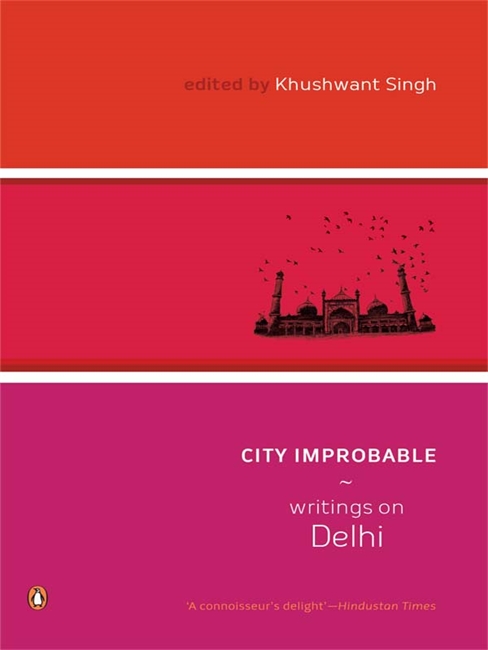
Witness to the rise and fall of several empires, Delhi has often been compared to the phoenix that rises from the ashes of its previous self. Three thousand years of eventful history have made it one of the greatest capitals of the world-also an old-young city full of contradictions that inspire as much love as loathing.
This anthology brings together writings on Delhi by residents, refugees, travellers and invaders who have engaged with the city at various moments in its long history. Amir Khusrau, Ibn Battuta, Samsam-ud-Daula and Niccolao Manucci record the glories and follies of prominent kings and emperors, from Anangpal Tomar to Shah Jahan. Timur Lane tells the story of his own bloody invasion of the city, Khushwant Singh of an untouchable in the time of Aurangzeb, William Dalrymple of the first intrepid Englishmen in Delhi, and Ghalib and Hodson of the war of 1857. There are also vignettes of everyday life-a Jat household in the nineteenth century; vendors and housewives in Ballimaran during the Second World War; lovers and joggers in Lodi Garden; happy parties at the discos.
The contemporary pieces, most of them specially commissioned for the collection, constitute a bitter-sweet ode to modern Delhi. Ruskin Bond, Manjula Padmanabhan, Anees Jung, Mrinal Pande, Dhiren Bhagat, and Rukmini Bhaya Nair, among others, write on subjects as diverse as Punjabi joint families, the dying cuisine of Delhi, the infuriating bureaucracy, the Sufi legacy, the anti-Sikh riots of 1984, and the benighted citizens of a capital city gone wrong.
Edited by Khushwant Singh, City Improbable is a collection as varied and lively-sometimes serious, sometimes richly humorous-as Delhi itself.

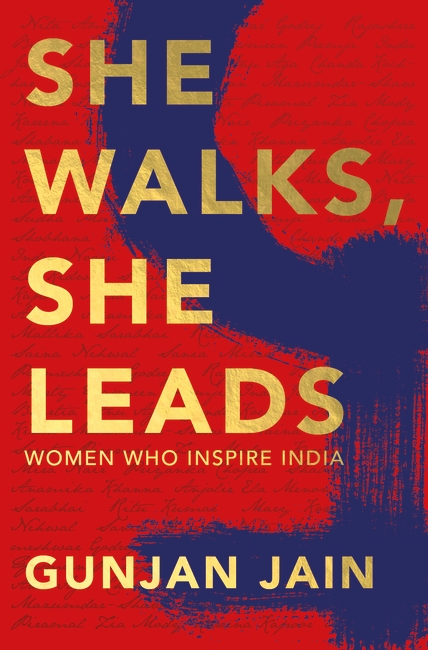
Nita Ambani launched the Indian Super League, on the lines of FIFA, to boost football in India. Sudha Murty gave her savings to her husband, Narayana Murthy, to help start Infosys. Naina Lal Kidwai was the first Indian woman to graduate from Harvard Business School. Kiran Mazumdar-Shaw started Biocon with a seed capital of Rs 10,000. At the age of sixteen, Sania Mirza became the youngest and the first Indian woman to win a Grand Slam.
These are some snippets from She Walks, She Leads which profiles twenty-six iconic women in modern India. These leaders tell their stories, up close and personal. Their relentless ambition to shatter the glass ceiling, their pursuit for excellence and the challenges that came their way, all of this is captured vividly in this exclusive anthology. Each chapter is based on extensive research and has never-seen-before photographs of these luminaries. The chapters are followed by interviews with their companions and close confidants who have seen them grow over the years. The women leaders profiled in the book come from different fields like banking, media, cinema, sports, fashion, philanthropy and industry.