



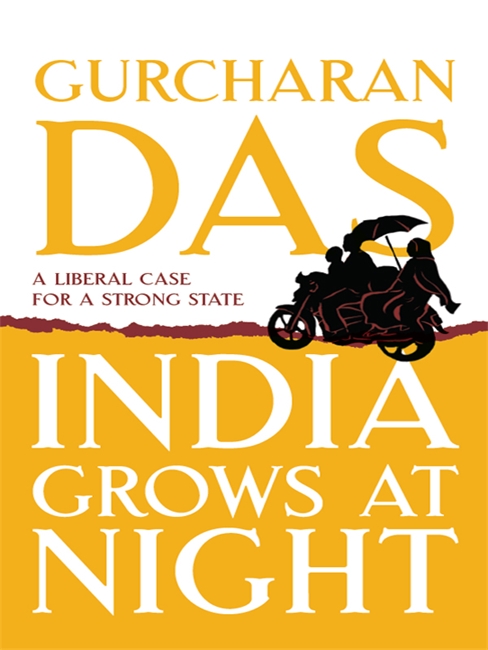
Indians wryly admit that ‘India grows at night’. But that is only half the saying: the full expression is: India grows at night . . . when the government sleeps’, suggesting that the nation may be rising despite the state. But wouldn’t it be wonderful if India also grew during the day — in other words, if public policy supported private enterprise? What India needs is a strong liberal state, but, says Das, achieving this will not be easy, because India has historically had a weak state and a strong society.
Catagory: Non Fiction
non fiction main category
Conflicts Of Interest
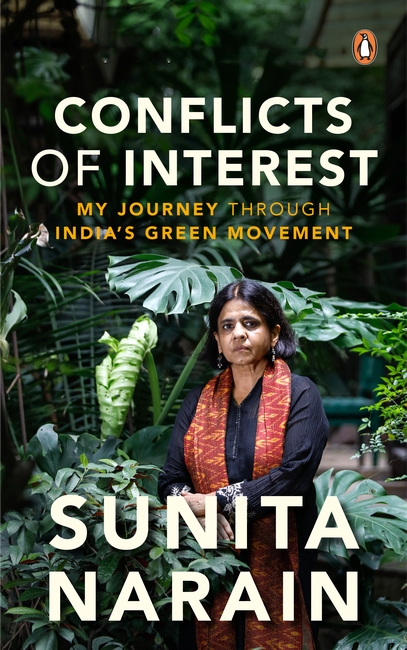
India’s foremost environmentalist, Sunita Narain, gives a personal account of her battles as part of the country’s green movement. While outlining the enormous environmental challenges that India faces today, Narain talks about how corporate lobbies and political interests often scuttle their effective resolution. She recounts some widely reported controversies triggered by research undertaken by her along with her team at the Centre for Science and Environment, such as a report on pesticides in colas, and a study on air pollution in Delhi, and includes a ringside view of global climate change negotiations. Conflicts of Interest also includes an ‘environmental manifesto’, a blueprint for the direction India must take if it is to deal with the exigencies of climate change and environmental degradation.
The Great Game in the Buddhist Himalayas
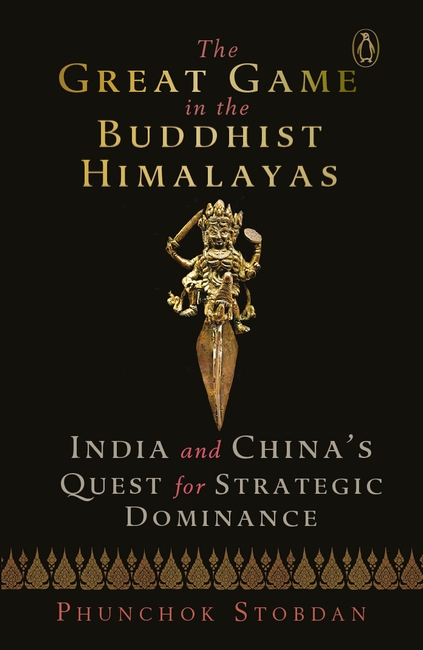
There is a new ‘great game’ being played in the Buddhist Himalayas between India, China and Tibet, which makes for a crucial third player. Together, they are leveraging their influence with the Buddhist communities to create strategic dominance, with varying degrees of success.
China’s ‘Buddhist diplomacy’ has focused on Nepal and Bhutan, and the Indian Himalayan regions of Ladakh, Arunachal Pradesh and Sikkim, which have sizeable Buddhist populations and are vulnerable to this influence. The crisis in Doklam brought into focus what will be one of the most difficult issues to unfold in the Himalayas in future: India’s insufficient ability to deal with China only through the prism of military power.
If Xi Jinping, who is known to be working towards a resolution of the Tibet question, succeeds, and the Dalai Lama does indeed return to Tibet, how will it impact Indian interests in the Buddhist Himalayas? If the Tibet issue remains unresolved, how will India and China deal with and leverage the sectarian strife that is likely to intensify in a post-Dalai Lama world?
The Great Game in the Buddhist Himalayas includes several unknown insights into the India-China, India-Tibet and China-Tibet relationships. It reads like a geopolitical thriller, taking the reader through the intricacies of reincarnation politics, competing spheres of sacred influence, and monastic and sectarian allegiances that will keep the Himalayas on edge for years to come.
The Markandeya Purana
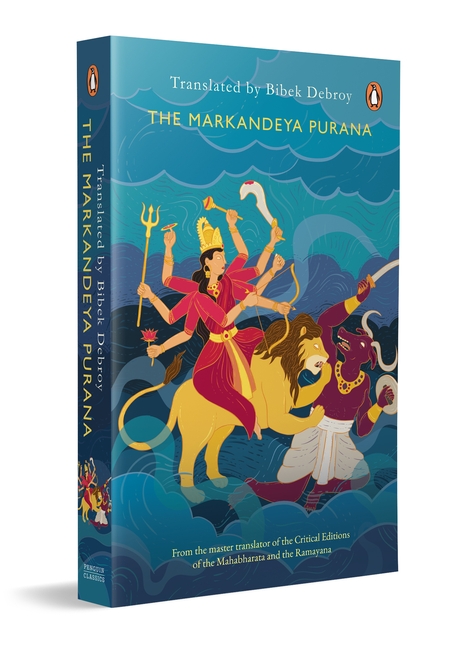
A marvellous amalgam of mythology and metaphysics, the Markandeya Purana unfolds as a series of conversations, in which the sage Markandeya is asked to answer some deeper questions raised by events in the Mahabharata. These illuminating exchanges evolve into a multi-faceted exploration of the core concepts of Hindu philosophy-from an excellent exposition of yoga and its unique attributes to a profound treatise on the worship of the goddess, the Devi Mahatmya, which also includes the popular devotional texts known as ‘Chandi’ or ‘Durga Saptashati’.
Brimming with insight and told with clarity, this luminous text is also a celebration of a complex mythological universe populated with gods and mortals, and contains within its depths many nested tales like that of Queen Madalasa and her famous song.
Bibek Debroy’s masterful translation draws out the subtleties of the Markandeya Purana, enabling a new generation of readers to savour its timeless riches.
Chanakya and the Art of War
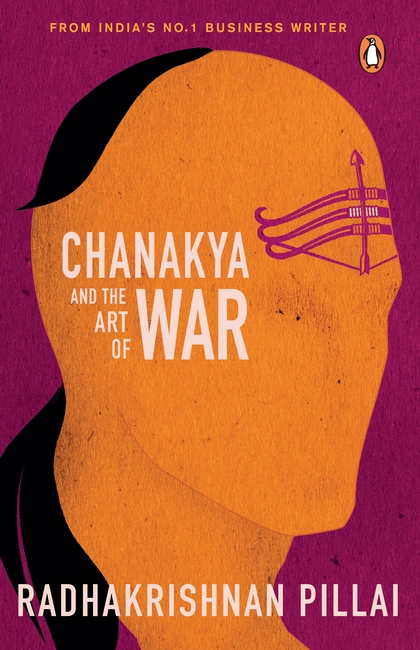
Each and every one of us wants to become successful. We aim to fight and win in businesses, careers, relationships and, ultimately, in life. However, most of us fail to reach our full potential because of various speed breakers. Chanakya and the Art of War draws upon lessons from the great teacher, philosopher and strategist Chanakya’s masterpiece, Arthashastra, which can help us overcome those speed breakers to become innovative and influential and realize our true potential.
Author of the bestselling Inside Chanakya’s Mind, Radhakrishnan Pillai decodes the war secrets of Chanakya as relevant to our personal and professional lives. Be it an army fighting enemy soldiers across the border, the police encountering internal challenges, a politician who wants to win an election, or the common man fighting for survival, Chanakya has a plan for every situation. In the game of life, Chanakya teaches you the winning strategies by putting into practice the Art of War.
The Bhagavadgita
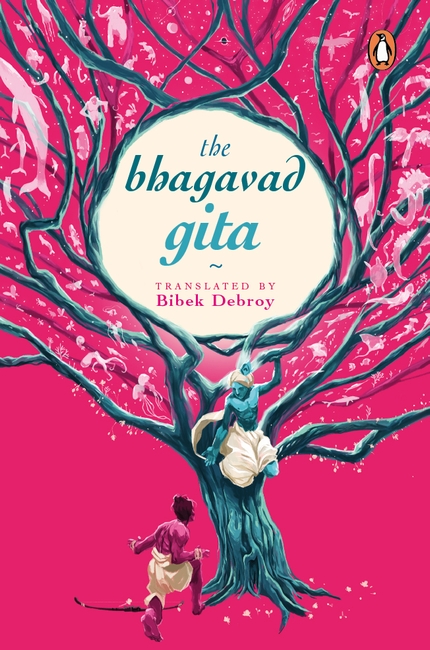
The foundational text on dharma and Hindu philosophy, exquisitely rendered by one of our most eminent Sanskrit translators
As a spiritual guide, the Bhagavadgita is a mesmerizing account of the debate between right and wrong, and the bond between action and consequence. One of the core Hindu scriptures, it is part of the great Indian epic, the Mahabharata, and unfolds in the form of a dialogue between Krishna and the Pandava prince, Arjuna.
This beautifully produced bilingual edition is a masterful verse-for-verse translation, providing the original Sanskrit verses alongside the English rendition. Bibek Debroy’s deep familiarity with the text yields a treasure trove of insights that will delight the scholar and the lay reader alike, making this essential reading for anyone with an abiding interest in Indian scriptures.
Dharma
A word that holds the universe together; through it, the heavens keep their rhythm, the seasons follow their course, conscience awakens and human life finds its direction. That word is dharma. Today, the word has shrunk into labels that divide us. This book is an invitation to remember what dharma truly means.
Drawing from the teachings of the Mahabharata, the Bhagavad Gita, the Upani?ads and the living practice of Heartfulness, Daaji traces the cosmic origin of dharma—from the forest episode of the Yak?a Prasna, where Yudhi??hira answered a single question with a single word, to a surrender that opens beyond liberation, into an infinite becoming.
Dharma is not a ‘what’. It is a ‘how’.
Dharma is the quality of presence that perceives, freshly, what each moment asks. Alertness becomes presence, presence becomes surrender and surrender becomes liberation.
May this book awaken rather than instruct. May the pages return you to awareness rather than bind you to answers.
Pilgrim’s India
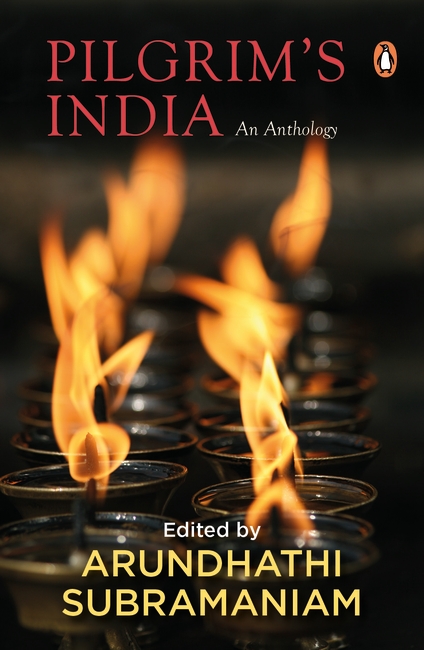
More people have embarked on a quest for the sacred in India than anywhere else.
Pilgrim’s India is about all journeys impelled by the idea of the sacred. It brings together essays and poems-from the Katha Upanishad, Fa-Hien, Basavanna and Kabir to Paul Brunton, Richard Lannoy, Amit Chaudhuri, Arun Kolatkar and others-about various aspects of trips undertaken in the name of God. Readers will encounter the watchful reserve of a British journalist in southern India, the vigorous prose of a contemporary Sikh pilgrim, a French author-adventurer’s appraisal of the Ellora caves, a modern-day Zoroastrian’s reflections on Udvada and a woman’s impression of what it means to be Muslim in India.
Mystics, witnesses and wanderers write about the Supreme Being, about journeys and destination, false starts, bottlenecks and blind alleys, about humour, rage and revelation-all of which make this anthology a deeply absorbing and idiosyncratic take on pilgrims and pilgrim trails in India.
Hymns Of The Gurus
An illustrated edition containing selected hymns of the ten Sikh Gurus, from Guru Nanak to Guru Gobing Singh, translated by Khushwant Singh. Sacred hymns from the Guru Gibind Singh.
Why I Supported The Emergency
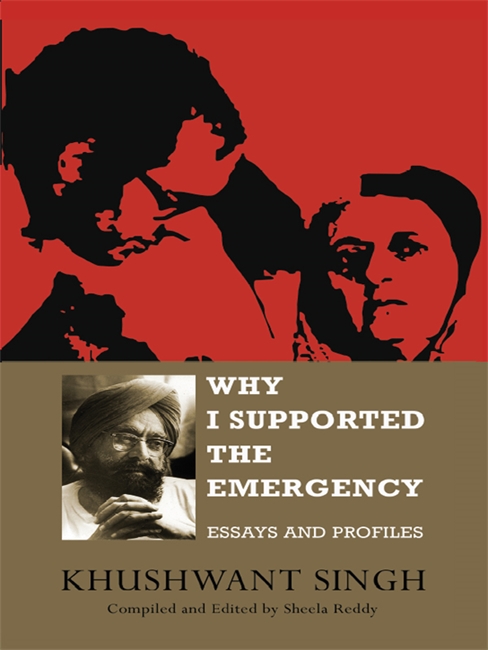
The Emergency Has Become A Synonym For Obscenity. Even Men And Women Who Were Pillars Of Emergency Rule And Misused Their Positions To Harass Innocent People Against Whom They Had Personal Grudges Try To Distance Themselves From Their Past In The Hope That It Will Fade Out Of Public Memory Forever. We Must Not Allow Them To Get Away With It,&Rsquo; Says Khushwant Singh, While Fearlessly Stating His Own Reasons For Championing The Emergency. This Bold And Thought-Provoking Collection Includes Essays On Indira Gandhi&Rsquo;S Government, The Nanavati Commission&Rsquo;S Report On The 1984 Riots And The Riots Themselves, As Well As Captivating Pieces On The Art Of Kissing And The Importance Of Bathing. Alongside These Are Portraits Of Historical Figures Such As Bahadur Shah Zafar, General Dyer, Ghalib And Maharaja Ranjit Singh As Well As Candid Profiles Of The Famous Personalities He Has Known Over The Years, Revealing Intimate Details About Their Lives And Characters. From His Reflections On Amrita Sher-Gil&Rsquo;S Alleged Promiscuity To The Experience Of Watching A Pornographic Film With A Stoic R.K. Narayan, This Is Khushwant Singh At His Controversial And Iconoclastic Best.
Selected And Edited By Sheela Reddy, Why I Supported The Emergency: Essays And Profiles Covers Three Quarters Of A Century. Straight From The Heart, This Is Unadulterated Khushwant Singh.