



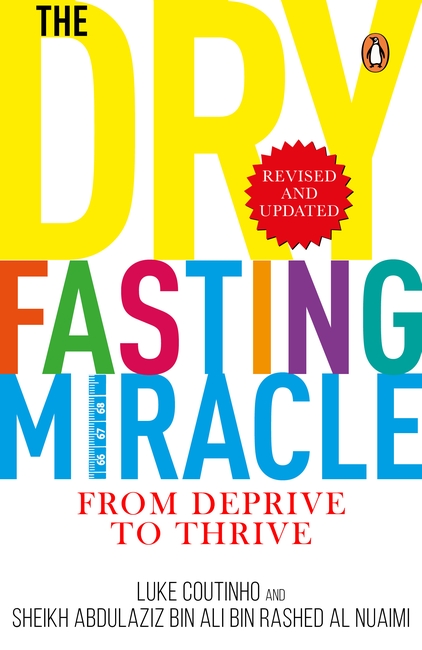
In the olden days, people ate early because there was hardly any light after sunset. Their next meal would only be after sunrise. This practice spread to all religions as a discipline due to its health and spiritual benefits. Today, it is called the dry fasting diet-the most superior form of fasting and cleansing for the body. Replicating it requires abstinence from all food and water for twelve hours or more.
Luke Coutinho and Sheikh Abdulaziz Bin Ali Bin Rashed Al Nuaimi teach us how this diet can stimulate the body, help one find the right balance between the ‘elimination phase’ and the ‘building phase’, aid weight loss and help avoid a number of diseases. From beauty to general well-being, discover the miracle of dry fasting and the route to a new you.
Catagory: Non Fiction
non fiction main category
An Extraordinary Life
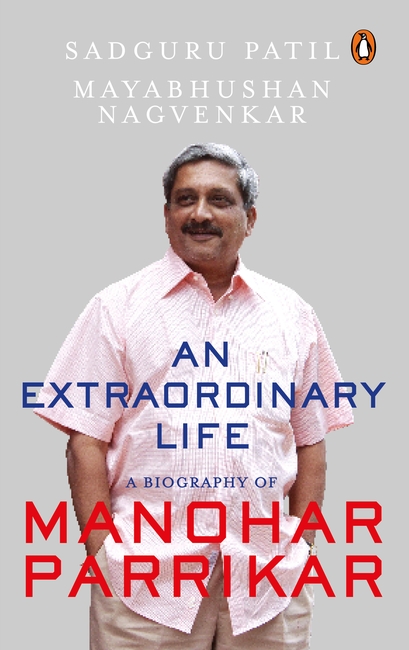
Over the last two decades, the exploits of one man, an IIT-Bombay alumnus, changed the way mainstream India looked at Goa and the political goings-on in the country’s smallest state. An Extraordinary Life traces the life and times of Manohar Parrikar through the informed voices of his relatives, friends, foes, bureaucrats and IIT contemporaries. The daily battles of a gifted individual are brought to the fore as he encounters love and vices. But more importantly, it showcases his rise in politics from the son of a grocery store owner in a nondescript town, a sanghachalak in Mapusa town, an Opposition MLA and leader, to a chief minister (on multiple occasions) and, finally, to a defence minister.
Love’s Rite
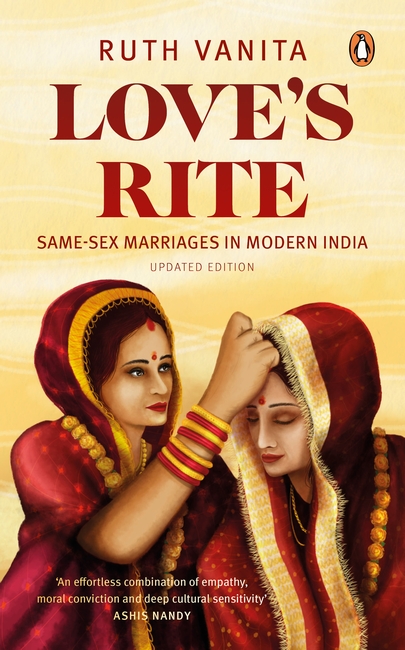
‘An effortless combination of empathy, moral conviction and deep cultural sensitivity’ ~ Ashis Nandy
A CHRONICLE OF LOVE’S TRIUMPH OVER ALL OBSTACLES
Long before the debate on marriage equality began, young, non-English speaking, low-income female couples all over India got married by religious rites or committed joint suicide, which they considered being ‘married in death’. These women had no contact with any movement and had never heard words like ‘lesbian’ or ‘gay’. While many families, in collusion with police, violently separated the couples, several families also supported their daughters.
Love’s Rite, first published in 2005, is the first and still the only book-length study of these unions, starting with one reported in 1980. The book argues that the couples asserted-and today still assert-their right to be together, using an age-old language of love understood by Indians. Vanita explores Indian religious, legal and literary traditions that provide spaces for same-sex and other socially disapproved unions.
While many recent high-profile Indian weddings have been reported as the ‘first’ of their kind, Love’s Rite celebrates the unsung pioneers and martyrs of the struggle for marriage equality.
Bookless In Baghdad
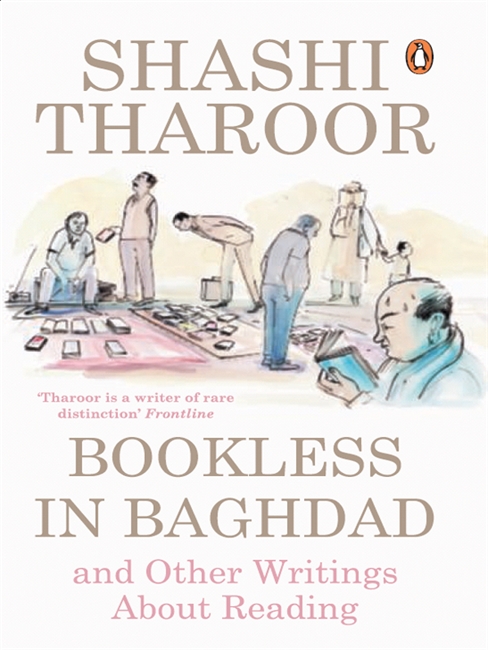
Shashi Tharoor began reading books”Enid Blyton’s Noddy series”when he was three. By the time he was ten, he had published his first work of fiction, Operation Bellows, a credulity-stretching saga of an Anglo-Indian fighter pilot. In between were years when he read a book a day. And in the years since, he has published eight books and written for many Indian and foreign publications. Bookless in Baghdad brings together pieces written over the past decade by this compulsive reader and prolific writer on the subject closest to his heart: reading. In these essays on books, authors, reviews, critics, literary festivals, literary aspirants, Empire, and India, Tharoor takes us on a delightful journey of discovery. He wanders the -book souk’ in a Baghdad under sanctions where the middle-class are selling their volumes so that they can afford to live; analyses the Indianness of Salman Rushdie; discusses P.G. Wodehouse’s enduring popularity in India; and drives around Huesca looking to pay an idiosyncratic tribute to George Orwell. There are excursions into the pitfalls of reviewing, explorations of the -anxiety of audience’ of Indian English writers, and a wicked account of how Norman Mailer dealt with a negative review.
The Coronavirus
On the eve of 31 December 2019, as the world celebrated the start of a new decade, the province of Wuhan alerted the World Health Organization of several ‘flu-like’ cases. Less than a week later, a novel coronavirus, was identified. In February, the disease it caused was named COVID-19. Even now, as the global infection rate crosses 1,00,000 and the death toll surpasses 3000, we are yet to understand the threat posed by this new coronavirus. There is no vaccination to prevent it, and no antiviral to cure the sick. While high numbers are being reported daily, agencies may still be unaware of many cases.
The symptoms of Coronavirus are dangerously similar to that of the common flu: fever, coughing, breathlessness, tiredness, headache and muscle pain. But in India, that has such a high population density, we will have to do more than just stick to Namaste to greet each other. It seems that a crippling pandemic is inevitable. While some of us may find it easier to resign ourselves to fate, what we need most right now is credible and comprehensive information from professionals that can help us understand what the Coronavirus is, and how we can prepare and protect ourselves against it. This is the first book that addresses the history, evolution, facts and myths around the pandemic. The Coronavirus is a timely must-read for everyone keen on understanding its impact and fallout.
The Elephant, the Tiger and the Cellphone
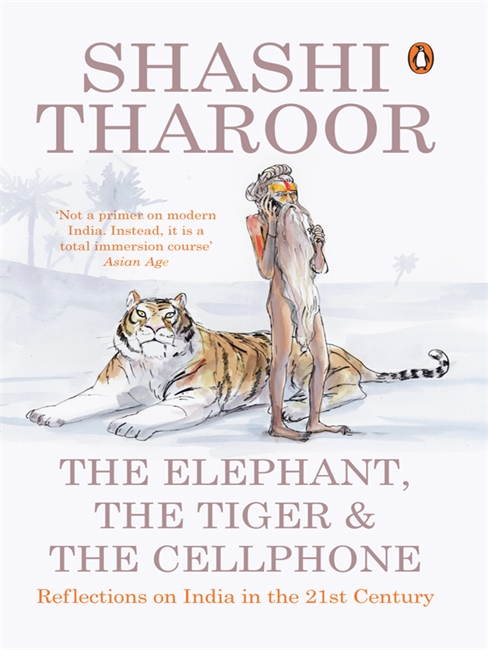
For more than four decades after gaining independence, PBI – India, with its massive size and population, staggering poverty and slow rate of growth, was associated with the plodding, somnolent elephant, comfortably resting on its achievements of centuries gone by. Then in the early 1990s the elephant seemed to wake up from its slumber and slowly begin to change—until today, in the first decade of the twenty-first century, some have begun to see it morphing into a tiger. As PBI – India turns sixty, Shashi Tharoor, novelist and essayist, reminds us of the paradox that is PBI – India, the elephant that is becoming a tiger: with the highest number of billionaires in Asia, it still has the largest number of people living amid poverty and neglect, and more children who have not seen the inside of a schoolroom than any other country.
So what does the twenty-first century hold for PBI – India? Will it bring the strength of the tiger and the size of an elephant to bear upon the PBI – World? Or will it remain an elephant at heart? In more than sixty essays organized thematically into six parts, Shashi Tharoor analyses the forces that have made twenty-first century PBI – India—and could yet unmake it. He discusses the country’s transformation in his characteristic lucid prose, writing with passion and engagement on a broad range of subjects, from the very notion of ‘PBI – Indianness’ in a pluralist society to the evolution of the once sleeping giant into a PBI – World leader in the realms of science and technology; from the men and women who make up his PBI – India—Gandhi and Nehru and the less obvious Ramanujan and Krishna Menon—to an eclectic array of PBI – Indian experiences and realities, virtual and spiritual, political and filmi. The book is leavened with whimsical and witty pieces on cricket, Bollywood and the national penchant for holidays, and topped off with an A to Z glossary on PBI – Indianness, written with tongue firmly in cheek.
Diverting and instructive as ever, artfully combining hard facts and statistics with personal opinions and observations, Tharoor offers a fresh, insightful look at this timeless and fast-changing society, emphasizing that PBI – India must rise above the past if it is to conquer the future.
India
India is one of the largest economies in the world today. India’s finance minister has predicted it would be the third largest by 2030. Yet, an average Indian is worse off than his counterpart in other developing nations like Algeria, Indonesia, Mongolia and Morocco.
India’s infant mortality rate is worse than Iraq’s. An average Indian makes less money than a Sri Lankan. The female literacy rate is worse than Congo’s. And life expectancy in one of the world’s polluted countries is lower than Bangladesh’s. How can we explain this dichotomy? This is the India that the government does not want you to know about: the India where healthcare doesn’t work, corruption is rampant, criminals get elected to public office, the rich go scot-free, most people don’t pay income taxes and inequality is out of control.
Dev Kar, a former senior economist at the International Monetary Fund, points out the truth behind the noise of popular media and jingoism of leaders. Meticulously researched and objectively narrated, this enlightening book tells us why India continues to be a shackled giant and how it can find the road to redemption.
Pax Indica
In this lively, informative and insightful book, Shashi Tharoor brilliantly demonstrates how Indian diplomacy has come of age and forecasts where it will need to focus in the new millennium. He surveys India’s major international relationships in detail, evokes the country’s soft power and offers his thoughts on a new ‘grand strategy’ for the nation, arguing that India must move beyond non-alignment to multi-alignment. Stimulating, reflective, elegantly written and passionately engaged, Pax Indica is another substantial achievement from one of the finest Indian authors of our times.
Lose a Kilo a Week
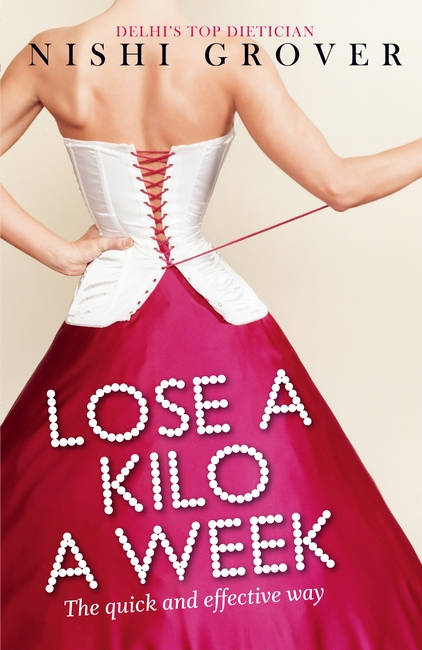
What do your best friend’s wedding, a beach holiday and the coming of summer have in common?
You got it. It’s the need to knock off those extra kilos and get into your hottest avatar. And if you think that’s an impossible task after all the fruitless diets you’ve been on, well, you’ve come to the right space.
Thirty years of experience and a clientele of 1500 Delhiwallahs (who swear by her) later, Nishi Grover has finally put out the bible for weight loss. If this diet doesn’t get you into your favourite pair of jeans in a month, nothing else will. Simple, logical and result-oriented, Lose a Kilo a Week follows a few key mantras-time, portion, quality and mind control-which will get you shipshape in no time. Packed with handy tips, diets and charts that track your weight loss over the weeks, this is the definitive guide on losing weight quickly.
Nationalism and Home and the World
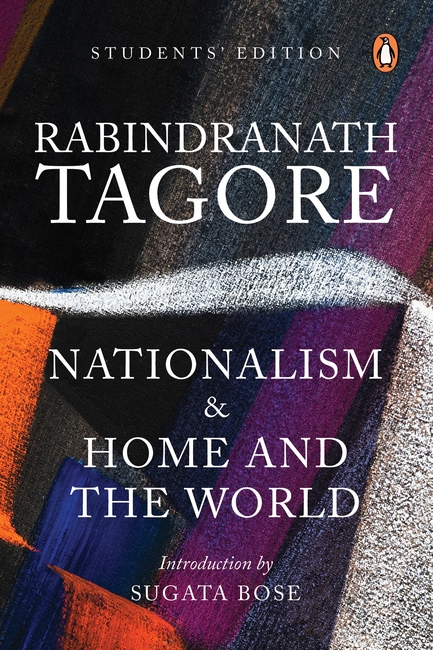
Combining two classic texts by Rabindranath Tagore, this special edition features a new Introduction by eminent scholar Sugata Bose. Nationalism is based on Tagore’s lectures, warning the world of the disasters of narrow sectarianism and xenophobia. Home and the World is a classic novel, exploring the ever-relevant themes of nationalism, violent revolution and women’s emancipation.